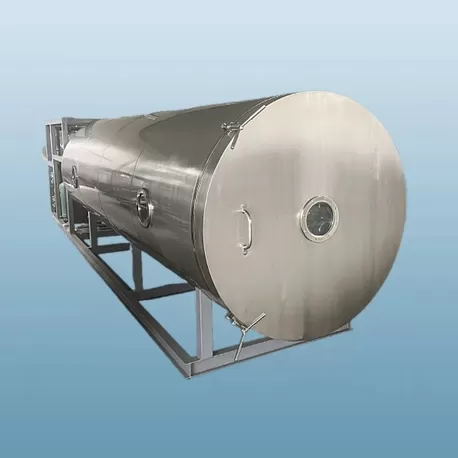
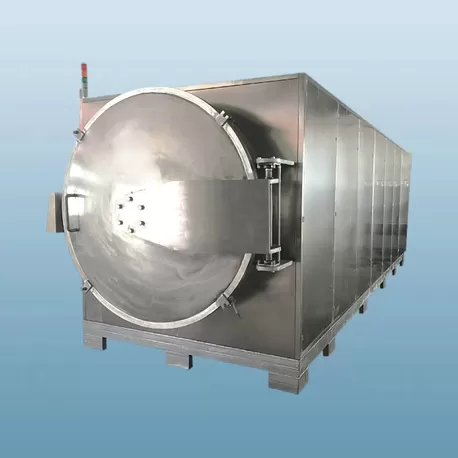
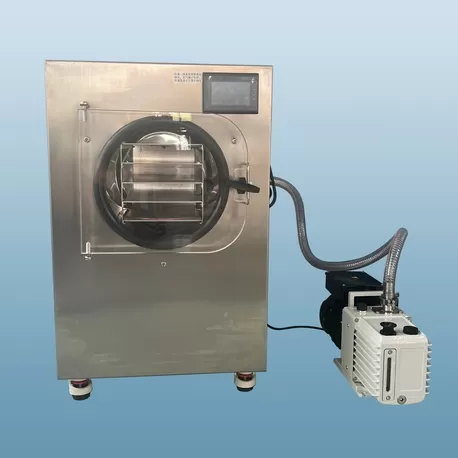
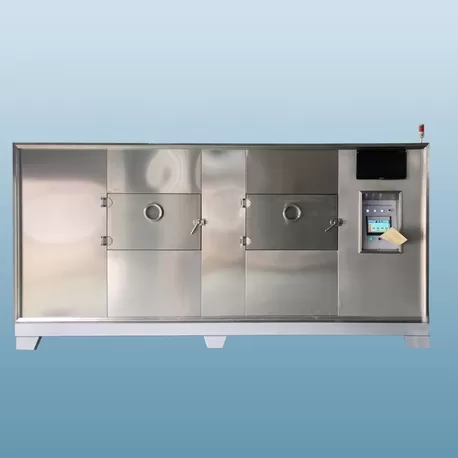
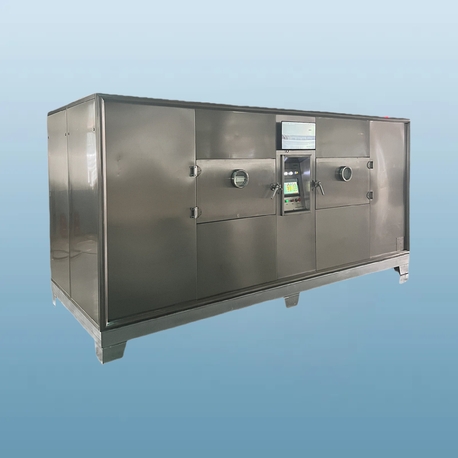
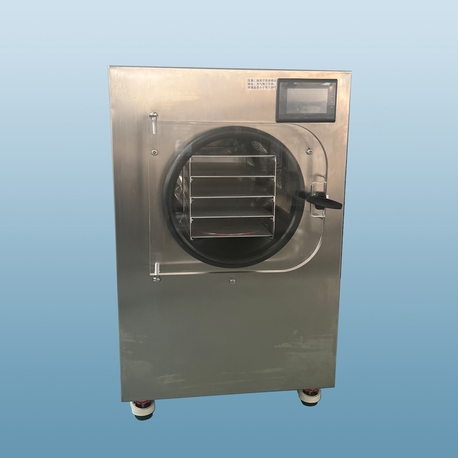
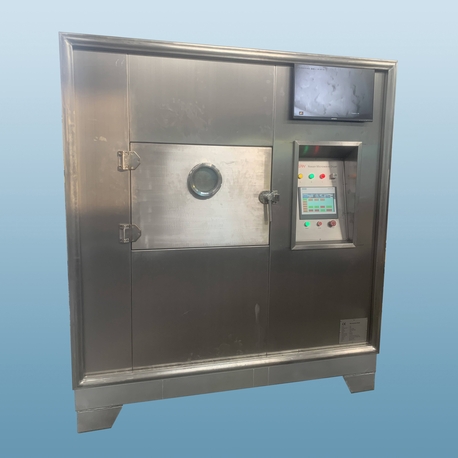
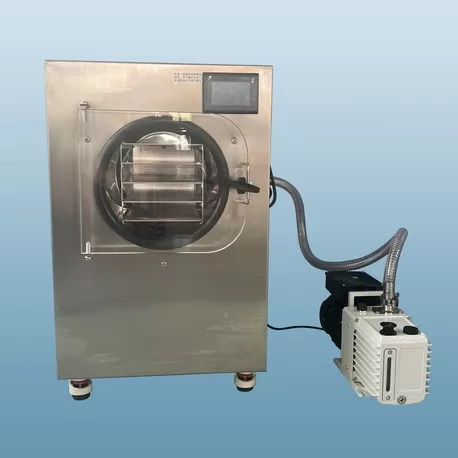
For high-value biological, pharmaceutical, and food products, preserving
molecular structure and extending shelf life without thermal degradation remains
a manufacturing priority. The industrial freeze dehydrator (lyophilizer) achieves this by sublimating ice directly from frozen state under
controlled vacuum, bypassing liquid phase. Over the past three decades,
Nasan has engineered
advanced freeze drying solutions that address common industry
challenges—excessive energy consumption, uneven sublimation rates, and batch
inconsistency. This analysis provides technical specifications,
application-specific performance data, and actionable criteria for procurement
teams evaluating capital equipment.
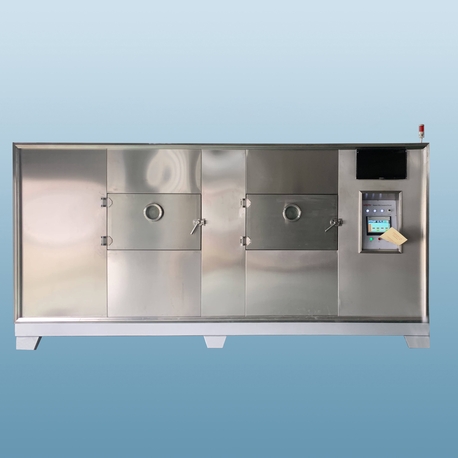
1. Freeze Dehydrator vs. Conventional Thermal Drying: A Technical
Comparison
Conventional drying methods (hot air, spray, fluid bed) apply heat that
causes protein denaturation, melanoidin formation, and volumetric shrinkage. In
contrast, a freeze
dehydrator operates below the triple point of water, typically at
shelf temperatures from -40°C to +40°C and chamber pressures between 10 and 500
mTorr. The key differentiators include:
Phase transition pathway: Direct sublimation preserves
cellular matrix and porosity – critical for probiotic survival and vaccine
adjuvant stability.
Residual moisture content: Achieves 0.5% to 3% vs. 5% to
12% in conventional dryers, directly correlating with longer storage stability
at ambient conditions.
Rehydration kinetics: Freeze-dried materials regain
original shape in < 30 seconds; air-dried equivalents often show irreversible
structural collapse.
Batch uniformity: Modern freeze dehydrators use independent
shelf temperature control and capacitance manometers to maintain uniformity ±1°C
across all trays, mitigating edge effects.
These technical advantages explain why the global lyophilization equipment
market is projected to grow at 8.2% CAGR through 2030, driven by biopharma and
premium instant food segments.
2. Core Engineering Architecture of an Industrial Freeze Dehydrator
To make informed capital investment decisions, engineers must evaluate six
subsystems that define performance boundaries:
2.1. Refrigeration System & Shelf Freezing
Two-stage cascade compressors (R404A / R508B) or single-stage with synthetic
oil allow shelf temperatures down to -55°C. Controlled cooling ramp rates
(0.5°C/min to 2.5°C/min) dictate ice crystal morphology: slower rates produce
larger ice crystals, leaving macroporous channels that accelerate primary drying
by up to 20%.
2.2. Vacuum Chamber & Condenser Design
316L stainless steel chambers with internal CIP/SIP capability are standard.
The external condenser (or internal coil type) must maintain a temperature
15–20°C below product temperature to capture sublimated vapor. High-end systems
from manufacturers like Nasan incorporate hot-gas defrost
cycles between batches, reducing downtime from 90 minutes to under 20
minutes.
2.3. Control Architecture & Process Analytical Technology (PAT)
Modern freeze
dehydrator systems integrate tunable diode laser absorption
spectroscopy (TDLAS) for real-time water vapor concentration monitoring, plus
comparative pressure measurement to determine primary drying endpoint. PID loops
adjust shelf heating and vacuum levels automatically, reducing operator
intervention and batch failures due to collapse temperature excursions.
2.4. Heat Transfer Fluid (HTF) System
Silicone-based HTFs (e.g., Syltherm XLT) provide uniform energy distribution.
Optimal freeze dehydrator design includes dual-circuit heat exchangers to allow
independent shelf ramping – essential for products with heterogeneous vial fill
volumes.
3. Common Industry Pain Points & Engineered Solutions (Nasan
Implementation)
From our field service records across 180+ installations, four recurring
challenges are consistently reported:
Prolonged primary drying cycles: Many freeze dehydrators
spend 40–60 hours on sublimation. Nasan addresses this via controlled nucleation
(ice fog seeding) that reduces primary drying by 15–25% while preserving product
resistance. Nasan systems also allow variable gap spacing between shelves for high-loaded
batches.
Non-homogeneous residual moisture: Edge vials dry faster
than center vials. Solution: adjustable radiation shields and staggered loading
protocols combined with capacitance manometers located at three chamber
positions. Data from Nasan installations show moisture variation ≤0.4% across
10,000 vials.
Condenser ice overload & pressure rise: Occurs when
sublimation rate exceeds condenser capacity. Advanced freeze dehydrator control
algorithms from Nasan include predictive ice load modeling, automatically
reducing heating power before pressure exceeds setpoint (typically 50 mTorr).
Validation & documentation burden: Regulatory
environment (FDA 21 CFR Part 11, EU GMP Annex 11) demands full data
traceability. Nasan’s SCADA package provides automated batch reporting,
electronic signatures, and audit trail.
By retrofitting or specifying these solutions, production managers can
increase annual throughput by eliminating out-of-spec batches and reducing cycle
times by 18–32%.
4. Application Domains Demanding Precision Freeze Dehydrator Technology
While freeze drying originally served the pharmaceutical sector, new
industrial segments have adopted the technology for high-margin product
differentiation:
Pharmaceutical & Biotech
mRNA lipid nanoparticles (LNPs) – require annealing steps and secondary
drying at 25°C to maintain particle size distribution.
Monoclonal antibodies (mAbs) – freeze dehydrator cycles must avoid pH shifts
during ice formation; controlled freezing at -45°C with 0.2°C/min ramp prevents
aggregation.
Vaccines (live attenuated, viral vectors) – residual moisture below 1%
ensures stability at 2-8°C, eliminating -70°C cold chain requirements.
Food & Ingredients Processing
Instant coffee and premium meals – freeze-dried particles retain volatile
aromatic compounds. Industrial freeze dehydrator systems with return vapor compression lower operating costs to $0.32/kg of water
removed.
Probiotic powders – stability data shows freeze-dried Lactobacillus strains
maintain 10^11 CFU/g after 24 months at 25°C, vs. 6 months for spray-dried
equivalents.
Fruits and vegetables (dragon fruit, mango, goji) – low-temperature drying
preserves anthocyanins and ascorbic acid (retention >90%).
Advanced Materials & Chemical Intermediates
Graphene oxide aerogels: freeze dehydrator processing prevents lamellar
stacking, keeping surface area >500 m²/g.
Metal-organic frameworks (MOFs) – mild sublimation removes solvents without
framework collapse.
5. Economic & Quality Metrics: ROI Analysis for B2B Buyers
Procurement decisions require quantifiable justification beyond technical
descriptions. Three financial models favor freeze drying in specific
scenarios:
Value preservation model: For high-value APIs (e.g.,
peptides >$200,000/kg), even 2% degradation avoided justifies a $1.2M freeze
dehydrator in less than 18 months.
Logistics replacement model: Converting a cold-chain
product (-20°C storage/distribution) to ambient-stable freeze-dried format
reduces supply chain costs by 40–60%. Amortization period typically 15–24
months.
Market expansion model: Producers of organic baby food and
premium pet treats achieve 3x–4x price premium on freeze-dried formats compared
to air-dried alternatives.
Operational expenditures per batch depend on loading density (kg water
removed/m² shelf area). Modern freeze dehydrator units achieve 5.2–6.8 kWh per kg of ice sublimated – a 35% improvement over
machines built before 2010. Nasan’s Eco-Dry line recovers condenser heat to
preheat HTF, further reducing energy by 12%.

6. Selection Criteria: Capacity, Control Systems, and Validation
Readiness
When issuing RFQs for a freeze dehydrator, include these mandatory
specifications based on product portfolio:
Shelf area & configuration: Pilot units (1–5 m²) vs.
production (10–60 m²). Modular designs with movable shelves allow both bulk
trays and stoppered vials.
Cooling rate range: 0.5°C/min to 1.5°C/min is sufficient
for most biotech; food applications with high water content benefit from 2°C/min
to restrict ice crystal size.
Cleanability standard: Require documentation of Ra <0.4
µm internal welds, slope to drain, and automated CIP cycles that cover all port
connections.
Data integrity suite: 21 CFR Part 11 compliant software
with encrypted audit logs and remote batch viewing. Reject systems that cannot
export raw temperature/pressure data in CSV format.
We also recommend factory acceptance tests (FAT) that include thermal mapping
across 80% of shelf locations using wireless sensors, plus a mock cycle with
sucrose solution to validate endpoint detection.
Frequently Asked Questions (Technical & Operational)
Q1: How does product collapse temperature influence freeze dehydrator cycle
settings?
A1: Collapse temperature (Tc) is the threshold above which
the dried matrix loses structural rigidity, leading to morphological collapse
and slow rehydration. For amorphous products (mannitol blends), Tc is typically
-32°C to -25°C; for crystalline materials (sucrose), Tc is higher (-15°C to
-5°C). The freeze
dehydrator must maintain product temperature 2-3°C below Tc during
primary drying. Using freeze-dry microscopy (FDM) to determine Tc before batch
production prevents irreversible failure.
Q2: What maintenance schedule ensures long-term reliability of industrial
freeze dehydrators?
A2: Quarterly inspections: vacuum pump oil analysis (change
every 2000 operating hours), condenser O-ring replacement (annually),
refrigerant charge verification. Annually: calibrate capacitance manometers
(three-point NIST traceable), inspect shelf flatness (tolerance ±1.5 mm/m²), and
replace HTF filters. Nasan offers predictive maintenance IoT modules that track
vibration signatures on compressor bearings and vacuum pump motor current draw –
reducing unplanned downtime by 50%.
Q3: Can a freeze dehydrator handle organic solvents (ethanol, acetone) in
the formulation?
A3: Yes, but requires explosion-proof components
(ATEX-certified motors, nitrogen inerting, and solvent-compatible seals).
Standard freeze dehydrator systems are not designed for flammable vapors because
vacuum pumps create ignition risks via adiabatic compression. For solvent-based
products, specify an inert gas bleed (nitrogen) and cold trap with solvent
recovery – Nasan manufactures custom flame-arrestor variants for nutraceutical
extraction residues.
Q4: What data sets are required for process validation under FDA
guidance?
A4: For lyophilized drug products, validation requires three
consecutive successful batches proving: 1) temperature uniformity across all
shelves (±2°C maximum deviation), 2) residual moisture content (Karl Fischer
titration) below specification limit, 3) product appearance (no meltback or
shrinkage), 4) condenser capacity demonstration at maximum sublimation rate.
Additionally, comparative pressure measurement ( Pirani vs. capacitance) graphs
must show clear primary-to-secondary drying transition. Nasan’s validation
package includes a pre-written IQ/OQ protocol template aligning with PDA
Technical Report No. 60.
Q5: How to choose between a batch freeze dehydrator vs. a continuous
system?
A5: Batch freeze dehydrator systems dominate pharma due to regulatory traceability per batch and flexibility
for multi-product campaigns. Continuous freeze drying (e.g., tray-less belt
designs) suits high-volume, single-SKU food production (instant coffee, diced
vegetables) where changeover is rare. Continuous units achieve lower labor cost
per kg but cannot handle vials or syringes. Evaluate changeover frequency – if
> 12 product changes/year, a multi-chamber batch system offers better
OEE.
Ready to Optimize Your Freeze Drying Process? Request a Technical
Consultation
Selecting and optimizing a freeze dehydrator directly impacts product
quality, operational costs, and regulatory compliance. The engineering team at
Nasan provides
process-mapping services, cycle development support, and turnkey installation
for both pharmaceutical and food-grade lyophilization lines. Whether you are
scaling from R&D to pilot production or replacing outdated equipment with
energy-efficient designs, precise specifications ensure maximum ROI.
Begin your inquiry: Share your product type, batch size (kg
or vial count), and desired residual moisture target with our applications
engineers. We will provide a technical datasheet, cycle simulation data, and a
comparative quotation within 6 business days.
Send your inquiry directly via the Nasan
official inquiry portal or email your process parameters to
engineering@nasandry.com. All requests receive a detailed feasibility
analysis, including energy consumption estimates and projected productivity
gains.