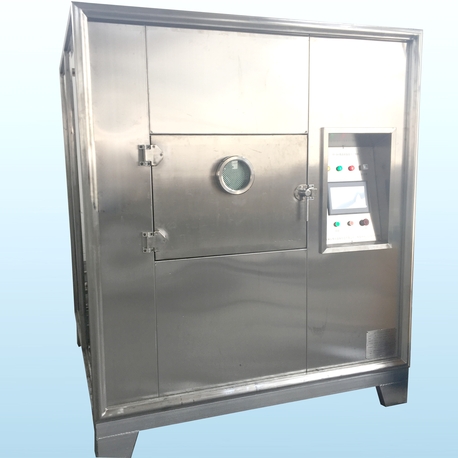
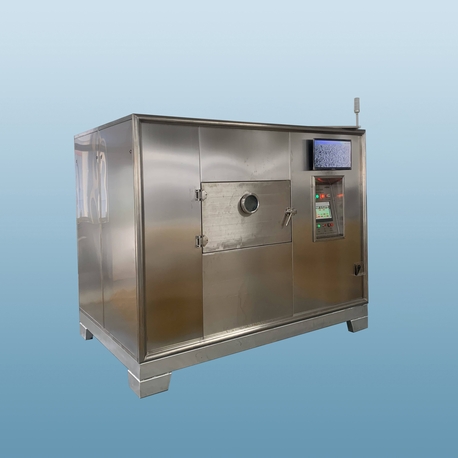
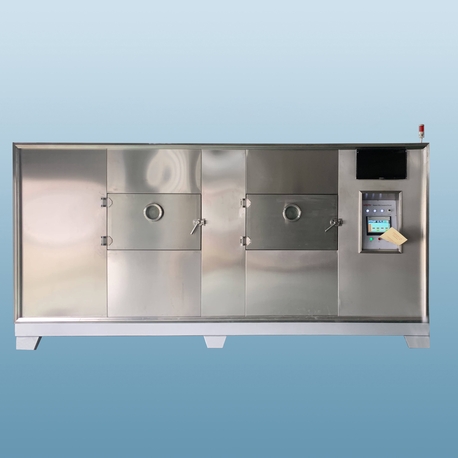
Timber processing margins run tight. Sawmills and furniture plants lose
thousands of dollars each month to lumber warping, surface checking, and
excessive electricity bills. Drying wet timber is no longer just a preliminary
processing step; it dictates your final product yield and your factory's bottom
line.
Industrial operations in 2026 face stricter emission thresholds, surging
power tariffs, and volatile raw material costs. Operating an obsolete drying
setup erodes your margins quickly. Selecting the right wood
dryer protects your capital and stabilizes your supply chain.
At Nasan, our engineering team designs thermal drying systems that balance
cycle speed with cellular integrity. If you plan to expand your plant capacity
or replace aging kilns this year, this technical guide outlines the exact
parameters you need to audit before issuing a purchase order.
Need immediate equipment sizing or a thermodynamic simulation for your
facility? Contact our engineering desk today for a detailed
system proposal.
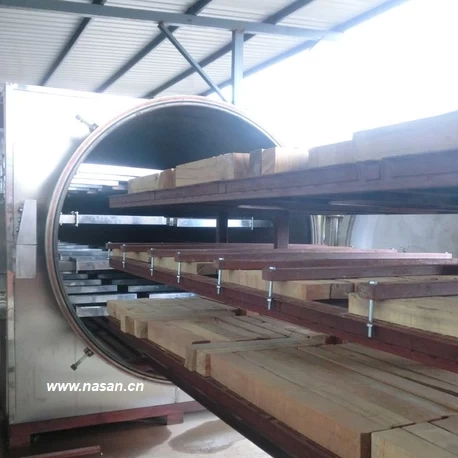
1. Understanding the Core: How Does a Modern Wood Dryer Work?
Wood is hygroscopic. It constantly absorbs or releases moisture until it
reaches equilibrium with the ambient air. A modern timber drying chamber
controls temperature, relative humidity, and airflow to pull moisture out
without fracturing the cell walls.
The Physics of Timber Drying: Free Water vs. Bound Water
Green timber holds moisture in two distinct forms: free water within the cell
cavities and bound water inside the cell walls. Removing free water down to the
Fiber Saturation Point (around 28% to 30% moisture content) requires thermal
energy but causes little structural shrinkage.
The real engineering challenge starts below the Fiber Saturation Point.
Evaporating bound water forces the wood fibers to shrink. According to research
from the USDA Forest Products Laboratory, unmonitored shrinkage rates
create internal tension gradients that snap raw boards from the inside out.
The Cost of Poor Drying: Checking, Warping, and Case Hardening
If the drying rate outpaces the internal moisture diffusion rate, defects
occur rapidly:
- End checking and surface cracking: The board exterior dries
and shrinks while the core remains saturated.
- Cupping and bowing: Uneven air velocity causes asymmetrical
moisture loss across opposite faces of the plank.
- Case hardening: The shell locks into place under tension;
the core later dries under compression, ruining timber for rip-sawing and
moulding.
Why Modern Wood Dryers are Pivotal to Carbon Neutrality in 2026
Industrial thermal drying accounts for up to 70% of total energy consumption
in primary wood manufacturing. As environmental mandates tighten globally under
FAO forestry manufacturing guidelines, venting untreated hot
air directly into the atmosphere is both financially wasteful and legally
non-compliant. Modern setups now prioritize closed-loop heat recovery to slash
operational carbon output.
2. Main Types of Industrial Wood Dryers: Comparative Analysis
Selecting the wrong kiln platform can double your operating costs overnight.
The table below compares the four primary drying platforms available on the
industrial market:
| Dryer Type | Drying Speed | Specific Energy Consumption | Best Wood Species | Initial CAPEX | Footprint |
|---|
| Conventional Steam Kiln | Moderate (10-25 days) | High (800-1200 kWh/m³ eq.) | Dense hardwoods, thick structural softwoods | Medium to High | Large |
| Heat Pump Dehumidification | Controlled (7-18 days) | Low (150-300 kWh/m³) | High-grade hardwoods, pine, mixed species | Moderate | Medium |
| High-Frequency Vacuum | Extremely Fast (1-3 days) | Moderate to High (per batch) | Valuable hardwoods, extra-thick timber slabs | High | Small |
| Biomass / Solar Hybrid | Slow to Moderate (15-30 days) | Extremely Low (grid dependent) | General construction lumber, softwoods | Low to Medium | Very Large |
Conventional Steam/Hot Water Kilns
Conventional kilns remain the standard for massive throughput operations.
They use boiler-driven steam or pressurized hot water running through finned
heat exchangers, combined with massive overhead reversible fans. They handle
bulk runs well, but continuous fuel combustion and thermal venting keep
efficiency ratings low.
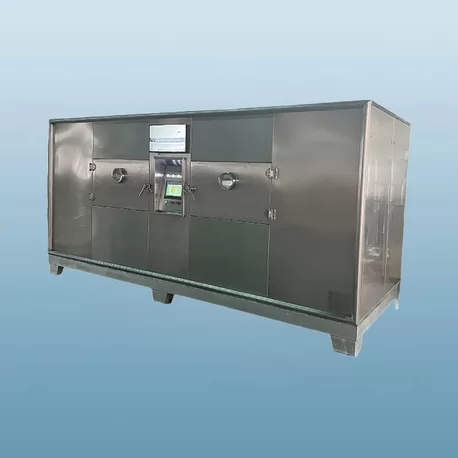
Heat Pump Dehumidification Wood Dryers
The heat pump wood dryer represents the most
energy-conscious choice for commercial plants in 2026. Instead of venting moist
air outside, the refrigeration cycle condenses water out of the air while
re-injecting the latent heat of vaporization back into the drying room. Power
consumption drops dramatically compared to standard direct-vent setups.
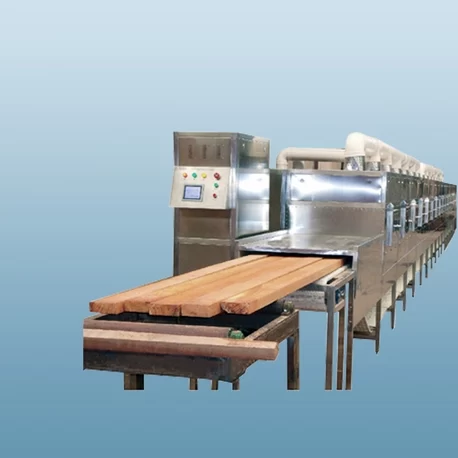
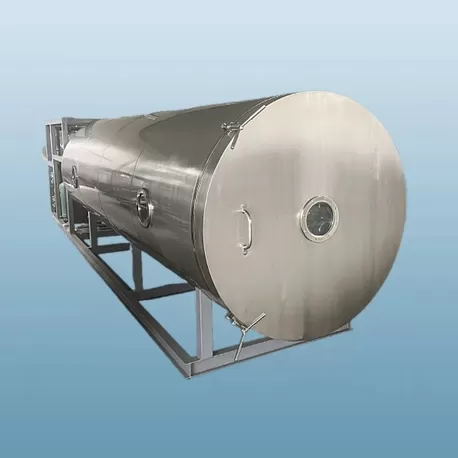
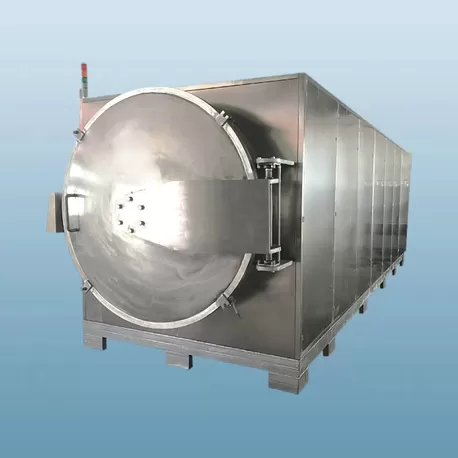
High-Frequency Vacuum Wood Dryers
A high-frequency vacuum wood dryer lowers the boiling point
of water by creating a negative pressure chamber. High-frequency electromagnetic
waves excite water molecules throughout the entire board simultaneously. This
setup dries 100mm thick oak slabs in days rather than months, making it ideal
for high-ticket furniture makers despite higher unit machinery costs.
Biomass & Solar Hybrid Wood Dryers
Facilities that generate vast piles of wood chips, sawdust, and edge
trimmings often opt for biomass-driven kilns. Supplemented by solar pre-heating
banks, these systems offer low fuel expenditures. However, they demand
continuous maintenance to keep burner systems clear of ash and slag.
3. Key Technical Factors to Consider Before Buying a Wood Dryer
Never buy an industrial wood drying kiln based strictly on
catalogue capacity. You must size equipment against your actual raw stock and
plant conditions.
Wood Species & Initial Moisture Content
Softwoods like radiata pine shed water rapidly and tolerate aggressive,
high-temperature drying schedules above 90°C. Refractory hardwoods like white
oak, walnut, or beech demand gentle, low-temperature schedules to prevent
honeycomb fracturing. Your drying chamber must deliver tight humidity modulation
across these divergent ranges.
Capacity Requirements: Batch Drying vs. Continuous Drying
Determine your throughput cadence. Batch kilns allow you to segregate
species, thicknesses, and initial moisture contents into separate runs.
Continuous counter-flow kilns suit industrial sawmills running identical
softwood cuts day and night on steady cycle lines.
Energy Efficiency & Power Consumption
Scrutinize the machine's metric performance: evaluate electricity and thermal
input per cubic meter of timber dried (kWh/m³). Modern plants require equipment
that preserves wood drying efficiency under peak load.
High-efficiency fans with variable frequency drives (VFDs) reduce parasitic
electrical draw during low-evaporation stages.
Chamber Material & Build Quality
Moisture inside a kiln contains volatile organic acids, such as acetic and
formic acids, released from the timber. Standard carbon steel rusts rapidly in
this environment. Insist on chambers built with anti-corrosion marine-grade
aluminum alloys or 304/316 stainless steel, backed by high-density polyurethane
insulation panels at least 100mm to 150mm thick.
4. The 2026 Tech Shift: Smart Features You Shouldn’t Ignore
Dryer design has moved beyond mechanical louvers and simple analog
thermostats. Modern timber drying machines rely on digital controls to eliminate
operator error.
Engineering teams, including technical specialists at Nasan, integrate sensor
arrays that safeguard raw timber batches. When evaluating a new
commercial wood dryer, confirm that the equipment includes the
following capabilities:
- AI-Powered PLC Control Systems: Automated controllers
adjust drying schedules on the fly based on internal air resistance, ambient
external temperature, and real-time core drying speeds.
- IoT Wireless Moisture Probes: Traditional hammer probes
require operators to drill into lumber stacks manually. Modern setups utilize
wireless transmitters embedded throughout the load, reading core and shell
moisture gradients continuously.
- Heat Recovery Systems (HRS): Air-to-air plate exchangers
recapture sensible heat from exhaust airstreams, preheating incoming dry air and
slashing burner runtime.
5. CAPEX vs. OPEX: Calculating the True ROI of Your Wood Dryer
A cheap kiln often turns into an expensive liability. Plant managers must
calculate Total Cost of Ownership (TCO) across a 10-year service window rather
than settling on low upfront purchase prices.
Initial Investment (CAPEX)
Your upfront capital covers the main dry kiln envelope, fan decks, heating
equipment, control cabinets, rail loading carts, and facility floor preparation.
Budget for local site civil engineering, such as reinforced concrete slabs
capable of handling multi-ton green timber packs.
Running Costs (OPEX)
Operational expenditure includes utility electricity, thermal energy supply,
periodic gasket replacements, lubrication, and labor. Heat pump platforms often
carry slightly higher initial costs than direct-vented gas kilns, but they
recover the difference within 12 to 24 months through monthly power bill
reductions.
Quality Yield Improvements
Every percentage point drop in scrap lumber directly boosts operational
margins. If a precision-controlled lumber drying equipment package cuts degraded boards from 8% down to 2%, the saved timber pays down the
capital expenditure ahead of schedule.
6. Common Pitfalls to Avoid When Sourcing from Global Manufacturers
Sourcing drying machinery internationally requires close technical oversight.
Avoid these operational missteps:
- Underestimating Local Power & Emission Regulations: Confirm that heating burner emissions meet local regional limits and that fan
motors match your industrial grid's voltage and hertz specifications.
- Overlooking After-Sales Support and Diagnostics: Kiln
down-time halts your downstream production line. Ensure the vendor offers remote
PLC diagnostics via cloud access, alongside stocked wear parts like fan belts,
actuator valves, and sensor probes.
- Failing to Account for Ambient Climate: A drying system
designed for tropical environments will suffer severe thermal wall losses in
sub-zero Scandinavian or Canadian winters. Verify insulation U-values against
your site's winter minimum temperatures.
7. Frequently Asked Questions (FAQ)
Q1: What is the ideal target moisture content for commercial
wood?
A1: For indoor furniture, flooring, and
architectural millwork, the global standard ranges between 6% and 8% moisture
content. For outdoor structural construction timber, 12% to 15% is typical to
match outdoor equilibrium conditions.
Q2: How long does a typical drying cycle take in a modern wood
dryer?
A2: Cycle duration depends on species, board
thickness, and dryer type. 25mm softwoods dry inside a conventional or heat pump
kiln in 40 to 70 hours. Dense 50mm hardwoods like oak require 14 to 28 days. A
high-frequency vacuum chamber can finish thick hardwoods in 48 to 96 hours.
Q3: Can I run different timber species inside the same drying
batch?
A3: We advise against it. Different species
have vastly different diffusion rates, initial moisture contents, and thermal
sensitivities. Mixing dense oak with pine in a single run leads to either
under-dried hardwoods or warped, over-dried softwoods.
Q4: Why should I choose a heat pump system over a direct-fired gas
kiln?
A4: Heat pump configurations recycle latent
heat, consuming 40% to 60% less energy than direct-fired systems. They avoid
fossil fuel emissions and supply the moderate, uniform heat necessary to prevent
surface cracking in valuable timbers.
Q5: How many moisture probes should I place in a standard kiln
load?
A5: For an industrial chamber holding 50 to
100 cubic meters of wood, install at least 6 to 12 monitoring points. Distribute
probes evenly between core and shell positions across hot, medium, and trailing
airflow zones to detect dry pockets.
8. Conclusion & Next Steps
There is no universally "perfect" drying chamber—only the equipment
engineered for your specific wood cut, factory volume, and thermal power setup.
Investing in high-efficiency timber drying machinery in 2026 demands a precise
calculation of thermal efficiency, digital sensor integration, and structural
longevity.
Nasan manufactures advanced drying chambers configured around your exact
production profile. Whether you run a high-output softwoods sawmill or craft
custom hardwood goods, our team can lower your scrap rates and curb power
consumption.
Request an Engineering Consultation & ROI Calculation
Upgrading your lumber operations? Contact the Nasan technical sales
department today. We will analyze your timber specifications, evaluate local
energy factors, and supply a comprehensive layout drawing with an operating cost
projection.
Direct Engineering Line: Contact us via our portal to
receive your plant evaluation within 24 business hours.