Industrial thermal processing requires a high degree of precision and
reliability. At the center of these operations is the hot air
generator, a system engineered to provide a consistent stream of
heated air for drying, curing, or dehumidifying materials. As global industries
transition toward more refined manufacturing standards, the engineering behind
these units has evolved from simple combustion chambers to complex thermal
management systems. Nasan provides a technical
perspective on how modern heating systems integrate with drying workflows to
ensure product integrity and operational stability.

Understanding the Thermodynamics of Industrial Heating
The primary function of a hot air
generator is to convert energy—be it from gas, oil, electricity, or
biomass—into a controlled airflow at a specific temperature. This process
involves three fundamental stages: combustion or energy conversion, heat
transfer, and air distribution. The efficiency of the system is often measured
by its ability to minimize heat loss through the exhaust and the external
casing.
In high-capacity industrial settings, heat exchangers are constructed using
high-grade stainless steel, such as SUS304 or SUS316L, to withstand thermal
expansion and prevent oxidation. These materials ensure that the air remains
free from contamination, which is a fundamental requirement in the food and
pharmaceutical sectors. The design of the combustion chamber must allow for
complete fuel atomization, ensuring that the maximum caloric value is extracted
from the fuel source.
Direct vs. Indirect Fired Systems
Choosing between direct and indirect heating is a decision based on the
sensitivity of the product being processed. Direct-fired units allow the
combustion gases to mix directly with the process air. This method offers nearly
100% thermal efficiency but is restricted to applications where combustion
by-products, such as CO2 or trace nitrogen oxides, do not affect the material.
Examples include brick drying or basic aggregate processing.
Indirect-fired units utilize a heat exchanger to separate the combustion
process from the air stream. The process air passes over a series of tubes or
plates heated by the internal furnace. This configuration is a prerequisite for
sensitive applications like milk powder production or chemical catalyst drying.
While there is a slight decrease in thermal efficiency compared to direct
firing, the purity of the air is guaranteed.
Technical Specifications and Component Optimization
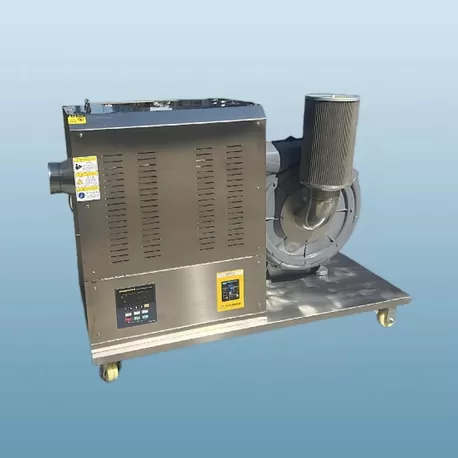
A robust industrial hot air
generator is composed of several high-performance sub-systems. Each
component must be synchronized to maintain a stable Delta T (the temperature
difference between the inlet and outlet air).
High-Efficiency Burners: Modern burners feature modulation
capabilities, allowing them to adjust the flame intensity based on the real-time
heat demand rather than simply cycling on and off.
Centrifugal Blowers: These fans provide the static pressure
needed to push heated air through ductwork and across the material bed.
Precision balancing of the impeller reduces vibration and extends the bearing
life.
Refractory Lining: High-temperature alumina bricks or
ceramic fiber blankets line the combustion chamber to protect the outer shell
and retain heat within the core.
Control Logic: PID (Proportional-Integral-Derivative)
controllers manage the fuel-to-air ratio, ensuring optimal combustion and
preventing overheating.
By focusing on these components, Nasan ensures that the drying
equipment operates within the tightest tolerances required by modern quality
control standards.
Addressing Industry Pain Points in Thermal Processing
Many manufacturing facilities struggle with inconsistent drying results,
often caused by temperature fluctuations or poor airflow distribution. These
inconsistencies lead to uneven moisture content, which can compromise the shelf
life of food products or the structural integrity of industrial ceramics.
Solving Non-Uniform Drying
Non-uniformity is frequently a result of laminar airflow where the center of
the air stream is significantly hotter than the edges. To combat this,
engineering teams implement turbulators within the heat exchanger and baffles in
the plenum chamber. These design elements induce turbulence, ensuring that the
air reaching the drying chamber has a uniform temperature profile. This is
particularly important when a hot air
generator is integrated into a multi-stage drying system.
Mitigating Thermal Stress
Frequent start-stop cycles can cause metal fatigue in the heat exchanger due
to rapid expansion and contraction. Advanced systems now incorporate a "soft
start" protocol and a controlled cooling phase. By gradually ramping the
temperature, the mechanical stress on the stainless steel components is
significantly reduced, extending the operational lifespan of the equipment
without requiring frequent overhauls.
Application Scenarios across Diversified Sectors
The versatility of forced-air heating allows it to be applied across a wide
range of material types, from bulk solids to thin films.
Food and Agriculture
In the dehydration of fruits, vegetables, and grains, the primary goal is to
remove moisture while preserving nutritional value and color. Low-temperature,
high-volume airflow is used to prevent the "case hardening" effect, where the
exterior of the product dries too quickly, trapping moisture inside.
Indirect-fired systems are the industry standard here to maintain strict
hygiene.
Chemical and Mineral Processing
For minerals and chemicals, the heat requirement is often much higher. A
heavy-duty hot air
generator can produce temperatures exceeding 400°C. These units
must be designed with specialized alloys to handle the corrosive nature of
certain chemical vapours that might be released during the drying process.
Textile and Paper Industries
In these sectors, the focus is on high-speed continuous drying. The heated
air is used to set dyes or remove water from paper pulp at rapid speeds. Here,
the precision of the blower system is as important as the burner, as a
consistent air velocity is needed to maintain the tension and quality of the web
material.
The Integration of Hybrid Technologies
As industry requirements become more sophisticated, the integration of
different drying modalities has become a focal point. Combining convective heat
with other forms of energy, such as electromagnetic radiation, can produce
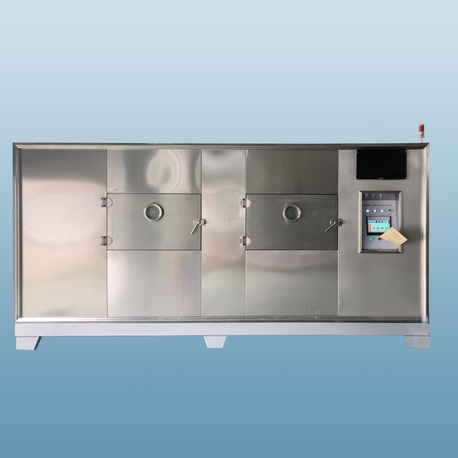
superior results. For example, the synergy between a standard heating unit and
microwave technology allows for both surface drying and internal moisture
migration simultaneously. This hybrid approach is a specialty of Nasan, providing a more
comprehensive solution for materials that are difficult to dry using
conventional methods alone.
Using a hot air
generator in conjunction with microwave energy reduces the overall
processing time. The hot air removes the surface moisture and maintains the
ambient temperature, while the microwave energy penetrates deep into the
material to drive internal water molecules to the surface. This dual-action
process prevents surface cracking and ensures a uniform moisture gradient
throughout the product.

Engineering for Maintenance and Longevity
To ensure long-term reliability, the design of thermal equipment must
prioritize accessibility. Industrial operators require systems where burners and
filters can be serviced without dismantling the entire ducting network.
Inspection ports, pressure gauges, and temperature sensors should be placed at
strategic points to allow for real-time monitoring and preventative
maintenance.
Air filtration is another vital factor. In environments with high dust
concentrations, the intake air must be filtered to prevent particulate matter
from entering the combustion chamber or the heat exchanger. This not only
protects the product but also prevents the buildup of carbon deposits on the
heating surfaces, which would otherwise act as an insulator and reduce
efficiency.
Conclusion: Selecting the Right Thermal Solution
The selection of a hot air
generator is a fundamental decision that impacts the efficiency,
quality, and reliability of an entire production line. By understanding the
nuances of heat exchange, air dynamics, and material science, manufacturers can
implement systems that provide consistent performance even under demanding
conditions. Whether the application requires the purity of indirect heating or
the high-output capacity of direct-fired units, the focus must remain on
precision engineering and robust construction.
For organizations seeking to optimize their drying processes or explore the
benefits of combined thermal technologies, professional consultation is the next
step. High-performance heating systems are not merely components; they are the
heart of the manufacturing process.
Frequently Asked Questions
Q1: What is the main difference between a direct-fired and an
indirect-fired system?
A1: A direct-fired system mixes combustion gases directly with the process
air, offering higher efficiency for non-sensitive materials. An indirect-fired
system uses a heat exchanger to keep combustion by-products separate from the
process air, ensuring a clean, contaminant-free air stream suitable for food and
pharmaceuticals.
Q2: How do I determine the required heating capacity for my
application?
A2: Capacity is calculated based on the initial and final moisture content of
the material, the mass flow rate of the product, the specific heat capacity of
the material, and the desired drying time. It is expressed in kilocalories
(kcal) or kilowatts (kW).
Q3: Which fuel types are most efficient for industrial air
heating?
A3: Natural gas and LPG are popular due to their clean-burning
characteristics and ease of control. However, in regions with specific resource
availability, diesel or biomass can also be used effectively, provided the
burner system is correctly configured for the specific fuel's viscosity and
caloric value.
Q4: What maintenance is required to keep a heating unit running at
peak efficiency?
A4: Regular maintenance includes cleaning the burner nozzles, inspecting the
refractory lining for cracks, checking the heat exchanger for soot buildup or
corrosion, and ensuring that air filters are clean to maintain proper airflow
volumes.
Q5: Can a hot air system be integrated with existing PLC
systems?
A5: Yes, modern units are designed for seamless integration with plant-wide
control systems. They utilize standard protocols like Modbus or Profibus to
communicate temperature, pressure, and status data to a central SCADA system for
remote monitoring and automation.
Inquire Now for Expert Thermal Solutions
Looking to improve your industrial drying efficiency? Contact our engineering
team today to discuss a custom-engineered solution tailored to your specific
material requirements and production goals. We provide technical consultation
and high-performance equipment to help you achieve consistent, high-quality
results.