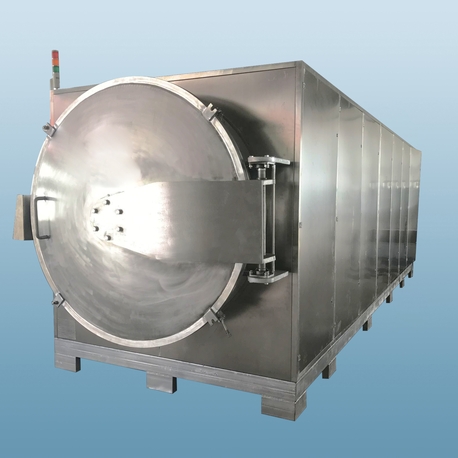
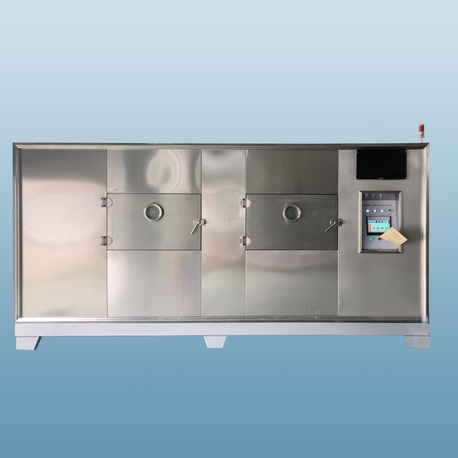
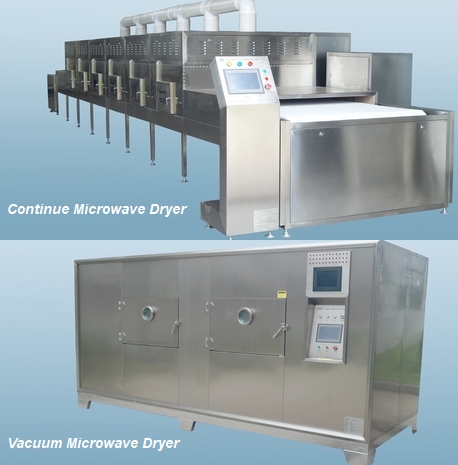
In the realm of industrial thermal processing, the vacuum dryer represents a critical
convergence of thermodynamics, mechanical design, and process control. For
applications ranging from pharmaceutical intermediates to high-performance
polymers and sensitive food ingredients, the selection of drying technology
directly dictates product purity, yield, and energy efficiency. Unlike
conventional convective drying, which relies on high-temperature airflows, a
vacuum dryer operates under reduced pressure,
fundamentally altering the vaporization dynamics of solvents and moisture. This
article provides a technical deep-dive into the engineering principles,
application-specific configurations, and operational strategies that define
modern vacuum drying, drawing on industry-proven methodologies from specialists
like Nasan.

1. Core Principles: Why Vacuum Alters Drying Kinetics
The operational superiority of a vacuum dryer is rooted in the relationship
between pressure and boiling point. By reducing the chamber pressure, the
boiling point of the liquid phase (water or organic solvent) decreases
significantly. This allows for rapid evaporation at low temperatures—a critical
factor for thermo-labile compounds. From a mass transfer perspective, the
pressure gradient between the interior of the solid matrix and the surrounding
vapor space is maximized, accelerating diffusion-limited drying phases. This is
not merely a matter of speed; it is about precision. Modern systems
incorporate:
Multi-stage pressure control: Programmable ramping to
prevent case hardening.
Condenser integration: Closed-loop solvent recovery that
meets environmental emission standards.
Heat transfer optimization: Using conduction via heated
shelves or agitated media to ensure uniform energy distribution without thermal
degradation.
For engineers evaluating capital equipment, the distinction lies in the heat
transfer mechanism. A vacuum dryer configured for conductive heating (such
as a paddle or rotary design) offers superior thermal efficiency compared to
convective vacuum ovens, particularly when dealing with high-viscosity pastes or
crystalline solids.
2. Technical Classifications: Matching Dryer Architecture to Material
Properties
Selecting the correct configuration requires an analysis of the material’s
rheology, solvent characteristics, and final particle size distribution. Below
is a technical breakdown of dominant industrial categories.
2.1 Agitated Nutsche Filter Dryers (ANFD)
Common in pharmaceutical API manufacturing, ANFDs combine filtration and
drying in a single vessel. The vacuum dryer functionality here relies on a heated
jacket and a slowly rotating agitator that plows the product bed. This design
minimizes residence time variance and is ideal for hazardous materials where
containment is paramount. Key engineering considerations include:
Agitator tip speed control to prevent crystal breakage.
Bottom discharge valves that maintain containment integrity under full
vacuum.
Inert gas purging (nitrogen) to prevent oxidation or dust
explosions.
2.2 Rotary Vacuum Paddle Dryers (RVPD)
For high-capacity continuous or batch processing of slurries and wet cakes,
the rotary paddle dryer offers robust performance. The vessel’s slow rotation
and heated paddles provide a high heat transfer coefficient (typically 50–120
W/m²·K). These systems are prevalent in specialty chemical and polymer drying,
where residual solvent levels must be reduced to parts-per-million (ppm) ranges.
The combination of mechanical agitation and vacuum exposure ensures that even
materials with high viscosity are constantly renewed at the heat transfer
surface.
When dealing with heat-sensitive granules or fragile materials that cannot
withstand mechanical agitation, shelf dryers remain the standard. These units
prioritize gentle processing. The vacuum dryer in this configuration uses heated
shelves where product trays rest. While batch times are longer, the advantage
lies in simplicity of cleaning (cross-contamination prevention) and the ability
to dry multiple distinct batches simultaneously. Modern iterations feature
programmable logic controllers (PLC) that manage vacuum break cycles to enhance
moisture migration.
3. Application Deep-Dive: Industry-Specific Solutions
The versatility of vacuum drying technology is best illustrated through
specific industrial scenarios. Each application imposes distinct constraints on
equipment design, materials of construction, and validation protocols.
Pharmaceuticals: Solvent Recovery and cGMP Compliance
In active pharmaceutical ingredient (API) manufacturing, the vacuum dryer
must satisfy current Good Manufacturing Practices (cGMP). This entails sanitary
welds, electro-polished stainless steel (316L) surfaces, and validated
cleaning-in-place (CIP) systems. A key challenge is drying high-potency
compounds where operator exposure must be zero. Here, Nasan integrates
high-containment barrier systems with their vacuum dryer lines,
ensuring that both solvent recovery and personnel safety are maintained. The use
of nitrogen blanketing further prevents degradation of oxygen-sensitive
molecules.
Lithium-Ion Battery Materials: Moisture Sensitivity
Electrode materials such as lithium cobalt oxide or nickel manganese cobalt
(NMC) require residual moisture levels below 500 ppm. Any excess moisture leads
to electrolyte decomposition and capacity fade. Vacuum dryers used in this
sector incorporate high-temperature thermal fluids (up to 220°C) and multi-stage
vacuum systems that achieve absolute pressures below 10 mbar. The challenge is
to achieve uniform drying without agglomerating nano-sized particles. Agitated
designs with specialized chopper blades are employed to maintain powder
flowability.
Food & Nutraceuticals: Preserving Bioactivity
For probiotics, enzymes, and botanical extracts, thermal degradation is the
primary risk. A low-temperature vacuum dryer allows dehydration at 30–50°C,
preserving cell viability and phytochemical profiles. The challenge is
maintaining homogeneity in products with high sugar content, which becomes
sticky during drying. Paddle designs with intermittent scraping cycles prevent
build-up, while automated vacuum control prevents foaming during initial
evaporation phases.
4. Engineering Metrics: Quantifying Performance
Moving beyond qualitative descriptions, we evaluate vacuum dryer performance
through specific engineering metrics that impact total cost of ownership
(TCO).
Heat Transfer Coefficient (U-value): In conductive dryers,
U-values range from 40 W/m²·K (for viscous pastes) to over 150 W/m²·K (for
free-flowing solids). Lower values indicate inefficient energy transfer,
increasing batch cycle times.
Residual Solvent Analysis: Using headspace gas
chromatography (HS-GC), modern systems consistently achieve residual levels
below 0.1% for Class 3 solvents, and <50 ppm for Class 1 and 2 solvents,
crucial for toxicological safety.
Specific Energy Consumption (SEC): Expressed as kWh per kg
of solvent removed. Advanced vacuum dryers with variable frequency drives (VFD)
on agitators and vacuum pumps reduce SEC by 20-30% compared to fixed-speed
counterparts.
5. Process Optimization: Addressing Industry Pain Points
Despite the robust design, industrial drying processes encounter recurring
challenges. Expert implementation focuses on mitigating these through control
architecture and predictive maintenance.
Challenge 1: Non-Uniform Moisture Content
Solution: This often stems from poor material movement or
uneven heat transfer. Implementing process analytical technology
(PAT) such as near-infrared (NIR) probes allows real-time monitoring of
moisture gradients. When integrated with PLC logic, the agitator speed or vacuum
level can be modulated mid-cycle to equalize drying. Additionally, ensuring the
vacuum dryer is equipped with a high-torque, variable-speed
drive prevents dead zones in the product bed.
Challenge 2: Solvent Carryover and Environmental Compliance
Solution: Regulatory pressure on volatile organic compound
(VOC) emissions demands closed-loop systems. Instead of venting solvent-laden
vapor, modern dryers incorporate deep-chilled condensers (-20°C to -40°C) that
recover >99.5% of solvents. This not only reduces environmental impact but
also transforms a disposal cost into a recovered asset. Nasan designs these
integrated recovery systems to align with EPA and EU solvent emission
directives.
Challenge 3: Thermal Degradation of Heat-Sensitive Materials
Solution: The fundamental advantage of vacuum processing is
low-temperature operation. However, extended residence time at elevated
temperature can still cause degradation. Advanced systems utilize pulsed
vacuum technology—alternating between vacuum and inert gas pressure to
induce micro-expansion of the material, releasing internal moisture without
prolonged thermal exposure. This technique reduces overall drying time by up to
40% while maintaining product potency.
6. Lifecycle Considerations: Material Selection and Maintenance
The longevity of a vacuum dryer is intrinsically tied to material
compatibility. For chloride-containing processes or acidic intermediates,
Hastelloy C-22 or titanium construction may be specified over standard 316L
stainless steel to prevent pitting corrosion and stress corrosion cracking. From
a maintenance standpoint, mechanical seals on agitator shafts are the highest
wear component. Dual mechanical seals with barrier fluid reservoirs and leak
detection sensors are now standard in continuous pharmaceutical and chemical
operations to prevent product contamination and ensure operator safety.
7. Economic Analysis: ROI of Advanced Vacuum Drying
While the capital expenditure for a high-specification vacuum dryer is
significant, the return on investment is realized through multiple channels.
First, reduced drying cycles increase batch throughput, effectively
debottlenecking production. Second, superior solvent recovery yields direct
financial returns, particularly with high-cost solvents like acetone or ethanol.
Third, improved product quality—specifically consistent particle size and
purity—reduces rejection rates and enhances final product value. For
manufacturers processing high-value goods, the payback period often falls within
12 to 24 months.
Frequently Asked Questions (FAQ)
Q1: What is the maximum achievable vacuum level in an
industrial vacuum dryer, and how does it affect drying time?
A1: Industrial vacuum dryers typically operate between 1 mbar and 100 mbar
absolute pressure, depending on the vacuum pump configuration (oil-sealed rotary
vane, dry screw, or steam ejector systems). Lower absolute pressure reduces the
boiling point of the solvent, accelerating evaporation. However, overly
aggressive vacuum can lead to "foaming" in liquid-rich pastes. The optimal
pressure profile often involves a staged approach—starting at 50–100 mbar to
remove bulk solvent, then stepping down to 5–10 mbar to achieve final ppm-level
dryness. This balance minimizes total cycle time while preventing product
defects.
Q2: How does a vacuum dryer compare to freeze drying
(lyophilization) for pharmaceutical products?
A2: While both operate under vacuum, the mechanisms differ fundamentally. A
vacuum dryer (particularly agitated or shelf types) uses conductive or radiant
heat to drive off solvent from a material that already has some structural
integrity. Lyophilization involves freezing the product first, then sublimating
ice directly to vapor under high vacuum, preserving a porous structure. For APIs
that are crystalline and stable at moderate temperatures (40–80°C), a vacuum
dryer is faster and more energy-efficient. For highly heat-sensitive biologics
or injectable powders that require a fluffy, fast-dissolving matrix,
lyophilization is preferred. Selection depends on the final product’s critical
quality attributes.
Q3: What safety certifications should I look for when
procuring a vacuum dryer for flammable solvents?
A3: For flammable solvents (e.g., ethanol, methanol, acetone), the equipment
must comply with ATEX (Europe) or NEC/NEMA (North America) classifications.
Critical features include: (1) Anti-static agitator seals and grounding to
prevent electrostatic discharge; (2) Inert gas (nitrogen) purging to maintain
oxygen concentration below the limiting oxygen concentration (LOC); (3) Bursting
discs or pressure relief valves sized for deflagration venting; (4) Temperature
sensors interlocked with the heating system to prevent runaway exothermic
reactions. Reputable manufacturers like Nasan provide full documentation for zone
classification compliance.
Q4: How can I validate cleaning effectiveness in a vacuum
dryer used for multi-product campaigns?
A4: Cleaning validation for multi-product use relies on a combination of
design-for-cleanliness and analytical verification. The vacuum dryer should
feature spray balls or CIP nozzles capable of reaching all internal surfaces,
including the agitator shaft and baffles. Rinse water samples are tested for
total organic carbon (TOC) and specific active residues using High-Performance
Liquid Chromatography (HPLC). Visual inspection via borescopes through dedicated
ports ensures no residue remains in crevices. For high-containment applications,
swab sampling of worst-case locations (e.g., shaft seals, discharge valve seats)
is mandatory. Documentation of cleaning protocols is essential for FDA/EMA
audits.
Q5: What are the signs that my vacuum dryer’s mechanical
seal is failing, and what is the typical replacement interval?
A5: Mechanical seal degradation typically manifests as: (1) A gradual
inability to reach target vacuum pressure; (2) Visible leakage of product or
barrier fluid around the shaft; (3) Unusual noise or vibration from the seal
housing. For continuously operated dryers, seal life is generally 3–5 years
under normal conditions. However, abrasive materials (e.g., crystalline APIs)
can reduce this to 18–24 months. Proactive maintenance includes monitoring the
barrier fluid reservoir for contamination and using vibration analysis to detect
early wear. Replacing seals during scheduled plant shutdowns prevents unplanned
downtime, which can cost significantly more than the seal component
itself.
In conclusion, the selection and operation of a vacuum dryer is a
sophisticated engineering decision that directly impacts product quality,
operational safety, and economic return. By focusing on heat transfer
efficiency, material compatibility, and process control architecture,
manufacturers can achieve superior drying outcomes. For specialized applications
requiring tailored solutions, engaging with an experienced partner like
Nasan ensures that the
equipment is not just a component, but a strategic asset in the production
line.