In the evolving field of industrial thermal management, the transition from
conventional conductive or convective methods to volumetric energy transfer
represents a significant shift in process engineering. Unlike traditional
methods that rely on external heat gradients to penetrate the surface of a
material, microwave
heating operates through direct interaction with the molecular
structure of the processed substance. This mechanism provides a level of speed
and uniformity that was previously unattainable in large-scale manufacturing
environments.
For industries ranging from pharmaceutical production to chemical synthesis,
understanding the electromagnetic interactions at play is necessary for
optimizing throughput and maintaining product integrity. Nasan has remained at the
forefront of this technology, refining the delivery of electromagnetic energy to
meet the rigorous demands of global industrial standards.

The Physics of Dielectric Interaction
At the heart of this technology lies the principle of dielectric loss. When a
material is subjected to a high-frequency electromagnetic field, typically at
2450 MHz or 915 MHz, the polar molecules within the material—most commonly
water—attempt to align themselves with the rapidly oscillating electric field.
This phenomenon, known as dipolar rotation, occurs billions of times per second,
resulting in internal friction and the subsequent generation of heat throughout
the volume of the material.
The efficiency of this process is governed by the complex relative
permittivity of the material, expressed as ε = ε' - jε''. The real part (ε')
represents the dielectric constant or the ability of the material to store
electrical energy, while the imaginary part (ε'') represents the dielectric loss
factor, which quantifies the conversion of that energy into heat. Understanding
these parameters is a requirement for engineers when designing systems for
specific materials, as the penetration depth of the radiation decreases as the
loss factor increases.
Key Factors Influencing Energy Absorption:
Moisture Content: Since water possesses a high dielectric
constant, high-moisture materials absorb energy more readily.
Ion Concentration: Ionic conduction contributes to heating
as dissolved ions migrate in response to the oscillating field.
Frequency Selection: Choosing between 2450 MHz (standard)
and 915 MHz (greater penetration) depends on the physical dimensions of the
load.
Temperature Dependency: Dielectric properties often change
as the material warms, which can lead to thermal runaway if not properly
managed.
Overcoming Industrial Drying Challenges
One of the primary hurdles in conventional drying—such as hot air or tray
drying—is the formation of a "dry skin" or case hardening on the product
surface. This layer acts as a thermal insulator and a physical barrier to
moisture migration, significantly slowing down the process. microwave heating solves this by creating a positive internal pressure gradient. Heat is generated
from within, forcing moisture toward the surface where it can be removed
efficiently.
In the production of high-value chemicals and sensitive botanical extracts,
maintaining low thermal stress is a major priority. Conventional methods often
degrade bio-active compounds due to prolonged exposure to high temperatures. By
utilizing electromagnetic energy, the processing time is reduced by up to 80%,
preserving the structural and chemical integrity of the material. Nasan engineers specialized
systems that monitor these variables in real-time, ensuring that the energy flux
remains within safe operating limits for delicate substrates.
Integration of Vacuum Technology for Heat-Sensitive Loads
The synergy between vacuum environments and electromagnetic energy represents
the pinnacle of modern drying technology. By reducing the ambient pressure, the
boiling point of water and solvents is lowered significantly. This allows for
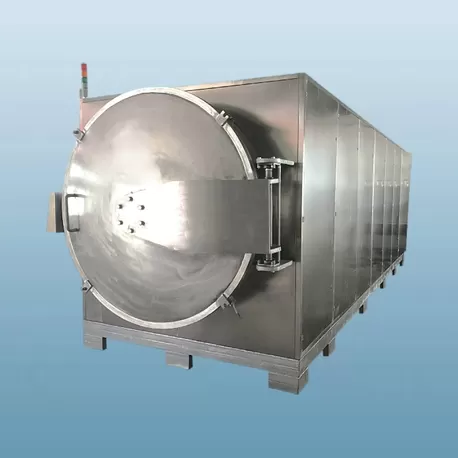
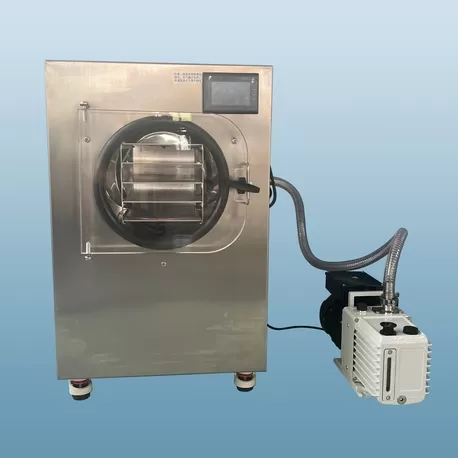
rapid evaporation at temperatures as low as 30°C to 40°C. When microwave heating is applied under vacuum, the energy is targeted directly at the liquid phase,
facilitating phase change without overheating the solid matrix.
This hybrid approach is particularly valuable in the pharmaceutical industry
for drying APIs (Active Pharmaceutical Ingredients) that are thermolabile. The
absence of oxygen in the vacuum chamber also prevents oxidation, ensuring the
purity and shelf-life of the final product. The mechanical design of such
systems requires robust engineering to prevent arcing—a phenomenon where the
rarefied gas in a vacuum becomes conductive, leading to electrical discharge.
High-precision waveguide design and specialized insulation are required to
mitigate these risks.
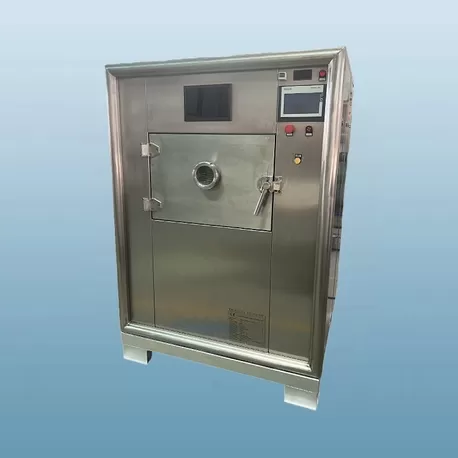
An industrial-grade thermal system is far more complex than a scaled-up
consumer unit. It requires a sophisticated architecture to ensure safety,
reliability, and process repeatability. Nasan focuses on the high-end
integration of these components to provide a seamless industrial experience.
The Magnetron and Power Supply
The magnetron is the vacuum tube responsible for generating the
electromagnetic waves. In B2B applications, these are often water-cooled for
continuous operation. Switched-mode power supplies (SMPS) are increasingly
preferred over traditional transformers because they allow for precise power
modulation, which is vital for maintaining a constant temperature profile in
sensitive materials.
Waveguides and Applicators
Waveguides are rectangular or circular metal tubes that transport the energy
from the generator to the heating chamber. The design of the applicator (the
chamber where the material is processed) is the most difficult aspect of the
engineering process. It must be designed as a resonant cavity that promotes a
uniform field distribution, often using "mode stirrers" or rotating turntables
to eliminate cold spots.
Control Systems and Sensors
Modern industrial systems utilize PLC (Programmable Logic Controller)
integration to manage the feedback loop. Infrared pyrometers and fiber-optic
temperature sensors are used instead of traditional thermocouples because they
are immune to electromagnetic interference, providing accurate data from inside
the high-energy field.
Application Specifics Across Diverse Industries
The versatility of microwave heating extends into numerous specialized sectors:
Food Processing: Beyond simple drying, it is used for
tempering frozen blocks of meat or butter, reducing the time from days to
minutes while preventing microbial growth.
Advanced Ceramics: Sintering ceramic materials via
electromagnetic energy reduces grain growth, resulting in stronger and more
uniform mechanical properties.
Polymer Vulcanization: In the rubber industry, it provides
uniform cross-linking in thick profiles that would otherwise suffer from uneven
curing in steam tunnels.
Waste Management: Sterilization of medical waste and the
drying of industrial sludge are increasingly handled by microwave systems due to
their energy efficiency and volume reduction capabilities.
Safety and Operational Standards
Operating high-power electromagnetic equipment necessitates strict adherence
to safety protocols. Leakage must be monitored to ensure it remains well below
the regulatory limit of 5 mW/cm² at a distance of 5 cm from the machine surface.
Redundant safety interlocks on all access doors and high-speed arc detection
sensors are standard features in reputable industrial designs. Furthermore, the
longevity of the magnetron depends on proper impedance matching; if too much
energy is reflected back to the source (High VSWR), it can cause premature
component failure.
Through rigorous testing and robust mechanical construction, Nasan ensures that every system
meets these high safety and performance benchmarks, providing a reliable
solution for heavy-duty industrial cycles.
Technical Comparison: Conventional vs. Microwave Systems
When evaluating the transition to microwave
heating, it is helpful to look at the mechanical differences in
energy delivery:
| Feature | Conventional (Hot Air) | Microwave Systems |
|---|
| Heat Transfer | Surface to Core (Slow) | Volumetric / Core to Surface (Fast) |
| Moisture Gradient | High (leads to cracking) | Uniform (outward flow) |
| Process Control | High Thermal Inertia | Instantaneous Start/Stop |
| Space Requirement | Large footprint (Long tunnels) | Compact and Modular |
| Product Quality | Risk of overheating surface | Preserves heat-sensitive traits |
Addressing Potential Implementation Issues
While the benefits are significant, successful implementation requires
addressing specific technical hurdles. The most common issue is "thermal
runaway," where a material's loss factor increases with temperature, causing it
to absorb more energy and heat up even faster. This can lead to localized
charring. Advanced pulse-width modulation (PWM) and multi-point sensing are used
to counteract this effect. Additionally, the heterogeneity of the load must be
considered; if a batch has varying moisture levels, the drier parts may heat
differently than the wet parts, requiring sophisticated agitation or air-flow
integration to equalize the results.
Future Perspectives in Electromagnetic Processing
The industry is currently moving toward solid-state microwave generators.
Unlike traditional magnetrons, solid-state sources offer extreme precision in
frequency and phase control. This allows for "beam steering," where the energy
can be focused on specific areas of a drying bed based on real-time moisture
maps. While this technology is still maturing for high-power industrial use, it
represents the next step in the evolution of thermal processing.
The integration of AI-driven moisture profiling also allows for autonomous
adjustments during the drying cycle. By analyzing the reflected power and the
rate of moisture loss, the system can self-correct to maintain optimal
efficiency throughout the batch or continuous process. This level of
sophistication is becoming a hallmark of top-tier manufacturing facilities.
Summary
The adoption of microwave heating is not merely an upgrade in hardware; it is a fundamental improvement in the
physics of production. By leveraging volumetric energy transfer, manufacturers
can achieve superior product quality, reduced footprints, and a level of process
agility that traditional methods cannot match. As global demand for high-purity
and heat-sensitive products increases, the role of electromagnetic thermal
processing will only continue to grow.
Frequently Asked Questions (FAQ)
Q1: How does penetration depth affect the scaling of industrial
microwave systems?
A1: Penetration depth determines the maximum thickness of the material that
can be heated uniformly. If the product is too thick, the center may not receive
sufficient energy, leading to uneven processing. This is why 915 MHz systems are
often preferred for very large bulk loads, as they offer deeper penetration
compared to the standard 2450 MHz frequency.
Q2: Can all materials be processed using microwave
energy?
A2: No. Materials are categorized as transparent (insulators), reflective
(metals), or absorptive (dielectrics). Only absorptive materials, or those with
a sufficient dielectric loss factor, can be heated directly. However,
"susceptor" materials can sometimes be used to transfer heat to non-absorptive
substances.
Q3: Is the radiation from these industrial machines harmful to the
product?
A3: Microwave radiation is non-ionizing, meaning it does not have enough
energy to break molecular bonds or cause chemical changes in the way that X-rays
or Gamma rays do. It purely facilitates thermal agitation. For food and
pharmaceuticals, this is a safe and well-regulated method of processing.
Q4: How do you prevent arcing when using microwaves in a
vacuum?
A4: Arcing occurs when the electric field strength exceeds the breakdown
voltage of the air/gas in the chamber. In a vacuum, this threshold is lower.
Prevention involves careful chamber geometry, avoiding sharp metallic edges, and
using specialized impedance matching to keep the electric field uniform and
controlled.
Q5: What maintenance is required for a large-scale microwave
generator?
A5: The primary maintenance involves monitoring the health of the magnetron,
ensuring the cooling system (water or air) is functioning correctly, and
checking the integrity of the waveguide seals. Regularly cleaning the applicator
chamber to prevent the buildup of residues that could catch fire is also a
necessary protocol.
Are you looking to optimize your industrial drying process with
advanced thermal technology? Contact our technical team today to
discuss your specific material requirements and discover how our specialized
engineering solutions can improve your production efficiency. Inquiry Now