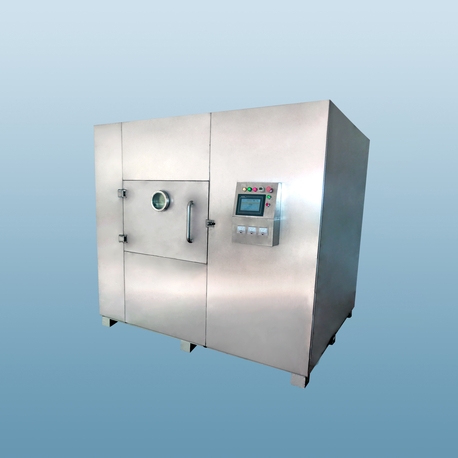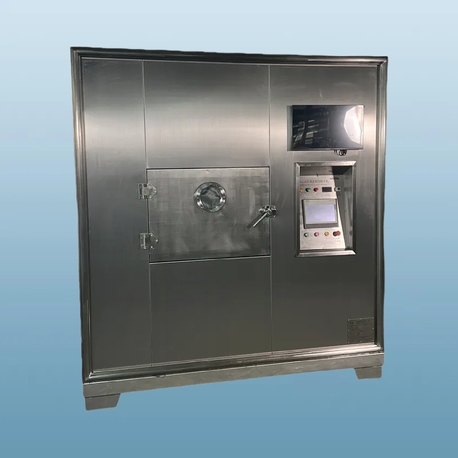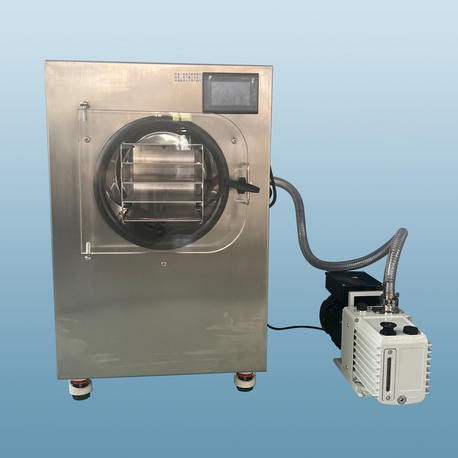
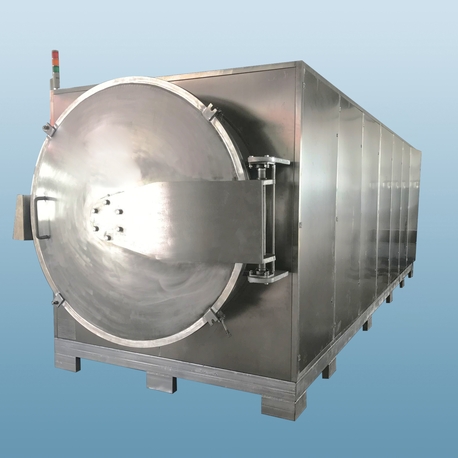
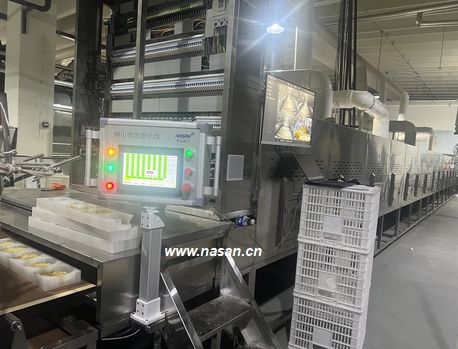
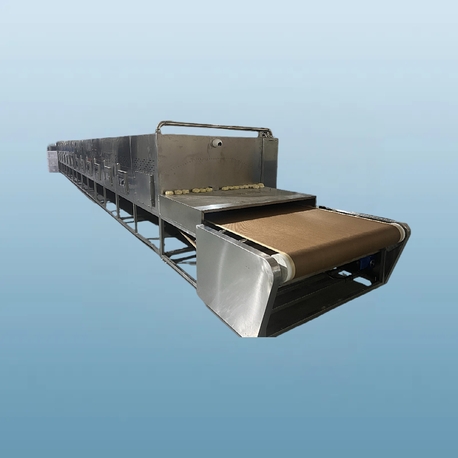
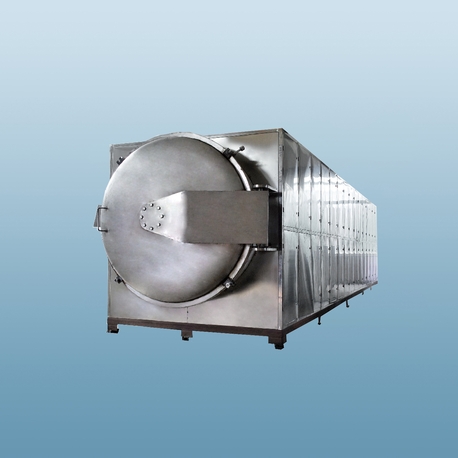
For thermal processing under reduced pressure—whether drying heat-sensitive pharmaceutical intermediates, curing epoxy resins, or degassing electronic components—the choice of a vacuum oven manufacturer directly affects product quality consistency and production throughput. Unlike conventional convection ovens, a vacuum oven operates between 10 mbar and 1013 mbar absolute pressure, enabling moisture and solvent evaporation at substantially lower temperatures. Over two decades, Nasan has engineered vacuum drying systems that solve two common industrial failures: uneven heat distribution across shelves and vacuum decay caused by substandard sealing. This article provides a technical framework for procurement teams, plant engineers, and R&D managers to evaluate vacuum oven suppliers based on measurable performance data rather than marketing claims.
When comparing quotes from different vacuum oven manufacturer candidates, three technical parameters require direct verification rather than brochure statements:
Temperature uniformity at setpoint: Class A units maintain ±2°C across all shelves at 150°C and 50 mbar. Inferior designs show ±5–8°C gradients, causing partial drying or material degradation. Request thermal mapping reports from independent third-party sensors.
Vacuum leak rate: Acceptable industrial standard is ≤0.005 mbar·L·sec⁻¹ after reaching 1 mbar. High-quality vacuum oven manufacturer designs incorporate KF flange fittings and electropolished chamber interiors to minimize virtual leaks. Field data shows leak rates above 0.02 mbar·L·sec⁻¹ double cycle times due to continuous pumping compensation.
Heat-up ramp rate under vacuum: Measured in °C/min from ambient to 180°C at 10 mbar. Superior designs with direct shelf heating (integrated silicone heaters or fluid-circulated shelves) achieve 3.5–4.5°C/min; convective wall-heated ovens manage only 1.2–1.8°C/min.
Reputable manufacturers provide guaranteed values for these metrics in the technical datasheet, backed by factory acceptance testing protocols. Nasan vacuum ovens include a four-point temperature mapping certificate for each shelf level as standard documentation.
Selecting a vacuum oven manufacturer begins with categorizing the application domain, as each imposes unique construction and control needs:
Active pharmaceutical ingredients (APIs) – must avoid oxidation. Vacuum ovens with inert gas purging (N₂, Ar) maintain headspace oxygen below 50 ppm.
Sterile filling components – require electropolished 316L stainless steel chambers (Ra < 0.4 µm) and validated cleaning protocols. Some vacuum oven manufacturer units integrate HEPA-filtered venting to prevent particulate ingress.
Baking of moisture-sensitive devices (MSD) – J-STD-033 standard requires vacuum baking at 125°C, 5 mbar for 8 hours to reduce moisture content below 0.03%. Ovens must achieve rapid pump-down (<15 minutes to 1 mbar).
Epoxy and underfill curing – ramping profiles with programmable dwell steps (e.g., 80°C for 2h, then 150°C for 1h) demand multi-segment controllers and data logging.
Degassing of hydraulic system parts – residual solvent removal down to <0.01% by weight. High-performance vacuum ovens include cold traps to recover expensive solvents.
Composite prepreg drying – temperature uniformity critical to avoid premature resin advancement. Manufacturers such as Nasan supply vacuum ovens with nitrogen flow control to prevent oxidation of carbon fiber precursors.
From post-installation audits across 90+ industrial vacuum oven users, three recurring operational issues appear regardless of price tier:
Uneven drying between center and edge shelves: Caused by poor radiative heat transfer in low-pressure environments. The solution is independent heating zones per shelf (typically 3–5 zones). Leading vacuum oven manufacturer designs incorporate PID-controlled heating mats individually connected to a master PLC, enabling dynamic adjustment.
Condensation inside the vacuum line: When volatile solvents (ethanol, acetone, water) are drawn out, they condense in the cold pump oil, increasing backpressure. A properly sized cold trap (−40°C to −80°C) between chamber and pump eliminates this. Nasan vacuum ovens include optional PTFE-coated cold traps with automatic drain cycling.
Door seal degradation after high-temperature cycles: Standard Viton® seals operate to 200°C but harden after 500 cycles. For frequent high-temperature operation, specify all-metal C-seals (copper or aluminum) or silicone seals with water-cooled door flanges – solutions that only specialized manufacturers provide.
By quantifying these pain points, a buyer can write an RFQ that demands specific countermeasures, avoiding generic “high-quality construction” claims.
For regulated industries (FDA, GMP, IATF 16949), a vacuum oven must provide full traceability of each batch. Critical features to ask from any vacuum oven manufacturer include:
Touchscreen HMI with audit trail (21 CFR Part 11 compliant – password policies, event logging, electronic signatures).
Real-time pressure and temperature recording at configurable intervals (recommend 1 reading per minute).
Alarm handling for vacuum pump over-temperature, overpressure, and inert gas low supply.
Remote monitoring via Modbus TCP or Profibus – enables integration with plant SCADA systems.
Nasan vacuum ovens come with a validated SCADA package that pre-configures IQ/OQ protocol templates, reducing validation time by approximately 40% compared to generic equipment.
Direct price comparisons between vacuum oven manufacturers often overlook energy consumption and maintenance intervals. A 400-liter industrial vacuum oven typically consumes 4.2–6.8 kW·h per batch. Key differentiators affecting total cost of ownership (TCO):
Insulation thickness and type: Mineral wool (50mm) vs. microporous panels (25mm). Microporous reduces heat loss by 35%, decreasing cycle energy by approximately 0.9 kW·h per batch. Over 5,000 batches this saves ~4,500 kW·h.
Vacuum pump oil lifetime: Without an efficient cold trap, oil changes every 200 hours; with cold trap and inlet filter, oil life extends to 800 hours. At $120 per oil change, annual savings exceed $400 per oven.
Door sealing system maintenance: Quick-clamp hinged doors with automatic pneumatic sealing last 15,000 cycles vs. manual toggle clamps needing replacement every 4,000 cycles.
When evaluating quotes, request a five-year TCO projection using your expected batch frequency. Experienced vacuum oven manufacturers provide these calculations as part of proposal development.
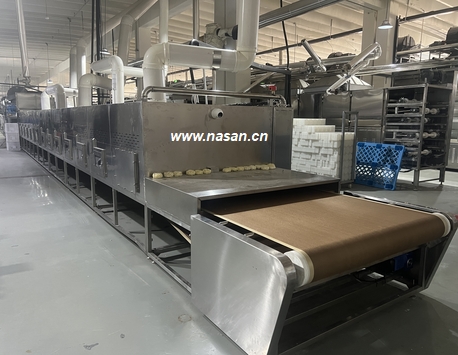
Before finalizing a purchase from any vacuum oven manufacturer, complete an on-site or witnessed factory acceptance test (FAT) covering these protocols:
Empty chamber thermal mapping: Place 15 thermocouples across three shelves (front, center, rear) at setpoints 80°C, 120°C, and 180°C under 10 mbar. Maximum deviation must stay within supplier’s claim.
Vacuum integrity measurement: Evacuate to 1 mbar, isolate chamber, and record pressure rise over 30 minutes. Rise >0.15 mbar indicates leak.
Control system response test: Program ramp from 50°C to 150°C at 3°C/min and verify actual vs. setpoint deviation every 5 minutes.
Safety interlock check: Verify that heating is disabled when door opens or if vacuum level drops below 50 mbar after drying starts.
Request documented FAT results before shipment. Nasan and other reputable vacuum oven manufacturers provide this data digitally stamped with calibration certificates traceable to NIST/PTB.
A1: Standard models from leading vacuum oven manufacturer reach 250°C with Viton seals and 400°C with metal seals or mica heaters. However, at vacuum levels below 10 mbar, heat transfer becomes almost purely radiative, so chamber walls and shelves can exceed material outgassing thresholds. For applications above 200°C, specify ceramic feedthroughs and nickel-plated heating elements. Nasan’s HT series operates to 350°C with graphite-based insulation.
A2: Use the formula: Pumping speed (m³/h) = (Chamber volume in liters × ln(initial pressure / desired pressure)) / desired pump-down time in hours. For a 500-liter oven from atmospheric to 1 mbar in 20 minutes (0.33h): 500 × ln(1013/1) / 0.33 ≈ 500 × 6.92 / 0.33 ≈ 10,485 l/h (10.5 m³/h). Add 25% margin for piping losses. Many vacuum oven manufacturer datasheets provide pump sizing tables.
A3: Yes, but requires stainless steel 316L (not 304) for acid resistance, PTFE-coated shelves, and a chemically resistant vacuum pump (dry screw or PTFE diaphragm). Standard rotary vane pumps fail within 300–500 hours of exposure to HCl, acetic acid, or MEK vapors. Nasan constructs acid-resistant vacuum ovens with Hastelloy C22 coil condensers for halogenated solvent recovery.
A4: Many drying or curing processes require gradual temperature increase to avoid case hardening (solvent entrapment beneath a dried skin). A profile such as: 40°C for 2h → ramp 1°C/min to 80°C → hold 4h → ramp 0.5°C/min to 120°C → hold 1h. Programmable controllers in modern vacuum ovens store up to 50 profiles, each with 99 segments. Data from each batch can be exported for SPC analysis.
A5: Minimum annual preventive maintenance includes: calibration of vacuum gauge (capacitance vs. pirani), check of door seal compression, cleaning of vent valve filter, and thermal imaging of all electrical connections. A high-quality vacuum oven manufacturer offers remote diagnostic support via Ethernet interface, reducing on-site service calls by 60%. Nasan’s premium contract includes predictive wear monitoring of vacuum pump exhaust filters and heating element resistance trending.
Choosing the right vacuum oven manufacturer involves balancing thermal performance, vacuum integrity, control sophistication, and total cost of ownership. The engineering team at Nasan provides detailed heat transfer simulations, custom shelf configurations, and turnkey installation support for both laboratory R&D and high-throughput production lines. Submit your process parameters—maximum temperature, chamber size, solvent types, and required residual moisture—to receive a datasheet with guaranteed uniformity values and a lifecycle cost comparison.
Initiate your inquiry: Send your technical requirements via the Nasan official inquiry form or email directly to engineering@nasandry.com. Every request receives a preliminary feasibility analysis, a recommended model configuration, and a quotation within five working days.