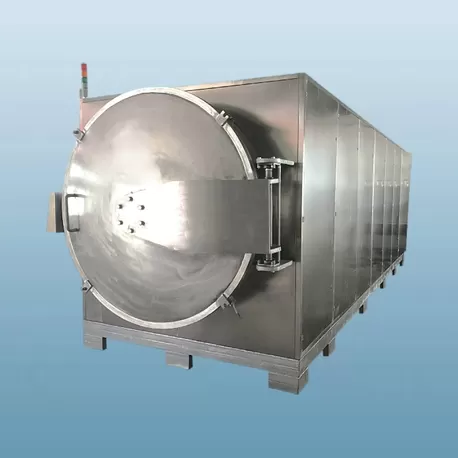
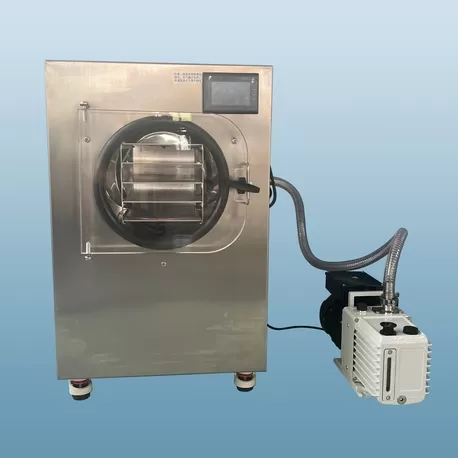
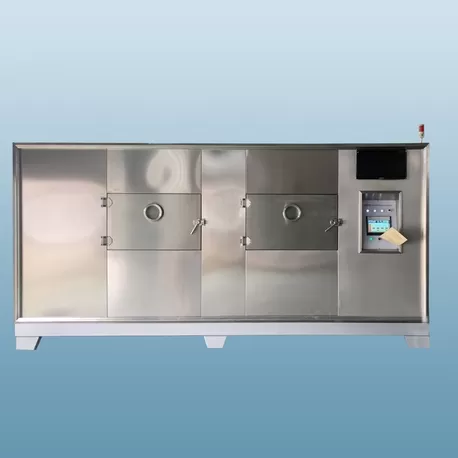
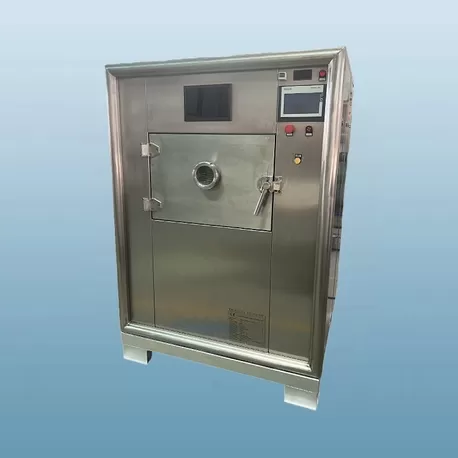
In advanced manufacturing and material processing, the industrial microwave represents a fundamental shift from conventional thermal transfer. Unlike
conduction or convection, which rely on surface-to-core temperature gradients,
microwave energy penetrates materials volumetrically, interacting with molecular
dipoles and ionic conduction mechanisms. This direct energy coupling yields
processing speeds that often exceed traditional methods by an order of
magnitude, while offering unprecedented control over thermal profiles. For
industries ranging from food pasteurization to polymer curing and ceramic
sintering, the industrial microwave system has evolved from a
niche technology to a cornerstone of process intensification. This article
provides a rigorous examination of the physics, equipment architectures,
application-specific engineering, and operational considerations that define
modern industrial microwave processing, drawing on principles validated by
specialized manufacturers like Nasan.

1. Fundamentals of Dielectric Heating: The Physics Behind Microwave
Processing
The operational principle of an industrial microwave system hinges on two primary
phenomena: dipolar rotation and ionic conduction. When electromagnetic radiation
in the 915 MHz or 2450 MHz frequency bands penetrates a dielectric material,
polar molecules (primarily water) attempt to align with the rapidly oscillating
field. The molecular friction generated translates into volumetric heat
generation. The penetration depth—defined as the distance where power drops to
37% of surface value—is a critical engineering parameter. For 2450 MHz systems,
penetration depth in wet materials ranges from 10–30 mm, while 915 MHz systems
achieve 50–100 mm, making the latter suitable for bulkier loads. Key factors
governing process design include:
Dielectric loss factor (ε''): Determines how efficiently a
material converts microwave energy into heat. High-loss materials (e.g., aqueous
solutions) couple readily; low-loss materials (e.g., dry ceramics) require
susceptor assistance.
Complex permittivity (ε*): Temperature-dependent properties
that can cause thermal runaway if not carefully managed through power modulation
or load geometry.
Reflected power management: Automatic impedance matching
(circulators and dummy loads) protects magnetrons from damage due to mismatched
loads.
From a systems engineering perspective, the industrial microwave must
integrate robust power generation (magnetron arrays), waveguide transmission,
and applicator design (single-mode or multimode cavities) to ensure uniform
field distribution. This is not merely a heating element substitution but a
holistic redesign of the thermal processing workflow.
2. Industrial Microwave System Classifications and Configurations
Selecting the appropriate equipment architecture requires analyzing material
throughput, geometry, and thermal sensitivity. Below is a technical
categorization of dominant industrial microwave platforms.
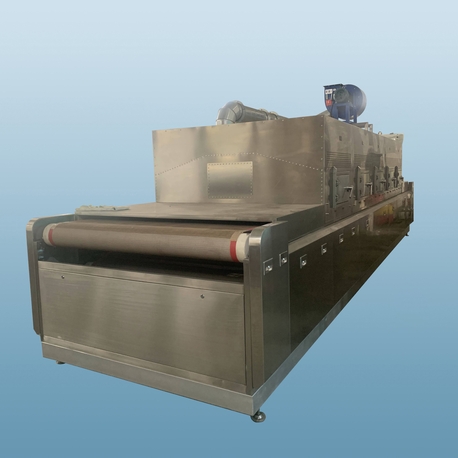
2.1 Continuous Multimode Tunnel Systems
For high-throughput applications—such as drying pasta, tempering frozen meat
blocks, or curing rubber extrusions—continuous tunnel systems represent the
standard. These industrial microwave configurations employ multiple
magnetrons feeding into a series of resonant cavities. The material traverses on
a conveyor belt through zones of controlled power density. Advanced systems
incorporate:
Staggered magnetron firing sequences to minimize standing wave
patterns.
Infrared sensors for surface temperature feedback, modulating power in each
zone.
Variable-speed conveyors synchronized with moisture measurement (NIR or
microwave transmission sensors) to ensure endpoint consistency.
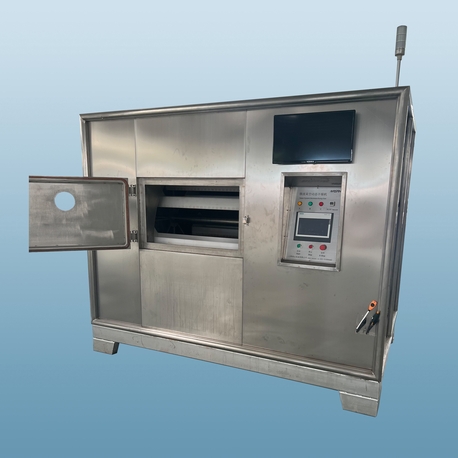
2.2 Batch Single-Mode Cavities
When processing high-value materials requiring precise, repeatable thermal
histories—such as pharmaceutical granulation drying or carbon fiber
pre-oxidation—single-mode applicators offer superior control. In these systems,
the electromagnetic field is focused into a controlled pattern, allowing energy
to be concentrated on specific sample geometries. Batch systems are also
preferred for R&D scale-up, where process parameters must be validated
before transitioning to continuous production. The ability to perform
ramp-and-soak cycles under inert atmospheres makes these units essential for
advanced material synthesis.
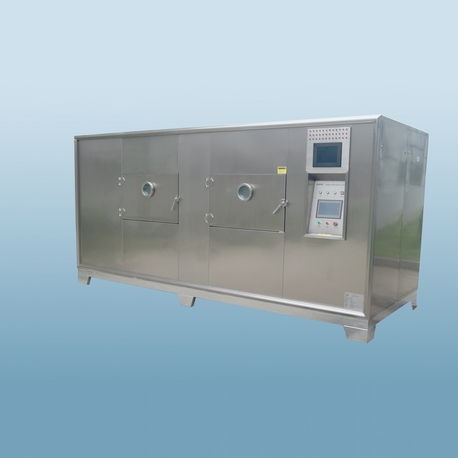
2.3 Pilot-Scale and Modular Systems
For industries like specialty chemicals or battery material synthesis,
modular industrial microwave units provide flexibility. These skid-mounted
systems integrate power supplies, control cabinets, and process chambers that
can be reconfigured for different product lines. The compact footprint belies
their capability: with 6 kW to 75 kW power outputs, they handle throughputs from
50 kg/h to 2,000 kg/h, depending on moisture load.
3. Application Deep-Dive: Industrial Sector Implementations
The adoption of microwave technology spans diverse industries, each with
distinct material science challenges. Below, we examine specific use cases where
industrial microwave processing delivers measurable advantages over conventional
methods.
Food Processing: Pasteurization and Blanching
Thermal processing of food products requires balancing microbial reduction
with nutrient retention. Traditional steam or hot water blanching leads to
leaching of water-soluble vitamins and significant wastewater generation.
Industrial microwave systems achieve rapid volumetric heating,
reducing process time by 60–80%. For pasteurization of ready-to-eat meals in
sealed trays, microwave technology ensures that cold spots are eliminated
without overheating edges. The dielectric properties of the food matrix—fat,
water, and salt content—dictate the frequency and power strategy. Manufacturers
like Nasan provide integrated
solutions with automated power profiling to accommodate recipe changes without
hardware modifications.
Chemical Processing: Catalytic Reactions and Solvent-Free Synthesis
In organic synthesis and heterogeneous catalysis, microwave-assisted
chemistry has demonstrated reaction rate enhancements of 10–1,000× compared to
conventional heating. The industrial microwave acts as a direct energy transfer
mechanism, activating polar intermediates and reducing activation energy
barriers. For continuous flow reactors, microwave applicators are integrated
into tubular reactors, enabling precise temperature control for exothermic
reactions. Solvent-free processes benefit from the selective heating of
reagents, minimizing byproduct formation and improving atom economy. Key
engineering considerations include:
Reactor materials: Borosilicate glass or PTFE for chemical compatibility
with microwave transparency.
Pressure containment: Capability to operate up to 30 bar for superheated
solvent systems.
Real-time monitoring: Raman or FTIR probes coupled with microwave power to
enable kinetic control.
Advanced Materials: Ceramic Sintering and Carbon Fiber Processing
Sintering of technical ceramics (alumina, zirconia, silicon carbide)
conventionally requires hours in high-temperature furnaces, leading to grain
growth and residual porosity. Industrial microwave sintering reduces cycle times by
70–90% while achieving finer microstructures and enhanced mechanical properties.
The mechanism relies on microwave-specific effects that accelerate diffusion
processes. For carbon fiber manufacturing, microwave technology is applied in
the stabilization stage (oxidation) of polyacrylonitrile (PAN) precursors,
providing uniform heating across fiber tows and reducing energy consumption per
kilogram of fiber by 35% compared to convection ovens.
4. Engineering Metrics: Quantifying Industrial Microwave Performance
Evaluating an industrial microwave system requires moving beyond simple power
ratings to performance metrics that affect operational cost and product
quality.
Energy efficiency (wall-plug to product): Modern systems
achieve 70–85% efficiency, compared to 30–50% for conventional gas-fired ovens,
due to minimal heat losses to the environment and direct volumetric
absorption.
Power density uniformity: Measured via calorimetric mapping
or infrared thermal imaging across the applicator cross-section.
State-of-the-art systems achieve ≤ ±5% variation across the load footprint.
Magnetron lifetime: High-quality industrial-grade
magnetrons provide 5,000–8,000 operating hours under full power with proper
cooling and reflected power management.
Throughput rate (kg/kW·h): For drying applications, values
range from 1.2 to 2.5 kg of water removed per kWh, depending on material
dielectric properties and initial moisture content.
5. Process Control and Mitigation of Common Industrial Challenges
Despite the inherent advantages, industrial microwave processing introduces
specific engineering challenges that must be addressed through robust control
architecture and equipment design.
Challenge 1: Thermal Runaway and Hot Spots
Solution: Materials with temperature-dependent dielectric
loss can experience runaway heating, where hot regions absorb more energy,
exacerbating non-uniformity. Mitigation strategies include: (1) Pulsed microwave
power delivery with duty cycles between 30–70% to allow thermal diffusion; (2)
Rotating or oscillating loads to average field intensity; (3) Multi-frequency
power sources (frequency-agile magnetrons) that sweep across the ISM band to
disrupt standing wave patterns. Advanced PLC systems integrate fiber-optic
temperature sensors at multiple points to implement closed-loop power
control.
Challenge 2: Electromagnetic Interference (EMI) and Shielding Integrity
Solution: Industrial microwave systems must comply with FCC
(US) and CE (EU) emissions standards. Double-sealed doors with
quarter-wavelength chokes, reinforced waveguide seals, and metalized viewing
windows are mandatory. Periodic leakage testing using calibrated probes ensures
occupational safety limits (5 mW/cm² at 5 cm) are maintained. Nasan systems incorporate
triple-interlock safety circuits that immediately terminate power upon door
opening.
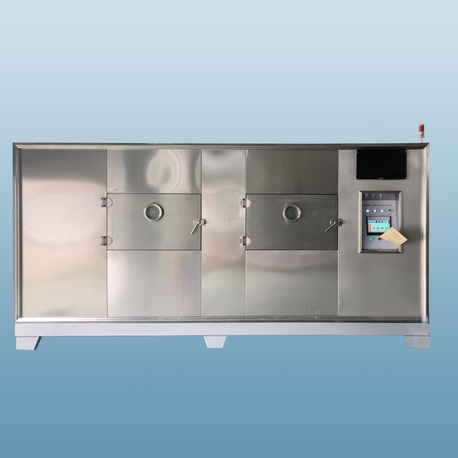
Challenge 3: Load Variability and Process Repeatability
Solution: In batch production, variations in raw material
moisture or density can alter dielectric loading. Automatic tuning systems (stub
tuners or circulator-based matching) dynamically adjust impedance to minimize
reflected power. For continuous systems, feedback control using inline microwave
moisture sensors adjusts conveyor speed and power levels in real time,
maintaining product specifications despite upstream variations.
6. Economic and Sustainability Considerations
The adoption of industrial microwave technology is increasingly driven by
total cost of ownership (TCO) and environmental metrics. Compared to gas-fired
or electric resistance systems, microwave processing offers:
Reduced floor space: Equipment footprint is typically
50–70% smaller due to shorter residence times.
Lower carbon footprint: For regions with grid electricity
derived from renewables, the switch from fossil fuel combustion yields direct
Scope 1 emission reductions.
Waste minimization: Precise endpoint control reduces
product rejects; for chemical processes, higher yields translate to less
post-reaction purification waste.
Capital expenditure for industrial microwave systems has decreased by
approximately 30% over the past decade due to solid-state generator developments
and modular manufacturing. Payback periods for applications with high energy
costs or throughput constraints typically range from 18 to 36 months.
Frequently Asked Questions (FAQ)
Q1: What is the difference between 915 MHz and 2450 MHz
industrial microwave systems, and how do I choose?
A1: The 2450 MHz frequency (ISM band) is standard for smaller-scale and pilot
applications, offering penetration depths of 1–3 cm in wet materials. It is
suitable for thin-layer drying, small parts processing, and laboratory work. The
915 MHz frequency provides deeper penetration (5–10 cm) and is used for
high-throughput bulk processing, such as thawing large meat blocks, drying wood,
or processing dense ceramic preforms. Selection depends on material thickness,
desired throughput, and whether the process is batch or continuous. For thick,
high-moisture loads, 915 MHz provides more uniform
heating.
Q2: Can industrial microwave systems process metallic
materials or components?
A2: Direct processing of bulk metals is not feasible due to high reflectivity
and risk of arcing. However, microwave systems are used to process composite
materials containing conductive fibers (carbon fiber) or metallic powders when
the particle size is below the skin depth (typically < 100 μm) and the
material is dispersed in a dielectric matrix. For metal components that must be
present during processing, specialized applicators with mode stirrers and
controlled power ramping can prevent arcing, but this requires custom
engineering and should be validated with the equipment
manufacturer.
Q3: How does the industrial microwave drying process compare
to vacuum drying for heat-sensitive materials?
A3: The two technologies are complementary rather than competitive. Vacuum
drying reduces the boiling point of solvents, enabling low-temperature
processing but relies on conduction for heat transfer, which can be slow.
Microwave drying heats volumetrically, significantly reducing drying time, but
requires atmospheric or controlled atmosphere conditions. For
ultra-heat-sensitive materials (e.g., bioactive compounds), microwave-vacuum
hybrid systems combine both principles: the vacuum reduces thermal stress while
microwave energy accelerates moisture removal. This combination achieves drying
times 50–70% shorter than vacuum alone, with superior product
quality.
Q4: What maintenance procedures are required to ensure
long-term reliability of industrial microwave systems?
A4: Key maintenance tasks include: (1) Quarterly inspection of waveguide
seals and door chokes for contamination or damage; (2) Magnetron cooling system
checks—air filters for forced-air units or coolant levels and flow rates for
liquid-cooled systems; (3) Annual calibration of power output using water load
calorimetry; (4) Verification of interlock and safety circuit functionality; (5)
Cleaning of applicator interiors to prevent product buildup that could cause
arcing. Magnetrons typically require replacement after 5,000–8,000 operating
hours; solid-state generators offer longer lifetimes but demand specialized
diagnostics.
Q5: Can industrial microwave technology be scaled from
laboratory to full production without process deviation?
A5: Scale-up requires careful consideration of power density, field
uniformity, and material handling. The most reliable approach uses modular
systems where the pilot unit employs the same frequency, applicator geometry,
and power density as the production system. Scale-up is achieved by multiplying
identical modules rather than increasing single-unit power. This “number-up”
approach maintains the same electromagnetic environment, ensuring process
parameters developed at pilot scale transfer directly. Manufacturers like
Nasan provide scalable
platforms with standardized module designs to facilitate this
transition.
In summary, the industrial microwave represents a mature,
high-performance thermal processing platform when engineered with attention to
dielectric material properties, applicator design, and robust process control.
From food safety to advanced material synthesis, the technology delivers
measurable improvements in energy efficiency, throughput, and product quality.
For organizations seeking to implement or upgrade microwave processing
capabilities, partnering with an experienced equipment manufacturer such as
Nasan ensures that the
system is tailored to specific process requirements, validated for scale-up, and
supported throughout its operational lifecycle.