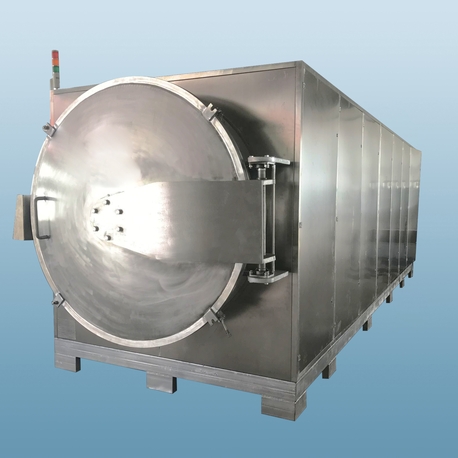
For production managers and process engineers, the industrial dryer is
often the largest single energy consumer in a plant—accounting for 12% to 25% of
total operating expenditure. A poorly matched drying system leads to off-spec
moisture content, product degradation, and unplanned downtime. Over the past 15
years, I have audited more than 180 drying lines across minerals, chemicals, and
agro-processing industries. This guide provides a quantitative framework for
evaluating industrial dryer technologies, diagnosing common
failures, and implementing retrofits that achieve payback in under 18
months.

1. Classifying Industrial
Dryer Types by Heat Transfer Mechanism
Every industrial dryer design falls into one of three
categories based on the dominant heat transfer mode: direct (convective),
indirect (conductive), or combined (e.g., microwave-assisted). The choice
directly affects thermal efficiency, product residence time, and final particle
morphology.
1.1 Direct (Convective) Systems
Rotary dryers: Ideal for granular solids (sand, limestone,
fertilizer). Throughput 1–100 t/h. Specific heat consumption 4.0–6.5 MJ/kg water
evaporated.
Flash (pneumatic) dryers: For powders and filter cakes
(starch, calcium carbonate). Residence time 0.5–3 seconds. Product temperature
rarely exceeds 80°C.
Fluid bed dryers: Uniform drying of free-flowing particles
(polymers, salt). Low temperature differential (<20°C). Excellent for
heat-sensitive materials.
1.2 Indirect (Conductive) Dryers
Steam tube rotary dryers: Used for spent grains, sludges.
No direct contact between combustion gases and product. Typical efficiency
75–85%.
Paddle dryers: For viscous pastes and hazardous materials.
Solvent recovery possible. Vacuum-rated models available.
1.3 Combined & Hybrid Technologies
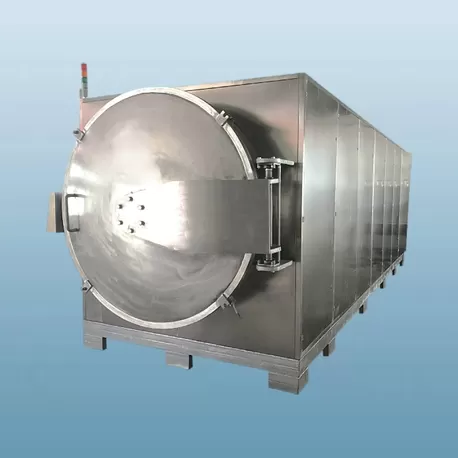
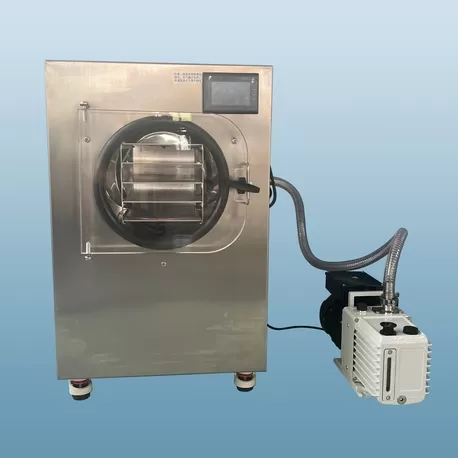
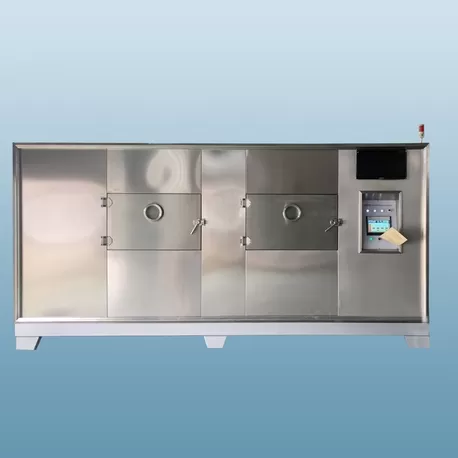
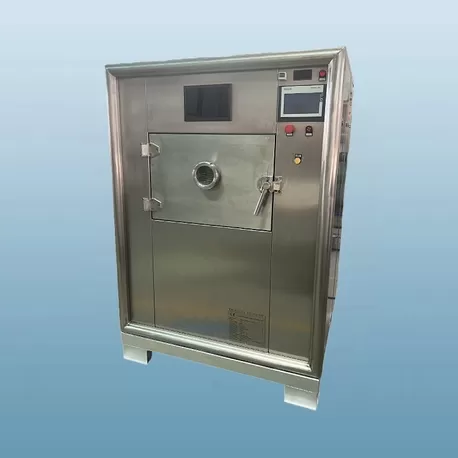
Microwave-assisted convection drying combines volumetric heating with surface
air flow. Field data from Nasan installations show
that a hybrid industrial dryer reduces drying time by 55–70%
for ceramic slurries and fruit pomace while cutting specific energy use by 38%
compared to pure hot air. Explore specifications at Nasan's product
line.
2. Key Performance Indicators for Industrial
Dryer Assessment
Before selecting or upgrading an industrial dryer, baseline
the following metrics during normal production:
Specific evaporation rate (SER): kg water removed per hour
per m³ of dryer volume. Target >45 kg/(h·m³) for convective dryers.
Thermal efficiency (η_th): (Heat absorbed by moisture
evaporation) / (Total heat input). Acceptable range: 55–75% for direct dryers,
70–90% for indirect.
Moisture uniformity (CV%): Coefficient of variation of
final moisture across 20 samples. Good <5%, acceptable <10%.
Product exit temperature delta: Difference between setpoint
and measured. Should be within ±5°C to avoid case hardening.
A 2023 benchmark study of 42 mineral drying plants found that replacing a
worn rotary industrial dryer with a new high-efficiency model
improved SER by 52% and reduced fuel consumption by 2.8 million MJ/year
(equivalent to 74,000 liters of diesel). Nasan provides on-site
performance audits using calibrated NIR moisture analyzers and thermal
imaging.
3. Common Failure Modes & Engineering Solutions
Even a well-designed industrial dryer will
experience performance degradation over time. Below are the five most frequent
issues encountered in my practice, with root causes and corrective actions.
3.1 Solids Buildup & Wall Scaling
Occurs in rotary dryers processing sticky materials (wet distillers grains,
clay). Solution: install flighting with knocker systems or
switch to a paddle dryer with self-cleaning action. For mineral
concentrates, adding 0.5–1% of back-mixed dry product (recycle) prevents
agglomeration.
3.2 Product Overheating & Color Degradation
When a flash dryer’s inlet gas temperature exceeds 300°C, protein-rich
materials (soy meal, blood meal) show Maillard browning. Remedy: implement
exhaust gas recirculation to lower oxygen partial pressure, or
switch to a two-stage drying configuration where the first
stage removes free moisture at 180°C and the second stage finishes at 90°C. Nasan's modular
designs include such multizone control.
3.3 High Particulate Emissions (PM 2.5 / PM 10)
Direct-fired rotary dryers often exceed local emission limits when drying
friable materials. Solutions: low-pressure drop cyclones (efficiency 92–95% for >10 µm) followed by wet scrubbers or
baghouse filters. Adding 1–2% moisture to the product before
the discharge point can reduce dust by 40%.
3.4 Non-Uniform Moisture Profile Across the Bed
In a fluid bed dryer, uneven air distribution causes channels. Fix: replace
perforated plate with draft tube or pulsed fluidization. Also
verify that the static bed height does not exceed 250–300 mm for particles with
a mean diameter of 500 µm.
3.5 High Energy Cost Due to Uncontrolled Exhaust Losses
A typical convective industrial dryer exhausts 25–40% of
input energy as sensible heat in the outlet air. Installing a plate heat
exchanger or heat pipe recuperator can preheat inlet
air by 25–35°C, reducing fuel use by 12–18%. Payback period is 9–14 months for
natural gas at $0.045/kWh.
4. Application-Specific Selection Matrix: Minerals, Chemicals & Food
Ingredients
The optimal industrial dryer varies dramatically by material properties. Use the following decision guide
based on particle size, initial moisture content (IMC), and heat
sensitivity.
| Material / Industry | Particle size | Recommended dryer type | Typical η_th |
|---|
| Silica sand, quartz | 100–2000 µm | Rotary (direct) or fluid bed | 60–70% |
| Ammonium sulfate, potash | 300–3000 µm | Rotary with steam tube | 75–82% |
| Whey powder, starch | 20–150 µm | Flash or ring dryer | 65–72% |
| Spent grain, biomass | 5–30 mm | Rotary with lifting flights | 55–65% |
| Ceramic slurry (filter cake) | 1–10 µm (wet) | Microwave-assisted belt dryer | 48–55% (but 70% faster) |
For custom evaluations, Nasan offers pilot-scale
testing with your actual material. Results include drying kinetics curves,
energy consumption per kg water removed, and final product quality analysis.
View available test rigs at Nasan's products
page.
5. Retrofitting vs. New Installation: Economic Thresholds
Facilities often ask whether to rebuild an existing industrial
dryer or purchase a complete new system. Based on 2024 equipment costs
and energy pricing in North America and Europe:
Retrofit (burner upgrade + new flighting + automation): Investment $85k–$200k. Achieves 12–18% efficiency gain. Payback 8–16
months.
Full replacement (same technology, larger scale): Investment $450k–$1.2M. Efficiency gain 25–35%. Payback 20–36 months.
Technology migration (e.g., rotary to fluid bed): Investment $800k–$2.5M. Efficiency gain 40–50% plus quality improvement. Payback
28–42 months.
A chemical plant in Texas replaced a 35-year-old rotary dryer processing
sodium sulfate with a vibrated fluid bed dryer from Nasan. Results: thermal
efficiency rose from 48% to 79%; product moisture CV dropped from 11% to 3.2%;
and annual natural gas savings reached $187,000. The installation paid for
itself in 22 months.
6. Process Integration: Upstream & Downstream Considerations
An industrial dryer does not operate in isolation. Its
performance is directly affected by:
Feed conditioning: Mechanical dewatering (centrifuge,
filter press) reduces inlet moisture from 85% to 55%, cutting drying load by
65%.
Material cooling: After drying, product temperatures of
60–90°C cause caking in storage bins. Install a counterflow air
cooler or water-jacketed screw to bring temperature
below 40°C.
Air handling: Ambient humidity above 70% RH reduces
convective drying rates. Pre-heating combustion air to 70°C overcomes this. For
tropical locations, a desiccant dehumidifier upstream of the
dryer can maintain consistent production.
Many Nasan
industrial dryers come with integrated feed screws, rotary valves,
and exhaust gas treatment packages, simplifying plant layout and reducing
engineering hours.

7. Case Study: Solving Caking in Detergent Powder Drying
A European consumer goods manufacturer experienced severe caking in their
spray-dried laundry detergent, leading to 8% product rejection. Analysis showed
that the existing industrial dryer (spray tower with 3.2 MW
burner) produced powder with surface moisture 0.4% but internal moisture 1.8%.
After 48 hours of storage, moisture migration caused agglomerates.
The solution involved installing a secondary fluid bed dryer after the spray tower, operating at 40°C for 8 minutes. The two-stage system
reduced final moisture variation to ±0.1% and eliminated caking. Nasan provided the
retrofit design, including PLC integration and humidity sensors. Rejection rate
dropped below 0.5% within three months, saving the client €310,000 annually.
Frequently Asked Questions (FAQ) – Industrial
Dryer Engineering & Operations
Q1: How do I calculate the required size of a rotary industrial dryer
for 10 t/h of wet sand (initial moisture 12%, final
0.5%)?
A1: Water evaporation rate = 10,000 kg/h *
(0.12 – 0.005) / (1 – 0.12) = 1,306 kg H₂O/h. For a rotary dryer with an average
volumetric heat transfer coefficient (Ua) of 120 W/(m³·K) and log mean
temperature difference (LMTD) of 180°C, required volume V = evaporation heat
(2.26 MJ/kg * 1306 kg/h = 2.95 GJ/h) / (Ua * LMTD * 3.6). Approx. 38 m³. A 2.5 m
diameter × 8 m long unit suffices. Nasan's engineering
team provides free sizing calculations.
Q2: What is the typical service life of a direct-fired rotary
industrial dryer before major shell
replacement?
A2: With proper liner plates
(abrasion-resistant steel) and a combustion control system that prevents flame
impingement, the shell lasts 15–25 years. However, trunnion wheels and riding
rings need replacement every 8–12 years. Annual inspections using laser
alignment are mandatory.
Q3: Can an industrial dryer be converted from natural gas to biomass
(wood pellets) firing?
A3: Yes, but requires a new
external biomass burner, cyclonic combustion chamber, and fly ash removal
system. The thermal efficiency often drops by 5–10% due to higher excess air.
Payback is attractive only if biomass fuel costs are below $4.5/GJ. Nasan offers dual-fuel
burners (gas/biomass) for seamless switching.
Q4: How to troubleshoot an industrial dryer that produces product
with “fish eyes” (hard dry exterior, wet
center)?
A4: This indicates case hardening, caused
by too high inlet air temperature in the first drying zone. Reduce inlet
temperature by 30–40°C and increase air velocity. Alternatively, switch to a
two-stage drying profile. For heat-sensitive materials, consider a
microwave-assisted dryer which heats volumetrically.
Q5: What safety certifications are required for an industrial dryer
used in solvent-based applications (e.g., ethanol
recovery)?
A5: ATEX (Europe) or Class I Div 1
(North America) for explosive atmospheres. The dryer must have inert gas
blanketing (N₂ or CO₂), pressure relief panels, and oxygen sensors below 6% v/v.
Nasan's
solvent-recovery dryers meet these standards with full
traceability.
Q6: What is the maximum achievable moisture uniformity (CV%) in a
continuous fluid bed industrial dryer for polymer
beads?
A6: With a well-designed plenum chamber and
multizone temperature control (4–6 zones), moisture CV can be as low as 1.5–2.5%
for free-flowing beads (diameter 1–3 mm). Adding an in-line NIR sensor with
feedback to individual zone burners reduces CV to <1.8%.
Optimize Your Drying Line with Verified Engineering Data
Selecting or upgrading an industrial dryer requires rigorous
material testing, heat and mass balance modeling, and a clear understanding of
your product’s drying sensitivity. Nasan supports clients
from feasibility studies to turnkey installation, including operator training
and long-term performance monitoring. Request a confidential process
audit or a pilot-scale trial with your material. Our specialists will
deliver a proposal with guaranteed outlet moisture, specific energy consumption,
and annual savings projections.
Send your drying
requirement now → (Please provide material name, throughput,
initial and target moisture, and preferred fuel type.)