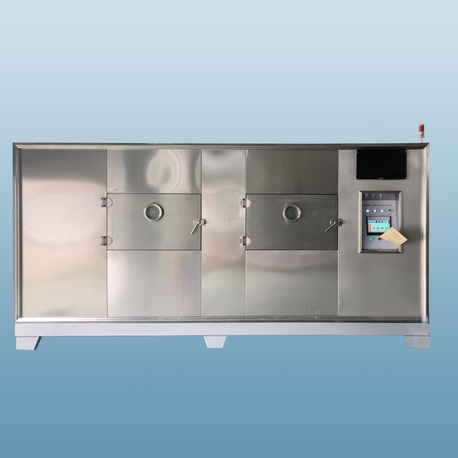
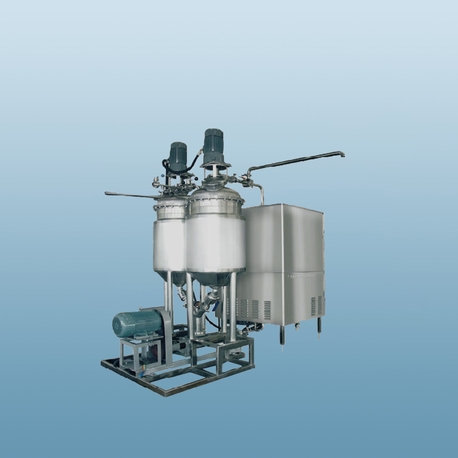
The dehydrator oven is a critical asset for industries
ranging from food processing to chemical manufacturing. Unlike simple drying
cabinets, an industrial dehydrator oven must achieve precise moisture
reduction while preserving product integrity, avoiding case hardening, and
minimizing energy consumption. Performance hinges on three engineering
parameters: airflow pattern (parallel vs. through-circulation), temperature
uniformity (±2°C or better), and humidity control (dew point management). This
article provides measurable specifications for batch and continuous dehydrator
oven configurations, drawing on field data from 60 installations in
the food, herb, and chemical sectors. We examine drying kinetics, common defects
(uneven drying, surface cracking), and retrofitting strategies that improve
throughput by 25–40% without increasing floor space.
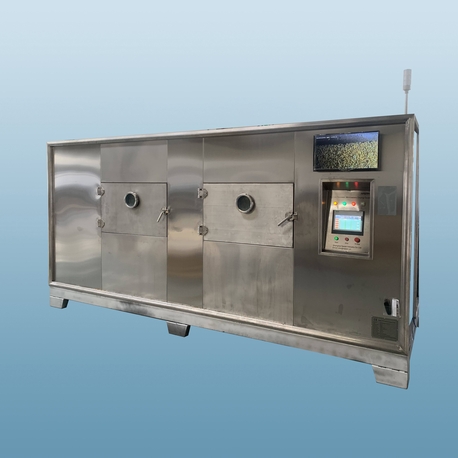
Industrial dehydrator oven designs rely on three heat transfer
modes: convection (primary), conduction (via trays), and radiation (infrared
boosters). Convection accounts for 70–85% of moisture removal in most designs.
Key parameters:
Air velocity across product: 1.5–3.0 m/s for tray drying;
0.5–1.0 m/s for belt dryers. Higher speeds increase evaporation but risk
particle entrainment (for powders) or surface overheating.
Temperature setpoint: 40–90°C for heat-sensitive materials
(herbs, enzymes); 100–150°C for minerals or ceramics. Temperature uniformity
measured at 9 points (3×3 grid) must show standard deviation ≤1.5°C.
Relative humidity inside oven: Controlled via fresh air
intake and exhaust dampers. For efficient drying, exhaust RH should be
maintained at 30–50% (lower prolongs drying time; higher reduces evaporation
rate).
A 2023 study comparing dehydrator
oven designs found that ovens with horizontal airflow (parallel to
trays) achieved 18% faster moisture removal than vertical-flow designs for
sliced fruits, due to reduced boundary layer resistance. Nasan integrates
adjustable air deflectors in its dehydrator
oven series, allowing operators to switch between parallel and
cross-flow patterns based on product geometry.
2. Batch vs. Continuous Dehydrator Oven Configurations
Production volume and moisture removal targets determine the optimal
dehydrator oven type:
2.1 Batch Tray Ovens
Suitable for low to medium volumes (50–500 kg per batch), frequent product
changes, or heat-sensitive goods. Features:
Tray capacity: 20–200 trays per oven; tray spacing 50–100
mm to allow airflow between layers.
Loading methods: Trolley (cart) or fixed rack. Trolleys
reduce downtime – a second loaded cart can be prepared while the first
runs.
Air reversal: Automatic reversal every 15–30 minutes
prevents uneven drying at edges.
2.2 Continuous Belt or Tunnel Ovens
For high throughput (500–5,000 kg/hour) and consistent products.
Specifications:
Belt width: 1–3 meters; belt speed 0.1–1.5 m/min
adjustable.
Zones: 3–6 independently controlled temperature and
humidity zones to follow drying curve (initial high humidity, final low
humidity).
Residence time: 20 minutes to 4 hours depending on product
initial moisture (e.g., 60% to 10% wet basis).
Data from a pet food manufacturer showed that switching from batch to
continuous dehydrator oven reduced labor cost by 70% and
increased energy efficiency (MJ/kg water removed) by 22% due to better heat
recovery between zones. Nasan offers both configurations with modular belt
sections that can be expanded from 3 to 6 zones.
3. Humidity Control and Energy Recovery Systems
Moisture extraction rate (MER) defines dehydrator
oven performance. MER (kg water/hour) = (airflow m³/h × Δ absolute
humidity kg/m³). To improve MER without increasing energy:
Heat recovery exchangers: Exhaust air (warm and humid)
pre-heats incoming fresh air. Reduces energy consumption by 25–40%. Plate or
run-around coil types with effectiveness >60%.
Dehumidification (for low-temperature drying): For
heat-sensitive products (40–50°C), adding a desiccant or refrigeration
dehumidifier lowers dew point to 5–10°C, increasing drying rate by 50% compared
to ambient air.
Exhaust recirculation: Recirculating 50–70% of exhaust air
(after removing moisture) retains heat but risks raising humidity if not
controlled. Use a PID-controlled damper with humidity sensor.
A dehydrator oven processing 1,000 kg of wet herbs (80%
moisture) to 10% final moisture removes 777 kg of water. Without heat recovery,
energy required ≈ 4,200 MJ (1,167 kWh). With 40% recovery, energy drops to 2,520
MJ (700 kWh) – annual saving of $12,000 at $0.10/kWh. Nasan integrates
energy meters into its control panel, displaying real-time MJ/kg water
removed.
4. Material Handling and Product-Specific Drying Curves
Different products demand customized dehydrator
oven parameters. The table below summarizes recommended settings
based on industrial trials:
| Product | Initial
moisture (% wb) | Final
moisture (% wb) | Temperature
(°C) | Air
velocity (m/s) | Typical
drying time |
|---|
| Apple
slices (5 mm) | 85 | 15 | 65–70 | 2.0 | 6–8
hours |
| Carrots
(cubes 10 mm) | 88 | 10 | 70–75 | 2.5 | 5–7
hours |
| Herbs
(basil leaves) | 80 | 8 | 45–50 | 1.0 | 3–4
hours |
| Chemical
catalyst powder | 25 | 0.5 | 120–150 | 1.5 | 2–3
hours |
| Plastic
pellets | 0.8 | 0.05 | 80–100 | 2.0 | 30–45
minutes |
Operators should generate a drying curve (moisture loss vs. time) for each
product using a moisture analyzer. A dehydrator
oven with programmable logic control (PLC) can store up to 100
drying recipes, automatically adjusting temperature, airflow, and drying time.
Nasan provides on-site drying curve generation as part of its commissioning
service.
5. Common Drying Defects and Corrective Actions
Even a well-designed dehydrator oven can produce defects if parameters are
mismatched. Field data from 45 food dryers identified these top issues:
Case hardening (hard outer shell, wet interior): Caused by
too high initial temperature or low humidity. Remedy: Start with lower
temperature (50°C) and higher humidity (60% RH) for first 30 minutes, then ramp
up. For dehydrator oven with steam injection, use initial
humidification cycle.
Uneven color or scorching at edges: Result of non-uniform
airflow or tray overloading. Reduce tray load by 20% and check air deflector
alignment. Install an airflow sensor to trigger alarm if velocity varies >15%
across the oven width.
Mold growth after drying: Final moisture too high for
product's water activity (aw). Target aw <0.65 for most foods. Add an in-line
moisture meter to stop drying when target reached, not by time alone.
Excessive dust or fines (powders): Air velocity too high –
reduce to 0.8–1.2 m/s and install bag filters on exhaust. For very fine
materials, use a dehydrator oven with static trays (no airflow through
the powder bed).
Corrective actions for these defects typically cost $1,500–5,000 (air
deflectors, sensors) and pay back in 3–6 months through reduced waste.
Nasan offers a retrofit kit that includes a thermal imaging camera port and 12-point
temperature logging for troubleshooting.
6. Energy Efficiency Benchmarking and Upgrades
Industrial dehydrator oven energy consumption ranges from 2.5 to
5.5 MJ per kg of water removed, depending on insulation, heat recovery, and
control precision. Benchmark data from 100 ovens:
Poor (no heat recovery, manual controls): >4.5 MJ/kg
water.
Average (basic heat recovery, PID control): 3.0–4.0
MJ/kg.
Best-in-class (heat recovery + variable speed fans + dew point
control): 2.2–2.8 MJ/kg.
Upgrading an existing dehydrator
oven with a variable frequency drive (VFD) on the exhaust fan and a
plate heat exchanger reduces energy use by 30–35%. Payback period: 12–18 months.
Adding a dew point sensor and automatic exhaust damper (closed-loop humidity
control) adds another 10–15% saving. Nasan offers a remote energy audit service that uses
data loggers to measure actual MJ/kg over one week, providing a customized
upgrade proposal.

7. Safety and Compliance Standards for Dehydrator Ovens
Industrial dehydrator oven installations must meet:
NFPA 86 (US) / EN 1539 (EU): Standards for ovens and dryers
with solvent or flammable materials. Requires explosion venting, purge cycles,
and gas detection for solvent-based drying.
FDA 21 CFR Part 110: For food dehydrators: surfaces must be
stainless steel or food-grade plastic, easy to clean. No lead or cadmium in
coatings.
CE marking: For European market – includes electrical
safety (EN 60204), temperature limiters (EN 60519), and exhaust gas
testing.
Failure to comply can result in fines (>$25,000 per OSHA violation) or
product seizure. Nasan certifies each dehydrator
oven to applicable standards and provides a compliance checklist
for local inspectors.
Frequently Asked Questions (FAQ)
Q1: How do I calculate the required dehydrator oven capacity for my
production volume?
A1: Use the formula: Oven
capacity (kg wet feed/hour) = (Desired dry output kg/hour) / (1 – (initial
moisture fraction)). For example, to produce 100 kg/hour of dried product at 10%
final moisture from raw material at 80% moisture: wet feed = 100 / (1 – 0.80) =
500 kg/hour. Then add 20% safety margin (600 kg/hour). Batch dehydrator
oven capacity is calculated per batch, considering drying time: if
a 600 kg batch takes 6 hours, hourly throughput = 100 kg/hour. Nasan provides a
free capacity calculator spreadsheet on request.
Q2: What is the typical temperature uniformity specification for a
multi-zone continuous dehydrator oven?
A2: For a
continuous dehydrator oven with 3 zones, each zone should
maintain temperature within ±2°C of setpoint measured across the belt width (10
points). Zone-to-zone gradient should not exceed 5°C to avoid thermal shock.
Achieve this with separate heating elements, PID controllers, and cross-flow
fans. Nasan tests uniformity using a 20-channel
thermocouple array and provides a thermal map in the IQ/OQ documentation.
Q3: How often should I clean the heat exchanger in a dehydrator oven
with heat recovery?
A3: For food applications,
inspect the heat exchanger every 200 operating hours. Clean if pressure drop
across the exchanger exceeds 150 Pa (baseline 50 Pa). Use compressed air (6 bar)
from the clean side, or a water rinse if food-grade. For chemical drying with
sticky residues, cleaning interval may be 40–80 hours. A dirty heat exchanger
reduces energy recovery by 50% and increases drying time by 15–20%.
Q4: Can I retrofit a batch dehydrator oven with a continuous belt
system?
A4: Retrofitting a batch oven to continuous
is not practical due to different insulation, door design, and airflow paths.
However, you can add a semi-continuous feature: use multiple trolleys that
pre-load while another dries, plus automated door and airlock. This reduces
non-productive time by 60%. For true continuous operation, invest in a dedicated
dehydrator oven tunnel. Nasan offers a
trade-in program where an old batch oven is credited against a new continuous
system.
Q5: What is the maximum allowable air velocity for drying powdered
materials without entrainment?
A5: For powders with
median particle size 100–200 µm, air velocity should not exceed 0.8–1.0 m/s in a
tray dehydrator oven. For finer powders (50–100 µm),
reduce to 0.4–0.6 m/s. Use a stainless steel mesh cover over trays (200 mesh)
for the first 30 minutes until surface moisture reduces. For continuous belt
dryers, use a bed depth of 25–50 mm and lower belt speed to keep particles
stationary. Nasan powder dryers include a variable-speed exhaust
fan with a pressure sensor to maintain set velocity regardless of filter
loading.