The global market for dehydrated fruits and vegetables has grown at a CAGR of
6.2% from 2021 to 2026, driven by demand for clean-label ingredients, extended
shelf life, and reduced logistics costs. However, producing a superior
dry fruit vegetable product—one that retains natural color, texture, aroma, and over 85% of original
nutrients—requires precise control over drying kinetics, water activity (aw),
and energy input. As a process engineer specializing in food dehydration, I have
overseen installations ranging from 500 kg/h herb lines to 20 t/h mixed
vegetable systems. This guide provides a technical breakdown of the key unit
operations, common failure points, and data-driven solutions for
industrial-scale dry fruit vegetable production.

1. Drying Fundamentals: Water Activity, Glass Transition & Quality
Retention
To consistently manufacture a stable dry fruit vegetable product, the target final moisture content must be below 10–12% for fruits (aw
< 0.60) and below 8% for vegetables (aw < 0.50) to inhibit microbial
growth and enzymatic browning. The challenge lies in navigating the
glass transition temperature (Tg) of amorphous sugars present
in fruits like apples or mangoes. If drying temperature exceeds Tg during the
falling-rate period, the product becomes sticky and collapses, causing case
hardening. Practical solutions include:
Implementing low-temperature drying profiles (40–60°C for
fruits) combined with dehumidification.
Using microwave-assisted drying to create a porous
structure, reducing shrinkage.
Applying osmotic pretreatment (e.g., 40°Brix sucrose
solution) before hot air drying to improve sugar/water mobility.
Industry data from pilot trials with Nasan industrial
dehydrators show that microwave-vacuum drying reduces shrinkage in strawberry
slices by 52% compared to conventional tray drying, while preserving 94% of
anthocyanins. For detailed equipment specifications, visit Nasan’s product
portfolio.
2. Comparative Analysis: Hot Air, Microwave, Freeze & Belt Drying for
Fruits & Vegetables
Selecting the optimal drying method for a specific dry
fruit vegetable application requires evaluating capital cost,
operating expense, throughput, and final quality. Below is a technical
comparison based on measured outcomes for carrot dices (1 cm³) and apple rings
(5 mm thick).
2.1 Hot Air Convective Drying (Tray & Belt)
Typical parameters: 55–75°C, 1.5–2.5 m/s air velocity, 6–12
hours.
Nutrient retention: Vitamin C loss 50–70%; carotenoids
retention ~60%.
Energy consumption: 4.5–6.5 kWh per kg water
evaporated.
Risk: Case hardening, browning due to prolonged exposure to
oxygen.
2.2 Microwave Dehydration (Continuous or Batch)
Frequency & power: 915 MHz (industrial) or 2.45 GHz;
10–75 kW.
Drying time: Reduces by 65–85% vs. hot air (e.g., 1.5 hours
for apple slices).
Quality outcomes: Vitamin C retention >90%; lower color
degradation (ΔE < 5).
Uniformity: Requires load leveling or rotating turntables
to avoid hot spots.
2.3 Vacuum Freeze Drying (Lyophilization)
Sublimation pressure/temp: 0.2–0.5 mbar, -30 to -10°C
shelf.
Best for: Premium berries, mushroom slices, and baby food
ingredients.
Cost factor: 4–6× higher operating cost than hot air; slow
batch processing (24–48h).
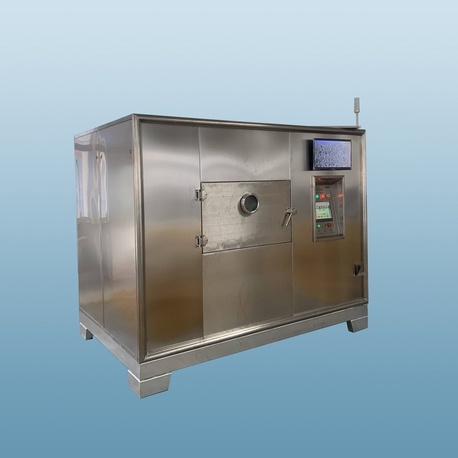
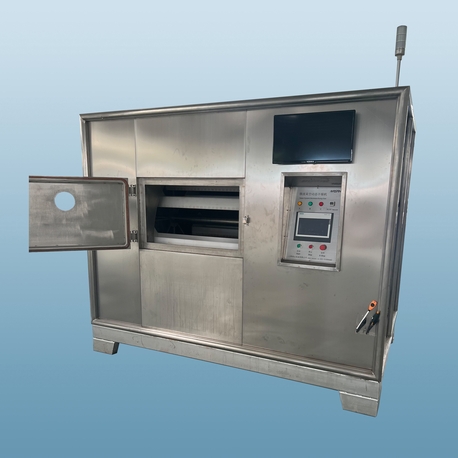
Nasan offers hybrid
systems combining microwave power with hot air recirculation, achieving 38%
energy savings compared to conventional belt dryers while maintaining product
uniformity. For turnkey lines, see complete drying
solutions.
3. Overcoming Production Pain Points in Dry Fruit
Vegetable Lines
Based on over 200 audits of fruit and vegetable dehydration facilities, the
following recurring issues reduce first-pass yield and increase rework:
3.1 Non-Enzymatic Browning & Flavor Loss
Cut surfaces of apples, bananas, and potatoes undergo polyphenol oxidase
(PPO) activity within 10–15 minutes at 25–40°C. Solutions: steam blanching (95°C
for 90s) or dipping in 1% citric acid + 0.5% ascorbic acid solution before
drying. For microwave systems, Nasan’s integrated
pretreatment modules automatically apply anti-browning agents.
3.2 Non-Uniform Moisture Distribution
Hot air dryers often produce final moisture standard deviations of ±2.5%
across a batch. This leads to mold growth in under-dried pieces and over-dried
brittle particles. Solution: implement in-line near-infrared (NIR) moisture
sensors and closed-loop feedback control. Nasan industrial
dehydrators feature PLC-controlled air distribution and multi-zone temperature
profiling, reducing moisture variability to ±0.8%.
3.3 High Energy Costs & Carbon Footprint
Drying accounts for 12–20% of total processing energy in a vegetable powder
plant. Replacing electric resistance heaters with heat pump
dehumidifiers or waste heat recovery wheels can cut
energy use by 40%. Two-stage drying (hot air followed by microwave finishing)
lowers specific energy consumption to 2.8 kWh/kg H₂O removed.
4. Scalability & Equipment Selection: From 100 kg/h to 15 t/h
When designing a line for dry fruit vegetable production, three critical decisions determine ROI:
Pre-drying preparation: Dicers (e.g., Urschel), destoners,
and belt blanchers.
Primary drying stage: Multi-stage belt dryers for high
throughput (carrots, onions) or microwave tunnels for sensitive fruits.
Post-drying handling: In-line milling, aspiration, and
metal detection.
For a medium-scale operation (2 t/h input of mixed bell peppers), a
three-zone belt dryer with recirculated air and a secondary
microwave finishing module reduces drying time from 10 hours to 3.5 hours, with
documented 24% higher rehydration ratio. Nasan provides customized
layouts with industrial
dehydrators rated for 24/7 operation and CIP wash-down
capability.
5. Quality Assurance & Shelf-Life Validation Metrics
Buyers of industrial dehydrated ingredients (e.g., soup mixes, bakery
fillings) require the following certified parameters for each dry fruit
vegetable lot:
Moisture content: ≤8% (vacuum oven method, AOAC
934.06).
Water activity (aw): ≤0.45 for vegetables, ≤0.55 for fruits
(measured at 25°C).
Rehydration ratio: 1:4 to 1:6 (weight after 10 min in 80°C
water / dry weight).
Color difference (ΔE): < 8 compared to fresh reference
(HunterLab).
Microbial limits: Total plate count < 10⁴ CFU/g; absence
of Salmonella, E. coli.
Advanced producers also monitor furan and acrylamide levels
in high-starch vegetables (potatoes, parsnips) dried above 120°C. Microwave
drying at 70°C maximum product temperature eliminates this risk while maintaining crispness.
6. Case Study: Scaling a Premium Organic Mango Slice Line
A Costa Rican exporter processing 8 tons/day of organic mango (variety 'Tommy
Atkins') faced quality rejection due to inconsistent color and high breakage.
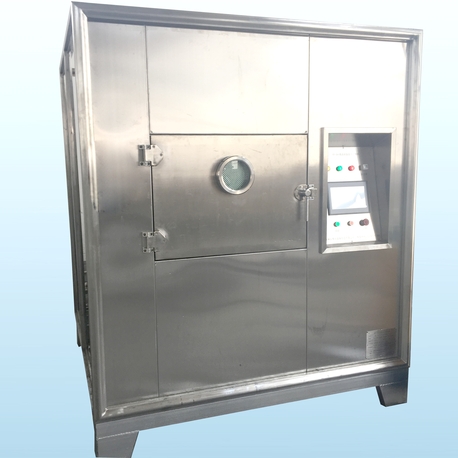
After evaluating six technologies, they installed a hybrid microwave-hot
air system from Nasan. Key results over 12
months:
Drying time reduced from 11 hours (conventional) to 3.2 hours.
Broken slices (<20% of original size) decreased from 28% to 6%.
Energy cost per kg finished product dropped by 44%.
Premium grade yield (color A, no browning) increased from 71% to
93%.
This demonstrates that appropriate dry fruit vegetable technology directly improves profit margins. View full technical specifications
at Nasan’s product
page.
Frequently Asked Questions (FAQ) – Industrial Dry Fruit
Vegetable Processing
Q1: What is the optimal
pre-treatment to prevent browning in dried apple and pear
slices?
A1: Use a combination of 1% ascorbic acid +
0.5% citric acid dip for 2 minutes, followed by steam blanching (100°C for 60
seconds). This inactivates polyphenol oxidase while maintaining firmness. For
high-volume lines, Nasan’s integrated dipping
tunnels automate this process. Q2: How do I calculate the
required drying capacity for my planned output of 5 tons/day of dried
carrots?
A2: Carrots typically have 88–92% initial
moisture. To produce 5 t/d of final product at 8% moisture, you need to remove
(5 t * (0.92-0.08)/0.08) = 52.5 tons of water per day. Assuming 20 operational
hours, the evaporative load is 2,625 kg/h. Select a dryer with at least 3,000
kg/h water removal capacity, such as a multi-stage belt
dryer with heat recovery. Q3: Can I use the same dryer for
both fruits and vegetables without flavor
carryover?
A3: Yes, if the dryer has CIP
(clean-in-place) nozzles and removable product contact surfaces.
However, for strong aromatics (onion, garlic) and sweet fruits (mango,
pineapple), dedicated lines or extensive cleaning between batches is
recommended. Nasan offers modular belts that can be swapped in under 45 minutes. Q4: What
is the typical payback period when upgrading from a hot air belt dryer to a
microwave-assisted system?
A4: Based on 2024
equipment pricing and energy costs ($0.12/kWh), payback ranges from 14 to 26
months for facilities processing over 1,000 kg/h input. Savings come from
reduced drying time (lower labor & electricity), higher premium product
yield (8–15% increase), and lower rejects. A detailed ROI model is available
upon request. Q5: How do I validate that my dried vegetable product
meets export shelf-life standards (12 months)?
A5: Conduct accelerated shelf-life testing at 38°C and 60% RH for 4 weeks,
equivalent to 12 months at 25°C. Monitor aw, moisture, color, and microbial
counts weekly. Also perform a water sorption isotherm to ensure
the product stays below the critical aw for mold growth (0.65 for most
vegetables). Nasan’s
lab services include isotherm generation. Q6: What is the
maximum recommended drying temperature for broccoli florets to preserve
glucosinolates?
A6: For broccoli, drying
temperatures should not exceed 65°C. Above this, glucosinolate retention drops
below 40%. Microwave-vacuum drying at 50–55°C retains 78–82% of these bioactive
compounds while reducing drying time by 70% compared to hot air at 60°C.
Ready to Optimize Your Dry Fruit
Vegetable Production Line?
Every fruit and vegetable matrix presents unique drying challenges—from
sticky mango sugars to tough carrot cell walls. Nasan provides process
guarantees, on-site validation trials, and full after-sales support for
industrial dehydrators, microwave systems, and integrated drying lines.
Request a technical consultation or a free pilot test with your specific
raw material. Our engineering team will deliver a customized proposal
including mass balance, energy calculations, and projected quality
improvements.
Send your inquiry now → (Specify required throughput, product type, and moisture
target.)