Rising industrial electricity tariffs and stringent corporate carbon targets
are forcing processing facilities to audit their most power-hungry unit
operations. Industrial drying consistently ranks near the top of thermal energy
consumption profiles across food, pharmaceutical, and chemical plants.
For decades, conventional freeze drying has served as the default benchmark
for high-value, heat-sensitive materials. Yet the rapid engineering refinement
of industrial microwave vacuum systems has created a viable
alternative that challenges that supremacy.
As production directors, chemical engineers, and operations managers plan
their capital equipment budgets for 2026 and beyond, the core dilemma remains:
Should you maintain the proven, pristine path of the industrial freeze dryer, or
transition to the rapid, lower-carbon mechanics of microwave vacuum drying
(MVD)?
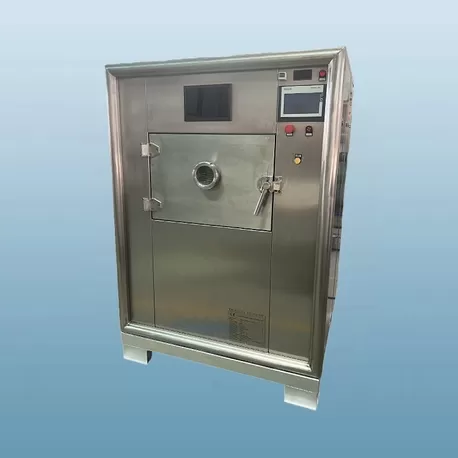
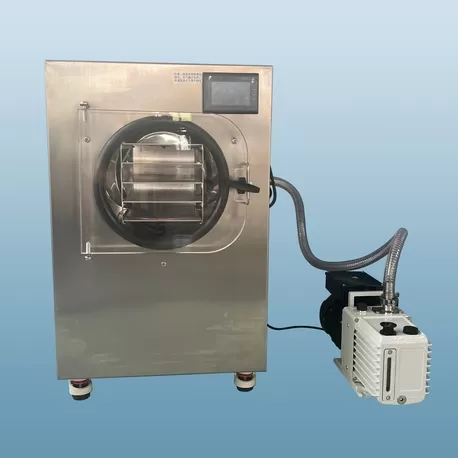
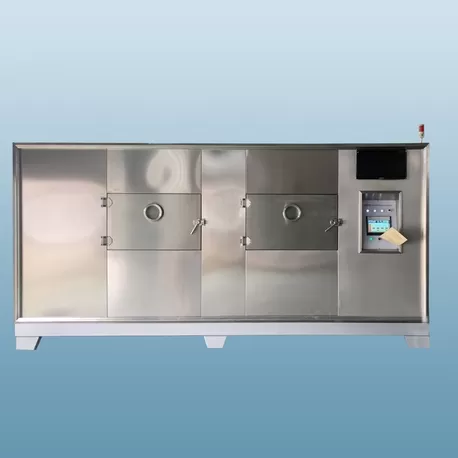
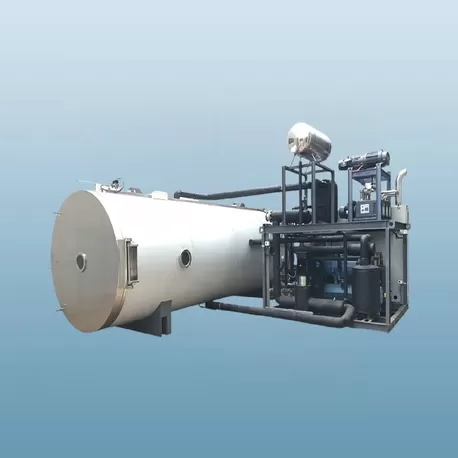
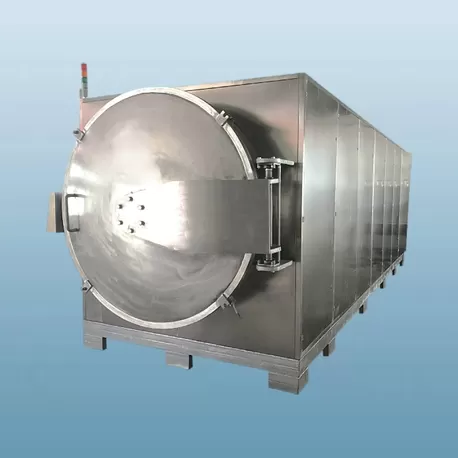
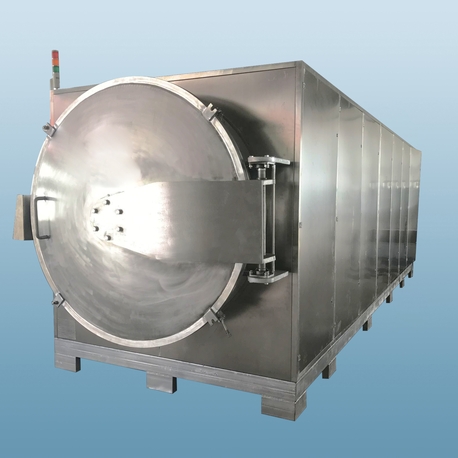
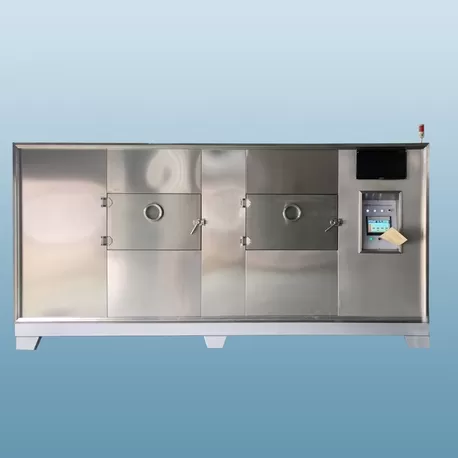
At Nasan, we engineer both industrial freeze drying setups and high-capacity
microwave vacuum drying systems. If you need immediate cycle simulations or
utility cost calculations for your specific feedstocks, contact our
engineering team today to submit an inquiry. Otherwise, read this
operational comparison to evaluate which technology fits your 2026 manufacturing
roadmaps.
1. The 2026 Manufacturing Crossroads: Energy, Throughput, and ESG
The manufacturing climate of 2026 will not tolerate unchecked operational
expenditure (OPEX). Scope 1 and Scope 2 emission monitoring frameworks are
tightening across North America, Europe, and Asia. Facilities can no longer
afford to run multi-day batch cycles if faster, lower-energy thermodynamic
routes exist.
Traditional freeze drying produces gold-standard structural integrity, but it
does so through brute-force refrigeration and prolonged sublimation cycles.
Batches often occupy processing bays for 24 to 48 hours, locking up working
capital on the plant floor.
Simultaneously, the global market demands high retention of active compounds,
crisp mouthfeel in functional snacks, and rapid reconstitution in bio-actives.
This brings microwave vacuum technology directly into focus.
Plant managers must balance preservation quality against thermal cost per
kilogram of evaporated moisture.
2. Deep Dive: Microwave Vacuum Drying (MVD) Mechanics
Microwave vacuum drying merges volumetric electromagnetic heating with
sub-atmospheric pressure. Rather than relying on conductive or convective
surface heat transfer, magnetrons or solid-state generators direct
electromagnetic radiation into the wet matrix.
Water molecules possess a permanent electrical dipole. Under an alternating
electromagnetic field (typically 915 MHz or 2450 MHz), these dipoles rotate
billions of times per second. This intermolecular friction generates immediate
internal heat throughout the volume of the product.
Simultaneously, a vacuum pump drops the internal chamber pressure to between
10 and 100 millibars. At these reduced pressures, water boils and evaporates at
temperatures as low as 25°C to 45°C. Moisture transforms into vapor inside the
product core and vents outward along pressure gradients.
Core Engineering Advantages of MVD
Slashed Cycle Times: Drying times drop from double-digit
hours to intervals between 30 and 180 minutes.
Direct Energy Coupling: Thermal energy goes directly into
dipolar moisture rather than heating air masses, trays, or the vacuum chamber
walls.
Controlled Expansion ("Puffing"): The rapid internal vapor
generation can create open-cell, crisp cellular structures without structural
collapse.
Continuous or Semi-Continuous Potential: Many microwave
vacuum systems accommodate rotary drum configurations or multi-stage vacuum
load-locks, streamlining continuous manufacturing workflows.
Engineering Limitations
Microwave vacuum systems demand sophisticated design to prevent plasma
discharge (arcing) under vacuum. Uneven dielectric properties within irregular
or heterogeneous bulk loads can also cause localized thermal runaway ("hot
spots") if the field design lacks precision rotation or mechanical agitating
mechanisms.
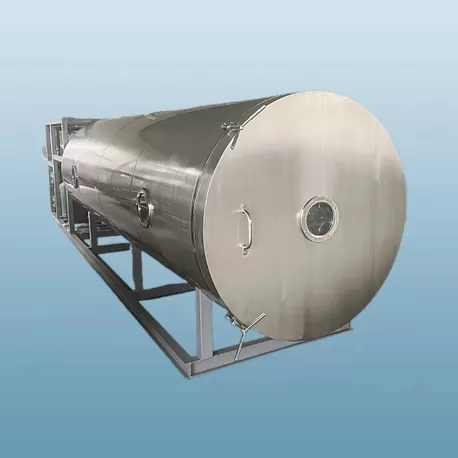
3. The Established Standard: Industrial Freeze Drying
Industrial freeze drying, or lyophilization, separates moisture via
sublimation. The process freezes the product completely below its lowest
eutectic point or glass transition temperature, typically -30°C to -50°C.
Once frozen, the primary drying stage activates inside a chamber drawn down
to ultra-high vacuum (often below 0.1 mbar). Radiant or conductive shelf heating
provides the latent heat of sublimation. Ice crystals convert directly from
solid to vapor without entering a liquid phase.
A secondary desorption phase then raises shelf temperatures to strip out
bound moisture molecules, leaving behind a bone-dry, structurally intact
matrix.
Uncontested Strengths of Freeze Drying
Zero Capillary Collapse: Because ice sublimates directly,
the original physical geometry remains virtually unchanged.
Supreme Rehydration: The empty pockets left behind by
evacuated ice crystals allow instantaneous rehydration upon contact with
liquids.
Maximum Viability for Live Cultures: Fragile proteins,
vaccines, and certain probiotic strains suffer minimal thermal denaturation when
frozen correctly.
Inherent Operational Roadblocks
Freeze dryers carry immense CAPEX and OPEX burdens. The refrigeration systems
must run continuously, pulling heavy electrical loads to drive condensers down
to -50°C to -85°C. Total cycle times regularly span 24 to 72 hours, resulting in
substantial utility bills and large plant footprints.
4. Head-to-Head Comparison: Microwave Vacuum vs. Freeze Drying
To see how these two processes compare across standard industrial metrics,
review the operational breakdown below:
| Operational Metric | Microwave Vacuum Drying (MVD) | Industrial Freeze Drying (FD) |
|---|
| Average Cycle Duration | 45 minutes – 3 hours | 20 – 48+ hours |
| Operating Pressure Regime | 10 to 100 mbar (Rough Vacuum) | 0.01 to 0.5 mbar (Deep Vacuum) |
| Thermal Mechanism | Internal Volumetric (Dielectric) | Conductive/Radiant Sublimation |
| Energy Use (kWh / kg H₂O removed) | Approx. 1.0 – 1.8 kWh/kg | Approx. 3.0 – 6.5 kWh/kg |
| Product Texture & Form | Expanded, porous, crisp ("puffed") | Sponge-like, highly porous, brittle |
| Capital Expense (CAPEX) | Moderate to High | Very High |
| Operating Expense (OPEX) | Low to Moderate | High |
| Footprint per Ton Output | Compact, dynamic throughput | Extensive (Chambers + Condensers) |
Throughput and Production Efficiency
Time translates to capacity. A facility running an 80-minute
microwave vacuum recipe can complete 10 to 12 cycles within a
single working day. A freeze dryer running alongside it might still be halfway
through its primary sublimation phase on a single batch.
This turnover velocity alters inventory dynamics. Plant operators running MVD
can react quickly to supply chain fluctuations, while freeze-drying operators
must maintain larger buffer stocks to offset long batch cycles.
Energy Profiles and Carbon Accounting
Industrial freeze dryers must refrigerate the material, evacuate a massive
chamber to deep vacuum levels, continuously freeze condenser plates, and slowly
heat shelves. Each phase consumes substantial electricity.
A commercial microwave vacuum plant eliminates the deep
refrigeration and mechanical freezing stages entirely. By coupling energy
strictly to volatile moisture at shallow vacuum, MVD reduces total energy inputs
by roughly 40% to 65% compared to complete lyophilization runs.
Product Quality and Organoleptic Characteristics
Freeze drying maintains the pristine external shape of fresh botanicals,
fruits, and fragile proteins. Shrinkage sits near zero. However, MVD generates a
pleasant, airy crunch due to controlled internal vapor expansion.
For nutritional preservation, several peer-reviewed thermal studies indicate
that low-temperature microwave vacuum drying preserves between 85% and 95% of
ascorbic acid, polyphenols, and active enzymes—nearly mirroring the results of
freeze drying while completing the run in a fraction of the time.
5. Strategic Application Matrix for 2026 Production Plants
Equipment choice depends entirely on your material's physical properties,
production volume, and downstream retail pricing. The guidance below outlines
how processors are distributing these drying methods:
1. High-Value Food, Confectionery, and Pet Treats
Modern pet food processors and functional snack producers are migrating
heavily toward microwave vacuum setups. The slight internal
pressure drop expands pieces naturally, producing a distinct crunch that
consumers appreciate.
Optimal for MVD: Fruit crunchies, cheese bites, meat cubes
for raw pet formulations, and expanded vegetable snacks.
Retain Freeze Drying: Intact whole berries intended for
premium packaging where any cosmetic shrinkage causes rejection.
2. Bio-Pharmaceuticals, Probiotics, and Herbal Extracts
In bio-processing, thermal destruction means financial loss. Certain active
pharmaceutical ingredients (APIs) and high-density liquid botanical extracts dry
exceptionally well under rough vacuum microwave fields.
Nasan specializes in sanitary vacuum setups that maintain low product
temperatures throughout the process. When extracts possess high viscosity or
sticky sugar contents, microwave vacuum systems dry them
directly into friable, crystal-like cakes without caramelization.
3. Advanced Technical Materials, Ceramics, and Polymers
Advanced engineering materials cannot tolerate the internal stress cracks
caused by surface-first hot air drying. Ceramic green bodies, aerogels,
catalysts, and specialized functional woods benefit from volumetric heating. MVD
extracts interior bound water through open micro-channels, preventing structural
warping.
6. The 2026 Trend: Hybrid Drying and Adaptive Processing
Forward-thinking plant engineers rarely treat capital equipment as an
all-or-nothing contest. The most profitable factories operating in 2026 will use
hybrid thermal regimes.
One emerging industrial technique is Microwave-Assisted Freeze Drying
(MAFD). Introducing controlled electromagnetic waves into the primary
sublimation zone eliminates the main bottleneck of freeze drying: slow heat
transfer across dry, insulating product layers.
Another popular format is staged dewatering: using conventional methods to
remove free surface moisture, followed by microwave vacuum drying to strip internal bound moisture past critical thresholds. This
sequential approach maximizes line efficiency while keeping operating budgets
balanced.
7. Partner with Nasan for Custom Drying Solutions
Equipment builders who only sell freeze dryers will tell you that sublimation
is the only path to premium product quality. Builders who only make microwave
systems will insist that freeze dryers are obsolete. The reality lies in your
product chemistry, moisture isotherm, and financial targets.
With more than 20 years of hands-on research, engineering, and manufacturing
experience, Nasan offers a balanced perspective. We design and
build heavy-duty industrial freeze dryers, custom microwave
vacuum systems, and continuous industrial dryers for clients
worldwide.
Nasan drying machinery operates in over 40 countries across the globe,
including demanding manufacturing environments in the United States, Germany,
France, and the United Arab Emirates. Our engineering facilities conduct
real-world pilot runs on your actual raw materials, validating moisture curves,
kilowatt-hour profiles, and sensory outcomes before you commit capital.
Ready to configure your 2026 industrial drying
line?
Contact the Nasan engineering department today. Submit an
inquiry to discuss your production volume, request a feasibility assessment, or
schedule a pilot material testing run at our technical centers.
Frequently Asked Questions (FAQ)
Q1: Can a microwave vacuum system replace our existing industrial freeze
dryer entirely?
A1: It depends on your formulation and packaging requirements. If your
product requires exact zero-shrinkage physical geometry or involves live,
fragile viral vectors, an industrial freeze dryer remains the best fit. However,
if you produce solid foods, extracts, purees, or chemical granules, a
microwave vacuum system can often deliver identical shelf
stability and nutrient counts at a fraction of the time and utility expense.
Q2: Does microwave vacuum drying run the risk of thermal scorching?
A2: When properly engineered, thermal scorching does not occur. Because the
process operates under vacuum (typically below 50 mbar), the boiling point of
the water drops to 30°C–40°C. Water acts as an evaporative heat sink, absorbing
the microwave energy and venting off. The product temperature cannot rise above
the saturation point while free water remains. Nasan systems also incorporate
temperature sensing and field balancing to prevent hot spots.
Q3: How does the capital cost (CAPEX) of MVD compare to a freeze dryer?
A3: A commercial-scale microwave vacuum system generally
requires 25% to 45% less capital expenditure than a freeze drying system of
equivalent throughput. Furthermore, because MVD cycles finish in hours rather
than days, a smaller MVD footprint can match the annual output of a massive
freeze drying battery.
Q4: What maintenance is required on a commercial microwave vacuum
system?
A4: Routine maintenance involves vacuum seal inspections, vacuum pump oil
management, chamber cleaning, and monitoring magnetron or solid-state generator
output efficiency. Unlike freeze dryers, there are no complex low-temperature
cascade refrigeration systems, thermal expansion loops, or oversized ice
condenser surfaces to defrost and maintain.
Q5: How can I confirm whether my material works in a microwave vacuum
setup?
A5: Never purchase commercial thermal equipment without material validation.
Contact Nasan to coordinate a raw material testing protocol. Our process
engineers will determine your product's dielectric properties, analyze drying
rates, calculate exact energy consumption, and present finished product samples
for your QA team to review.