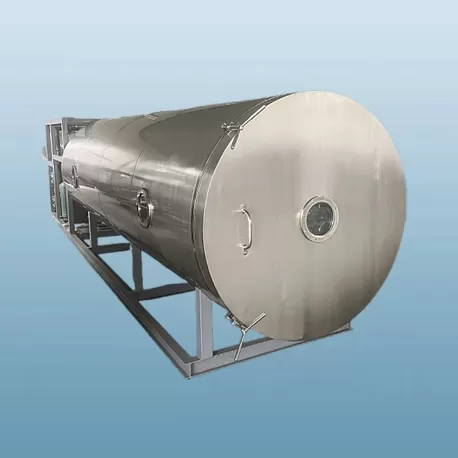
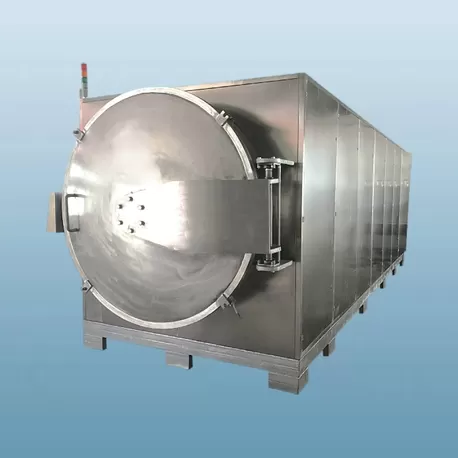
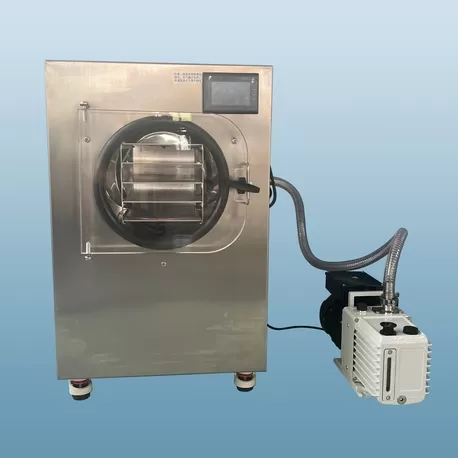
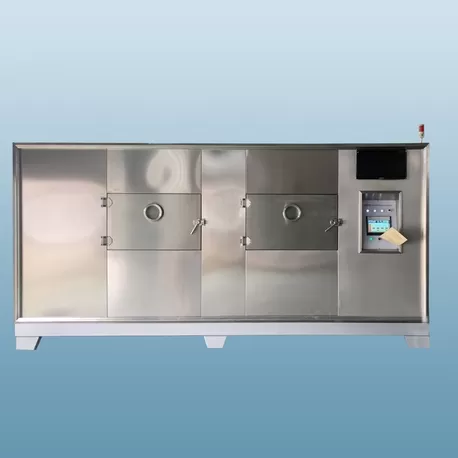
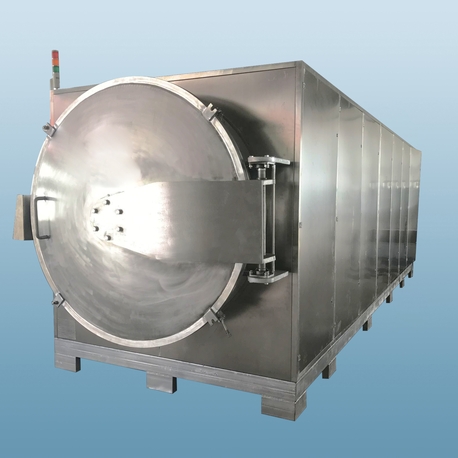
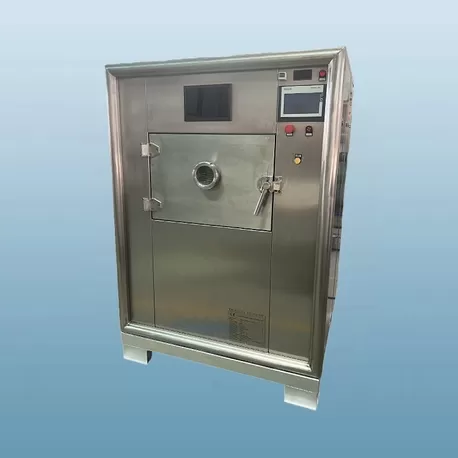
In the demanding world of industrial processing, removing moisture from sensitive or high-value materials presents a constant challenge. Traditional drying methods often rely on high temperatures, which can degrade active compounds, cause shrinkage, or unevenly process the final product. This is where advanced microwave vacuum drying technology provides a superior solution. By combining two powerful physical principles, it offers precise, rapid, and gentle drying for a wide range of commercial applications. Industry leaders like Nasan have pioneered the development of robust and efficient microwave vacuum dryers, setting new standards for quality and operational efficiency in sectors from pharmaceuticals to food manufacturing.

The core innovation of a microwave vacuum dryer lies in its synergy of two mechanisms. First, a vacuum pump dramatically lowers the pressure inside the drying chamber. This reduces the boiling point of water, allowing moisture to evaporate at much lower temperatures, typically between 20°C and 60°C. Second, targeted microwave energy is introduced. Unlike conventional heating which works from the outside-in, microwaves penetrate the material volumetrically, exciting water molecules throughout its entire mass.
This combination creates an ideal drying environment:
- Rapid and uniform heat generation inside the product.
- Low-temperature evaporation prevents thermal damage.
- The vacuum environment swiftly removes liberated moisture vapor.
- The process is highly energy-efficient, as energy is directed primarily at the water content.
The result is a drastic reduction in drying time—often by 50-80% compared to conventional methods—while preserving the material’s color, nutritional value, aroma, and chemical structure. Companies like Nasan integrate precise control systems into their microwave vacuum dryers, allowing operators to fine-tune parameters for different materials.
Core Advantages for Industrial and Commercial Operations
Adopting microwave vacuum technology translates into direct and measurable benefits for production facilities. The advantages extend far beyond simple speed.
- Exceptional Product Quality: Low-temperature processing is perfect for heat-sensitive products. It locks in volatile oils, maintains probiotic viability, preserves delicate colorants, and prevents case-hardening—a common issue where a hard outer shell traps moisture inside.
- Unmatched Energy Efficiency: Microwave energy directly targets water molecules, not the entire chamber or the product tray. This direct transfer minimizes thermal losses. Combined with shorter cycle times, it leads to significant reductions in energy consumption.
- Precision and Control: Modern systems offer programmable logic controllers (PLCs) for exact control over temperature, pressure, and microwave power. This ensures batch-to-batch consistency and allows for the processing of complex, multi-stage drying protocols.
- Space-Saving Design: The high efficiency and speed mean a smaller machine footprint can achieve the output of a much larger conventional dryer, optimizing valuable factory floor space.
This technology is not a one-size-fits-all solution; it excels in specific, high-value domains where product integrity is critical. Its application is widespread across several key industries.
- Pharmaceuticals and Nutraceuticals: Ideal for drying granules, extracts, and probiotic cultures without destroying their bioactivity. It ensures precise moisture content for powder stability and tablet formation.
- Food and Ingredients: Used for drying fruits, vegetables, herbs, spices, and premium instant foods. It preserves flavor, color, and nutrients far better than air or spray drying. High-value protein powders and marine collagen also benefit greatly.
- Advanced Materials and Chemicals: Employed in processing ceramic powders, battery cathode materials, and sensitive chemical intermediates where controlled, low-temperature moisture removal is essential to final product performance.
- Biotechnology and Laboratories: Perfect for R&D and small-batch production of enzymes, diagnostic reagents, and other biological materials that are deactivated by high heat.
Comparison with Traditional Drying Methods
To understand the value proposition of a microwave vacuum system, a direct comparison with common alternatives is useful.
- Versus Hot Air/Convection Drying: Hot air drying is slow, inefficient, and applies intense surface heat. It often leads to uneven drying, degradation, and high energy costs. Microwave vacuum drying is faster, gentler, and more uniform from the core outward.
- Versus Freeze Drying (Lyophilization): Both are excellent for heat-sensitive materials. However, freeze drying is a multi-step, lengthy (often 24+ hours), and extremely energy-intensive process. Microwave vacuum drying achieves similar quality benchmarks for many products in a fraction of the time and at a lower operational cost.
- Versus Spray Drying: Spray drying is a high-throughput method but uses very high inlet air temperatures, which can damage heat-labile components. It is less suitable for viscous or sticky materials. Microwave vacuum is a batch process that offers superior thermal protection and handles a wider viscosity range.
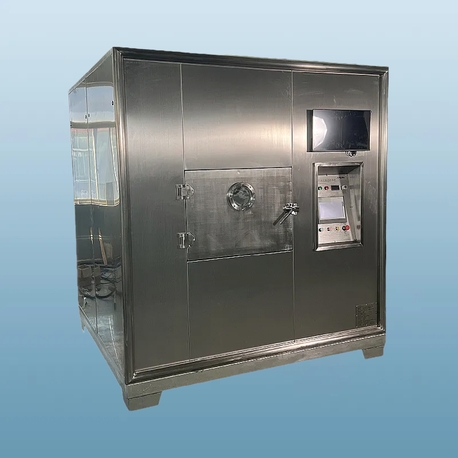
Nasan’s engineering team has focused on overcoming traditional limitations, designing microwave vacuum systems that are not only effective but also reliable and user-friendly for continuous industrial use. Their machines often feature robust construction and advanced safety interlocks.
For industries where product quality, active ingredient preservation, and production efficiency are non-negotiable, microwave vacuum drying represents a significant technological step forward. It moves beyond the compromises of traditional methods, offering a controlled, rapid, and gentle alternative. As material science and consumer demand for high-quality products advance, this technology is poised to become the standard for an increasing number of applications. Investing in a well-engineered system from a proven manufacturer like Nasan can provide a decisive competitive edge, safeguarding product integrity while improving your bottom line through faster cycles and lower energy use. The future of industrial drying for sensitive materials is clearly under the precise influence of microwave vacuum technology.
Frequently Asked Questions (FAQ)
Q1: Is microwave vacuum drying safe for all food and pharmaceutical products?
A1: While exceptionally gentle, suitability depends on the specific material. It is generally excellent for most organic, heat-sensitive products. A small-scale test run is always recommended to determine the optimal parameters for a new material. Manufacturers like Nasan often provide trial facilities for this purpose.
Q2: How does the energy consumption compare to a traditional convection oven?
A2: Energy consumption is typically significantly lower. Although the microwave generators use electricity, the drastic reduction in process time (often over 50%) and the direct, efficient heating of water molecules lead to lower total energy use per kilogram of water removed.
Q3: What is the main maintenance concern for a microwave vacuum dryer?
A3: The primary maintenance focuses on the vacuum system (pumps and seals) and the regular cleaning of the chamber to ensure optimal performance and prevent arcing. Modern industrial units from suppliers like Nasan are designed for easy access and serviceability.
Q4: Can microwave vacuum dryers handle liquid or slurry materials?
A4: Yes, with the proper configuration. Specialized tray designs or atomization systems can be used to process liquid extracts, slurries, or pastes into dry powders in a single step, preserving heat-sensitive compounds often lost in spray drying.
Q5: What is the typical batch size for an industrial microwave vacuum dryer?
A5: Capacity varies widely. Industrial pilot-scale units may start from 10-20 liters per batch, while full production systems can range from 100 to over 1000 liters. The modular nature of the technology allows systems to be scaled to specific production needs.