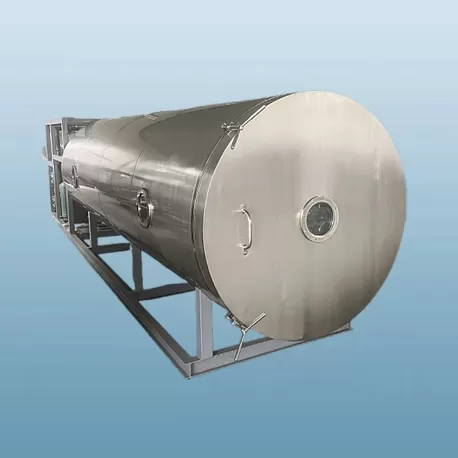
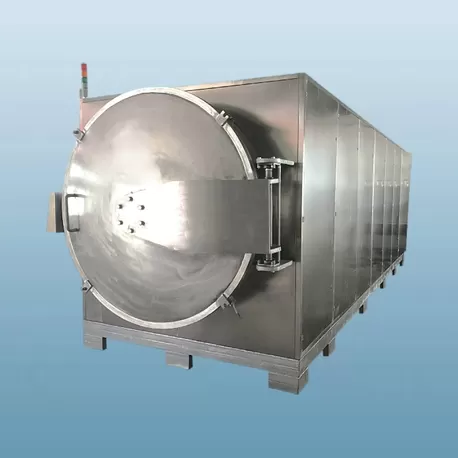
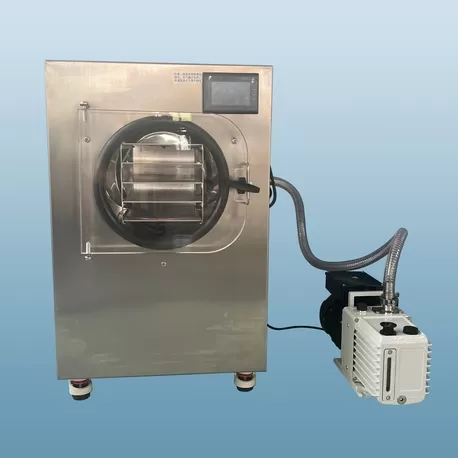
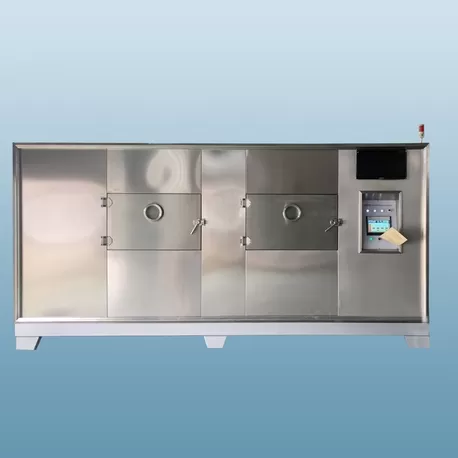
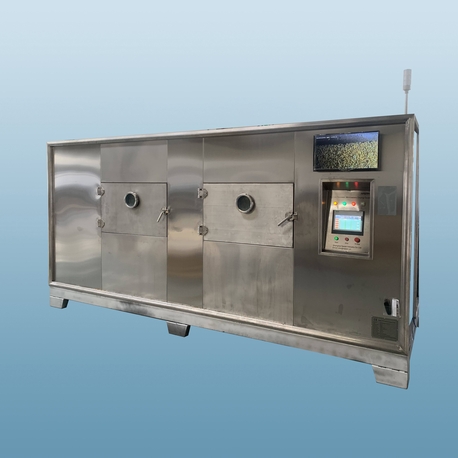
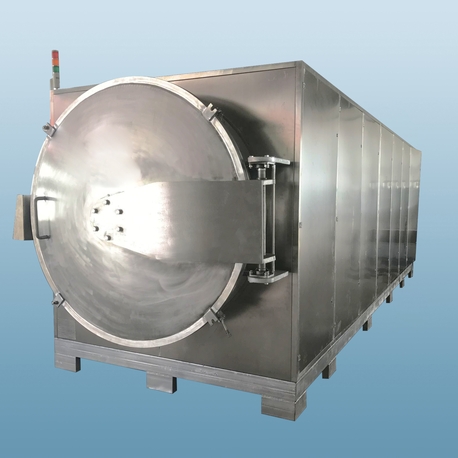
Industrial drying is a critical stage in manufacturing. It often determines the final quality of a product. For years, factory managers faced a difficult choice. You could use hot air, which is cheap but damages heat-sensitive materials. Or you could use freeze-drying, which preserves quality but costs a fortune. The vacuum microwave oven has emerged as the ideal middle ground.
This technology solves the conflict between speed and quality. It allows manufacturers to dry products rapidly at low temperatures. This ensures that nutrients, color, and texture remain intact. Whether you are processing food, pharmaceuticals, or chemicals, this machine offers a distinct advantage.
Companies like Nasan are at the forefront of this technology. They design systems that help businesses scale up without sacrificing product integrity. This article explores how a vacuum microwave oven works, its benefits, and why it is becoming a standard in modern factories.

To appreciate the value of this equipment, we must look at how it operates. It combines two powerful forces: microwave energy and vacuum pressure.
Microwaves work by causing water molecules to vibrate. This friction generates heat from within the product. It is known as volumetric heating. Unlike conventional ovens that heat from the outside in, a vacuum microwave oven heats the entire product simultaneously.
The vacuum component is equally important. By reducing the atmospheric pressure inside the chamber, the boiling point of water drops significantly. At sea level, water boils at 100°C. Inside these machines, water can evaporate at temperatures as low as 35°C.
Internal Heating: Heat is generated directly inside the material.Low Boiling Point: Moisture evaporates without high thermal stress.Rapid Transfer: The pressure difference pulls moisture to the surface quickly.
This combination allows for rapid drying without the "cooking" effect. It is the core reason why a vacuum microwave oven is superior for high-value goods.
Core Advantages for Industrial Production
Investing in advanced drying machinery is a major decision. However, the operational benefits of a vacuum microwave oven usually justify the capital expenditure quickly.
Superior Product Quality
Quality is the main driver for adoption. High temperatures cause oxidation. This turns fruit brown and destroys vitamins. It can also degrade active pharmaceutical ingredients.
Because a vacuum microwave oven operates at low temperatures, these reactions are minimized. Bright colors are preserved. Aromas stay locked inside the product. The texture becomes porous and crisp, rather than hard and shrunken.
Speed and Throughput
Time is a critical resource. Freeze drying can take 24 to 48 hours per batch. Hot air drying can take 12 hours or more.
In contrast, a vacuum microwave oven can often finish the same job in 1 to 4 hours. The energy transfer is immediate. You do not waste time heating the air or the metal trays. The energy targets the moisture directly. This allows for multiple batches per day.
Energy Efficiency
Sustainability is becoming a priority for manufacturing. Traditional dryers are inefficient because they lose heat to the environment.
A vacuum microwave oven is highly efficient. The microwave energy is absorbed only by the wet material. Once the water is gone, the energy consumption drops. Manufacturers often see a reduction in energy bills per unit of water removed compared to older methods.
Applications of the Vacuum Microwave Oven
The versatility of this technology allows it to serve various sectors. It is not limited to just one type of product.
The Food Industry
This is the most common application. Consumers demand healthy snacks that look and taste fresh.
Fruit and Vegetable Chips: Producing crunchy snacks without frying.Spices and Herbs: Drying basil or mint while keeping the essential oils intact.Meat and Seafood: Making jerky or dried shrimp with a better texture.
The Pharmaceutical Sector
Pharmaceuticals require precision. A deviation in temperature can ruin a batch of medicine.
A vacuum microwave oven provides precise control. It is used to dry pill granulates, herbal extracts, and sensitive powders. The low temperature ensures that the chemical potency remains stable.
Chemical Industries
Beyond food and drugs, this machine handles industrial materials. It is used for drying ceramics, catalysts, and removing solvents from chemical pastes.
Manufacturers often turn to Nasan for these specialized applications. Nasan builds machines that can handle the rigorous demands of chemical processing, ensuring safety and durability.
Comparing the Vacuum Microwave Oven to Competitors
To make a smart purchase, you must compare this technology against standard alternatives.
Vs. Hot Air Drying
Hot air drying is the traditional method. It relies on conduction and convection.
Hot Air: Slow heat transfer. Often results in "case hardening," where the outside dries but the inside remains wet.Vacuum Microwave Oven: Uniform heating. No case hardening. Much faster processing time.
For low-cost items, hot air is acceptable. For premium products, it simply cannot compete on quality.
Vs. Freeze Drying
Freeze drying (lyophilization) creates excellent quality but is the most expensive method available.
Freeze Drying: Extremely high energy usage. Very long cycle times. High machine cost.Vacuum Microwave Oven: Moderate energy usage. Fast cycle times. Lower operational costs.
The quality from a vacuum microwave oven is often comparable to freeze-drying but comes at a fraction of the cost. It offers a much higher Return on Investment (ROI) for most commercial products.
Technical Features to Look For
Not all machines are built the same. When sourcing a vacuum microwave oven, you need to check specific technical parameters.
Magnetron Reliability
The magnetron creates the microwaves. You need industrial-grade components that can run 24/7. Water-cooled magnetrons are generally preferred for heavy-duty cycles as they maintain stable output.
The Vacuum System
The pump must be powerful enough to handle high vapor loads. As water turns to steam, it expands volume massively. The vacuum system must extract this volume efficiently to maintain the necessary low pressure.
Automation and PLC Control
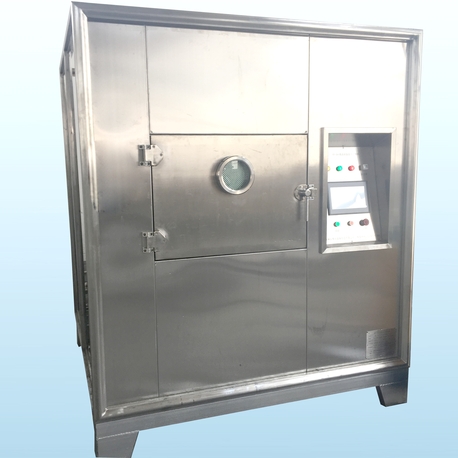
Modern manufacturing requires data. A good vacuum microwave oven comes with a Programmable Logic Controller (PLC).
Recipe Storage: Save settings for different products.Real-time Monitoring: Track temperature and pressure curves.Safety Interlocks: Ensure the machine stops if a door is opened or a fault is detected.
The Importance of Material Handling
How you load and unload the machine matters. Some units use static trays, while others use a turntable.
A turntable design helps improve uniformity. By rotating the product through the microwave field, you ensure that every piece dries evenly.
Stationary tray systems are available for larger loads. These often use "mode stirrers" to scatter the microwaves around the chamber. Nasan offers various configurations to fit specific factory layouts and workflow requirements.
Maintenance and Durability
Industrial equipment receives rough treatment. A vacuum microwave oven must be built with stainless steel, usually grade 304 or 316.
Cleaning is also vital. The chamber should be easy to wash down, especially for food and pharma applications. Look for designs that have minimal crevices where powder or residue could hide.
Regular maintenance involves checking the magnetrons and the vacuum pump oil. With proper care, these machines can operate reliably for many years.
Why Manufacturers Choose Nasan
Selecting the right partner is just as important as the machine itself. Nasan has built a reputation for understanding the nuances of microwave drying.
They do not just ship a crate. They assist with installation and process optimization. Determining the right power curve for a specific fruit or chemical takes experience.
Nasan provides that expertise. They help clients transition from lab-scale testing to full mass production. Their support ensures that the vacuum microwave oven performs at peak efficiency from day one.
The Future of Drying Technology
The market trend is clear. Consumers want cleaner, healthier products. Regulators want factories to use less energy.
The vacuum microwave oven aligns perfectly with these goals. It uses electrical energy, which can be sourced from renewables. It eliminates the need for preservatives by lowering water activity quickly and safely.
Innovations in magnetron design and solid-state microwave generators are making these machines even more precise. We are seeing better sensors that can measure moisture content in real-time inside the vacuum chamber.
For any factory looking to upgrade its processing line, this technology is the logical step forward. It transforms a bottleneck (drying) into a competitive advantage.
In conclusion, the vacuum microwave oven is a powerful tool for modern industry. It delivers speed, quality, and efficiency. By partnering with experienced manufacturers like Nasan, businesses can secure their place in the future of manufacturing.
Frequently Asked Questions (FAQ)
Q1: What materials cannot be dried in a vacuum microwave oven?
A1: You cannot dry metal parts or materials containing metal, as this causes arcing. Also, sealed containers cannot be placed inside, as the pressure changes will cause them to burst. Highly flammable solvents require explosion-proof modifications, which are not standard on basic models.
Q2: Does the vacuum microwave oven sterilize the product?
A2: Yes, it has a significant sterilization effect. The combination of thermal heat and the non-thermal effects of microwaves helps destroy bacteria, mold, and insect eggs. This often extends the shelf life of the product without adding chemical preservatives.
Q3: How much faster is this compared to a standard hot air dryer?
A3: It is typically 5 to 10 times faster. A process that takes 10 hours in a hot air oven might take only 1 to 1.5 hours in a vacuum microwave oven. This dramatic reduction is because the heat is generated internally rather than relying on slow conduction from the surface.
Q4: Is the operation complex? do I need a specialized engineer?
A4: No, modern machines are designed for easy operation. They use PLC touch screens with pre-programmed recipes. Once the parameters (time, power, vacuum level) are set by your quality team, a regular operator can load the machine and press "Start."
Q5: What is the maintenance requirement for a vacuum microwave oven?
A5: Routine maintenance is straightforward. It involves keeping the chamber clean, checking the vacuum pump oil levels, and ensuring the cooling system for the magnetrons is flowing correctly. The magnetrons themselves are consumables and will need replacement after several thousand hours of use, which is a standard procedure.