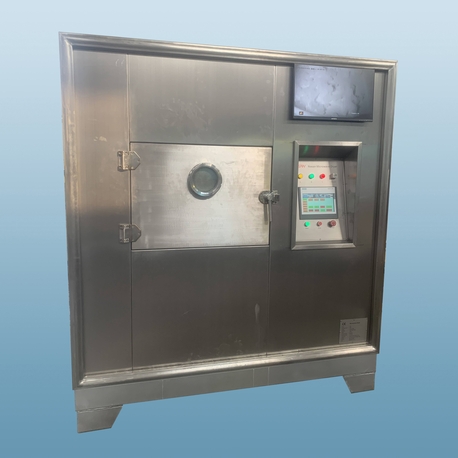
In commercial mushroom processing—whether for nutraceutical extracts,
culinary powders, or dried whole products—the transition from harvest to
shelf-stable form must preserve structural integrity, flavor profile, and
bioactive polysaccharides (β-glucans). A generic agricultural dryer often fails
to meet these criteria, resulting in case hardening, uneven moisture
distribution, and degradation of heat-sensitive compounds. A purpose-engineered
mushroom
dehydrator addresses the unique cellular architecture of fungal
tissues: the chitinous cell wall, high initial moisture content (typically
88-92% wet basis), and the need to maintain enzymatic stability during the
falling-rate drying period.
At Nasan, we have engineered over 250 industrial drying
systems for mycological applications, working with species ranging from
Agaricus bisporus (white button) to Ganoderma lucidum (reishi)
and Hericium erinaceus (lion’s mane). The technical demands vary
significantly: reishi requires low-temperature dehydration to preserve
triterpenes, while shiitake demands controlled enzymatic browning for umami
development. This article dissects the thermodynamics, psychrometrics, and
control strategies that define a high-performance industrial mushroom
dehydrator, providing data-driven benchmarks for processors seeking to
scale operations with quality assurance.
1. Drying Kinetics in Fungal Tissue: The Two-Stage Moisture Migration
Model
Mushroom tissue presents a biphasic drying curve. During the constant-rate
period, free water on the surface and within intercellular spaces evaporates at
a rate governed by air velocity, temperature, and relative humidity. The
critical moisture content for most cultivated mushrooms occurs at approximately
65-70% moisture content (wet basis). Below this threshold, the falling-rate
period begins, where moisture transport is controlled by internal diffusion
through the hyphal network and cell walls.
An industrial mushroom dehydrator must manage this
transition precisely. Prematurely elevating temperature during the falling-rate
period causes shrinkage and case hardening, trapping residual moisture.
Third-party studies indicate that inadequately controlled drying results in
moisture stratification exceeding 4.5% coefficient of variation (CV) across
batch samples, leading to post-packaging mold risks. Advanced systems employ
dual-zone control: zone 1 operates at 45-50°C with 55-60% RH to maximize
evaporation during constant-rate phase; zone 2 reduces RH to 25-30% while
maintaining or slightly increasing temperature (max 58°C for most culinary
species) to drive bound water removal without thermal shock.
1.1 The Role of Airflow Distribution and Tray Loading Density
Airflow uniformity across product trays is a primary determinant of batch
consistency. In suboptimal designs, velocity gradients can vary by ±0.8 m/s,
creating localized “hot spots” that scorch caps and “cold zones” that retain
excess moisture. Computational fluid dynamics (CFD) analysis of
Nasan continuous belt and tray-type mushroom
dehydrator units shows velocity variation below ±0.2 m/s across a 2.5 m
width when plenum designs incorporate perforated distribution plates and
adjustable dampers.
Loading density also significantly impacts drying time. For whole button
mushrooms, optimal tray loading is 8-10 kg/m²; exceeding 12 kg/m² extends drying
cycles by 35-40% and promotes overlapping caps, which traps moisture at contact
points. Sliced mushrooms require 6-8 kg/m² to ensure adequate air passage
between pieces. Automated belt systems with vibration-assisted spreading prevent
clumping and achieve uniform single-layer distribution.
2. Classification of Industrial Mushroom Dehydrator Architectures
Selection of the appropriate drying platform depends on throughput, product
form (whole, sliced, powdered), and required quality parameters. The following
configurations dominate commercial operations.
Continuous Multi-Stage Belt Dryers: Optimal for high-volume
processing of sliced mushrooms destined for frozen food ingredients or
dehydrated retail packs. These systems feature 3-5 independently controlled
zones, allowing operators to program specific drying curves. Belt speeds adjust
automatically based on inlet moisture sensors. Nasan continuous
units achieve throughputs of 1,500–4,000 kg/h of fresh product with moisture
uniformity (CV) ≤ 3.2%.
Batch Tray-Truck Dryers: Preferred for specialty mushrooms
(e.g., morels, maitake) requiring gentle handling and full traceability per
batch. Modern batch units incorporate gravimetric feedback: load cells beneath
each truck monitor mass loss in real time, automatically terminating the cycle
when target moisture (typically 8-12%) is reached, eliminating guesswork.
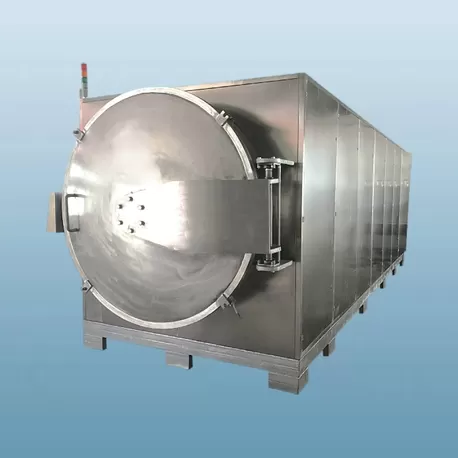
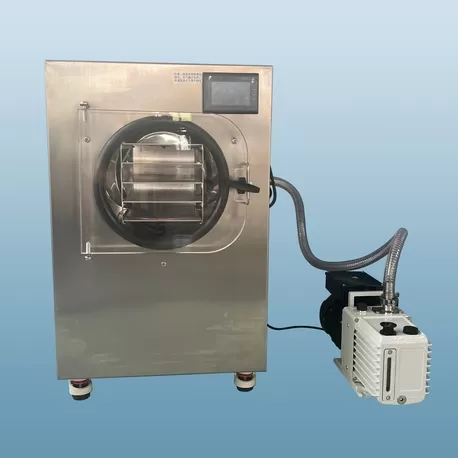
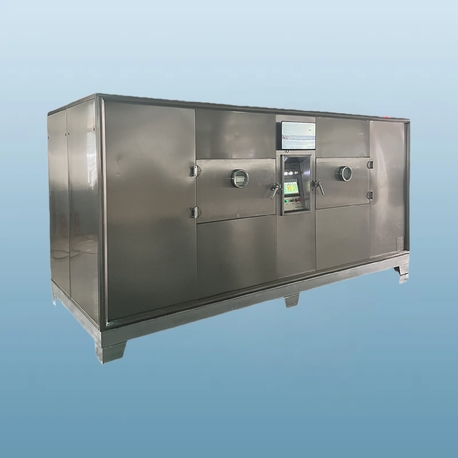
Vacuum Tray Dryers: Essential for high-value medicinal
mushrooms (reishi, cordyceps) where preservation of thermolabile triterpenoids
and polysaccharides is critical. Operating at absolute pressures of 50–100 mbar
reduces the boiling point of water to 38-45°C, enabling rapid drying without
exceeding 45°C product temperature. This configuration yields bioactive
retention rates exceeding 92%, compared to 65-70% in conventional atmospheric
dryers.
3. Industry Pain Points: Quantifying Quality Defects and Engineering
Countermeasures
Commercial mushroom drying operations face recurring quality issues that
directly impact market acceptance and pricing. Below are documented failure
modes and the engineered solutions implemented in modern mushroom
dehydrator systems.
3.1 Enzymatic Browning and Flavor Development
For shiitake and similar varieties, controlled enzymatic browning is
desirable to develop the characteristic umami flavor. However, uncontrolled
browning results in dark, unappealing caps and bitter notes. The key is precise
temperature management during the first 90 minutes of drying: holding at 38-42°C
activates polyphenol oxidase (PPO) and tyrosinase without denaturing them
prematurely, allowing natural browning to proceed. After this period, the
temperature is ramped to 55°C to inactivate enzymes and fix color. A
mushroom dehydrator with programmable zone sequencing and
real-time colorimetric feedback (using inline spectrophotometers) automates this
process, achieving consistent color (ΔE < 2.5) across batches.
3.2 Microbial Load Reduction Without Thermal Degradation
Dried mushrooms intended for pharmaceutical or functional food applications
require total plate count (TPC) below 10⁴ CFU/g. Conventional hot-air drying at
60°C achieves a 2-3 log reduction but may not meet stringent export
specifications. Advanced systems integrate pulsed UV-C irradiation within the
drying chamber or radio frequency (RF) assisted drying. RF energy selectively
heats water molecules, achieving pasteurization (5-log reduction) while
maintaining bulk temperatures below 48°C. Nasan offers modular
RF-assist options that retrofit into existing belt dryers, providing a
non-thermal kill step.
3.3 Sulfite-Free Color Retention for White Varieties
White button mushrooms naturally discolor due to melanin formation. Many
processors resort to sulfite pretreatment, which faces regulatory restrictions
in EU and organic markets. Alternative solutions include modified atmosphere
drying (using nitrogen or carbon dioxide blanketing) to exclude oxygen during
initial drying phases, or applying a thin coating of ascorbic acid-based
solutions via misting nozzles inside the dryer entrance. These methods preserve
whiteness (L* value > 82) without chemical additives, allowing “sulfite-free”
labeling.
4. Energy Efficiency and Heat Recovery in Commercial Drying
Energy consumption represents the largest operational expenditure in mushroom
dehydration. A conventional electric resistance or gas-fired dryer consumes
3.2-4.5 kWh per kilogram of water evaporated. High-performance heat-pump
assisted mushroom dehydrator systems reduce specific energy
consumption (SEC) to 1.3-1.8 kWh/kg water removed, yielding payback periods of
12–20 months depending on local utility rates.
The efficiency gains derive from closed-loop operation: the heat pump
captures latent heat from exhaust air, reusing it for incoming air preheating.
For facilities processing 10,000 kg of fresh mushrooms daily (approximately
8,500 kg water removal), annual energy savings range from $55,000 to $75,000.
Nasan systems incorporate additional energy recovery features
such as:
Cross-flow plate heat exchangers recovering 65-70% of exhaust enthalpy
Variable frequency drives (VFDs) on all fans, adjusting airflow to actual
load requirements
Automated defrost cycles that optimize heat pump operation in low-ambient
conditions
5. Sanitary Design and Regulatory Compliance
Mushroom processing facilities exporting to North America, EU, or Japan must
comply with sanitary design standards to prevent cross-contamination and
facilitate cleaning. Key design features of a hygienic mushroom
dehydrator include:
Fully welded 304L or 316L stainless steel construction with radiused corners
(≥ 6 mm radius) to eliminate harborage points
Sloped floors (minimum 2°) with central drains to allow washdown water
egress
IP69K-rated electrical enclosures for high-pressure washdown
environments
Quick-release belt sections and tool-free access panels to reduce cleaning
downtime by 40-50% compared to conventional designs
Nasan dryers are certified to EHEDG (European Hygienic
Engineering & Design Group) guidelines, providing documented compliance for
GMP and HACCP audits.
6. Case Study: Scaling Organic Shiitake Production with Continuous
Drying
A midwestern US mushroom farm specializing in organic shiitake faced capacity
limitations with their batch cabinet dryers. Each batch required 22 hours and
produced inconsistent moisture levels, with 18% of product exceeding 12%
moisture—leading to mold complaints during storage. The operation upgraded to a
Nasan 3-stage continuous belt mushroom
dehydrator with integrated heat pump and zone-specific dew point
control.
Results over a 12-month period demonstrated:
Throughput increased from 350 kg/day (fresh) to 1,800 kg/day
Drying time reduced from 22 hours to 9.5 hours per batch-equivalent
Moisture uniformity improved: CV reduced from 8.2% to 2.9%
Reject rate due to color inconsistency dropped from 15% to 2.3%
Energy consumption per kilogram of dried product decreased by 58%
The automated recipe system allowed operators to store profiles for shiitake,
oyster, and lion’s mane, switching between products with minimal changeover
time.
7. Process Control: IoT-Enabled Drying Curves and Predictive Analytics
The modern industrial mushroom dehydrator functions as a
connected asset within Industry 4.0 frameworks. Nasan’s Drying
Intelligence Platform (DIP) integrates:
In-line near-infrared (NIR) sensors measuring moisture content every 30
seconds across belt width
Wireless temperature probes placed within product layers to monitor core
temperature without opening the chamber
Predictive algorithms that adjust zone setpoints based on real-time moisture
data, maintaining target endpoint with ±0.8% accuracy
Remote diagnostics and maintenance alerts: the system notifies operators
when fan bearing vibration exceeds baseline thresholds or when filter pressure
drop indicates cleaning required
This infrastructure supports full traceability for regulatory audits, with
time-stamped drying profiles archived for each batch. For contract
manufacturers, this data provides verification of process consistency to
buyers.
8. Future Directions: Hybrid Drying and Carbon Reduction
As corporate sustainability commitments intensify, mushroom processors are
evaluating hybrid drying configurations that reduce Scope 1 and Scope 2
emissions. Emerging systems combine:
Solar thermal pre-heaters to elevate air temperature before entering the
heat pump, reducing electrical demand
Biomass-fired thermal oil loops in regions with forestry waste
availability
Microwave-assisted vacuum drying (MAVD) for ultra-premium extracts, reducing
drying time to 1/8th of conventional methods while preserving β-glucan
integrity
Nasan offers modular designs that allow future integration
of these technologies without replacing the core drying infrastructure,
protecting capital investments as energy landscapes evolve.
Frequently Asked Questions (FAQ)
Q1: What is the optimal temperature profile for drying shiitake
mushrooms to maximize umami flavor?
A1: Shiitake requires a
controlled enzymatic development phase. Initiate drying at 38-42°C for 90
minutes to allow natural browning via tyrosinase activity. Then increase
temperature to 52-55°C for the remainder of the cycle, maintaining relative
humidity below 35% during the falling-rate period. A programmable
mushroom dehydrator with zone segmentation is essential for
replicating this profile consistently. Total drying time for 8 mm slices
typically ranges from 6 to 8 hours.
Q2: How can I prevent case hardening in whole button mushrooms during
industrial drying?
A2: Case hardening occurs when surface moisture
evaporates too rapidly before internal moisture can migrate. Solutions include:
(1) maintaining relative humidity above 50% during the first 2-3 hours of
drying; (2) using lower air velocities (0.8-1.2 m/s) during the initial stage;
(3) implementing intermittent drying cycles—short periods of rest where no
airflow is applied—to allow moisture gradients to equalize. Many advanced
mushroom dehydrator controllers include intermittent drying
modes as a standard feature.
Q3: What moisture level should I target for dried mushrooms intended
for long-term storage?
A3: For shelf stability without
refrigeration, final moisture content should be between 8% and 10% (wet basis).
At 10% moisture, water activity (aw) typically falls below 0.65,
inhibiting mold and bacterial growth. Exceeding 12% moisture raises
aw to >0.70, significantly increasing spoilage risk. Industrial
dryers with inline NIR sensors can ensure precise endpoint detection.
Q4: How do I calculate the required capacity for a mushroom
dehydrator based on fresh throughput?
A4: Mushrooms generally have
88-92% moisture content fresh and are dried to 8-10%, meaning approximately 8-9
kg of fresh product yields 1 kg of dried. To determine required evaporative
capacity: fresh throughput (kg/h) × (initial moisture fraction – final moisture
fraction) = water removal rate (kg/h). For example, processing 1,000 kg/h fresh
(90% to 9%) requires removing 810 kg/h of water. Select a dryer with nominal
evaporative capacity at least 15% above this figure to accommodate seasonal
variability.
Q5: Can a single dehydrator process both medicinal mushrooms (reishi)
and culinary varieties without cross-contamination?
A5: Yes,
provided the system incorporates sanitary design features and validated cleaning
protocols. Reishi and other medicinal fungi often have allergenic spores that
must not cross into culinary products. Look for a mushroom
dehydrator with fully welded stainless steel interiors, removable belt
sections for cleaning, and separate air-handling zones or a clean-in-place (CIP)
system. Nasan dryers include CIP spray balls and self-draining
surfaces certified for allergen-changeover protocols.
Q6: What is the typical return on investment for upgrading from a
batch oven to a continuous belt mushroom dehydrator?
A6: ROI depends
on current labor costs, energy rates, and reject percentages. Based on
installations at facilities processing 500-2,000 kg/day fresh, payback periods
range from 14 to 24 months. Primary drivers: labor reduction (continuous
operation requires 50-60% less handling), energy savings (heat-pump models
reduce consumption by 40-55%), and yield improvement (reject reduction of 8-12%
directly adds to net revenue). A detailed analysis using your specific utility
rates and throughput can be provided by Nasan engineering
staff.
Selecting a high-performance mushroom dehydrator is a strategic investment that determines product quality, operational
efficiency, and regulatory compliance. Nasan provides end-to-end
support—from process auditing and equipment customization to commissioning and
remote monitoring—ensuring that your drying operation meets the rigorous demands
of global markets. Contact our mycological processing team to schedule a
technical consultation and receive a tailored capacity analysis.