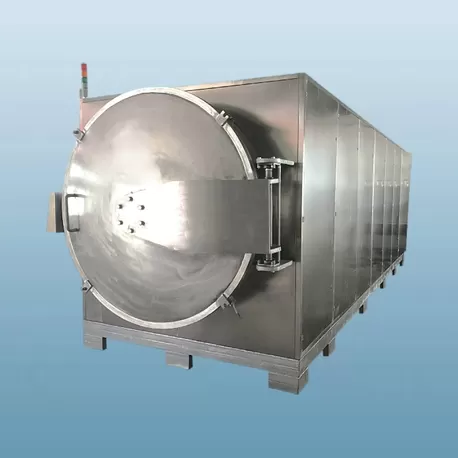
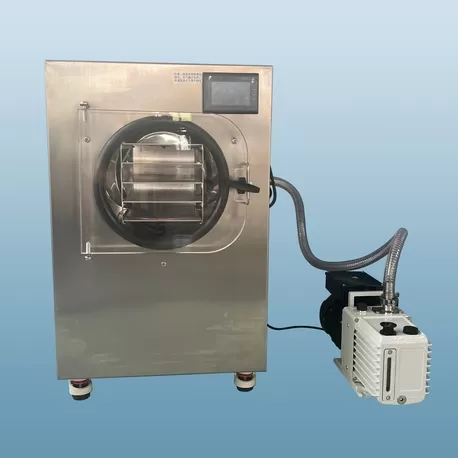
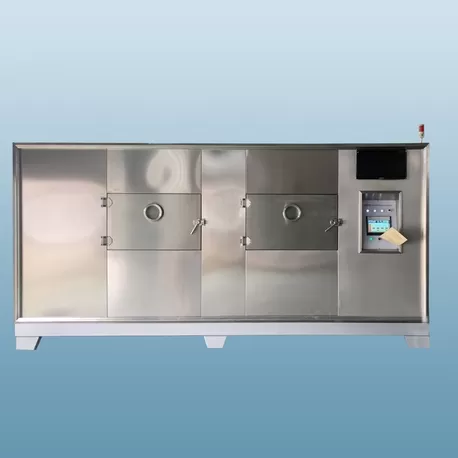
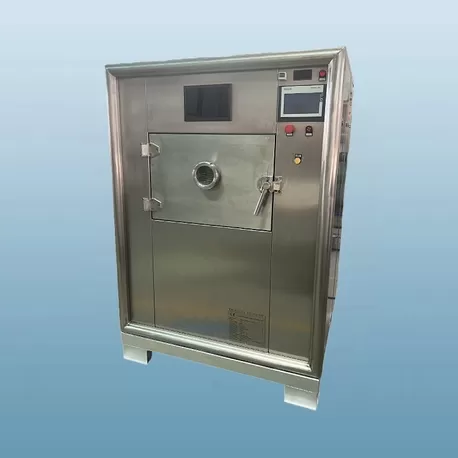
In the realm of high-value botanical processing—whether for nutraceuticals,
cosmetic raw materials, or specialty tea markets—the margin between
premium-grade dried flowers and commercial-grade waste is defined by the
precision of the dehydration infrastructure. Unlike generic agricultural dryers,
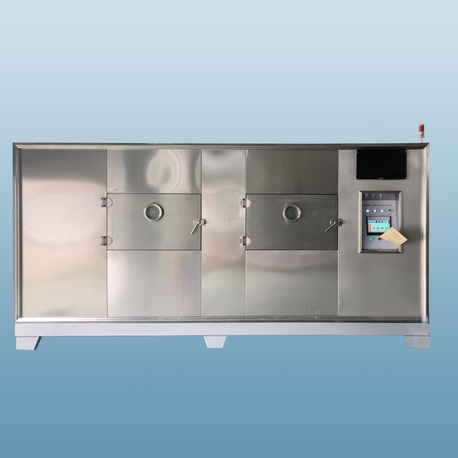
a dedicated flower
dryer must address the anisotropic cellular structure of petals,
the volatile oil retention thresholds, and the batch-to-batch consistency
required for ISO-compliant production. At Nasan, we have spent
over two decades refining industrial drying protocols that balance thermodynamic
efficiency with botanical integrity.
The global botanical extract market, projected to exceed USD 80 billion by
2030, places unprecedented demand on post-harvest processing equipment.
Traditional sun-drying or makeshift hot-air systems lead to color degradation
(ΔE > 8.0), microbial proliferation, and inconsistent moisture
uniformity—failures that cascade into rejection by pharmaceutical buyers. This
article provides a granular breakdown of modern flower dryer engineering, focusing on psychrometric control, airflow stratification, and the
integration of IoT-enabled drying curves. We will examine how specific equipment
architectures solve the perennial industry conflict: reducing dehydration time
without triggering thermal degradation of sensitive compounds like anthocyanins
and flavonoids.
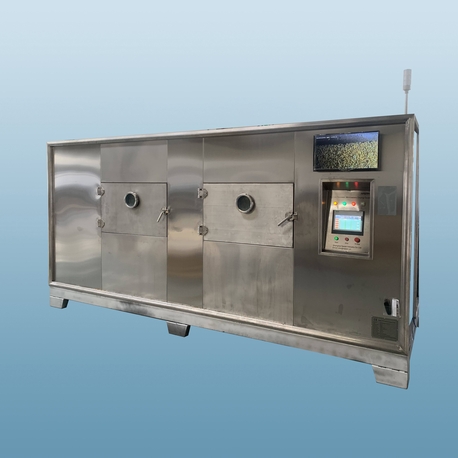
1. The Physics of Floral Dehydration: Beyond Simple Moisture Removal
Effective floral drying is governed by two simultaneous transport phenomena:
heat transfer to the product and mass transfer of water vapor away from the
product’s boundary layer. A commercial flower dryer must
manipulate these variables with surgical precision. In petals, the cuticle layer
presents a high resistance to moisture diffusion; if the drying air’s dew point
is not properly managed, case hardening occurs—a phenomenon where the exterior
denses into a moisture barrier while the interior retains 18-22% moisture
content, leading to post-drying mold outbreaks within 4-6 weeks of storage.
Advanced systems employ multi-stage drying profiles. For chamomile or
calendula, the initial stage (0-4 hours) operates at 35-40°C with 65% relative
humidity (RH) to equalize moisture migration without cell rupture. The second
stage lowers RH to 40% while incrementally increasing temperature to 52°C,
targeting the bound water within the vacuole. Industrial data from
Nasan installations show that such gradient-controlled profiles
reduce moisture content from 88% wet basis to 8.5% with a moisture uniformity
index (CV) below 3.2%, compared to 11-14% CV in single-stage units.
1.1 Psychrometric Optimization and Energy Input
Energy consumption remains the largest operational expenditure in botanical
drying. A standard heat-pump assisted flower dryer reduces
specific energy consumption (SEC) to 1.2-1.6 kWh per kilogram of water removed,
versus 3.5-4.0 kWh in electric resistance heaters. The recirculation rate is
critical: closed-loop systems that recover 85-90% of exhaust enthalpy can
achieve a coefficient of performance (COP) of 4.2. For large-scale operations
processing 2,000 kg of fresh flowers daily, this translates to annual energy
savings exceeding USD 45,000.
However, recirculation must be balanced with volatile organic compound (VOC)
evacuation. Flowers such as lavender or rose release terpenes and esters during
drying; excessive VOC accumulation can lead to flavor tainting. High-end
flower dryer designs incorporate partial fresh-air injection
valves, automated based on VOC sensor feedback, ensuring aromatic integrity
without sacrificing thermal efficiency.
2. Categorization of Industrial Flower Dryer Architectures
Selecting the correct drying system requires a forensic analysis of
throughput, botanical fragility, and downstream processing requirements. Below
are the three primary configurations dominating the industrial sector, with
specific application parameters.
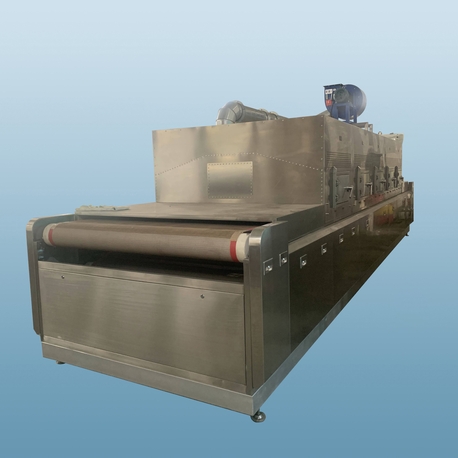
Continuous Belt Dryers (CBD): Ideal for high-throughput
crops like hibiscus, rose petals, and marigold. Multi-tier belt systems allow
for material turning, preventing matting. Critical design factors include belt
load density (10-15 kg/m²) and air velocity uniformity across the belt width.
Nasan’s CBD units employ computational fluid dynamics
(CFD)-optimized plenums to achieve velocity variation < ±0.3 m/s across a 3m
width, eliminating edge-drying defects.
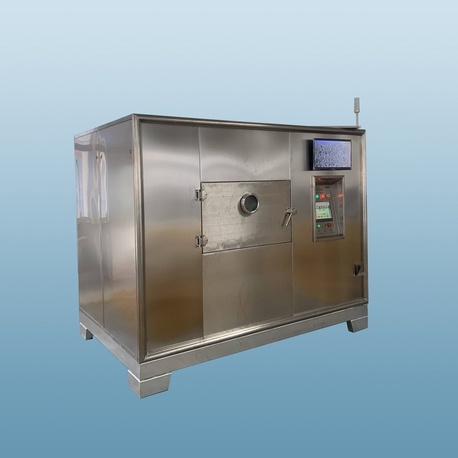
Tray-Truck Dryers (Batch): Preferred for R&D,
small-batch specialty flowers (e.g., saffron, organic-certified elderflower),
and pharmaceutical lots requiring full traceability. These systems offer the
highest process flexibility, allowing different drying recipes per batch. Modern
units incorporate gravimetric feedback—when the batch loses 88-92% of its
initial weight, the system automatically shifts to a cooling phase to prevent
over-drying.
Fluidized Bed Dryers (FBD): Reserved for granular or cut
flower particles (≤ 5 mm). The fluidization state provides exceptional heat and
mass transfer coefficients (h > 200 W/m²K), reducing drying time by 40%
compared to static methods. FBDs are optimal for drying flowers destined for
powder extraction, as they minimize thermal history.
3. Industry-Specific Pain Points and Engineered Solutions
Through our deployment of over 300 industrial drying systems globally,
Nasan has documented recurring failure modes that compromise
dried flower quality. Addressing these requires not merely equipment, but
integrated process engineering.
3.1 Color Retention: The Anthocyanin Stability Index
Anthocyanins, responsible for red/blue pigmentation in flowers like butterfly
pea and cornflower, degrade exponentially with temperature and oxygen exposure.
Conventional dryers operating at 70°C cause degradation rates (k) of 0.035
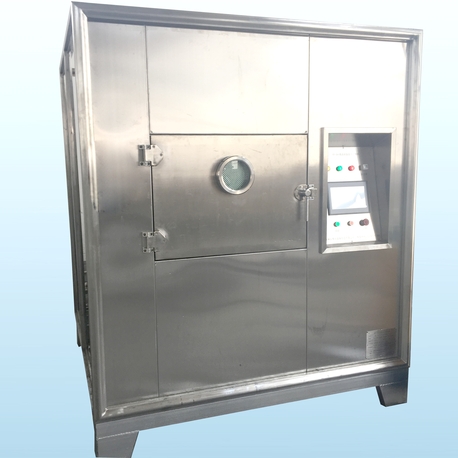
min⁻¹. By implementing vacuum-assisted flower dryer configurations (absolute pressure 50-70 mbar), the boiling point of water is
reduced to 38°C, allowing rapid moisture removal without thermal degradation.
Third-party lab tests on Nasan vacuum dryers show anthocyanin
retention of 94.7% versus 62.3% in atmospheric dryers.
3.2 Microbiological Compliance: Reducing Total Plate Count (TPC)
Pharmaceutical-grade dried flowers require TPC below 10⁴ CFU/g. The drying
process itself must act as a kill step. The challenge is that low-temperature
drying (<45°C) may not achieve the required pasteurization effect. Advanced
flower dryer systems incorporate pulsed microwave assist—short
bursts of 915 MHz energy that generate selective heating of water molecules,
achieving a 5-log reduction in mesophilic bacteria while maintaining average
bulk temperatures below 42°C. This dual-modality approach is becoming a
prerequisite for cosmetic ingredient suppliers.
4. IoT and Process Analytical Technology (PAT) in Drying Operations
The modern drying facility is moving toward Industry 4.0 architectures. A
fully instrumented flower dryer now includes near-infrared
(NIR) sensors for real-time moisture monitoring, vibration sensors for bearing
prognostics, and automated damper controls tied to predictive algorithms.
Nasan’s proprietary Drying Optimization Platform (DOP) collects
data at 0.1 Hz intervals, constructing a digital twin of each batch.
For contract manufacturers, this data infrastructure enables:
Traceability: Full documentation of
time-temperature-moisture profiles for GMP audits.
Predictive Maintenance: Alerts when fan amperage deviates
8% from baseline, indicating belt misalignment.
Yield Optimization: Machine learning models that adjust
drying recipes based on incoming flower moisture variability, reducing
over-dried scrap by 12-15%.
5. Lifecycle Cost Analysis and ROI Considerations
When evaluating capital expenditure for a commercial flower
dryer, the total cost of ownership (TCO) over 10 years often outweighs
the initial purchase price by a factor of 5-7x. Primary cost drivers are energy,
maintenance, and product loss. A comparative analysis between a basic hot-air
dryer and a Nasan heat-pump integrated dryer reveals the
following:
Energy consumption: Basic: 3.8 kWh/kg water; Nasan: 1.4
kWh/kg water → annual savings: ~$28,000 (based on 500 tons wet input/year at
$0.12/kWh).
Maintenance: Belt replacement costs and fan motor failures
in basic units average $7,200/year; Nasan’s corrosion-resistant 316L stainless
steel construction and direct-drive fans reduce annual maintenance to
$1,900.
Product value uplift: Premium-grade (Grade A) dried flowers
command 32-40% price premium over Grade B. Higher uniformity and color retention
from advanced dryers yield Grade A rates of 92% versus 68% in conventional
dryers.
Payback periods for high-performance flower dryer systems
typically range from 14 to 22 months, contingent on local energy tariffs and
product market positioning.
6. Compliance and Sanitary Design Standards
For manufacturers exporting to EU or North American markets, equipment must
adhere to strict sanitary design principles. The European Hygienic Engineering
& Design Group (EHEDG) guidelines mandate that all product-contact surfaces
be free of crevices, with a surface finish ≤ 0.8 µm Ra. Our flower
dryer systems are fabricated with fully radiused internal corners,
sloped floors for washdown drainage, and clean-in-place (CIP) spray balls
integrated into the chamber design. This eliminates the risk of
cross-contamination between batches of allergenic flowers such as arnica and
chamomile.
Furthermore, compliance with NFPA 69 for deflagration venting is mandatory
when processing flowers with low ignition energy (e.g., dried lavender dust). We
incorporate explosion panels with burst pressure ratings of 0.5 psi, mitigating
risk in pneumatic conveying sections.

7. Case Study: Scaling Artisanal Production to Industrial Volume
A European botanical extractor faced consistent rejection of dried cornflower
due to scorched petal edges and moisture stratification. Their existing batch
oven produced 12% substandard material. After implementing a
Nasan continuous multi-stage belt dryer with individual zone
temperature control and automatic belt speed modulation, the reject rate dropped
to 1.8%. The system’s integrated dew point control preserved the characteristic
blue hue (CIELAB b* value maintained at -12.5, compared to -5.6 previously).
Throughput increased from 180 kg/day to 1,100 kg/day without adding labor,
effectively doubling the facility’s production capacity within the same
footprint.
This success was largely due to the ability to maintain a consistent drying
curve across varying harvest seasons—a challenge that static dryers cannot
accommodate. The flexibility of the flower dryer’s PLC control
allowed operators to store 15 distinct drying recipes, each validated against
specific cultivar characteristics.
8. Future Outlook: Carbon-Neutral Drying and Hybrid Systems
As carbon accounting becomes a competitive factor in B2B contracts, the
drying industry is shifting toward electrification and waste-heat recovery.
Emerging flower dryer configurations integrate solar thermal
pre-heaters with high-temperature heat pumps, achieving Global Warming Potential
(GWP) reductions of 85% compared to natural gas-fired systems. Additionally, we
are witnessing the adoption of microwave-assisted vacuum drying (MAVD) for
ultra-premium botanicals; MAVD reduces drying time to 1/6th of conventional
methods while preserving thermolabile compounds at near-ambient conditions.
For operations seeking to future-proof their processing lines, modular
designs that allow retrofitting of heat recovery units or electric boosters will
dominate procurement criteria. Nasan currently offers modular
retrofit kits enabling existing customers to upgrade from fossil-fuel heating to
closed-loop heat pump systems without replacing the entire dryer housing,
reducing capital outlay by 40% compared to full system replacement.
Frequently Asked Questions (FAQ)
Q1: What is the optimal temperature range for drying chamomile
flowers in an industrial flower dryer?
A1: Chamomile requires a
delicate thermal profile due to its high essential oil content (0.4-1.2%). The
optimal range is 35°C to 48°C, with a two-stage process: initial 4 hours at 35°C
with 60% RH to equalize moisture, followed by 38-48°C at 25% RH to complete the
process. Temperatures exceeding 50°C accelerate oxidation of bisabolol oxide,
diminishing the oil’s anti-inflammatory efficacy. A precision flower
dryer with zone segregation is highly recommended for this
application.
Q2: How can I prevent color fading in red rose petals during
drying?
A2: Color fading in red rose petals is primarily driven by
thermal degradation of anthocyanins and oxidation. Solutions include using a
low-temperature vacuum dryer (<45°C at 70-100 mbar) or introducing an inert
gas blanketing (nitrogen) in a modified atmosphere dryer. Also, ensure the
dryer’s air velocity does not exceed 1.5 m/s during the first 30% of drying to
prevent mechanical damage to cell walls, which accelerates enzymatic
browning.
Q3: What is the expected moisture uniformity after processing in a
continuous belt dryer versus a batch dryer?
A3: Continuous belt
dryers, when properly designed with CFD-optimized airflow, achieve a coefficient
of variation (CV) of 2.5-4.5% across the belt width. Batch tray dryers typically
achieve CV of 3-6%, though this depends heavily on loading density and air
recirculation patterns. High-end flower dryer models like those
from Nasan incorporate real-time moisture sensors that
dynamically adjust zone dampers, maintaining uniformity below 3% even during
start-up and shut-down phases.
Q4: What maintenance schedule is required for an industrial flower
dryer to ensure continuous operation?
A4: A preventive maintenance
schedule should include: daily inspection of belt alignment and tension; weekly
cleaning of condenser coils and filters; quarterly calibration of temperature/RH
sensors and NIR moisture meters; semi-annual greasing of fan bearings and motor
alignment checks; annual inspection of insulation integrity and door gaskets.
For Nasan equipment, our IoT platform provides predictive
alerts, typically flagging bearing degradation 200-300 operating hours before
failure, allowing scheduled downtime rather than unexpected stoppages.
Q5: Can a single flower dryer process multiple species (e.g.,
lavender, calendula, hibiscus) without cross-contamination?
A5: Yes,
provided the dryer incorporates sanitary design features and validated cleaning
protocols. The key is to use a system with removable product contact surfaces,
washdown-capable interiors (IP69K rating), and separate air plenums or a CIP
system. Nasan dryers are designed with fully welded stainless
steel interiors and no horizontal ledges where residual material could
accumulate. Additionally, we recommend maintaining separate belt sets for
different allergen categories if processing for pharmaceutical or cosmetic
clients.
Q6: What is the typical lead time for a custom-engineered flower
dryer system?
A6: Lead times vary based on system complexity and
capacity. For a standard 500-2000 kg/h continuous belt dryer with heat pump
integration, the lead time is typically 16-20 weeks from order to commissioning.
This includes engineering design, fabrication, factory acceptance testing (FAT),
shipping, and on-site installation supervision. Nasan maintains
a modular inventory program for our most common models, reducing lead times to
10-12 weeks for qualifying orders.
For businesses seeking to transition from artisanal drying methods to
scientifically validated, high-throughput production, the selection of the
correct flower dryer is
the single most impactful capital decision. It determines not only operational
costs but also the premium positioning of the final product. Nasan offers comprehensive engineering support, from process audits to full-scale
system integration, ensuring that your drying line delivers the consistency,
efficiency, and quality that global buyers demand. Contact our process
engineering team to discuss your specific botanical drying parameters and
receive a tailored ROI projection.