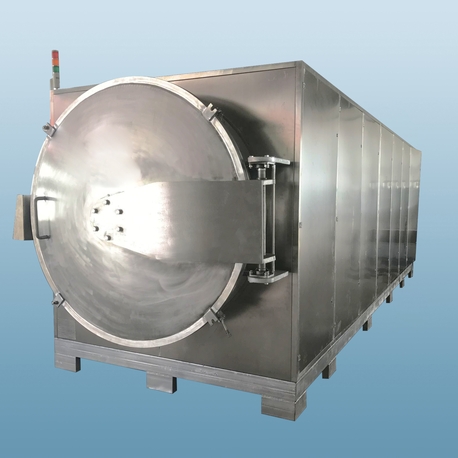
Dehydrated garlic represents a multi-billion-pound global commodity, yet
achieving consistent garlic dehydrator performance requires mastery of psychrometrics, cellular biology, and industrial
airflow engineering. For processors handling 5–50+ metric tons daily, the gap
between theoretical drying curves and actual output often determines
profitability. This guide examines validated parameters, common failure modes,
and how modern equipment—including Nasan industrial
solutions—addresses core challenges.
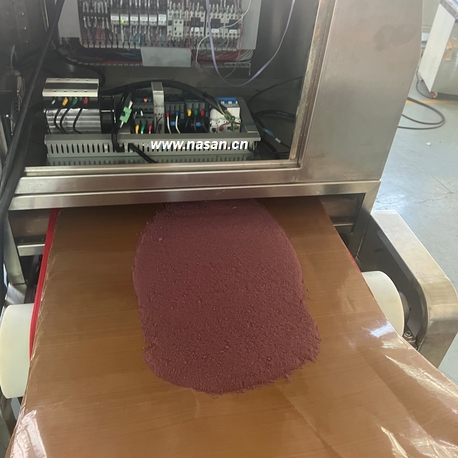
1. Dehydration Physics: Why Garlic Behaves Differently from Other
Alliums
Garlic (Allium sativum) contains high initial moisture (70–78% w.b.)
with significant bound water in parenchyma cells. Unlike onions, garlic’s
volatile sulfur compounds—mainly allicin, diallyl disulfide—are heat-labile
above 75°C. A well-designed garlic dehydrator must balance vapor pressure differentials while keeping product temperature
below 68°C to prevent allicin degradation and browning reactions.
Critical zone: Between 45–60% moisture content, case
hardening risk is highest if relative humidity drops too fast.
Target final moisture: ≤6% (aw <0.60) for microbial
stability and 12-month shelf life.
Drying ratio: 5.8:1 to 6.2:1 (fresh to dried
weight).
Industry data from 2023 shows that improper temperature staging in a
garlic dehydrator leads to 12–18% loss in allicin content. Optimal profiles use a three-zone
approach: pre-heating (55°C, 2h), constant-rate (62°C, 4–6h), and falling-rate
(58°C, 3h).
2. Core Components of a High-Performance Garlic Dehydrator
Industrial dehydration lines are not generic dryers. The most reliable
systems incorporate the following engineering elements:
2.1 Airflow Geometry & Turnover Rate
Cross-flow vs. through-flow belt designs: For sliced garlic (2–3 mm
thickness), through-flow belt dryers achieve 40% faster moisture extraction
compared to cross-flow because air passes perpendicularly through the product
bed. Belt drying systems must maintain air velocity between 1.5–2.8 m/s across the belt to avoid particle
entrainment.
2.2 Heat Source Flexibility & Energy Recovery
Modern facilities integrate waste heat recovery units that pre-heat incoming
air using exhaust from the drying chamber. A closed-loop heat
pump dehydrator configuration reduces specific energy consumption
from 5.2 kWh/kg water removed to 3.1 kWh/kg. For large-scale operators, this
translates to annual savings exceeding $45,000 per line.
2.3 Control Logic with Moisture-Feedback Loops
Real-time near-infrared (NIR) moisture sensors allow dynamic adjustments of
belt speed and zone temperatures. Without such feedback, manual scheduling
cannot compensate for incoming garlic’s natural variability (harvest season,
curing differences).
3. Industrial Applications and Throughput Modeling
Processors typically fall into three capacity tiers. Matching the garlic
dehydrator scale to output requirements is critical for ROI:
Small-batch (500–2,000 kg/day): Tray or cart dryers with
batch scheduling. Best for specialty organic garlic or colored varieties.
Mid-volume (3–12 TPD): Single-belt continuous dryers with
4–6 drying zones. Typical for powder and granule production.
High-capacity (>15 TPD): Multi-stage belt or hybrid
fluid-bed dehydrators. Nasan has engineered systems for
25 TPD garlic lines that include automatic CIP (clean-in-place) for sulfur
residue removal.
In 2022, a Spanish cooperative processing 18,000 tons/year reduced their
dehydration cycle by 27% after upgrading to a five-zone garlic
dehydrator with recirculation, achieving final moisture standard
deviation below 0.4%.
4. Process Validation: Critical Control Points for Garlic Quality
To meet food safety standards (BRC, FSSC 22000) and buyer specifications, you
must monitor six key parameters. Deviations directly affect color, flavor
strength, and rehydration ratio.
Slice uniformity: Tolerance ±0.5 mm. Thicker pieces cause
under-drying and microbial risk.
Pre-treatment: Blanching (85°C for 90 sec) inactivates
peroxidase, preventing off-flavors; but excessive blanching leaches allicin
precursors.
Dewatering before drying: Mechanical screw presses remove
15–20% free water, reducing energy load by 18%.
Zone 1 temperature (inlet): Set at 60°C max for first 30
minutes to avoid thermal shock.
Exhaust humidity setpoint: Maintain 28–32% RH during
constant-rate period; below 22% promotes case hardening.
Cooling stage: Product must exit below 35°C to prevent
condensation in bulk bags.
Advanced dehydration uniformity
systems now use differential pressure transducers across the belt
to detect clogging or channeling. A clogged section can increase drying time by
300% for that batch.
5. Energy Efficiency Strategies: Lowering Cost Per Ton
Energy typically represents 32–40% of operating costs in garlic dehydration.
Proven reductions include:
Exhaust air recirculation: Recirculating 55–65% of dry
exhaust air (still at 40–50°C) reduces fresh air heating load. ROI under 14
months.
Variable frequency drives (VFDs) on fans: Matching airflow
to actual moisture load cuts fan energy by 35–45%.
Solar pre-heating: In sunny climates, roof-mounted air
collectors can pre-heat intake air from 15°C to 42°C, saving 12% total thermal
energy.
Insulation thickness: Increasing from 50mm to 100mm mineral
wool reduces heat loss by 58% – a simple payback in less than one year for
continuous operation.
Nasan offers energy audits for
existing lines and integrates heat recovery cells directly into their garlic
dehydrator platforms, achieving verified SEC as low as 2.95 kWh/kg
water evaporated.
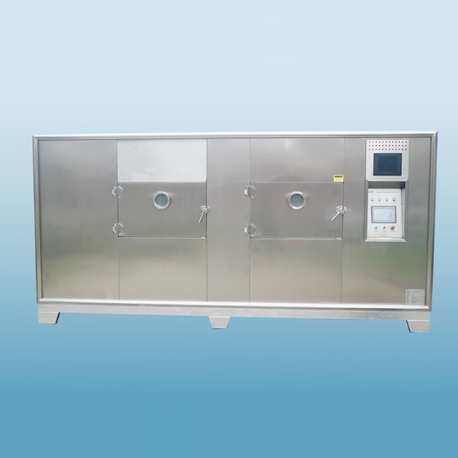
6. Common Failure Modes in Garlic Dehydration & Corrective Actions
Even experienced operators encounter these five technical issues. Root-cause
analysis is essential:
Non-enzymatic browning (dark tan color): Caused by zone
temperatures exceeding 72°C or prolonged residence time. Solution: recalibrate
thermocouples and reduce belt speed by 8–10%.
Mold growth after packaging: Indicates uneven moisture
(center of clove pieces still at >9% w.b.). Use online moisture sorting or
increase falling-rate stage time by 45 minutes.
Low rehydration ratio (<1.8:1): Collapse of cellular
structure due to too-rapid drying in first 2 hours. Implement gradual ramp from
55°C to 62°C over 90 minutes.
Sulfur off-odor in drying chamber: Alliinase not denatured;
pre-blanching or steam treatment required. Add a catalytic odor scrubber on
exhaust.
High fines in granulation (excessive dust): Over-dried
brittle garlic. Maintain exit moisture at 6% rather than 4% when making flakes;
for powder, use two-stage milling after conditioning.
For persistent throughput bottlenecks, upgrading to a multi-stage belt
dryer (three independently controlled conveyors) allows each stage
to operate at optimal humidity without cross-interference. This design also
reduces mechanical stress on garlic slices.
7. Why Nasan Engineering Solves Real-World Garlic Dehydration
Challenges
With over 200 food dehydration references worldwide, Nasan specializes in customized garlic dehydrator configurations that address regional climate and raw material variance. Their
approach combines computational fluid dynamics (CFD) simulations for airflow
optimization with IoT-based remote performance monitoring. Key differentiators
include:
Hygienic design: All stainless steel 304/316L contact
parts, sloped surfaces to prevent garlic residue accumulation, and quick-access
inspection ports.
Modular heat exchanger banks: Easily switch between steam,
thermal oil, or gas-fired heating without redesigning the drying chamber.
Predictive maintenance algorithms: Machine learning models
that alert operators to bearing wear or belt misalignment 200+ hours before
failure.
A recent installation for a Turkish garlic exporter demonstrated 23% higher
throughput compared to a European competitor’s dryer of equal footprint, with
99.2% product passing USDA Grade A color standards. You can review case studies
on Nasan’s
official website.
8. Frequently Asked Questions About Industrial Garlic Dehydrators
Q1: What is the optimal slice thickness for garlic dehydration in a
continuous belt dehydrator?
A1: For standard garlic dehydrator operation, 2.0–2.8 mm is ideal. Thinner (<1.5 mm) leads to rapid over-drying
and powder formation; thicker (>3.5 mm) extends drying time by up to 40% and
risks insufficient center moisture removal. Nasan’s adjustable guillotine
cutters maintain ±0.2 mm tolerance at 4 tons/hour.
Q2: How can I reduce energy consumption without extending the drying
cycle?
A2: Install an exhaust air heat exchanger (plate or
run-around coil) to pre-heat incoming fresh air. Combined with VFDs on drying
fans, you can reduce total kWh per ton by 27–33% without altering belt speed.
Energy recovery
modules from Nasan achieve payback in 8–14 months depending on
local energy tariffs.
Q3: Why does my dehydrated garlic sometimes develop a bitter
aftertaste after 3 months of storage?
A3: This indicates residual peroxidase activity. Measure the
PPO (polyphenol oxidase) value. If >0.15 absorbance units, extend blanching
time by 20 seconds or increase product temperature to 68°C for 10 minutes during
the falling-rate period. Also ensure final aw below 0.55.
Q4: Can I use the same dehydrator for garlic and other vegetables
without cross-flavor contamination?
A4: Not recommended without thorough cleaning. Garlic’s
volatile sulfur compounds adsorb onto stainless steel and belt materials. A
dedicated garlic dehydrator line is preferred. If unavoidable, run a hot water wash (70°C) with 1% citric
acid followed by a 2-hour bake-out at 100°C with open exhaust.
Q5: What is the typical ROI period for an automated garlic dehydrator
with NIR moisture control?
A5: For mid-scale (6 TPD) lines, payback ranges 18–24
months. Savings come from: reduced overdrying (2–3% weight loss recovery), lower
energy use (adaptive belt speed), and fewer rejected batches. Nasan provides ROI
calculators based on your local electricity cost and throughput.
Q6: How often should I calibrate temperature sensors in a multi-zone
garlic dehydrator?
A6: Every 90 days of continuous operation is industry
standard (ASTM E220). Drift exceeding ±1.2°C will alter drying kinetics. Nasan
systems include automatic sensor validation using a reference thermocouple
during scheduled maintenance alarms.
Data-Driven Dehydration Delivers Competitive Advantage
The industrial garlic market rewards processors who treat dehydration as a
precision thermal process rather than a commodity step. By controlling
psychrometric staging, investing in moisture feedback
systems, and adopting energy recovery designs, you can achieve
allicin retention above 82%, reduce per-ton operating cost by 19–24%, and meet
the most stringent import specifications. Nasan continues to lead this
sector with application-specific garlic dehydrator platforms that integrate these proven technologies. Evaluate your current drying
curves, benchmark against the parameters above, and upgrade strategically.