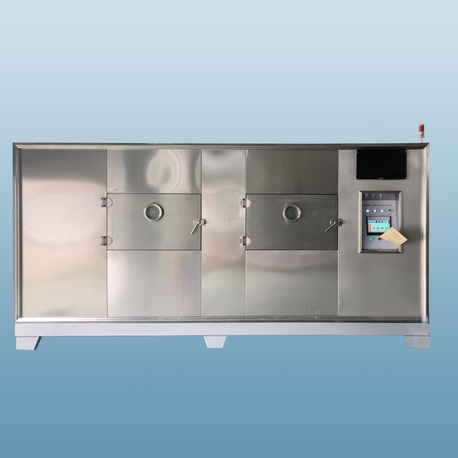
The intersection of microwave dielectric heating and vacuum pressure
reduction has redefined drying standards for thermolabile materials. Vacuum microwave
dehydration operates on a distinct principle: microwave energy generates
volumetric heating within the product matrix, while the vacuum environment
lowers the boiling point of water, enabling rapid moisture removal at reduced
temperatures. This dual mechanism addresses a fundamental contradiction in
conventional drying—the trade-off between drying speed and product quality. For
industries handling enzymes, probiotics, vitamins, and botanical actives, this
technology offers a pathway to preserve molecular integrity while achieving
commercial throughput.
This analysis examines five industrial domains where vacuum microwave
dehydration has demonstrated measurable advantages over convective, conductive,
or freeze-drying methods. Each application reveals a specific interplay between
material properties, process parameters, and equipment configuration. The
discussion draws on established principles of dielectric loss, vapor pressure
management, and heat-mass transfer coupling, providing a framework for process
engineers evaluating this drying modality.
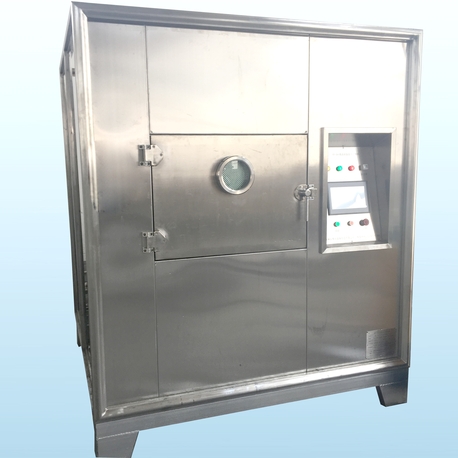
1. Pharmaceutical Intermediate and API Drying
Active pharmaceutical ingredients (APIs) and synthetic intermediates
frequently exhibit thermal sensitivity due to labile functional groups, hydrate
formation tendencies, or polymorphic transitions. Conventional tray drying
exposes these materials to prolonged elevated temperatures, often exceeding 60
°C for 12–24 hours, conditions that accelerate degradation pathways such as
oxidation, hydrolysis, or racemization. Vacuum microwave dehydration reduces
both time and temperature exposure: drying cycles of 1–4 hours at product
temperatures between 30 °C and 50 °C are typical, with moisture content
reductions from 30–40% to below 2% achievable.
The mechanism behind this performance lies in the volumetric heating
characteristic of microwaves. Unlike convective heat transfer, which relies on
thermal gradients from the surface inward, microwave energy couples directly
with polar water molecules throughout the material bulk. This causes internal
vapor generation, which drives moisture toward the surface where it is removed
by the vacuum system. The resulting drying kinetics are substantially faster,
minimizing the residence time at elevated temperatures. For hygroscopic or
shear-sensitive compounds, this translates to higher residual potency and fewer
degradation byproducts.
Process Control Parameters for Pharmaceutical Applications
Precise control over microwave power density and vacuum level is essential to
prevent localized overheating or boiling. Power density—expressed as watts per
gram of product—must be calibrated to the material's dielectric properties and
specific heat capacity. Excessive power leads to thermal runaway, where
localized hot spots cause product charring or fusion. Vacuum level dictates the
boiling point of water; at 50–100 mbar absolute pressure, water evaporates at
30–40 °C, providing a substantial safety margin for heat-labile compounds.
Inline temperature measurement using fiber-optic sensors or infrared pyrometry
enables real-time feedback control, maintaining product temperature within ±2 °C
of the setpoint throughout the drying cycle.
Batch uniformity presents another consideration. Microwave field distribution
within the chamber must be homogeneous to ensure uniform heating across all
product containers. Rotary turntables or mode stirrers improve field uniformity,
while variable frequency microwave sources allow dynamic adjustment of frequency
to match changing dielectric properties as moisture content declines. These
engineering features are integrated into commercially available systems from
manufacturers like Nasan, whose equipment designs incorporate
field simulation and power distribution optimization for consistent batch
results.
2. Botanical Extracts and Herbal Concentrates
Botanical extracts—including those from medicinal plants, adaptogens, and
culinary herbs—contain a complex matrix of polysaccharides, flavonoids, phenolic
acids, and essential oils. These constituents are prone to degradation during
drying, with losses in total phenolic content (TPC) and antioxidant activity
frequently exceeding 30% in hot air drying. Vacuum microwave dehydration
preserves these phytochemicals through a combination of low temperature and
short residence time. Comparative studies have shown that total flavonoid
retention in vacuum microwave-dried extracts exceeds 90%, compared to 65–75% for
conventional air drying at 60 °C.
Essential oil preservation is particularly critical for botanical
applications. Monoterpenes and sesquiterpenes are volatile at temperatures above
40 °C, and their loss during drying directly diminishes product potency and
aroma profile. The reduced boiling point under vacuum allows oil evaporation to
occur at lower temperatures, but careful vacuum control prevents excessive loss.
Process optimization involves balancing microwave power to drive water removal
while maintaining the vacuum level sufficiently low to retain volatile
fractions. A stepped pressure profile—beginning at a moderate vacuum (150 mbar)
and gradually reducing to 50 mbar—has been employed to achieve both effective
dehydration and essential oil retention.
Color and Rehydration Properties
Color stability serves as a visual indicator of product quality. Chlorophyll
degradation and Maillard reaction products are minimized under vacuum microwave
conditions, resulting in dried extracts that retain the natural green or brown
hues of fresh material. Rehydration kinetics also improve: the porous structure
formed during rapid vapor generation facilitates rapid water uptake when the
dried product is reconstituted. This property is especially valued in botanical
raw materials intended for beverage, supplement, or cosmetic formulations, where
dispersion and dissolution characteristics affect final product performance.
Nasan provides vacuum microwave systems with programmable drying profiles that
accommodate the varying composition of botanical batches, enabling manufacturers
to maintain consistent extract quality across harvests and seasonal
variations.
3. Probiotic Cultures and Enzyme Preparations
Probiotic microorganisms—Lactobacillus, Bifidobacterium, and Bacillus
strains—require careful dehydration to maintain viability during storage and
subsequent formulation. Freeze-drying (lyophilization) is the conventional
method for probiotic stabilization, but its extended processing times (often
24–48 hours) and high energy consumption have prompted exploration of
alternative technologies. Vacuum microwave dehydration offers a compelling
alternative: drying times of 2–6 hours at product temperatures below 40 °C have
yielded viability rates exceeding 80%, comparable to freeze-dried controls.
The protective mechanism involves rapid moisture removal before cellular
injury can accumulate. During conventional drying, cells experience prolonged
osmotic stress, leading to membrane damage and protein denaturation. The
volumetric heating and accelerated kinetics of vacuum microwave dehydration reduce this stress period, allowing cells to remain in a viable state through
the drying transition. Addition of cryoprotectants—such as sucrose, trehalose,
or skim milk—further enhances survival by stabilizing membrane lipids and
intracellular proteins during the dehydration process.
Enzyme Activity Retention
Enzyme preparations—proteases, amylases, lipases, and cellulases—similarly
benefit from reduced thermal exposure. Enzymatic activity is directly correlated
with native protein conformation; temperatures above 50 °C typically cause
irreversible denaturation. Vacuum microwave dehydration maintains product
temperatures in the 30–45 °C range, preserving specific activity. In industrial
applications, dried enzyme concentrates are preferred for their stability,
transport economy, and ease of dosing. Drying with microwave-vacuum technology
produces free-flowing powders with particle sizes suitable for direct
compression or encapsulation.
The selection of drying parameters depends on the organism or enzyme's
thermal tolerance. For particularly sensitive strains, microwave power
application can be pulsed—intermittent on/off cycles—to allow thermal relaxation
and prevent cumulative heat buildup. Real-time moisture sensing via
near-infrared (NIR) spectroscopy provides endpoint determination, preventing
over-drying that could compromise cell viability or enzyme activity.
4. Fruit and Vegetable Powder Production
The fruit and vegetable processing industry faces persistent challenges in
producing powders with high nutritional value, good flowability, and extended
shelf life. Hot air drying of fruits like berries, mangoes, or tomatoes results
in significant losses of vitamins (especially vitamin C and B-group vitamins)
and anthocyanin pigments. Vacuum microwave dehydration preserves these
nutritional components while achieving the low moisture content (<5%)
required for microbial stability and extended shelf life.
Quality parameters in fruit powder production include hygroscopicity,
particle size distribution, and bulk density. The foaming characteristics of
certain fruit purees—due to pectin content—can be managed through vacuum
microwave drying, producing porous, easily rehydratable powders with low bulk
density. This attribute is advantageous for powdered beverage mixes, where rapid
dissolution is a customer expectation. The reduced temperature also preserves
volatile aroma compounds, maintaining the natural fruity notes that are often
lost in spray drying or drum drying processes.
Vegetable and Botanical Residue Utilization
Beyond primary fruit products, vacuum microwave dehydration offers
opportunities for valorizing processing residues. Pomace, peels, and seeds
contain valuable fiber, polyphenols, and essential oils that are currently
underutilized. Drying these residues to stable moisture content enables their
incorporation into functional food ingredients, dietary supplements, or animal
feed. The versatility of vacuum microwave equipment—accommodating varied
particle sizes and moisture contents—supports this waste-to-value conversion,
contributing to more sustainable production models.
Process development for fruit and vegetable applications frequently involves
optimization of sample loading density and container geometry. Uniform layers of
20–30 mm thickness are typical, with microwave power modulated to maintain
steady evaporation rates. Condenser design plays a role in system performance:
efficient solvent recovery reduces vacuum pump load and enables collection of
distillates for potential flavor or nutrient recovery.
5. Fine Chemicals and Specialty Polymer Drying
Fine chemical synthesis often produces wet cakes, precipitates, or resinous
materials that require drying to free-flowing powders or granules. Many of these
compounds—such as catalysts, initiators, crosslinking agents, and
stabilizers—are sensitive to oxygen, moisture, or heat. Vacuum microwave
dehydration provides a closed-system environment with inert gas purging
capability, addressing oxygen sensitivity. The reduced temperature prevents
premature polymerization, decomposition, or color formation.
Specialty polymers—including polyelectrolytes, hydrogels, and biodegradable
polyesters—present drying challenges due to their high affinity for water and
tendency to form rubbery or glassy states during dehydration. The volumetric
heating characteristic of microwaves facilitates moisture removal even from
dense or viscous matrices that would resist convective drying. Achieving the
glass transition temperature (Tg) is important; drying above Tg can cause
stickiness and agglomeration, while drying below Tg requires extended
processing. Vacuum microwave drying allows operation below the Tg for most
polymers, preserving particulate morphology.
Solvent Removal and Residual Volatiles
In cases where organic solvents are present—from crystallization or
precipitation steps—vacuum microwave drying can effect solvent removal alongside
moisture reduction. The vapor pressure of solvents under vacuum is increased,
enabling evaporation at moderate temperatures. However, safety considerations
require explosion-proof construction, inert gas blanketing, and vapor detection
systems. Solvent recovery systems using chilled condensers or cryogenic traps
are integrated to capture and reuse process solvents, aligning with
environmental regulations and economic considerations.
This application domain demands robust equipment design, including
microwave-transparent ceramics or polytetrafluoroethylene (PTFE) liners for
chemical resistance. Nasan offers customized vacuum microwave
configurations for chemical and polymer processing, incorporating
chemical-resistant materials and safety interlocks to meet industry-specific
requirements.
Equipment Configuration and Process Scale-Up
Batch and Continuous System Comparisons
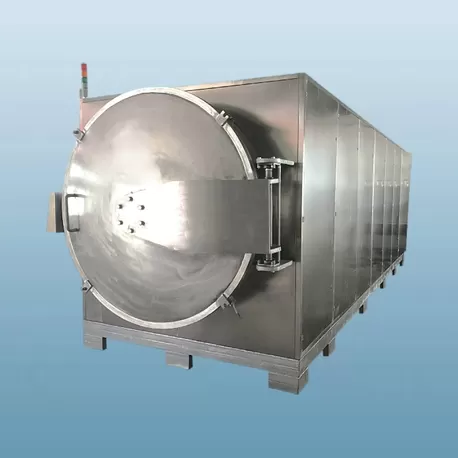
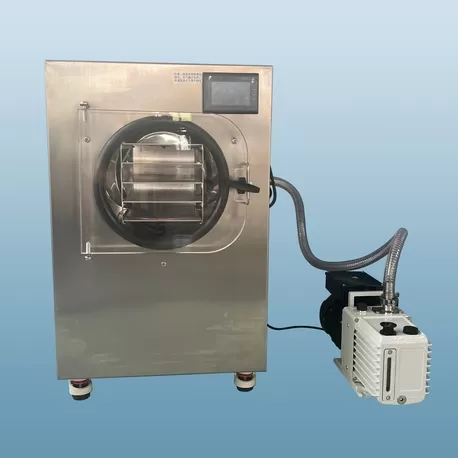
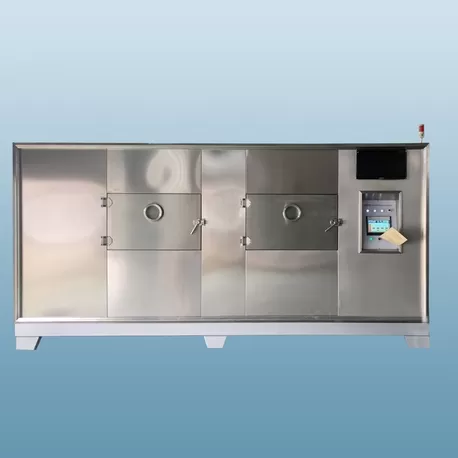
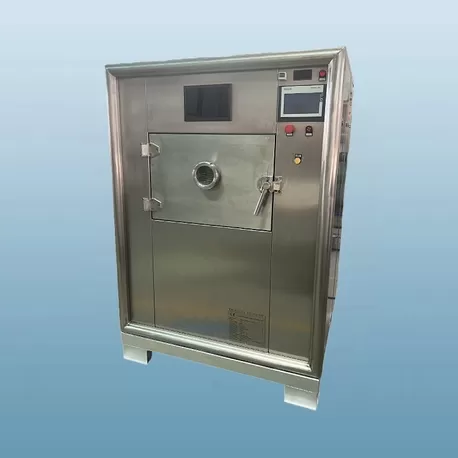
Vacuum microwave dehydration systems are available in batch and continuous
configurations, each suited to different production scales and product types.
Batch systems—typically with chamber volumes of 50–500 liters—offer flexibility
for product development, low-volume specialty products, and variable batch
sizes. Continuous systems, employing belt or screw conveyors, are designed for
high-throughput operations where consistent feed composition and drying
parameters are maintained. The transition from batch to continuous involves
careful engineering of microwave leakage prevention, vacuum sealing, and
material handling systems.
Scale-up considerations include the ratio of microwave power to product mass,
which must be maintained as production volumes increase. For a given power
density, total microwave power scales linearly with batch size. However, field
penetration depth imposes constraints on product layer thickness, requiring
either thinner layers or additional microwave sources positioned on multiple
sides of the product bed. Computational modeling of electromagnetic field
distribution is increasingly used to predict heating patterns and optimize
applicator design prior to fabrication.
Instrumentation and Control Integration
Modern vacuum microwave systems incorporate comprehensive instrumentation for
process monitoring and control. Parameters including microwave forward and
reflected power, vacuum pressure, product temperature, and condenser temperature
are continuously recorded. Programmable logic controllers (PLCs) enable
recipe-based operation, storing drying profiles for different products and
facilitating reproducible batch-to-batch performance. Remote monitoring via
industrial ethernet provides operators with real-time visibility and alarm
management, supporting shift-based production and remote troubleshooting.
Frequently Asked Questions About Vacuum Microwave Dehydration
Q1: How does vacuum microwave dehydration differ from conventional
freeze-drying?
A1: Freeze-drying (lyophilization) operates by
freezing the product and sublimating ice directly to vapor under high vacuum,
typically at temperatures below −40 °C. The process is slow, often requiring
24–72 hours. Vacuum microwave dehydration uses microwave energy to generate heat
within the product, evaporating water at reduced temperatures (30–60 °C) under
moderate vacuum (50–200 mbar). Drying times are substantially shorter—1–6
hours—making it more energy-efficient and productive for many applications.
However, freeze-drying remains preferred for ultra-sensitive biologics and
products requiring preservation of fragile cellular structures.
Q2: Which product characteristics make a material suitable for vacuum
microwave dehydration?
A2: Suitability depends on dielectric
properties—the material's ability to absorb microwave energy and convert it to
heat. High-dielectric materials, such as those with high moisture content or
ionic constituents, are readily processed. Products with low dielectric loss
require assistance from moisture or added susceptors. Additionally, the product
must withstand a vacuum environment without structural collapse or outgassing of
volatile components. Materials prone to foaming or splattering can be managed by
adjusting power ramp rates and vacuum levels.
Q3: What parameters require optimization during process
development?
A3: Key optimization parameters include microwave power
density (W/kg), vacuum level (mbar), product loading thickness, and drying
endpoint moisture target. Power density determines heating rate and must be
balanced to avoid thermal runaway. Vacuum level controls product temperature and
evaporation rate. Loading thickness affects uniformity and drying time; optimal
thickness is determined by microwave penetration depth and heat transfer
characteristics. Endpoint detection can be based on product temperature
stabilization, pressure change rate, or inline moisture sensors.
Q4: Can vacuum microwave dehydration be used for heat-sensitive
colorants and natural pigments?
A4: Yes, this is one of the
prominent applications. Natural pigments such as anthocyanins, betalains, and
carotenoids are highly temperature-sensitive. Vacuum microwave dehydration
preserves these pigments due to the reduced thermal exposure and shortened
drying cycles. Maintaining low product temperatures (below 45 °C) and minimizing
exposure to oxygen (via vacuum and inert gas purging) are critical for color
retention. Pigment stability during drying is often superior to that achieved
with hot air or spray drying, making this technology preferred for high-value
natural colorant production.
Q5: How is product quality validated after vacuum microwave
dehydration?
A5: Product quality validation involves multiple assays
depending on the application. For food and botanical products, analyses include
moisture content, water activity, color measurement (CIELAB), total phenolic
content, antioxidant capacity (DPPH, FRAP), and microbial counts. For
pharmaceuticals, assays include potency, impurity profiles, crystallinity,
dissolution rate, and stability under accelerated conditions. Comparative
testing with reference drying methods establishes the equivalence or superiority
of vacuum microwave dehydration for the specific product. Routine quality checks
and process capability studies ensure ongoing compliance.
Q6: What are the main constraints when scaling up vacuum microwave
dehydration?
A6: Scale-up constraints include microwave field
uniformity across larger applicator volumes, ensuring consistent heating for all
product portions. As cavity dimensions increase, field distribution becomes more
complex, requiring mode stirrers or variable frequency sources to maintain
uniformity. Power supply capability must match the increased power demand, with
high-voltage magnetrons or solid-state generators scaled accordingly. Vacuum
pumping capacity must be sufficient to maintain the desired pressure despite
increased vapor loads. Material handling becomes more challenging for continuous
systems, requiring robust feeding and discharge mechanisms that maintain vacuum
integrity.
Q7: How does product formulation affect drying
performance?
A7: Formulation factors—including moisture content,
sugar concentration, presence of salts, and viscosity—influence dielectric
properties and water binding energies. Products with high sugar or salt content
exhibit strong microwave absorption, requiring careful power control to prevent
overheating. Additives such as fibers, fillers, or matrix formers alter heat and
mass transfer pathways, affecting drying rates and final texture. Pre-treatment
steps—such as blanching, homogenization, or addition of processing aids—may be
employed to optimize drying response and product quality. Each formulation
requires its own drying profile for optimal results.
For detailed engineering consultation on integrating vacuum microwave
dehydration into your production line—covering equipment sizing, process
validation, and operational training—contact the process specialists at Nasan for a
comprehensive evaluation of your material's drying requirements.