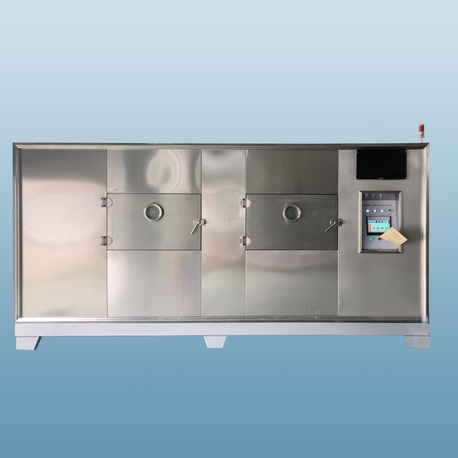
Dehydrated fruit products—from mango slices to apple rings—represent a $38
billion global market, yet many processors struggle with inconsistent color,
nutrient loss, and high energy costs. An industrial fruit
dryer must do more than remove moisture; it must preserve cellular
integrity, minimize enzymatic browning, and achieve uniform final water activity
(aw <0.55). This guide examines validated engineering principles, common
failure patterns, and how modern equipment—including Nasan integrated systems—addresses real production challenges.
1. Fruit Drying Physics: Why Each Commodity Demands a Unique Profile
Unlike vegetables, fruits contain high sugar levels (12–25% fresh weight) and
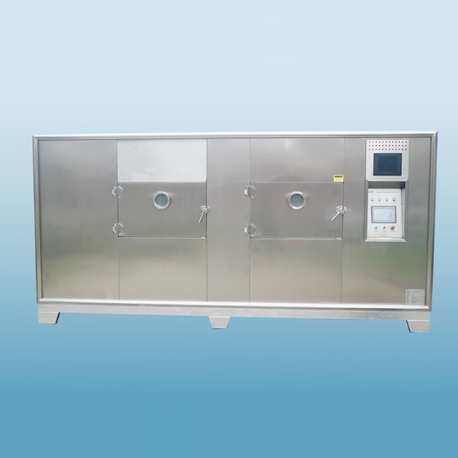
heat-sensitive vitamins. A generic fruit dryer without
zone-specific control often produces leathery texture or case hardening. Three
critical parameters define success:
Glass transition temperature (Tg): Sugars become sticky
above Tg, causing agglomeration. For mango, maintain product temperature below
65°C during constant-rate period.
Vitamin C retention: Degradation follows first-order
kinetics; half-life at 70°C is only 45 minutes. Optimal drying uses 55–60°C for
high-ascorbic fruits.
Enzymatic browning (PPO activity): Inactivated by
pre-treatment (steam blanching or sulfite-free dip) before the fruit
dryer loading.
Industry data (2023) shows that a multi-stage fruit
dryer with falling-rate humidity control reduces ascorbic acid loss
from 42% to 19% compared to single-stage units. The key is matching air dew
point to the fruit’s moisture sorption isotherm.
2. Core Components of a High-Performance Fruit Dryer
Reliable dehydration lines integrate five engineering subsystems.
Compromising any one reduces output or quality.
2.1 Airflow Distribution & Plenum Design
Uniform velocity across trays or belts prevents channeling. Computational
fluid dynamics (CFD) simulations show that a well-designed belt
dryer plenum achieves ±8% airflow variation; poor designs exceed
±25%, causing up to 30% moisture heterogeneity. For high-sugar fruits like figs
or dates, use lower air velocity (1.2–1.8 m/s) to avoid surface sugar
migration.
2.2 Heat Pump Integration for Energy Recovery
Closed-loop heat pump drying systems recirculate 85% of process air, reducing specific energy consumption (SEC) from
4.9 kWh/kg water to 2.4 kWh/kg. A heat pump fruit dryer also
allows precise dew point control (10–25°C), essential for aroma retention in
berries and stone fruits.
2.3 Automatic Loading & Belt Tracking
For continuous lines, uneven bed depth causes drying non-uniformity.
Laser-based bed depth sensors paired with servo-driven feeders maintain ±2 mm
tolerance across 2.4 m width. Nasan’s feeding
systems include anti-bridging agitators for sticky diced fruit.
3. Commodity-Specific Drying Protocols (Apple, Mango, Banana, Berry)
Each fruit type requires tailored pre-treatment and fruit
dryer settings. Below are validated parameters from production
environments.
Apple (cubes or rings): Pre-treatment: 1% citric acid dip
(2 min) to prevent browning. Drying: 62°C for 4h, then 55°C for 2h. Final
moisture ≤5% w.b. Rehydration ratio 3.2:1.
Mango (slices 6–8 mm): Blanch in 85°C steam for 90 sec to
inactivate pectin methylesterase. Drying: 60°C first zone, 55°C second zone.
Total 7–9h. Avoid >65°C to prevent sugar caramelization.
Banana (4 mm discs): High sugar (20%). Use lower air
velocity (1.0 m/s) and 58°C constant temperature. Add 2% calcium chloride
pre-dip to maintain firmness. Drying time 10–12h.
Berries (blueberry, cranberry): Osmotic pre-treatment
(50°Brix sucrose solution, 2h) reduces drying time by 35%. Then use 55°C with
20% RH. Final aw 0.45–0.50.
A 2022 study comparing multi-zone drying
profiles found that step-down temperature protocols (start 5°C
higher, then reduce) reduce total drying time by 22% while improving color
retention versus constant-temperature operation.
4. Process Validation: Critical Control Points for Fruit Quality
To meet GlobalG.A.P. and BRC standards, monitor these six parameters in your
fruit dryer operation. Record data at 15-minute intervals.
Pre-dry moisture homogeneity: Sample 10 pieces per batch;
standard deviation must be <1.5% w.b. Use NIR sorting if needed.
Zone 1 inlet temperature: For fruits with skins (grapes,
cherries), start at 50°C for 30 min to avoid skin rupture.
Exhaust air relative humidity: Maintain 25–35% during
constant-rate phase. Below 20% causes case hardening; above 40% slows
drying.
Product temperature (real-time): Use infrared sensors on
belt exit. Should never exceed 68°C for most fruits.
Final moisture by Karl Fischer: Target ≤6% for shelf-stable
products (aw<0.55). For intermediate moisture (15–18% for soft bars), add
potassium sorbate.
Water activity meter: Calibrate daily. aw >0.65 permits
mold growth (Aspergillus, Penicillium).
Advanced lines now integrate automated moisture feedback loops that adjust
belt speed within 2 minutes of detecting deviation. Nasan provides IoT-enabled controllers with predictive algorithms that reduce moisture
variance by 63% compared to manual operation.
5. Energy Efficiency: Lowering Operational Cost Per Ton of Dried Fruit
Energy accounts for 30–45% of fruit drying operational expenditure. Measured
strategies to reduce consumption without extending drying cycles include:
Exhaust air recirculation: Recirculate 50–70% of exhaust
(still at 35–45°C) back to intake. Reduces fresh air heating by 38–50%. Payback
8–10 months.
Variable frequency drives (VFDs) on all fans: Match airflow
to real-time moisture load. Achieve 35% fan energy reduction.
Solar thermal pre-heaters: In sunny climates, flat-plate
collectors pre-heat makeup air from 20°C to 45°C, saving 11–14% of thermal
energy.
Condensate heat recovery: If using steam coils, recover
flash steam from traps to pre-heat fresh water for cleaning or blanching.
Insulation upgrades: Increasing wall insulation from 50 mm
to 100 mm PIR foam reduces heat loss by 60%. Simple payback <12 months for
continuous operation.
Case data: A Thai mango processor upgraded to a heat pump fruit
dryer with waste heat recovery and reduced SEC from 5.3 to 2.7
kWh/kg water, saving $112,000 annually on electricity. Nasan offers free energy audits for existing lines.
6. Common Failure Modes in Fruit Dehydration & Corrective Actions
Even experienced operators encounter these five technical issues. Systematic
diagnosis prevents recurring losses.
Surface browning without internal cooking: Typically due to
insufficient pre-treatment or high oxygen levels in the drying chamber.
Solution: Add an anti-browning dip (ascorbic acid + calcium chloride) and reduce
initial airflow turbulence.
Sticky product buildup on belts: Occurs with high-sugar
fruits (banana, dates) when product temperature exceeds Tg. Reduce zone
temperatures by 4–6°C and increase air velocity slightly to cool surface.
Mold in sealed packages after 2 months: Indicates final aw
above 0.60 or moisture migration from thicker pieces. Implement post-drying
equilibration (hold in conditioning bin for 12h) before packaging.
Loss of volatile aroma (flat taste): Carried away by high
exhaust rates. Reduce exhaust damper opening from 40% to 25% and increase
recirculation ratio. For premium products, consider aroma recovery
condensation.
High fines (dust) in diced fruit: Over-dried brittle
material. Exit moisture should be 5–6% for diced apples/pears, not below 4%.
Adjust falling-rate stage temperature down by 3°C.
Persistent throughput bottlenecks often require re-engineering the airflow
distribution plate or upgrading to a multi-belt cascading design.
Fruit dryer retrofits with CFD-optimized plenums have demonstrated 18–25% capacity increases
without adding floor space.
7. Selecting Between Batch and Continuous Fruit Dryers
The choice depends on production volume, product variety, and capital budget.
Compare key metrics:
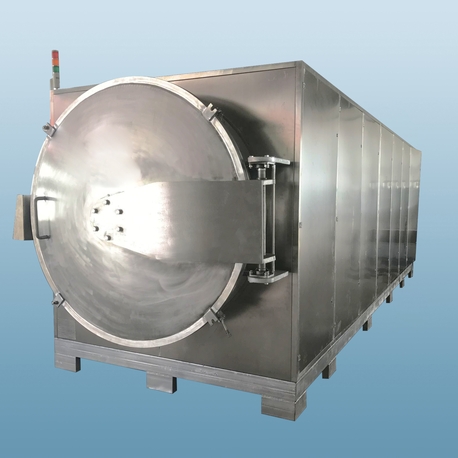
Batch tray dryers: Ideal for 200–2000 kg/day, multiple
fruit types, R&D. Lower initial cost ($45k–$120k) but higher labor per
kg.
Continuous belt dryers: For 3–30 metric tons/day. Uniform
quality, lower labor (0.5 operator per shift). Capital $350k–$1.8M. Payback
typically 18–30 months.
Hybrid (semi-continuous) car dryers: Middle ground for
1.5–5 TPD. Reduced manual handling vs batch.
High-volume processors benefit from modular belt dryer
configurations that allow adding zones as throughput grows.
Nasan provides custom engineering
for all three types, including turnkey installation and HACCP documentation.
Q1: What is the maximum recommended product bed depth for an apple
ring fruit dryer?
A1: For a fruit dryer with
through-flow air, apple rings should not exceed 45 mm bed depth. Deeper beds
create a pressure drop >250 Pa, reducing airflow through lower layers. For
diced fruit (12 mm cubes), maximum depth is 60 mm. Nasan’s bed level sensors
maintain optimal depth automatically.
Q2: How often should I clean the heat exchanger coils in a fruit
dryer to maintain efficiency?
A2: In fruit drying, sugar and dust accumulate rapidly.
Inspect weekly; clean with warm water (40°C) and mild alkaline detergent every
200 operating hours. Neglect reduces heat transfer coefficient by 25% within 6
weeks. Self-cleaning coil
systems are available for high-volume lines.
Q3: Can I use the same dryer for both low-sugar (apple) and
high-sugar (mango) fruits without cross-flavor issues?
A3: Not recommended without a full cleaning and reset of
humidity parameters. Mango’s volatile esters can adsorb onto belt surfaces. If
unavoidable, schedule production: run low-sugar fruits first, then a 2-hour hot
air bake (80°C) before switching to mango. For certified organic lines, dedicate
separate fruit dryer belts.
Q4: What is the typical payback period for adding a heat pump to an
existing electric resistance fruit dryer?
A4: Retrofitting a heat pump module to a fruit
dryer costs $40–70k for a 2 TPD line. At 0.12 USD/kWh electricity
and 4,000 operating hours/year, energy savings typically reach $22–28k annually,
yielding payback of 18–26 months. Many utilities offer incentives for heat pump
drying, reducing payback to 14 months.
Q5: How do I validate that my fruit dryer produces microbiologically
safe product without over-processing?
A5: Perform a thermal validation study: place wireless
temperature data loggers inside fruit pieces at the slowest drying location
(center of thickest pieces). Ensure product achieves 65°C for at least 10
minutes, or equivalent lethality (F0 value >1.5 for Salmonella). Nasan’s
validation protocol includes 21-point mapping and regulatory
reporting.
Q6: What is the effect of altitude on fruit dryer
performance?
A6: At 2000m altitude, air density drops by 20%, reducing
heat transfer and moisture pickup capacity. To compensate, increase air volume
flow (higher fan RPM) by 18–22% and extend drying time by 12–15%. Alternatively,
specify a fruit dryer with
higher static pressure fans. Nasan provides altitude-adjusted design for sites
up to 3500m.
Data-Driven Fruit Drying Delivers Quality and Margin
Dehydrated fruit profitability depends on three levers: energy cost per
kilogram water removed, final product grade (color/flavor), and throughput per
square meter. By implementing commodity-specific drying profiles, investing in
real-time moisture
control, and adopting heat pump or recirculation technologies,
processors can reduce operating costs by 22–30% while achieving USDA Grade A
standards. Nasan industrial fruit
dryer solutions combine CFD-optimized airflow, modular heat
sources, and predictive maintenance to deliver measurable ROI. Evaluate your
current drying curves against the benchmarks above, and schedule a process audit
to identify specific upgrade opportunities.