Operating an industrial processing facility in 2026 requires balancing strict
carbon reduction goals with rising electricity costs. Conventional convective
hot-air tunnels often fall short because they consume excessive power and dry
materials unevenly. Plant engineers must evaluate modern, low-emission
dehydration technologies to maintain operational margins.
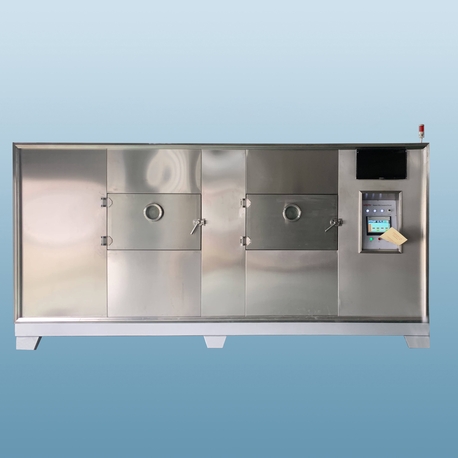
Both vacuum systems and the industrial microwave dryer have
emerged as standard replacements for legacy equipment. While vacuum units manage
moisture through reduced vapor pressure, microwave systems use direct volumetric
heating. Choosing the right machinery defines your product yield, energy bills,
and floor space utilization for the next decade.
At Nasan, we engineer thermal processing machinery that meets modern
efficiency benchmarks while cutting cycle times. If you need to upgrade an
outdated batch line or build a continuous production facility, submit an inquiry
today to discuss custom sizing and run preliminary material tests with our
engineering team.
Under the Hood: How Each Technology Operates
Understanding physical heating dynamics helps prevent costly procurement
mistakes. The two technologies remove water through distinct thermodynamic
pathways.
The Vacuum Dryer: Lowering Boiling Points
Vacuum dryers operate by mechanically evacuating air from a sealed vessel.
Lowering the internal vessel pressure reduces the boiling point of water. For
example, at a vacuum level of 0.08 bar, water evaporates at roughly 41°C instead
of 100°C.
Heat enters the wet cake or granules via conduction or radiation from heated
jacket walls or internal shelves. Because thermal energy travels from the
exterior surfaces into the core, heat transfer slows down as the outer layer
dries and becomes an insulating crust. This mechanism protects heat-sensitive
compounds but demands extended cycle times.
The Microwave Dryer: Volumetric Dielectric Heating
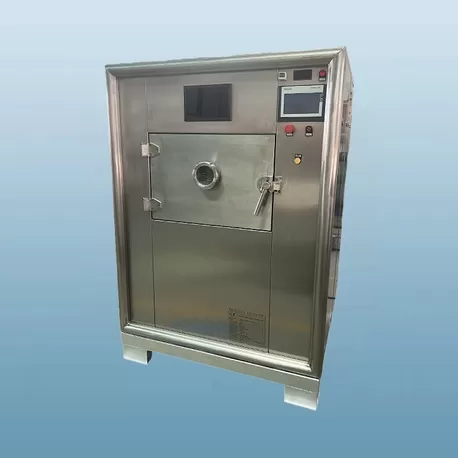
An industrial microwave dryer relies on electromagnetic
radiation, typically operating at industrial ISM frequencies of 915 MHz or 2450
MHz. Rather than applying external heat, the system targets polar molecules
directly, primarily free and bound water.
These polar molecules align with an alternating electric field that flips
millions of times per second. This rapid oscillation creates internal molecular
friction, generating heat instantly throughout the entire volume of the wet
material.
Moisture turns to vapor from the inside out. This internal vapor pressure
drives water outward through open pores, eliminating case hardening and
drastically cutting cycle durations.
Head-to-Head Comparison: Microwave Dryer vs. Vacuum Dryer
Selecting between these two technologies requires reviewing core operational
metrics. The table below outlines key differences for plant procurement
teams:
| Performance Metric | Industrial Vacuum Dryer | Industrial Microwave Dryer |
|---|
| Heating Mechanism | Conduction/Radiation via heated walls or trays | Direct dielectric heating (volumetric, inside-out) |
| Drying Cycle Times | 4 to 24 hours (Batch dependent) | 10 to 60 minutes (Continuous or batch) |
| Processing Mode | Predominantly batch mode | Continuous conveyor or batch |
| Energy Transfer Efficiency | Moderate (losses via thermal jackets and condensers) | High (energy absorbed directly by water) |
| Thermal Gradient | Hot exterior, cooler internal core | Uniform heating or hotter core pushing moisture out |
| Oxygen Exposure | Near zero (ideal for pyrophoric goods) | Ambient, purged, or controlled atmosphere |
| Equipment Footprint | Large (includes vessel, boiler, condensers, vacuum pumps) | Compact footprint for equivalent hourly output |
Drying Speed and Production Throughput
Production bottlenecks often start at the drying stage. An industrial
microwave dryer cuts processing times by 50% to 80% compared to
vacuum chambers.
Because the microwave dryer does not depend on slow thermal conduction
through dry product crusts, it keeps moisture evaporation rates steady until the
material reaches target dryness. For factories processing high-tonnage food
powders, mineral slurries, or wood planks, this rapid cycle prevents upstream
staging backups.
Energy Efficiency and Operating Costs (OPEX)
Plant managers preparing for stricter carbon regulations must monitor their
energy consumption per kilogram of evaporated water. Conduction vacuum systems
suffer thermal transfer losses at the vessel wall, heating fluid piping, and
condensation stages.
A high-performance energy-saving industrial dryer using
microwave power directs energy almost exclusively into water molecules. If the
bed contains dry spots, those spots stop absorbing microwave energy, preventing
wasted electricity.
This selective heating mechanism lowers kilowatt-hour consumption during
final falling-rate drying periods, where vacuum systems spend significant energy
heating dry product mass.
Product Quality and Nutrient Retention
Thermal degradation alters product color, destroys bioactive compounds, and
reduces rehydration rates. Vacuum systems protect heat-sensitive materials by
boiling off water at low temperatures, such as 35°C to 45°C, which preserves
vitamins and prevents oxidation.
A well-regulated microwave dryer preserves quality through
speed. While temperatures inside a microwave chamber may briefly exceed vacuum
temperatures, the exposure time is a fraction of the vacuum cycle. Short
exposure prevents long-term thermal breakdown of aromas, polyphenols, and active
ingredients. Rapid steam release also leaves porous cellular channels, giving
dried items excellent rehydration properties.
Footprint and Industry 4.0 Integration
Floorspace comes at a premium in modern industrial facilities. A vacuum dryer
demands substantial auxiliary hardware, such as rotary vacuum pumps, multi-stage
condensers, chilled-water circuits, and steam generators or hot-oil heaters.
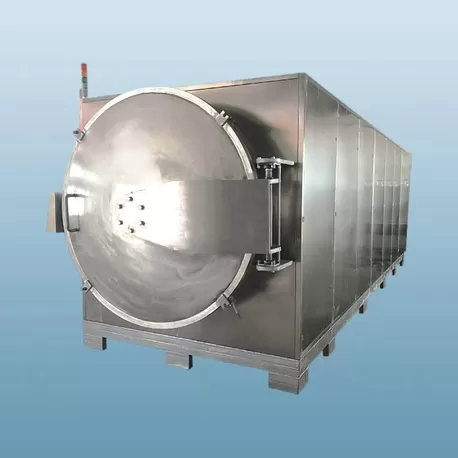
In contrast, a continuous microwave dryer features a linear
tunnel layout that fits directly into automated production lines. Operators
adjust magnetron power outputs, belt speeds, and exhaust rates through
centralized PLC touchscreens, integrating smoothly with plant SCADA
architectures.
Material Suitability Matrix: Which Fits Your Process?
Material properties dictate machine selection. Selecting the wrong dryer can
ruin product consistency or generate safety hazards.
When to Choose a Microwave Dryer
- Porous and semi-solid foods: Fruit chips, mushrooms, herbs,
pet treats, and plant proteins where color and rehydration structure
matter.
- Technical ceramics and refractories: Thick ceramic green
bodies, honeycomb catalysts, and insulators prone to cracking under conductive
thermal stress.
- Granular chemicals and ores: Mineral powders, graphite
slurries, and synthetic pigments requiring rapid, deep-bed moisture
extraction.
- Building materials: Timber, insulation batts, and
fiberboards where conductive heat cannot penetrate dense inner cores
efficiently.
When Vacuum Drying Is Mandatory
- Live biologics and probiotics: Microbial strains, active
enzymes, and vaccines where temperatures must never exceed 37°C.
- Solvent extraction and recovery: Slurries processed with
flammable, volatile organic compounds (VOCs) that need condensation and capture
without sparking hazards.
- Easily oxidized chemicals: Pyrophoric metallic powders that
require a pure, inert, low-pressure atmosphere to avoid combustion.
The Hybrid Solution: The Vacuum Microwave Dryer
When processing high-value pharmaceuticals or sensitive fruit concentrates,
engineers sometimes combine both methods. A vacuum microwave
dryer couples microwave generators with an evacuated chamber.
This design lowers the boiling point of moisture while heating the material
volumetrically. It handles sensitive materials like royal jelly, pharmaceutical
extracts, and high-sugar purees without scorching or puffing defects.
2026 Manufacturing Shifts Impacting Equipment Choice
Industrial procurement strategies must look past current requirements and
prepare for operational conditions five to ten years ahead. Equipment deployed
by Nasan today addresses several shifting industrial realities:
Decarbonization of Industrial Heat
Fossil-fuel-fired boilers and steam generators face increasing carbon taxes
and regulatory limits worldwide. Facilities are shifting toward all-electric
heating architectures. Because an industrial microwave dryer operates purely on electrical power, it runs on renewable grid supplies without
on-site fossil emissions.
Closed-Loop Temperature Control
Early microwave designs sometimes caused thermal runaway, where wet areas
overheated and scorched. Modern machines prevent this using high-speed infrared
thermal imaging cameras and multi-channel fiber-optic probes.
These sensors feed real-time temperature data back to variable-frequency
magnetron power supplies. The PLC modulates microwave power within milliseconds,
maintaining exact moisture profiles across conveyor widths.
Transitioning from Batch to Continuous Flow
Batch vacuum drying demands continuous manual or robotic intervention to load
trays, seal vessel doors, pull vacuum, vent pressure, and clear product. Modern
facilities prefer continuous-flow processing to cut labor expenses and eliminate
human error.
Continuous microwave systems accept wet material straight from upstream
extruders, washers, or granulators, sending finished, dried, and pasteurized
products directly to packaging stations.
CAPEX, OPEX, and Return on Investment (ROI)
Evaluating microwave drying vs vacuum drying requires
looking beyond initial machinery price tags to calculate the Total Cost of
Ownership (TCO).
Capital Expenditure (CAPEX)
Initial capital costs vary based on design pressures and metallurgy:
- Vacuum Dryers: High-pressure-rated steel vessels, robotic
door latches, robust vacuum pump groups, and condenser packages require
substantial capital investment, particularly for sanitary pharmaceutical-grade
designs.
- Microwave Dryers: Microwave systems require specialized
high-frequency generators, precision-machined waveguides, and continuous choke
assemblies to suppress radio frequency emissions. At scale, an industrial
microwave dryer often offers lower CAPEX than a multi-vessel vacuum system
designed for identical metric tonnage.
Operating Expenses (OPEX) and Maintenance
Maintenance routines differ completely across these two platforms:
- Vacuum Maintenance: Routine costs include vacuum pump oil
changes, seal and gasket replacements, condenser flushing, and periodic vessel
integrity testing. Mechanical breakdowns in vacuum seals bring production to a
sudden halt.
- Microwave Maintenance: The primary wear items are
industrial magnetrons or solid-state microwave generators. Modern industrial
magnetrons yield operating lifespans between 6,000 and 10,000 hours. Replacing
them takes minimal time, allowing plant maintenance crews to perform swaps
without taking down the full drying tunnel.
Representative ROI Case: 5,000 kg/Day Throughput
Consider an agro-processing plant handling 5,000 kg per day of high-moisture
botanical extract cake, drying it from 65% moisture down to 8%:
- Vacuum Tray System: Requires two operators per shift to
handle tray loading, with a combined cycle time of 10 hours per batch. Total
energy demand, factoring in the steam boiler, vacuum pumps, and chilling loop,
averages 1.35 kWh per kilogram of removed water.
- Continuous Microwave System: Requires one monitor
technician, operating with a 45-minute belt transit duration. Direct dielectric
coupling drops overall energy use to roughly 0.85 to 0.95 kWh per kilogram of
evaporated moisture.
Saving roughly 0.45 kWh per kilogram of water across continuous production
schedules reduces operating bills significantly. Combined with lower labor
overhead, these operational savings often pay back the capital expenditure
within 14 to 22 months.
Buyer's Selection Checklist
Work through these operational questions with your engineering team before
finalizing equipment specifications:
- Target moisture profile: What are your initial and final
moisture percentages? Is moisture surface-level or bound inside cells?
- Thermal limit: What is the absolute maximum core
temperature your product can withstand without degrading?
- Operating format: Does your operational layout support
continuous conveyor processing, or does track-and-trace compliance require
isolated batch lots?
- Utilities on-site: Does your facility have clean electrical
service, or do you rely on existing plant steam infrastructure?
- Available floor space: Can your plant floor house a
12-meter continuous microwave line, or do you have vertical height clearance
better suited for vacuum towers?
Frequently Asked Questions
Q1: Are industrial microwave dryers safe for plant
personnel?
A1: Yes. Industrial microwave systems follow strict
international safety regulations, such as OSHA and CE directives. Manufacturers
build tunnels with specialized attenuation chambers and mechanical choke traps
at feed and exit ports. These safeguards stop stray electromagnetic emissions,
keeping ambient readings around the machine well within safe residential
limits.
Q2: How does microwave dryer efficiency compare to conventional
hot-air drying?
A2: Microwave drying efficiency is significantly higher.
Conventional hot-air dryers transfer heat inefficiently across air boundaries
and lose heat through exhaust ducts, operating at roughly 30% to 45% efficiency.
A microwave dryer deposits energy straight into internal moisture, achieving
thermal efficiencies above 75% to 85%.
Q3: Will microwave drying create cold spots or uneven moisture inside
the bed?
A3: Uneven heating occurred mostly in early designs. Modern
continuous systems eliminate cold spots by combining rotating microwave feed
launchers, balanced conveyor movements, and supplemental low-velocity hot air
that sweeps away surface boundary-layer humidity.
Q4: Can a microwave dryer handle metal-containing compounds or
conductive ores?
A4: Yes, provided they are managed correctly. While solid
bulk metals cause electrical arcing, granular metal oxides, catalysts, and wet
chemical slurries containing trace metals dry reliably. In these applications,
microwave energy is absorbed efficiently without arcing.
Q5: How often do magnetrons need replacement in continuous industrial
operations?
A5: High-grade industrial magnetrons generally deliver
between 6,000 and 10,000 hours of continuous runtime, depending on cooling
quality, line voltage stability, and reflected power management. Facilities
usually run scheduled magnetron rotations during annual planned outages to avoid
unexpected line shutdowns.
Upgrade Your Thermal Processing Operations
Selecting the right drying system defines your plant's production capacity,
energy consumption, and product quality. As efficiency standards climb toward
2026, switching to advanced dielectric heating can modernize processing
operations and give your business a sustained competitive edge.
Nasan designs, manufactures, and supports high-performance industrial
microwave drying systems configured to your precise material requirements.
Contact our engineering team today to submit an inquiry, schedule a laboratory
drying trial, or request an initial system layout and cost estimate.