

7 Key Advantages of Industrial Food Drying Machines for Large‑Scale Food Producers
...
View Details
2026-07-11
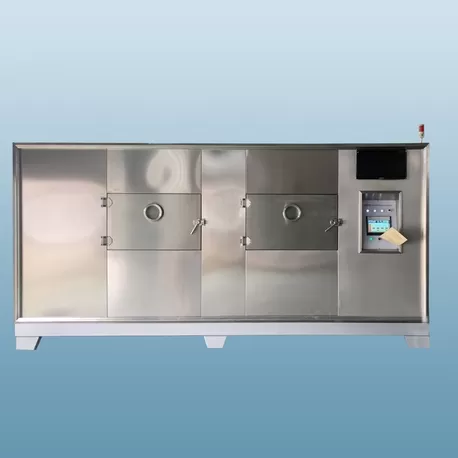
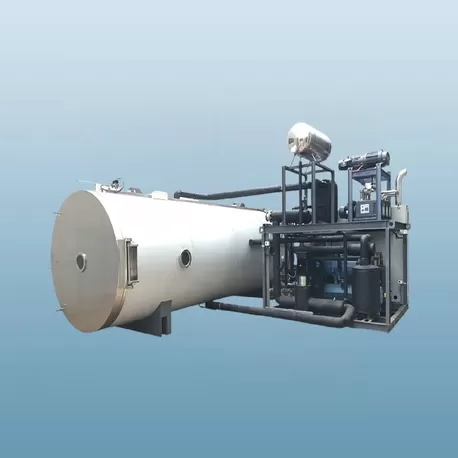
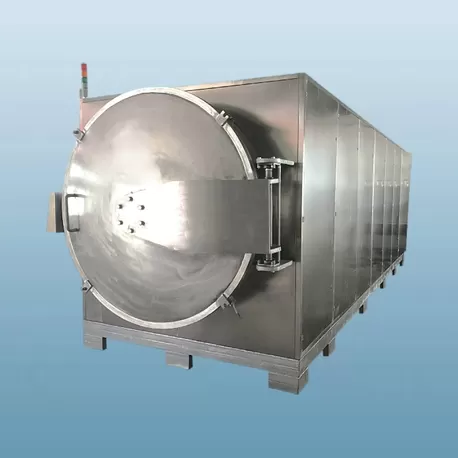
Dehydration remains one of the most effective methods for extending shelf life, reducing transportation weight, and preserving nutritional value in the global food supply chain. The industrial food dryer market is projected to grow at a CAGR of 5.8% through 2030, driven by demand for shelf-stable ingredients, ready-to-eat meals, and waste reduction in processing. However, selecting the wrong drying technology can lead to nutrient degradation, high operational costs, and inconsistent product quality. This technical guide, drawing on engineering expertise from Nasan, evaluates the five primary industrial food dryer configurations, their heat and mass transfer principles, and application-specific performance metrics.

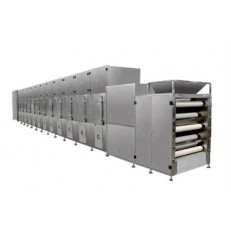
Conveyor (belt) dryers are the workhorses of the vegetable, fruit, and herb processing industries. In this configuration, wet material spreads evenly on a perforated belt, while heated air passes through the bed. The technology excels in handling large volumes with minimal labor.
Modern belt food dryers incorporate multiple temperature zones. The initial zone may use higher temperatures (90°C–110°C) for surface moisture removal, while subsequent zones operate at 50°C–70°C to prevent case hardening. Airflow reversal capabilities ensure uniform moisture content across the belt width. Nasan multi-stage conveyor systems integrate independent fan speed controls for each zone, reducing energy consumption by 12–18% compared to single-zone designs.
Ideal for: Cut vegetables (carrots, onions), fruits (apple cubes), and herbs (parsley, mint).
Throughput: 500–5000 kg of evaporated water per hour.
Consideration: Product residence time must be precisely controlled to avoid over-drying of smaller particles.
When the raw material is a pumpable liquid—milk, coffee extract, or fruit puree—the spray dryer offers unmatched speed and particle size control. Feed is atomized into fine droplets within a heated chamber, where moisture evaporates almost instantaneously.
The choice between rotary atomizers and high-pressure nozzles dictates droplet size distribution. Rotary atomizers (10,000–30,000 rpm) produce narrower distributions, critical for instant powders. Nozzle systems offer lower energy consumption but require wear-resistant materials for abrasive feeds. The inlet temperature in a spray food dryer typically ranges from 150°C to 220°C, while the outlet temperature, controlled via exhaust, stays near 80°C–95°C to protect heat-sensitive components.
For products requiring instant solubility (e.g., milk powder), some food dryer designs incorporate internal fluid beds or external agglomeration zones. Fine particles are returned to the atomization zone, creating porous, larger clusters that wet and dissolve rapidly. Nasan offers hybrid spray-fluid bed systems that combine drying and agglomeration in a single footprint.
Fluid bed technology suspends particles in a stream of heated air, creating a mixing action that maximizes surface contact. This results in extremely uniform drying and short residence times.
The fluidized state provides heat transfer coefficients three to five times higher than tray drying. For heat-sensitive products like probiotics or enzymes, a food dryer with fluid bed technology can operate at lower temperatures (30°C–45°C) while maintaining production rates. Static fluid beds suit materials with narrow particle size distribution, while vibratory fluid beds handle sticky or irregularly shaped items.
Continuous fluid bed food dryers are common in grain and legume processing. Batch fluid beds, often used in smaller pharmaceutical food operations, allow for complete containment and solvent recovery when drying ethanol-extracted botanicals.
For materials too viscous to spray but too fluid for belt conveyance—such as mashed potatoes, cooked cereals, or fruit purees—drum drying offers a unique solution. Heated drums (typically steam-heated to 120°C–170°C) rotate partially submerged in the product, picking up a thin film that dries within a single revolution.
The gap between applicator rolls and the drum determines film thickness, which directly impacts drying rate and product texture. Residence time is controlled by drum speed, usually 2–20 rpm. Drum-dried products often exhibit a characteristic flake morphology, desirable in instant cereal applications. However, the high surface temperatures require careful management to avoid scorching.
Atmospheric drum dryers are cost-effective for robust products. Vacuum drum food dryers, while more expensive, enable drying at lower temperatures, preserving volatile aromatic compounds in fruit purees and tomato paste.
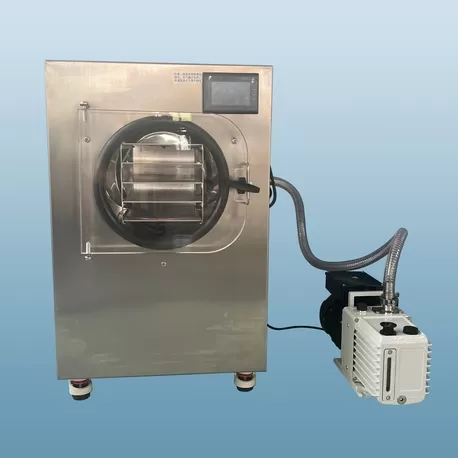
Despite the industry shift toward continuous processing, tray dryers retain relevance for R&D facilities, artisanal producers, and high-value, delicate items. Air is circulated across stacked trays, with adjustable baffles controlling flow distribution.
The primary technical challenge in tray food dryer design is ensuring uniform air velocity across all trays. Without careful plenum design, bottom trays may receive higher temperatures, leading to batch inconsistency. Modern industrial tray dryers incorporate variable-speed fans and reversing airflow to mitigate this. Nasan laboratory-scale tray dryers include full instrumentation to map drying curves, providing essential data for scaling up to continuous systems.
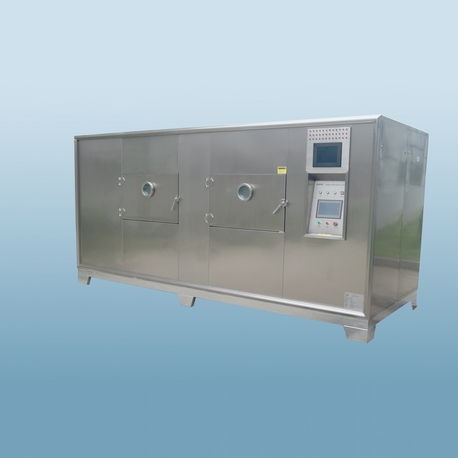
Even with advanced food dryer hardware, processors face recurring challenges that impact profitability and product quality.
Thermal degradation of vitamins (C, B-complex), polyphenols, and volatile oils remains a primary concern. Solutions include low-temperature drying under reduced pressure (vacuum drying) or using dehumidified air in closed-loop food dryer systems. Nasan modular designs allow retrofitting of dehumidification units that reduce oxygen exposure and drying temperature simultaneously.
Drying is one of the most energy-intensive unit operations in food processing, often accounting for 15–25% of total plant energy use. Heat recovery wheels, exhaust air recirculation, and mechanical vapor recompression (MVR) are increasingly integrated into industrial food dryer installations. For example, Nasan's energy-optimized belt dryers feature multi-stage heat recovery that preheats incoming air using exhaust streams, cutting natural gas consumption by up to 30%.
Wet, warm environments inside food dryers can harbor pathogens like Salmonella if not designed for sanitation. Hygienic standards (EHEDG, USDA) demand smooth welds, sloped surfaces for drainage, and clean-in-place (CIP) systems. Stainless steel construction (304 or 316L) with electropolished surfaces minimizes bacterial adhesion.
Failure to replicate lab drying curves at industrial scale is frequently traced to differences in heat transfer mechanisms. Lab units often rely on radiant and conductive heat disproportionately, while industrial food dryers depend on convective transfer. Nasan addresses this by offering pilot-scale systems with identical air velocity and bed depth characteristics to production models, ensuring reliable scale-up data.
The next generation of food dryer technology integrates real-time moisture sensing (NIR, microwave) with adaptive control algorithms. These smart dryers adjust belt speed, airflow, or temperature dynamically based on inlet moisture variation, reducing energy waste and improving uniformity. Simultaneously, the push for carbon neutrality drives adoption of electrically heated heat pump dryers, which can achieve efficiencies (SMER) of 3.5–5.0 kg water/kWh—two to three times higher than conventional gas-fired units for low-temperature applications.
Selecting the appropriate food dryer requires balancing capital expenditure, operating cost, and product quality preservation. Bulk commodities may prioritize throughput and energy cost, favoring conveyor or fluid bed systems. High-value functional ingredients and pharmaceuticals demand gentle handling, often pointing toward vacuum or low-temperature fluid bed designs. Nasan provides comprehensive testing services to determine optimal drying parameters, ensuring that your industrial food dryer investment delivers consistent returns through superior product quality and operational efficiency.
Q1: How do I determine the required capacity for an industrial food
dryer?
A1: Capacity is defined by the water removal rate (kg/h), not
just wet product input. Calculate the initial moisture content, desired final
moisture, and throughput. For example, drying 1000 kg/h of carrots from 85% to
10% moisture requires removing approximately 830 kg of water per hour.
Nasan engineers use mass balance calculations and pilot trials
to size the food dryer accurately, including safety margins for
feed variability.
Q2: What is the difference between direct and indirect drying in food
applications?
A2: In direct drying (convection), heated air contacts
the product directly, carrying away moisture. This is common in belt and fluid
bed food dryers. In indirect drying (conduction/contact), heat
transfers through a wall (e.g., drum dryer), and air primarily acts as a sweep
gas. Indirect systems reduce contamination risk but have lower heat transfer
rates. The choice depends on product sensitivity and fouling tendency.
Q3: Can one food dryer handle multiple product types?
A3:
Flexibility is possible but requires careful design. Modular belt dryers with
adjustable airflow and temperature zones can process various cut vegetables.
However, switching from powders to sticky pastes typically requires different
technologies. Nasan offers multi-functional pilot plants that
allow processors to test different configurations before committing to a
dedicated production-scale food dryer.
Q4: How often should a food dryer be cleaned, and what methods are
used?
A4: Cleaning frequency depends on product residue and
microbial risk. Wet, sugary products may require daily cleaning to prevent
buildup and insect attraction. Dry, low-fat products might run for weeks between
cleaning. Methods include manual wash-down, clean-in-place (CIP) spray balls for
internal chambers, and vacuum cleaning for dry systems. Stainless steel
construction with radius corners simplifies sanitation.
Q5: What is specific moisture extraction rate (SMER), and why is it
important?
A5: SMER measures energy efficiency: kilograms of water
removed per kilowatt-hour of energy input. A higher SMER means lower operating
cost. Gas-fired food dryers typically achieve SMER of 1.5–2.5,
while heat pump dryers can reach 4.0 or more. Requesting SMER data from
manufacturers like Nasan allows direct comparison of energy
performance across different dryer types.
Q6: How do I prevent case hardening in my dried fruit or vegetable
products?
A6: Case hardening occurs when the surface dries too
quickly, forming a impermeable layer that traps internal moisture. Solutions
include reducing initial air temperature, increasing humidity in the first
drying stage, or using pulsed airflow. Multi-stage food dryer designs with controlled temperature ramping help maintain open pore structure
for uniform moisture escape.