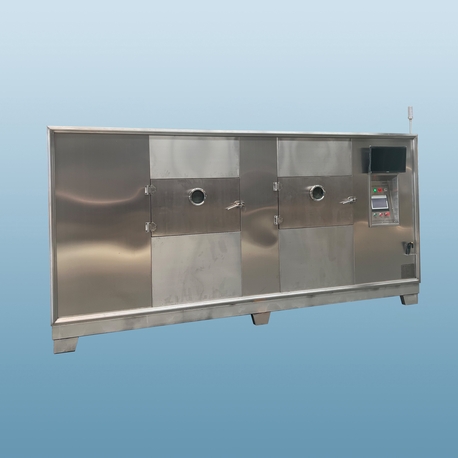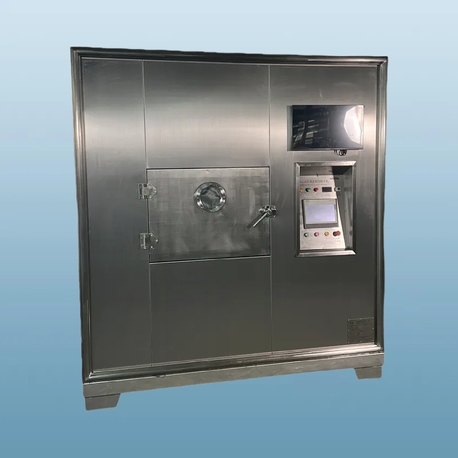
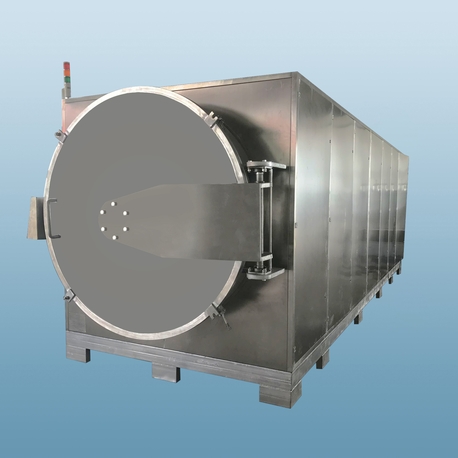
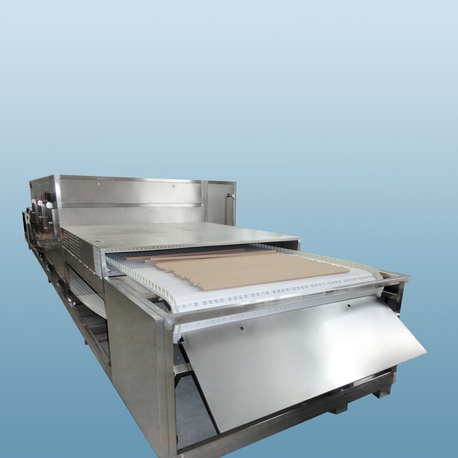
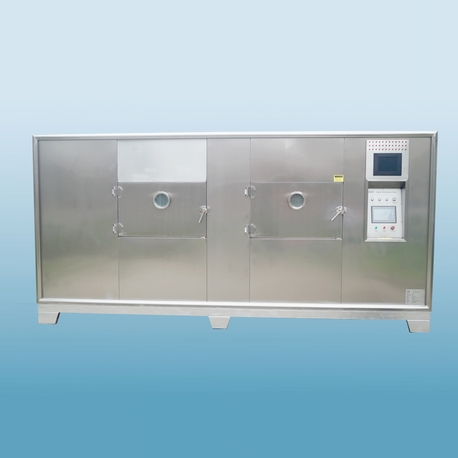
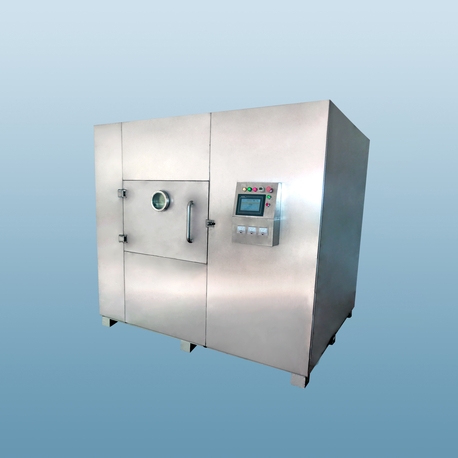
Dried fruit production faces persistent technical trade-offs: long processing times causing browning, case hardening that traps internal moisture, and high operational costs from conventional hot air dryers. A microwave fruit dryer solves these issues by generating heat directly within the product’s water molecules. This results in rapid, uniform moisture extraction while preserving natural sugars, vitamins, and color. For over a decade, Nasan has supplied continuous microwave dehydration lines to fruit co-ops, ingredient manufacturers, and freeze-dried snack producers across Europe and Southeast Asia. This article provides a technical breakdown of microwave fruit drying, validated process data, and selection criteria based on fruit morphology and throughput requirements.
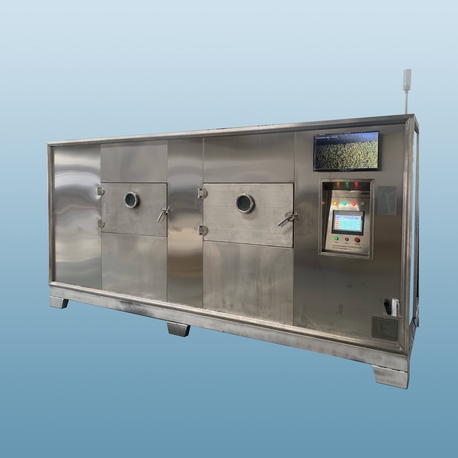
Unlike hot air convection, a microwave fruit dryer uses electromagnetic fields at 915 MHz or 2.45 GHz to agitate polar water molecules within fruit tissue. The resulting volumetric heating drives moisture from the interior to the surface without relying on thermal gradients. Key subsystems include:
Magnetron arrays with adjustable power (20–200 kW) to match fruit dielectric properties.
Multi-mode resonant cavities combined with rotating mode stirrers to eliminate standing wave patterns.
Perforated PTFE conveyor belts allowing air flow from below for moisture carry-off.
Infrared temperature sensors and load cells for closed-loop control of product temperature and residual moisture (±1% accuracy).
This approach reduces drying time by 50–70% compared to conventional belt dryers. For example, apple slices (8 mm thick, 82% initial moisture) reach 18% final moisture in 9 minutes versus 35 minutes in a hot air dryer at 70°C. Simultaneously, the rapid heating inactivates polyphenol oxidase enzymes, preventing enzymatic browning without chemical pretreatments like sulfites.
Industrial fruit drying methods each carry drawbacks. Below is a quantitative comparison:
Hot air tunnel (60–80°C): Long dwell times (4–12 hours) lead to surface hardening, nutrient loss (vitamin C destruction up to 70%), and high energy consumption (1.2–1.8 kWh per kg water removed).
Freeze drying: Superior quality but capital cost of $800k–$1.5M and operating cost of $3–$5 per kg water; limited throughput.
Vacuum microwave dryer: Excellent for heat-sensitive berries but batch type, lower capacity.
Continuous microwave fruit dryer: Energy consumption of 0.55–0.85 kWh per kg water removed; retention of total phenolics > 92%; rehydration ratio 2.5–3.2 vs 1.8–2.2 for hot air dried samples (ASTM D4442 standard).
For a medium-scale processor handling 500 kg/h of fresh mango slices, switching from a hot air dryer to a microwave system reduces annual energy costs by $48,000–$70,000 (electricity at $0.12/kWh). Additionally, product shrinkage drops from 35% to 18%, directly improving yield per ton of raw material.
Plant operators often report four recurring issues with existing drying lines. Nasan engineering addresses each through specific design features in the microwave fruit dryer:
Convection dryers create a moisture gradient that seals the surface while the core remains wet. Microwave volumetric heating reverses this: internal vapor pressure pushes moisture outward, resulting in porous, uniformly dried structures. Our systems include a pulsed power profile (5 seconds on, 2 seconds off) to allow equalization, especially for whole berries or grapes.
In hot air tunnels, product stays in the 30–50°C range for several hours, promoting thermophilic mold growth. Microwave fruit dryers raise internal temperature above 65°C within 90 seconds, achieving a 3–4 log reduction in yeast and mold counts (validated by third-party lab for dried apricots and dates). This eliminates the need for post-drying fumigation.
2,45 GHz microwave energy does not significantly heat non-polar aroma molecules. GC-MS analysis of microwave-dried pineapple showed 94% retention of ethyl butyrate and hexanoate esters, compared to 67% retention in hot air drying. This is particularly valuable for premium dried fruit brands targeting the organic snack market.
Our continuous microwave drying lines can be configured with upstream sugar infusion tanks or steam blanchers. A vibrating conveyor transfers fruit onto the microwave belt while excess liquid is recaptured. The system automatically adjusts power based on conductivity changes caused by osmotic syrup uptake.
Below are three validated deployments of microwave fruit dryers at commercial scale:
Input: Fresh Granny Smith apples, 84% moisture, cored and sliced to 6 mm thickness.
Microwave fruit dryer settings: 75 kW, 2.45 GHz, belt speed 1.8 m/min, bed depth 25 mm.
Residence time: 7.2 minutes. Final moisture: 16% (w.b.).
Quality metrics: L* color value 78 vs 62 for hot air dried; rehydration ratio 2.9; no sulfite residue.
Throughput: 420 kg/h fresh → 102 kg/h dried product. Energy per batch: 0.64 kWh/kg water removed.
Challenge: Sticky, high-sugar content caused burning on conventional dryers.
Solution: Microwave fruit dryer with cold air boundary layer disruption (nozzles blowing 25°C air across surface to prevent caramelization).
Outcome: Uniform mango cubes with 14% moisture, water activity (aw) 0.45, free from scorched particles. Production rate 280 kg/h finished product.
Input: Green plantain, 65% moisture, sliced 2 mm thick.
Microwave parameters: 50 kW, 915 MHz (better penetration for high-moisture starchy tissue).
Drying time: 5 minutes (compared to 18 minutes in hot air). Oil absorption reduced by 40% when frying after drying – a key advantage for baked snack producers.
When evaluating quotes, B2B buyers must analyze five technical parameters specific to their product portfolio:
Dielectric properties (ε’ and ε’’) of the target fruit at 20°C and 60°C – measure these with a network analyzer or request a lab test. High-sugar fruits like dates have lower loss factors, requiring 915 MHz or higher power density.
Product bed depth – maximum penetration depth is roughly half the wavelength in the material; for 2.45 GHz and apple tissue (ε’~55), penetration ~22 mm. Deeper beds require 915 MHz systems.
Desired output moisture uniformity – standard deviation of final moisture should be < 1.5% (dry basis). This demands computer fluid dynamics (CFD) optimized cavities – Nasan provides simulation reports.
Hygiene requirements – for organic certification, the dryer must have CIP spray balls, sloped surfaces, and non-absorbent belt materials (PTFE or polypropylene).
Byproduct handling – excessive sugar drip can ignite if not collected. Specify a drip tray with level sensors and automatic drain to a recycling tank.
Always request a pilot test using a microwave fruit dryer with at least 100 kg of your raw material. Nasan operates a certified test center in Rotterdam for mango, berry, citrus, and tropical fruits.
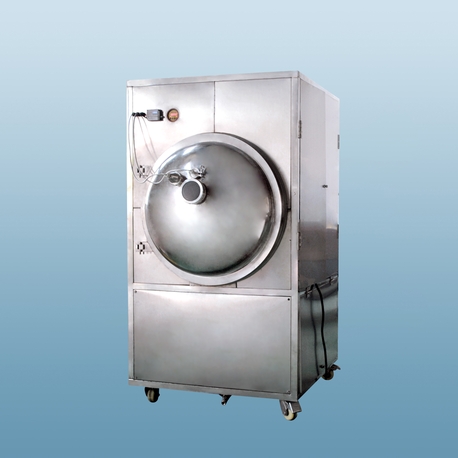
Below is a TCO comparison between a 400 kg/h (fresh) hot air belt dryer and a 70 kW microwave fruit dryer (installed cost $265,000 vs hot air $195,000). Assumptions: 6,000 operating hours/year, electricity $0.12/kWh, natural gas $0.045/kWh (for air heating).
Annual energy cost (microwave): 70 kW × 0.70 load factor × 6,000 h × $0.12 = $35,280.
Annual energy cost (hot air): Fan + heater equivalent 210 kW × 6,000 h × $0.045 (gas) + 15 kW electric = $56,700 + $10,800 = $67,500.
Maintenance: Microwave requires magnetron replacement ($7,500/year) and periodic waveguide cleaning. Hot air requires belt tracking, bearing replacement, filter changes ($12,000/year).
Product yield gain: Less breakage (2% higher yield) valued at $28,000/year for a premium dried fruit line.
Payback period: (capital difference $70,000) ÷ (energy savings $32,220 + maintenance saving $4,500 + yield gain $28,000) = 1.1 years.
Additional soft savings: reduced warehouse space due to shorter drying time, lower rework from burnt batches, and ability to produce new SKUs like infused fruit without separate equipment.
A1: Yes, but with precautions. Whole grapes (berries) require a lower initial power density to prevent bursting. Our control system includes a ramp-up profile: start at 40% power for 90 seconds to allow internal pressure equalization, then full power. For cherries, we recommend pre-pitting and a 0.5-second surface puncture (laser micro-perforation) to provide a steam escape path. Throughput for whole blueberries is approximately 60% of sliced fruit.
A2: Sugar content directly affects the dielectric loss factor – higher sugar reduces water mobility and slows heating. Nasan integrates an inline Brix sensor (refractometer) before the dryer. The PLC adjusts magnetron power zone by zone: for low-Brix fruit, power is reduced to avoid burning; for high-Brix fruit, power is increased or belt speed slowed. This maintains final moisture variation below 1.2% across a mixed batch.
A3: Yes. The system includes foreign object detection (metal separator upstream), glass-free construction (polycarbonate windows), and automated CIP validation (conductivity-based rinse verification). Nasan provides a complete SQF Level 3 documentation package including risk assessment for EM leakage, allergen cross-contact protocols, and temperature validation records. All wetted parts are 304 or 316L stainless steel with sanitary welds.
A4: Directly drying both extremes is inefficient because dwell time differs by a factor of 3–4. However, a multi-zone microwave dryer with individually controlled 1.5 m sections can process high-moisture fruit in the first three zones (full power), then low-moisture fruit in the final zone at reduced power. For a production schedule that alternates products, Nasan offers a quick-release conveyor belt (exchange within 25 minutes) and recipe memory for 99 SKUs. Dates require 915 MHz frequency due to low moisture; we recommend a dedicated 915 MHz system for date processing.
A5: Industrial magnetrons (Samsung or Toshiba) last 8,000–10,000 hours under continuous duty. With 6,000 annual operating hours, replacement occurs every 16–20 months. A 100 kW system uses 30 magnetrons (3.3 kW each); each unit costs $750–$1,100. Total replacement parts ~$27,000. Nasan offers a remanufactured magnetron exchange program with 30% cost reduction and guaranteed 6,000-hour performance. Preventive maintenance every 4,000 hours (waveguide cleaning, dummy load check) costs $2,800 including labor.
Adopting a microwave fruit dryer resolves longstanding production conflicts between throughput, quality retention, and energy cost. For operations producing dried mango, apple chips, coconut flakes, or infused berries, the technology provides consistent color, reduced breakage, and the ability to remove chemical preservatives. Nasan provides turnkey integration with upstream washing/sorting lines and downstream packaging, including SCADA data logging for full traceability.
To proceed, we recommend submitting a sample of your raw fruit (minimum 20 kg) for a free dielectric analysis and pilot drying trial. Nasan’s food technologists will return a full report: optimal belt speed, power profile, final moisture uniformity, and projected ROI based on your local utility rates.
Request a technical proposal for your fruit dehydration
line
Provide your production data (fresh fruit type, target
moisture, kg/h throughput) and receive:
✔️ Custom layout
drawing integrated with your existing conveyors
✔️ Energy
savings calculator comparing your current dryer vs. microwave
✔️
Validation protocol template for SQF/BRC/Organic
certification
✔️ Lifecycle cost model with 5-year spares
estimate
Contact Nasan’s process engineering team: info@nasandry.com or use the inquiry form at www.nasandry.com/contact. Reference code “FRUIT-DRY-2024” for priority response.
Explore commercial microwave drying systems for herbs, nuts and vegetables – modular designs from 100 kg/h to 5 t/h.