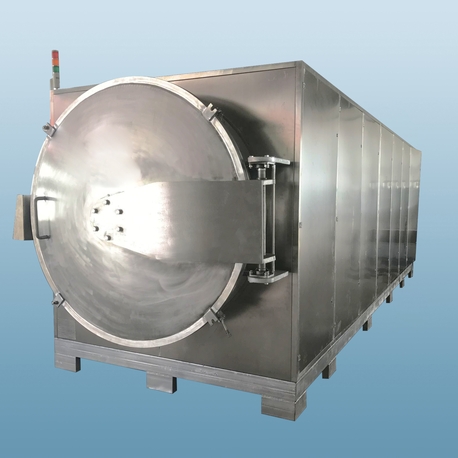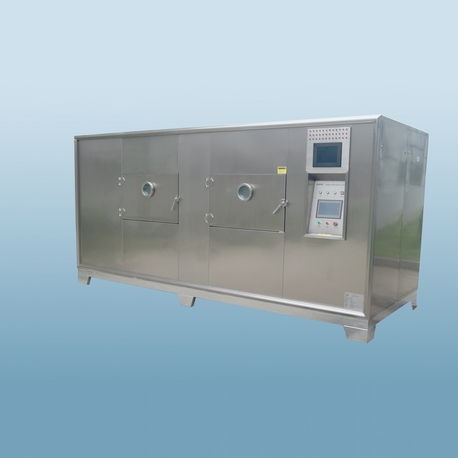



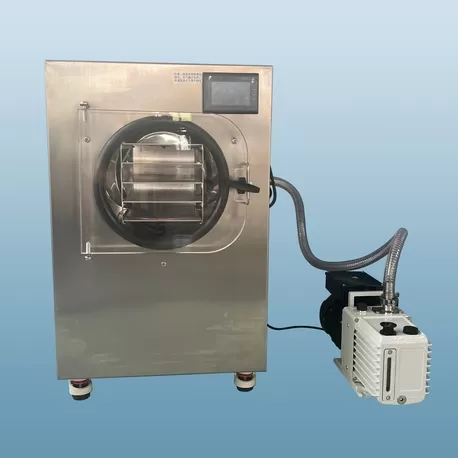
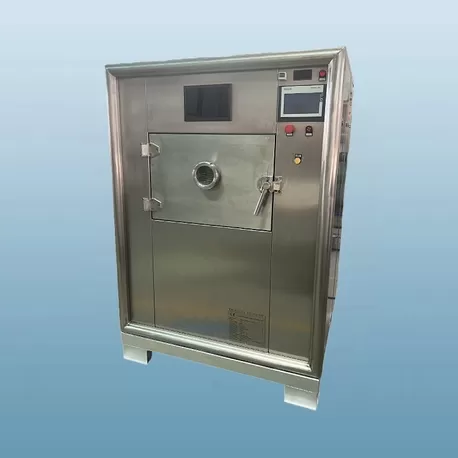
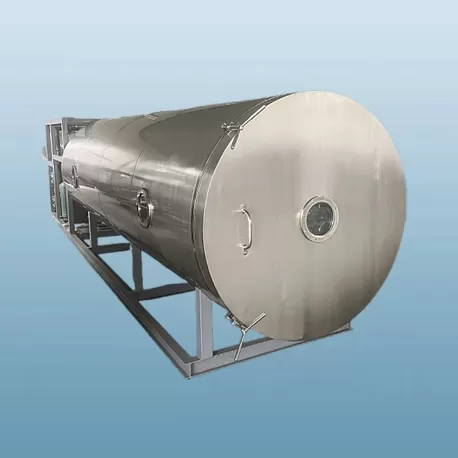
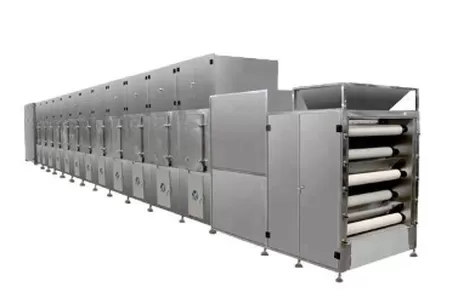
Industrial food dehydrator systems are the backbone of shelf‑stable ingredient production, from dried fruits and vegetables to jerky and herbs. Unlike small countertop units, industrial dehydrators must deliver uniform drying across tons of product per batch, comply with food safety regulations (FSMA, GMP), and optimize energy consumption. According to the American Society of Agricultural and Biological Engineers (ASABE), improper dehydrator selection can lead to moisture variability exceeding 5% within a batch, resulting in spoilage or rejected shipments. This article provides a technical examination of food dehydrator engineering—airflow patterns, material selection, control systems—and references installations by Nasan, whose industrial dryers are used by major food processors across three continents.

1. Airflow Dynamics: Cross‑Flow vs. Through‑Flow vs. Impingement
The core of any food dehydrator is its method of moving heated air across the product. Three primary configurations exist:
Cross‑flow (horizontal airflow): Air moves horizontally across stationary trays. Common for batch cabinets, but can create moisture gradients from inlet to exhaust.
Through‑flow (vertical airflow): Air passes through perforated trays or conveyor belts, penetrating the product bed. Used for diced vegetables and fruits, achieving faster drying times (30‑50% faster than cross‑flow).
Impingement: High‑velocity air jets directed at product surfaces. Ideal for products with high initial moisture like apple slices or meat strips, reducing boundary layer resistance.
Nasan’s industrial food dehydrator models often combine through‑flow with periodic air reversal to ensure top‑to‑bottom uniformity. Air velocity is typically 1.5‑3.0 m/s, measured with hot‑wire anemometers at multiple tray positions during validation.
2. Hygienic Construction: Stainless Steel and Cleanability
Food contact surfaces in a food dehydrator must meet 3‑A Sanitary Standards or EHEDG guidelines. Type 304 stainless steel (or 316 for high‑salt environments) is mandatory for all interior panels, ductwork, and tray supports. Welds must be ground and polished to Ra < 0.8 µm to prevent bacterial harborage. Nasan’s dehydrators feature fully welded, sloped floors with drains that allow wash‑down without water pooling. CIP (clean‑in‑place) nozzles are integrated, enabling automated cleaning with approved detergents and sanitizers, followed by a rinse cycle that leaves no residue.
Key sanitary design features
Radius corners (≥ 6 mm) in all internal angles.
Removable access panels for duct inspection.
Sealed motors and controls (IP55 or higher) to withstand hose‑down.
3. Heat Source and Energy Efficiency
Industrial food dehydrator systems use electric, gas, steam, or waste heat. The choice impacts operating cost and carbon footprint. For large operations, natural gas‑fired indirect heaters are common, achieving thermal efficiencies of 80‑85%. However, heat recovery is critical: exhaust air still contains significant enthalpy. Nasan integrates air‑to‑air heat exchangers (plate or run‑around coil) that preheat incoming fresh air, recovering 40‑60% of exhaust heat. In a recent apple drying line, this reduced propane consumption by 38%, with payback under 18 months.
4. Humidity Control and Dehumidification
Relative humidity (RH) inside the food dehydrator determines drying rate and final product quality. For fruits with high sugar content, high initial RH can cause case hardening (surface sealing). Modern dehydrators use a combination of exhaust dampers and dehumidifiers (refrigerated or desiccant) to maintain setpoint RH, often between 15% and 40% depending on the product. Nasan’s control system includes a dew point sensor that modulates exhaust to balance drying speed and energy loss. For heat‑sensitive products like herbs, dehumidification allows drying at lower temperatures (35‑45°C) while maintaining low RH, preserving volatile oils and color.
5. Conveyor vs. Batch Tray Configurations
The choice between continuous and batch operation depends on throughput and product variety.
Continuous belt dehydrators: Product enters at one end and exits at the other after a set residence time (e.g., 2‑6 hours). Ideal for single‑product, high‑volume lines (≥ 1 ton/hour). Multiple zones allow different temperature/RH profiles.
Batch tray dehydrators: Product is loaded onto fixed or mobile racks and dried until target moisture is reached. Suitable for seasonal products or frequent changeovers. Trays must be loaded uniformly; Nasan offers automatic tray loaders that spread product to ±5% depth uniformity.
6. Instrumentation and Process Control
Validating a food dehydrator requires continuous monitoring of temperature, humidity, and airflow. Thermocouples (type T or PT100) should be placed at multiple points—inlet, outlet, and within the product bed. Nasan’s PLC system records these parameters and can adjust damper positions or burner output in real time to maintain setpoints. For high‑value products, near‑infrared (NIR) moisture sensors on the exit belt provide feedback for automatic speed adjustment, ensuring final moisture within ±0.5%.
7. Food Safety and Pathogen Control
Drying reduces water activity (aw) below 0.85, inhibiting pathogen growth, but the process must be validated. The food dehydrator must bring product to a minimum temperature/time combination to achieve a 5‑log reduction of Salmonella or other target pathogens (e.g., 71°C for 15 seconds in meat jerky). Nasan’s validation protocols include heat distribution studies (temperature mapping) and aw measurements on finished product, documented for FDA or USDA audits.

8. Maintenance and Longevity
Industrial dehydrators operate 16‑24 hours daily during harvest seasons. Bearing maintenance, belt tracking, and filter cleaning are critical. Nasan’s designs incorporate externally mounted bearings (isolated from the airstream) and automatic belt washing systems that prevent buildup of food debris. Stainless steel frames with proper drainage extend equipment life beyond 20 years. Spare parts (fans, heaters, sensors) should be locally available; Nasan maintains regional warehouses to minimize downtime.
Frequently Asked Questions About Food Dehydrators
Q1: What is the difference between a food dehydrator and a freeze
dryer?
A1: A food dehydrator uses heated air (typically 35‑75°C) to evaporate moisture from the surface. A
freeze dryer freezes the product and sublimates ice under vacuum, preserving
structure better but at higher cost. Dehydrators are used for most fruits,
vegetables, and meats; freeze dryers are for premium instant coffee, military
rations, or heat‑sensitive probiotics.
Q2: How do I calculate the required dehydrator capacity for my
production?
A2: Determine the wet feed rate (kg/h) and the target
final moisture. Example: 1000 kg/h of apples (85% moisture) to 10% final
moisture means removing 750 kg water/h. A typical dehydrator evaporates 2‑5 kg
water per m² of tray area per hour, so you would need 150‑375 m² of tray area.
Nasan provides computer modeling based on your specific product.
Q3: Can I use one dehydrator for different products (e.g., apples and
meat)?
A3: Yes, but thorough cleaning between runs is essential to
prevent cross‑contamination (allergens, pathogens). The control system must
allow different temperature/RH profiles. Nasan offers multi‑program controllers
with password‑protected recipes.
Q4: What causes uneven drying in a batch dehydrator?
A4:
Common causes: non‑uniform airflow due to blocked trays, incorrect loading
density (too thick), or failed dampers. Air velocity mapping (using a vane
anemometer) can identify dead zones. Nasan recommends a yearly airflow
certification.
Q5: How often should filters be replaced?
A5: Pre‑filters
(protecting the heating coils) should be checked weekly and replaced when
pressure drop exceeds 2x initial value, typically every 1‑3 months. Final HEPA
filters (if installed for allergen control) may last 1‑2 years depending on
particulate load.
Q6: What are the energy saving options for a food
dehydrator?
A6: Heat recovery from exhaust, variable frequency
drives (VFDs) on fans to match airflow to load, and automatic modulation of
burners. Insulation thickness (e.g., 100 mm mineral wool) also reduces losses.
Nasan’s Eco‑Dry series incorporates all these features.