


In high-value B2B processing environments—from food dehydration and pharmaceutical extraction to biosolids treatment and advanced ceramics—conventional convective or conductive drying methods often create bottlenecks. Non-uniform moisture profiles, case hardening, lengthy cycle times, and thermal degradation of sensitive compounds are common. Microwave drying offers a fundamentally different approach: electromagnetic energy converts directly into heat within the wet material’s own polar molecules (water, ethanol, certain solvents). This volumetric heating mechanism bypasses slow thermal diffusion, providing uniform moisture extraction, shorter processing windows, and superior product quality. At Nasan, we design industrial-scale systems that leverage these principles with precise power modulation, continuous material handling, and safety-compliant architecture.
1. Physical Principles of Microwave Drying: Beyond Surface Heating
Unlike infrared or hot air where heat propagates inward from the surface, microwave drying relies on dielectric heating. A microwave applicator (typically operating at 915 MHz or 2.45 GHz) generates an alternating electric field. Polar molecules—especially water—attempt to align with the field millions of times per second, inducing molecular friction and immediate internal heat generation. Key technical parameters include:
Penetration depth (Dp): Dependent on material’s dielectric constant and loss factor; at 915 MHz, Dp can exceed 50 mm in moist materials, enabling uniform heating of thick slabs or bulk solids.
Power density & feed rate: For continuous industrial microwave drying lines, power per unit mass (kW/kg) determines moisture removal efficiency.
Selective heating: Water absorbs microwave energy far more efficiently than dry solid matrices — heat is directly generated where moisture exists, avoiding wasted energy on dry material or container walls.
This volumetric effect eliminates moisture gradients commonly found in hot-air drying, significantly reducing core-shell defects and allowing faster processing of thick or dense feedstocks.
2. Quantitative Advantages Over Conventional Drying Technologies
When replacing gas-fired rotary dryers, steam tube dryers, or belt ovens, microwave-based systems deliver measurable operational benefits. Independent studies and Nasan field data indicate:
Drying time reduction: Up to 70% shorter cycles for fruits, herbs, and ceramics compared to convection.
Energy efficiency: 40‑60% lower specific energy consumption (kWh per kg of water removed) because energy directly couples to moisture rather than heating entire air volumes or chamber walls.
Product integrity: Retention of volatile aromatics, vitamins, and bioactive compounds is typically 20-35% higher versus hot air drying at equivalent moisture targets.
Smaller footprint: A microwave drying module requires 50‑70% less floor space for similar throughput, due to highly intensified drying rates.
Moreover, microwave drying enables low-temperature drying (30–60°C) under atmospheric or vacuum conditions, ideal for oxygen-sensitive pharmaceutical intermediates and nutraceuticals.
3. High-Value Industrial Applications of Microwave Drying
3.1 Food & Agricultural Processing
Dehydrating fruits (banana, apple, mango), vegetables (carrots, onions, garlic), herbs (basil, mint, oregano), and ready-to-eat meals. Continuous microwave belt dryers preserve natural color and reduce case hardening, while eliminating the need for sulfites as anti-browning agents. For pasteurization and post-drying sanitation, the same equipment can reach lethal temperatures for insects and molds.
3.2 Pharmaceutical & Nutraceutical Manufacturing
Drying wet granules, herbal extracts (ginseng, echinacea, curcumin), and heat-labile APIs (active pharmaceutical ingredients). Microwave drying under vacuum (vacuum-microwave combination) allows gentle dehydration at 30–40°C, preventing degradation of thermally sensitive compounds. Additionally, uniform moisture distribution avoids caking and improves tablet compression characteristics.
3.3 Chemical & Advanced Material Drying
Catalysts, zeolites, carbon black, pigments, battery precursor materials, and aerogels. The selective heating effect accelerates solvent removal (water, alcohols, acetone) without overheating the solid matrix. For solvent recycling, closed-loop microwave systems with condensers reduce VOC emissions.
3.4 Environmental & Sludge Treatment
Municipal and industrial sludge dewatering and hygienization. Microwave energy simultaneously kills pathogens, reduces sludge volume by up to 65%, and improves calorific value for subsequent incineration or pyrolysis. Capitalizes on the high dielectric loss of water and polar organic matter.
4. Solving Critical Industry Pain Points with Microwave Technology
4.1 Non-Uniform Moisture & Hot Spots
Conventional dryers frequently produce over-dried edges and wet centers. Microwave’s self-limiting characteristic: areas with higher moisture absorb more energy, accelerating evaporation until moisture levels equalize. Advanced power distribution systems (mode stirrers, variable-power magnetrons, and load tracking) ensure ±1% final moisture uniformity across the belt or tray.
4.2 Thermal Degradation & Color Damage
For products like tea, coffee, herbs, and spices, high surface temperatures from hot air degrade chlorophyll, aroma precursors, and essential oils. Microwave drying maintains low bulk temperatures (typically <60°C) while quickly removing bound water, preserving original sensory properties and market grade.
4.3 Long Dwell Times & Production Bottlenecks
Many organic materials require hours in a convection oven. Industrial microwave tunnels can reduce retention from 8 hours to 30–45 minutes. This allows just-in-time production and lowers work-in-progress inventory.
4.4 High Energy Costs & Carbon Footprint
Fossil-based dryers are notoriously inefficient (thermal efficiency often below 35%). Microwave systems, especially those coupled with solid-state generators and power feedback, achieve 70-85% electrical-to-thermal conversion, with the ability to utilize green electricity, lowering Scope 2 emissions.
5. System Architectures: Batch, Continuous & Hybrid Designs
Choosing the right equipment layout depends on capacity, moisture profile, and material handling. Nasan offers tailored configurations:
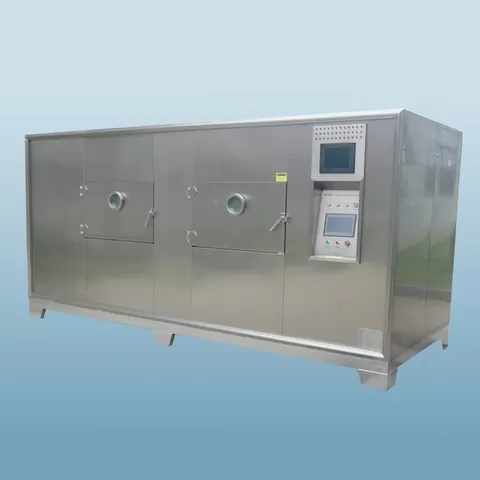
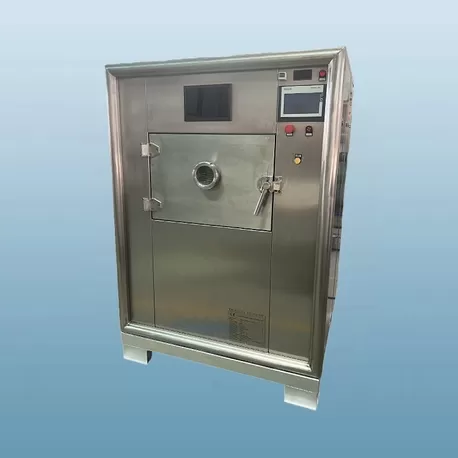
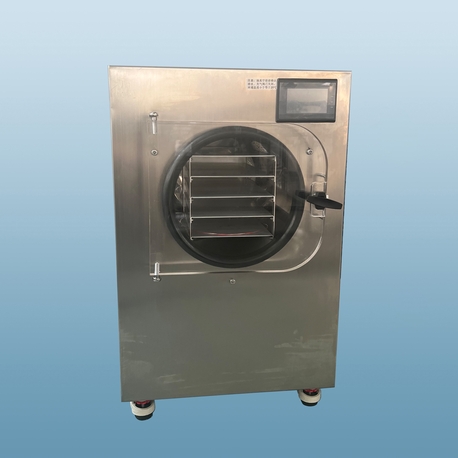
Batch microwave dryers (cabinet/tunnel): Ideal for small to medium volumes, R&D trials, and frequent product changeovers. Typical power: 3kW to 30kW per module.
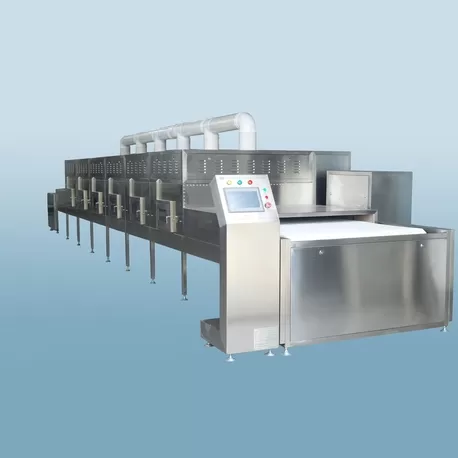
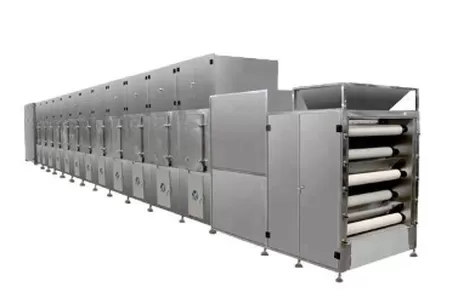
Continuous belt microwave dryers: High throughput (200–5000 kg/h) for food, chemical, and recycling industries. Multi‑stage applicators allow zoning of power density.
Hybrid systems (microwave + hot air / infrared / vacuum): Synergistic designs that combine volumetric heating with convective surface drying for materials requiring crust formation (e.g., snacks) or deep low-temperature drying.
Additional engineering options include inert atmosphere (nitrogen blanketing) for oxidation-sensitive products, PLC/HMI control with recipe storage, and integrated moisture sensors for closed-loop autotuning.
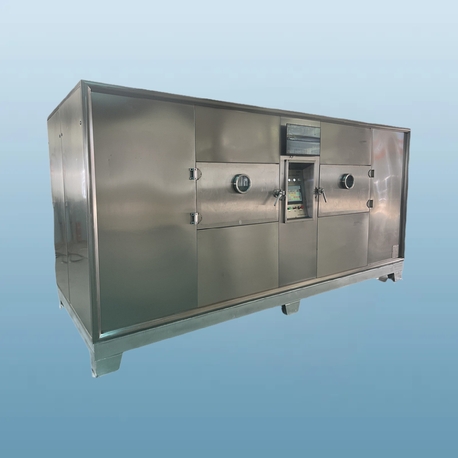
6. Equipment Integration & Safety Compliance
Industrial microwave drying installations must meet strict radiation leakage standards (<1–5 mW/cm² at 5 cm, following IEC 60519‑6 or local regulations). Nasan systems incorporate:
Double-interlocked door/choke designs and labyrinth seals
Over-temperature cutoffs and arc detection (especially important for metal‑containing or heterogeneous loads)
RF shielding on all ports, inlets, and outlets
EMC-compliant power supplies and filtering
Material pre‑assessment is critical: products containing metallic particles, conductive salts, or high-loss solvents require specific frequency/power profiles to avoid arcing. Our process lab evaluates dielectric properties and offers scale‑up feasibility studies.
7. Economic Analysis: Payback & Total Cost of Ownership
While capital expenditure for industrial microwave dryers is often higher than simple gas ovens, the total cost of ownership (TCO) frequently shows full ROI within 12–30 months due to:
Energy savings: At $0.10/kWh electric, a 100 kW microwave system saves approx. $50,000–$80,000 annually compared to equivalent gas heating (factoring electricity vs. gas price per MJ and efficiency).
Reduced product losses: Less trim waste, fewer rejects from discoloration or non-uniform drying, typically improves yield by 3-8%.
Labor & maintenance: Automated microwave lines reduce manual turning and belt cleaning cycles. No burner maintenance, flue gas cleaning, or dust explosion risks (when properly managed).
Case example: A spice processor replacing a 12-hour hot air batch process with a 60kW continuous microwave drying line increased daily throughput from 4 tons to 14 tons while cutting energy cost per ton by 52%. Payback occurred in 14 months.
8. Frequently Asked Questions (FAQ)
Q1: Can microwave drying handle high-sugar or high-fat materials (e.g., fruit purees, oily seeds)?
A1: Yes, but with precise power management. High-sugar or high-fat content reduces the loss factor, so initial moisture removal may be slower. Solutions include pulsed microwave application, mixing with dielectric enhancers (e.g., small amounts of water or coupling agents), or using lower frequency (915 MHz) for deeper penetration. Our engineers perform dielectric profiling to design optimal drying curves for sticky or fatty feeds.
Q2: What about fire or explosion risks with organic dust and microwave energy?
A2: Industrial microwave dryers are inherently safer than flame-based systems because no open combustion exists. However, combustible dust (sugar, starch, spices) can ignite if overheating occurs. We implement hazard mitigation: nitrogen purging, oxygen monitoring, spark-resistant conveyor belts, and temperature sensors with automatic power cutoff. All systems comply with ATEX or NFPA 69 where needed.
Q3: How does scaling up from a lab microwave to full production work?
A3: Scale‑up is not linear but follows power‑density and volume‑loading principles. We advise a three-phase approach: (i) lab tests (2–10 kg batch) to determine dielectric response, (ii) pilot trials (50–200 kg/h) using adjustable multi‑magnetron tunnel, (iii) full‑scale design with validated electromagnetic simulations. Nasan provides both pilot rental and process guarantee scales.
Q4: What is the typical maintenance schedule for a microwave dryer?
A4: Routine maintenance every 500–1000 operating hours: check magnetron cathode health (replace every 8,000–12,000 hrs), clean waveguide windows and applicator interior from product residue, inspect door seals with a leakage detector, and verify belt tracking. Because no hot gas or moving flames exist, maintenance costs are usually 40‑60% lower than conventional thermal dryers.
Q5: Can microwave drying be combined with vacuum for temperature‑sensitive pharmaceuticals?
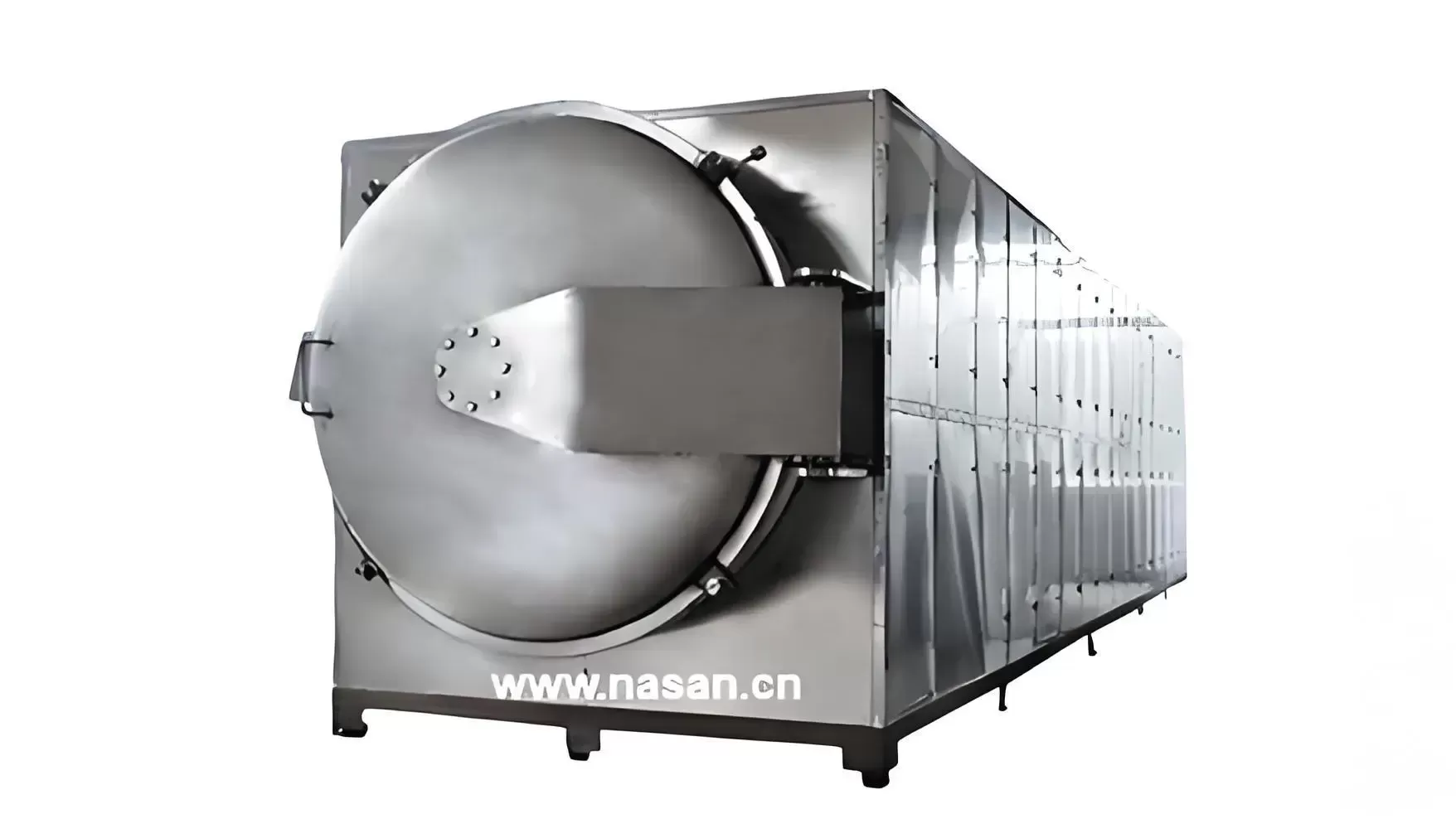
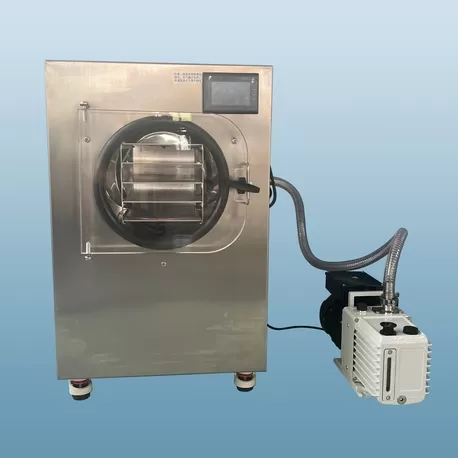
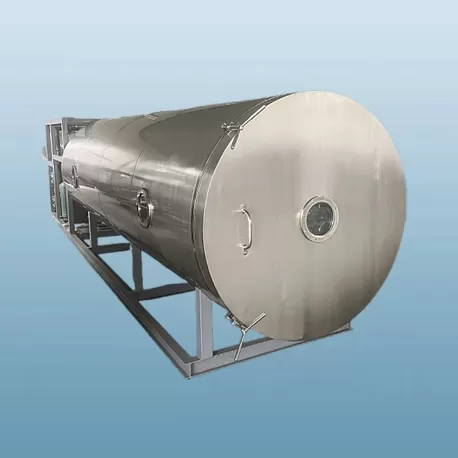
A5: Absolutely. Vacuum microwave drying (VMD) operates at 30–50°C and 10–50 mbar absolute pressure, drastically reducing boiling point of water and solvents. It prevents oxidation and thermal degradation of peptides, probiotics, and herbal extracts. Our vacuum-microwave systems incorporate rotary drums or static trays with continuous vacuum pumping and solvent recovery condensers.
Q6: What is the influence of product shape and size on drying uniformity?
A6: Uniformity improves when product dimensions are less than the penetration depth. For larger items (e.g., whole fruit or wood blocks), we configure multi‑directional microwave feed (top + bottom waveguides) and intermittent rotation. Alternatively, reduce product thickness or pre‑cut to optimize microwave drying efficiency. Our free process auditing includes size reduction recommendations.
9. Next Steps: Engineering a Custom Microwave Drying Line
Every industrial material has unique permittivity, bulk density, and sensitivity to thermal stress. A generic dryer will compromise efficiency or quality. Microwave drying investment must be preceded by feasibility tests, power mapping, and full-scale simulations. The Nasan process development team offers on‑site material evaluation, pilot runs using 6–50 kW testbeds, and turnkey installation support including electrical integration, safety certification, and operator training. We target moisture reduction from 85% down to 5‑10% with documented uniformity and retention of critical product attributes.
Ready to optimize your drying process? Submit your material specifications, desired throughput, and final moisture targets. Send an inquiry to Nasan's engineering team for a detailed technical proposal, pilot test arrangement, or ROI calculation. Our specialists respond within 24 hours with a preliminary economic assessment.