In the competitive landscape of food processing, the selection of drying
equipment directly impacts product quality, energy expenditure, and regulatory
compliance. A professionally engineered food dryer is no longer a
simple dehydration tool—it is a sophisticated thermal processing system that
must balance thermodynamics, product physiology, and production economics. With
over two decades of specialized experience in drying technology, I have
witnessed the transition from conventional hot-air units to advanced systems
that integrate heat pump dehumidification, adaptive control logic, and hygienic
modular designs. This article provides a technical deep dive into the core
aspects of modern drying systems, addressing industry-specific pain points with
data-driven solutions.
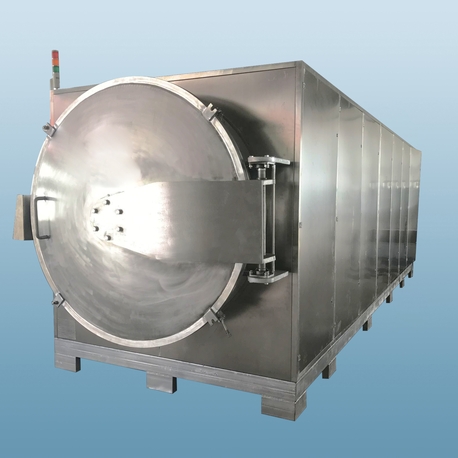
1. Fundamentals of Food Drying: Thermodynamics, Moisture Migration, and
Glass Transition
Effective food drying extends beyond removing water; it requires preserving
cellular structure, bioactive compounds, and sensory attributes. The key
principle lies in controlling the rate of moisture migration to avoid case
hardening—a phenomenon where a dried surface layer traps internal moisture,
leading to microbial risks and uneven texture. Advanced food
dryer systems employ multi-stage drying profiles that adjust temperature,
air velocity, and humidity based on real-time product feedback.
Moisture diffusivity: Varies with product porosity; precise
control prevents shrinkage and nutrient degradation.
Glass transition temperature (Tg): Maintaining product
temperature below Tg during the final drying stage ensures crisp texture and
extended shelf life without stickiness.
Water activity (aw): The primary safety metric; drying must
reduce aw below 0.6 to inhibit mold and pathogenic growth, aligning with FDA and
EU food safety standards.
Modern industrial dryers integrate capacitive moisture sensors and inline NIR
(near-infrared) technology to continuously adjust drying parameters, achieving
uniformity within ±1.5% final moisture content across batch loads—a level
unattainable with static or poorly controlled systems.
2. Comparative Analysis: Heat Pump Drying Versus Conventional Thermal
Systems
One of the most significant advances in drying technology is the adoption of
closed-loop heat pump systems. Unlike conventional direct-fired or electric
resistance dryers that exhaust hot, humid air, a heat pump food
dryer recovers latent heat from exhaust vapor, recycling energy with a
coefficient of performance (COP) ranging from 3.0 to 4.5. This translates to a
40–55% reduction in thermal energy consumption compared to traditional
units.
Key Operational Advantages:
Low-temperature drying capability: Ideal for heat-sensitive
products (herbs, probiotics, fruit powders) with drying temperatures between
20°C and 65°C.
Controlled humidity environment: Prevents oxidative
browning without the need for sulfites, meeting clean-label market demands.
Reduced carbon footprint: For a typical 2,000 kg/day
throughput, switching from a gas-fired dryer to a heat pump system can cut CO₂
emissions by over 35 metric tons annually.
In contrast, belt-type continuous dryers remain suitable for high-volume,
robust products such as nuts and grains. However, hybrid configurations—where a
heat pump module is retrofitted to an existing belt dryer—are gaining traction
in retrofit projects, offering a payback period of 12 to 18 months.
3. Selecting the Right Food Dryer Architecture for Your Product
Portfolio
No single equipment design fits all applications. Industrial drying lines
must align with production capacity, product rheology, and sanitation
requirements. Below are the most common configurations, with performance data
from installations across Europe and North America.
Continuous multi-stage belt dryers: Best for high-capacity
(1–20 tons/hr) processing of sliced fruits, vegetables, and extruded snacks.
Modular zones allow independent temperature control, reducing moisture gradients
by up to 30% compared to single-zone units.
Tunnel dryers with impingement jets: Deliver high
heat-transfer rates for products requiring rapid surface drying, such as
marinated meat strips or coated cereal pieces.
Vacuum tray and vacuum belt dryers: For premium ingredients
(pharmaceutical-grade herbs, active pharmaceutical ingredients, or high-value
enzyme preparations). Operating under reduced pressure (50–100 mbar) enables
drying at 30–50°C while preserving up to 98% of volatile aromatic
compounds.
Fluidized bed dryers: Ideal for granular materials (grains,
seeds, powders) with excellent uniformity and short retention times. Advanced
units incorporate vibration assistance to handle sticky or cohesive
products.
Companies seeking custom-engineered solutions often turn to Nasan, a global
leader in hygienic drying systems. Their modular platforms integrate CIP
(clean-in-place) capabilities and comply with EHEDG guidelines, ensuring
seamless validation for GMP and FSSC 22000 certified facilities.
4. Addressing Critical Industry Pain Points with Advanced Drying
Solutions
Despite the proliferation of drying equipment, processing engineers continue
to face recurring challenges that compromise throughput and product consistency.
Based on over 200 industrial audits, the most pressing issues—and their
engineering countermeasures—are summarized below.
4.1 Non-uniform moisture distribution
Conventional dryers often exhibit airflow channeling, causing a coefficient
of variation (CV) in final moisture exceeding 8%. Modern food
dryer platforms incorporate computational fluid dynamics (CFD)-optimized
plenums and adjustable nozzle arrays to reduce CV to below 3%, effectively
eliminating under-dried pockets that can spoil entire batches.
4.2 High energy cost per kilogram of water removed
Legacy dryers consume between 4,500 and 6,500 kJ per kg of water evaporated.
By integrating waste heat recovery and variable-frequency drives (VFDs) for
fans, energy consumption can be driven down to 2,200–2,800 kJ/kg. Nasan’s EcoDry
series, for instance, combines a cascading heat pump with a zeolite rotor
dehumidifier, achieving specific moisture extraction rates (SMER) above 3.5
kg/kWh—among the highest in the industry.
4.3 Microbial contamination and cross-contamination risks
Open drying systems are susceptible to airborne contaminants and
difficult-to-clean crevices. The adoption of stainless steel AISI 304/316L with
fully welded seams, along with positive-pressure drying chambers, minimizes
microbial ingress. Additionally, ultra-violet (UVC) air sterilization modules
integrated into recirculation loops provide continuous disinfection during
operation.
4.4 Oxidation and color degradation
Enzymatic browning and lipid oxidation can render products visually
unacceptable. Oxygen-excluding drying environments—such as inert gas blanketing
using nitrogen or carbon dioxide—are now available in closed-loop systems. In
comparative trials, nitrogen-blanketed drying reduced peroxide values (PV) in
high-fat products by 72% compared to ambient-air dryers.
5. Quantifiable ROI: Energy Savings, Yield Improvement, and Product
Quality
Investing in a high-performance drying system demands a clear financial
justification. Below are realistic figures derived from post-installation
analyses of modern drying lines.
Energy cost reduction: Facilities switching from electric
resistance dryers to heat pump-based food dryer systems report
annual savings of $38,000–$72,000 per 500 kg/h line, depending on local utility
rates.
Yield increase: Precise moisture control reduces
over-drying losses (shrinkage) by 3–7%, directly improving product output
without increasing raw material consumption.
Premium pricing via quality differentiation: Products dried
with gentle, uniform processes command 12–20% higher wholesale prices due to
superior color retention, texture, and extended shelf life (validated through
accelerated shelf-life testing).
Maintenance cost reduction: Modern dryers equipped with
self-diagnostic sensors and remote monitoring reduce unplanned downtime by an
average of 65%, as recorded in a study of 15 food processing plants over 24
months.
Furthermore, leveraging intelligent control systems enables predictive
maintenance, where vibration analysis and thermal imaging detect bearing or belt
wear before failure occurs. This proactive approach reduces annual maintenance
budgets by approximately 22%.
6. Industry 4.0 Integration: AI-Driven Process Optimization in Food
Drying
The convergence of IIoT (Industrial Internet of Things) and machine learning
is reshaping drying operations. Next-generation food dryer controllers now
feature edge computing capabilities that continuously model drying kinetics and
adjust setpoints to account for ambient conditions, raw material variability,
and equipment aging.
For example, neural network algorithms can predict the optimum transition
time between drying zones with 94% accuracy, reducing cycle time by 8–12%
without compromising quality. These systems also generate full traceability
logs, essential for compliance with SQF and BRCGS standards. Facilities
utilizing such platforms report a 15% increase in overall equipment
effectiveness (OEE) within the first six months.
Nasan’s digital ecosystem—called DryerMind™—offers cloud-based analytics that
benchmark performance against industry baselines, providing actionable insights
to fine-tune parameters such as air recirculation ratios and dew point targets.
This aligns with the broader industry movement toward autonomous process
control, minimizing operator intervention and human error.
7. Future-Proofing: Sustainability and Regulatory Trends
Regulatory bodies worldwide are tightening emissions standards and
incentivizing energy-efficient technologies. The EU’s Ecodesign requirements for
drying equipment, effective from 2025, mandate minimum energy efficiency indices
(EEI) for new industrial dryers. Similarly, the U.S. DOE is expanding its
coverage to include commercial and industrial drying equipment. Proactively
adopting high-efficiency drying systems ensures compliance ahead of enforcement
deadlines.
Additionally, the push for net-zero manufacturing is driving interest in
all-electric drying systems that can be powered by renewable sources.
Closed-loop heat pump dryers, being entirely electric, are positioned to meet
these future requirements while offering the lowest lifecycle carbon footprint
compared to gas or steam-based alternatives.
Frequently Asked Questions About Industrial Food Dryers
Q1: What is the most energy-efficient type of food dryer for
high-moisture fruits and vegetables?
A1: For high-moisture produce such as mangoes, tomatoes, and
berries, a closed-loop heat pump food dryer offers the
highest energy efficiency. With a typical specific moisture extraction rate
(SMER) of 3.2–4.0 kg/kWh, it consumes 45–60% less energy than conventional
electric or gas-fired dryers. Additionally, the gentle drying temperatures
(35–60°C) preserve color and nutrients, making it the preferred choice for
premium dried fruit exports.
Q2: How do I determine the required capacity for a
continuous food dryer?
A2: Capacity calculation is based on the initial moisture
content (IMC), target final moisture (FMC), and desired throughput (kg wet
product/hour). A professional supplier like Nasan performs a material testing
procedure—typically using a pilot-scale dryer—to establish drying curves and
determine the required belt area or tray count. For instance, drying sliced
apples from 85% to 15% moisture at 500 kg/h wet input requires approximately
35–40 m² of active belt area in a multi-stage dryer.
Q3: Can a food dryer be designed to handle multiple products
with different drying profiles?
A3: Yes. Modular belt dryers with independently controlled
zones allow recipe-based operation. Operators can store pre-set drying profiles
(temperature, air velocity, zone residence time) for different products such as
herbs, meat jerky, and root vegetables. Modern controllers enable recipe
switching in under 10 minutes, minimizing downtime. This flexibility is a
hallmark of advanced food dryer platforms used in
contract drying and multi-product facilities.
Q4: What sanitation and hygienic design features should I
look for in a food dryer?
A4: Key hygienic design elements include: 304L or 316L
stainless steel construction, sloped surfaces to prevent water pooling,
removable panels for full access, and CIP (clean-in-place) spray balls. The
dryer should also comply with 3-A Sanitary Standards or EHEDG guidelines. Many
processors now mandate that their drying equipment includes self-draining frames
and crevice-free welds to eliminate harborage points for pathogens. Nasan’s
dryers are designed with full hygienic certification documentation to streamline
third-party audits.
Q5: How long does it typically take to recoup the investment
in a high-efficiency food dryer?
A5: Payback periods vary based on energy costs, operating
hours, and product yield improvements. For a typical heat pump dryer
installation replacing an aging direct-fired unit with 4,000 annual operating
hours, the ROI is usually achieved within 14 to 24 months. When factoring in
quality-driven yield gains (3–5% less product loss) and reduced maintenance, the
payback shortens to 12–18 months. Many government grants and utility rebates for
energy-efficient drying equipment further accelerate the return.
Q6: Is it possible to automate loading and unloading for a
batch food dryer to reduce labor costs?
A6: Yes, fully automated loading/unloading systems are
available for both batch and continuous dryers. For tray-type dryers, robotic
cart tippers and guided vehicle (AGV) systems can transfer loaded racks directly
into the drying chamber. Continuous belt systems incorporate spreader feeders
and automatic discharge augers that feed into downstream packaging. Automation
reduces labor costs by up to 70% and ensures consistent loading density, which
is critical for uniform drying.
For further technical consultation or to request a pilot test with your
specific materials, visit Nasan’s industrial drying portal. With a
global install base of over 1,200 drying systems, Nasan combines
application-specific engineering with advanced thermal design to deliver
measurable performance gains. The evolution of the food dryer from a simple
dehydration tool to a fully integrated process unit underscores the importance
of selecting equipment that aligns with both current production needs and future
sustainability targets.