In countless industrial processes – from food processing to chemical
manufacturing – the removal of moisture is a critical step that directly impacts
product quality, shelf life, and production efficiency. An industrial drying machine must be
carefully selected and operated to achieve the desired residual moisture content
while minimizing energy consumption and preserving material properties. This
article provides a deep technical exploration of drying technologies, common
challenges, and how leading manufacturers like Nasan engineer systems that deliver
consistent performance and low operating costs.
Fundamentals of industrial drying
Drying is a mass transfer process that removes water or other solvents from a
solid, semi‑solid, or liquid feedstock by evaporation. The rate of drying
depends on several factors: temperature, air velocity, humidity, and the
material’s surface area. Industrial drying machine designs
optimize these parameters to achieve uniform moisture removal without thermal
degradation.
Heat and mass transfer mechanisms
Three primary heat transfer modes are employed in industrial dryers:
Convection – Hot air or gas flows over the material,
transferring heat and carrying away evaporated moisture. This is the most common
method, used in flash dryers, fluidized bed dryers, and spray dryers.
Conduction – Heat is supplied through direct contact with a
heated surface (e.g., drum dryers, paddle dryers). Conduction is efficient for
pasty or viscous materials.
Radiation – Infrared or microwave energy penetrates the
material and generates heat internally. This approach is fast and can be
precisely controlled, but is often limited to thin layers or specialty
applications.
Many modern dryers combine two or more modes to improve efficiency. For
example, a fluidized bed dryer uses convection for heat transfer and conduction
through the distributor plate.
The choice of drying
machine is dictated by the physical and chemical characteristics of the
feed, desired throughput, and final product specifications.
Convective dryers
Flash dryers – Particles are dispersed into a high‑velocity
hot gas stream. Drying occurs in seconds, making them ideal for heat‑sensitive
materials like starch or polymers.
Fluidized bed dryers – Material is suspended by
upward‑flowing air, creating a fluid‑like state. Excellent heat and mass
transfer, used for granulates, powders, and crystals.
Spray dryers – A liquid feed is atomized into fine droplets
and mixed with hot gas. Produces spherical powders from solutions or suspensions
(e.g., milk powder, ceramic precursors).
Rotary dryers – A rotating cylinder lifts and showers the
material through a hot air stream. Robust and versatile, used for minerals,
fertilizers, and biomass.
Conductive (contact) dryers
Drum dryers – A thin layer of liquid or paste is applied to
heated drums, dried, and scraped off. Common in food and chemical industries for
producing flakes.
Paddle dryers – Agitated paddles mix the product while
heating through the jacketed vessel and hollow paddles. Suitable for sludges,
filter cakes, and solvent‑wet solids.
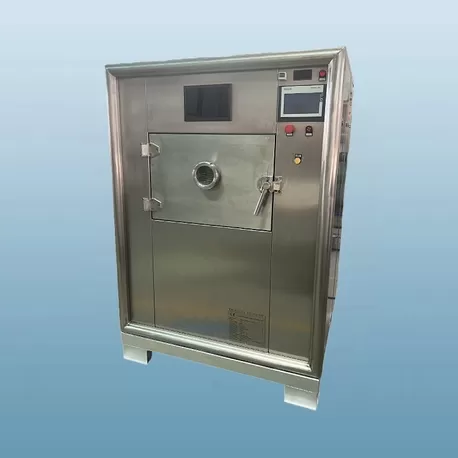
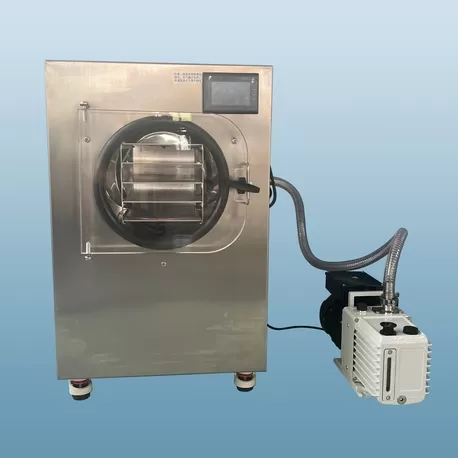
Vacuum dryers – Drying under reduced pressure lowers the
boiling point, allowing gentle drying of heat‑sensitive materials. Often
combined with conduction heating (e.g., vacuum shelf, vacuum paddle).
Radiant and dielectric dryers
Infrared dryers – IR emitters (short, medium, or long wave)
directly heat the material without heating the surrounding air. Used for
coatings, papers, and thin webs.
Microwave and RF dryers – Electromagnetic fields excite
water molecules, generating volumetric heating. Effective for thick or uneven
materials (wood, ceramics, food).
Key applications of industrial drying machines
Drying machine technology is deployed across virtually every sector that processes solid
materials.
Food industry – Dehydrated fruits and vegetables, milk
powder, coffee, spices, and pet food. Hygienic design and precise temperature
control are essential to preserve flavor and nutrients.
Chemical industry – Drying of pigments, catalysts, resins,
and specialty chemicals. Solvent recovery systems may be integrated to capture
volatile organic compounds.
Pharmaceuticals – Drying of active pharmaceutical
ingredients (APIs), excipients, and herbal extracts. Vacuum and freeze dryers
are common for heat‑sensitive biologics.
Minerals and ores – Rotary or fluidized bed dryers remove
moisture from concentrates, sand, and clay before further processing or
shipping.
Wood and biomass – Kiln drying of lumber and drying of wood
chips or pellets for bioenergy. Moisture content must be precisely controlled to
prevent warping or mold.
Wastewater treatment – Drying of sewage sludge reduces
volume and prepares it for incineration or fertilizer use. Paddle dryers are
often employed for this demanding application.
Industry challenges and technical solutions
Even well‑designed dryers can encounter operational issues that affect
product quality and energy efficiency. Below are common pain points and how
modern engineering addresses them.
High energy consumption
Drying is one of the most energy‑intensive unit operations, often accounting
for 10–25% of a plant’s total energy use. Solutions include:
Heat recovery systems (e.g., recuperators, heat wheels) that capture exhaust
heat to pre‑heat incoming air or product.
Insulation improvements and air leak sealing.
Variable frequency drives (VFDs) on fans and conveyors to match load.
Process integration, such as using waste heat from other
processes.
Nasan offers energy‑optimized
dryer designs with integrated heat recovery, often reducing fuel consumption by
20–30% compared to conventional systems.
Non‑uniform moisture content
Inconsistent drying leads to off‑spec product. Causes include poor air
distribution, material segregation, or inadequate mixing. Advanced control
systems with online moisture sensors (NIR, microwave) allow real‑time adjustment
of feed rate, temperature, or airflow. Computational fluid dynamics (CFD) is
used to optimize dryer internals for uniform flow.
Thermal degradation
Heat‑sensitive materials may discolor or lose potency if exposed to high
temperatures for too long. Solutions: use lower‑temperature drying with vacuum
or dehumidified air; employ gentle drying technologies like freeze drying or
vacuum contact drying; or design for short residence time (flash or spray
drying).
Dust and emissions
Particulate carryover can cause product loss and environmental compliance
issues. Cyclones, bag filters, or wet scrubbers are installed downstream. For
solvent‑based feeds, closed‑loop systems with solvent recovery are used. Nasan provides complete exhaust
treatment packages tailored to local regulations.
Maintenance and downtime
Wear from abrasive materials, corrosion, or material buildup can force
frequent shutdowns. Proper material selection (stainless steel,
abrasion‑resistant linings) and easy‑clean designs (e.g., hinged doors, smooth
surfaces) reduce maintenance. Predictive maintenance using vibration and
temperature monitoring extends component life.
Selecting the right drying machine
Choosing an industrial drying machine requires a
systematic evaluation of:
Feed characteristics – Moisture content, particle size,
density, thermal sensitivity, and abrasiveness.
Product requirements – Target final moisture, particle
morphology, and quality attributes (color, flavor, activity).
Production scale – Throughput (kg/h or t/h), batch vs.
continuous operation.
Utilities – Available heat sources (steam, gas,
electricity, waste heat), space constraints.
Regulatory and safety – Explosion hazards, solvent recovery
needs, food‑grade construction.
Pilot testing is strongly recommended. Nasan operates a state‑of‑the‑art test
center where customers can evaluate different dryer configurations with their
own materials, ensuring the selected machine meets all performance targets
before purchase.
Frequently asked questions about drying machines
Q1: What is the difference between a dryer and an
oven?
A1: While both apply heat, an oven is typically used for
curing, baking, or heat treatment, often without the primary goal of moisture
removal. A drying
machine is specifically designed to evaporate water or solvents from a
material, and includes features like air circulation, exhaust, and often product
agitation to facilitate mass transfer.
Q2: How do I determine the required drying time for my
product?
A2: Drying time depends on the material’s drying kinetics,
which can be obtained from laboratory tests in a thin‑layer dryer or through
pilot trials. Factors include initial and final moisture, temperature, air
velocity, and particle size. Most manufacturers, including Nasan, offer testing services to
establish accurate drying curves.
Q3: Can the same drying machine handle multiple
products?
A3: Yes, but flexibility may require compromises in
efficiency or cleanability. For example, a fluidized bed dryer can process many
different granular materials by adjusting airflow and temperature. However, if
products have very different characteristics (e.g., sticky vs. free‑flowing),
dedicated machines may be more cost‑effective. Nasan designs multipurpose dryers with
quick‑clean features for facilities with frequent product changeovers.
Q4: What is the typical energy consumption of an industrial drying
machine?
A4: Energy consumption varies widely. For convective
dryers, thermal energy use is typically 3,000–6,000 kJ per kg of water
evaporated, depending on inlet/outlet temperatures and heat recovery. Electrical
power for fans and drives adds 50–200 kW per ton of product. Modern dryers with
heat recovery can reduce consumption by 20–40%.
Q5: How often should a drying machine be cleaned?
A5:
Cleaning frequency depends on the product. Sticky or hygroscopic materials may
require daily cleaning to prevent buildup. For non‑sticky products, weekly or
monthly cleaning may suffice. Many dryers now incorporate clean‑in‑place (CIP)
systems for automated cleaning without dismantling.
Q6: What causes dust explosions in dryers, and how can they be
prevented?
A6: Dust explosions occur when fine combustible particles
are suspended in air within an enclosed space and ignited by a spark or hot
surface. Prevention measures include: inerting (using nitrogen or steam),
explosion venting, suppression systems, and grounding to prevent static
discharge. Nasan designs dryers
in compliance with ATEX or NFPA standards for safe operation with explosive
materials.
Q7: Can I retrofit an existing drying machine to improve energy
efficiency?
A7: Yes, many older dryers can be upgraded. Common
retrofits include: adding heat recovery units, installing VFDs on fans,
upgrading insulation, and implementing advanced controls with moisture feedback.
Nasan offers energy audits and
retrofit packages with typical payback periods of 1–3 years.