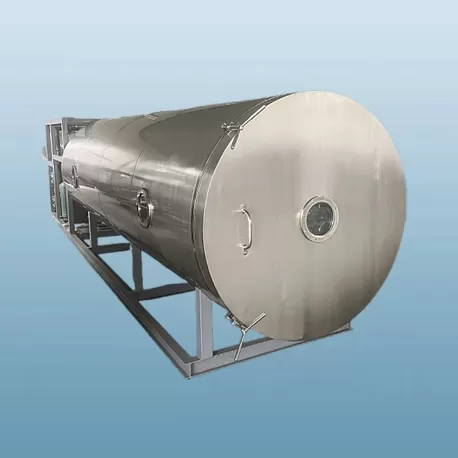
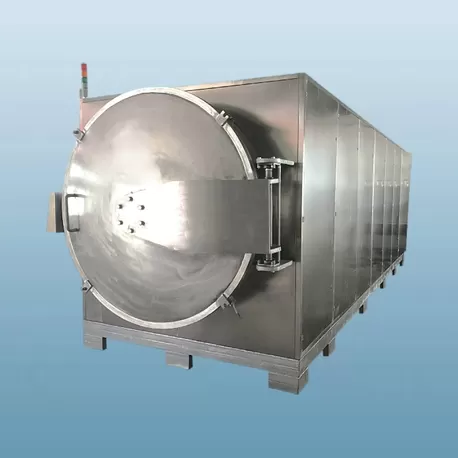
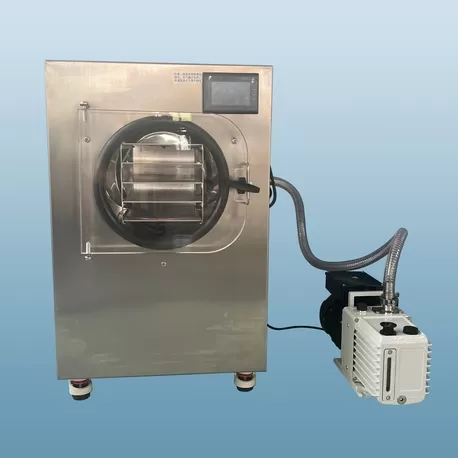
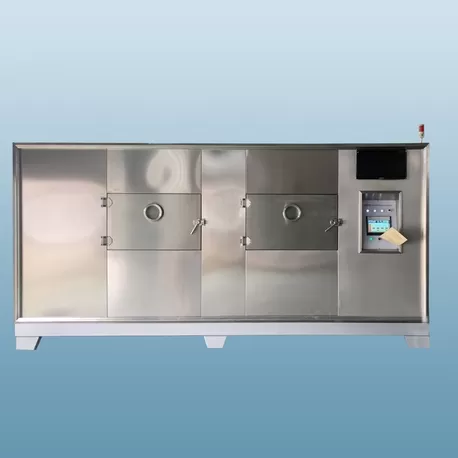
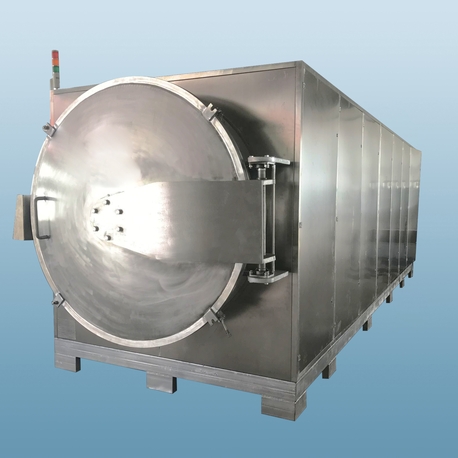
For plant managers and process engineers, the industrial dryer is the final gatekeeper of product quality. Whether removing surface moisture from polymers, drying heat‑sensitive pharmaceuticals, or conditioning bulk agricultural commodities, the choice of dryer type dictates energy consumption, throughput, and final moisture uniformity. This article dissects the engineering principles behind major industrial drying technologies, common operational challenges, and how Nasan integrates these principles into robust, high‑efficiency systems.

Fundamental Drying Mechanisms and Energy Transfer
Every industrial dryer relies on one or a combination of three heat transfer modes: convection, conduction, or radiation. The selection depends on material characteristics—particle size, initial moisture content, thermal sensitivity, and abrasiveness. Key performance indicators include:
Specific moisture extraction rate (SMER): kg of water removed per kWh of energy input. A well‑optimized convective dryer achieves SMER values of 2.5–4.5, while conductive systems can exceed 5.0 due to reduced heat losses.
Residence time distribution: ensures uniform drying; short‑circuiting leads to wet spots and off‑spec product.
Dew point control: in air‑based systems, inlet air dew point below –40 °C prevents reabsorption during the falling‑rate period.
Nasan engineers analyze material‑specific drying curves using lab‑scale trials before scaling to full‑size production dryer units, ensuring the selected technology matches both kinetics and product sensitivity.
Classification of Industrial Dryers by Heat Transfer Method
Direct (Convective) Dryers
In direct dryer designs, heated air or gas contacts the product directly. Common configurations include:
Flash (pneumatic) dryers: for fine, free‑flowing powders; residence times of 0.5–3 seconds. Used in starch, clay, and food ingredient processing.
Fluidized bed dryers: air velocity suspends particles, providing excellent heat and mass transfer. Ideal for pharmaceuticals, plastics, and crystalline products.
Spray dryers: atomize liquid feed into a hot gas stream; produces spherical powders from solutions or suspensions. Dairy, ceramic, and catalyst industries rely heavily on this technology.
Direct dryer systems are simple to operate but require careful exhaust gas treatment—cyclones, bag filters, or scrubbers—to meet emission standards. Nasan integrates these components into a single skid, minimizing field installation costs.
Indirect (Conductive) Dryers
Here, heat is transferred through a heated surface—steam, thermal oil, or hot water—with the product often under vacuum to lower boiling points. Typical indirect dryer types:
Paddle or disc dryers: agitated vessels with hollow paddles; suited for sludges, pastes, and shear‑sensitive materials.
Rotary vacuum dryers: cylindrical vessels with internal agitators; common in pharmaceutical intermediate drying.
Drum dryers: product is applied as a thin film on rotating heated drums; used for baby food, starches, and chemical flakes.
Because the heating medium is isolated, indirect dryer configurations offer solvent recovery and inert atmosphere capabilities—critical for explosive or toxic products. Nasan provides customized jacket designs and surface finishes for sanitary applications.
Specialized Dryer Designs for Challenging Materials
Handling Sticky and Hygroscopic Products
Materials that transition through a “sticky phase” during drying (e.g., organic intermediates, fruit purees) require specialized dryer geometries. Fluidized bed dryers with internal mechanical agitators (mechanically fluidized) prevent agglomeration. Alternatively, two‑stage drying—where the product is partially dried in a flash dryer then finished in a fluid bed—avoids sticking while maintaining thermal efficiency. Nasan has deployed such hybrid lines for fermentation by‑products and bio‑polymers.
Heat‑Sensitive and Biological Materials
For enzymes, antibiotics, and active pharmaceutical ingredients (APIs), excessive temperature degrades potency. Vacuum dryer operation at absolute pressures of 10–50 mbar allows water evaporation at 20–30 °C. Freeze drying (lyophilization) is the ultimate solution, but for bulk materials, vacuum paddle dryers offer a cost‑effective compromise. Nasan vacuum dryer systems incorporate solvent recovery condensers and inert gas purging to prevent oxidation.
Energy Efficiency and Heat Recovery Strategies
Drying is one of the most energy‑intensive unit operations, often accounting for 10–25 % of a plant’s total energy bill. Modern industrial dryer designs focus on:
Exhaust gas recirculation: reusing a portion of the outlet air after dehumidification reduces fresh air heating load.
Heat pump integration: closed‑loop systems recover latent heat from exhaust vapor, boosting SMER above 5.0 for low‑temperature applications.
Cogeneration (CHP): using waste heat from on‑site power generation to supply the dryer’s thermal demand.
Data from a recent Nasan installation at a specialty chemical plant showed that replacing a direct‑fired rotary dryer with an indirect paddle dryer equipped with a heat pump reduced natural gas consumption by 58 %, achieving a 22‑month payback.
Process Control and Quality Assurance
Consistent product quality requires tight control of exit moisture content. Advanced dryer control systems now incorporate:
Real‑time moisture sensors: NIR or microwave probes at the outlet provide feedback for adjusting feed rate or inlet temperature.
Model predictive control (MPC): using a dynamic model of the dryer to anticipate disturbances and adjust variables proactively.
Data historians: recording temperature profiles, pressure drops, and energy use for batch traceability and continuous improvement.
For pharmaceutical applications, Nasan offers dryer systems with full 21 CFR Part 11 compliance, including electronic signatures and audit trails for all critical process parameters.
Installation, Maintenance, and Safety Considerations
Industrial dryer installations must address:
Explosion protection: for combustible dusts, venting panels, suppression systems, or inerting (nitrogen blanketing) are mandatory.
Accessibility for cleaning: quick‑opening clamps, CIP spray balls, and polished internal surfaces reduce changeover time between products.
Predictive maintenance: vibration monitoring on fans and rotary shafts; thermal imaging of electrical panels and insulation.
Nasan provides comprehensive installation support, from foundation drawings to commissioning, and offers service contracts that include infrared thermography and alignment checks.
Emerging Trends: Digital Twins and Sustainable Drying
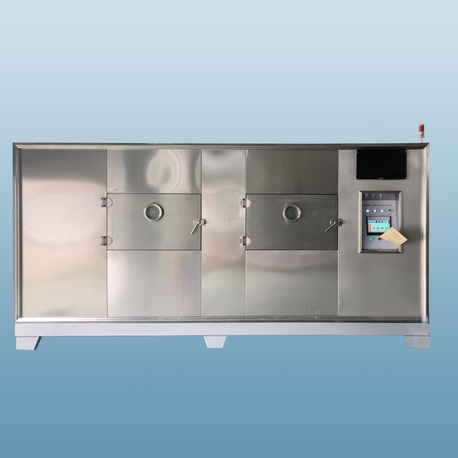
The next generation of industrial dryer technology is driven by sustainability and Industry 4.0. Digital twins—virtual replicas of the dryer and its process—allow operators to test cycle modifications, optimize energy use, and train staff without interrupting production. Meanwhile, the use of biomass‑fired heaters, waste heat from other processes, and electrically driven heat pumps is reducing the carbon footprint of drying operations. Nasan is actively developing modular dryer designs that can be easily retrofitted with alternative energy sources as they become available.
Frequently Asked Questions
Q1: How do I determine whether a direct or indirect dryer is right for my material?
A1: The choice depends on material sensitivity, solvent type, and emission limits. Direct dryer systems (flash, fluid bed) are simpler and lower‑cost when water is the solvent and exhaust can be discharged after particulate removal. Indirect dryer designs are preferred when the product is flammable, when solvents must be recovered, or when fine particles would be entrained in a gas stream. Laboratory drying curves and thermal stability data are essential before scale‑up.
Q2: What are the common causes of non‑uniform moisture in a production dryer?
A2: The main culprits are poor feed distribution (wet spots), channeling in fixed beds, or inadequate mixing in agitated dryer vessels. For convective dryers, uneven airflow due to plugged distributor plates is frequent. In rotary dryers, improper flight design or slope leads to uneven residence time. Regular audits of airflow patterns and solids flow, along with tracer studies, help diagnose the issue.
Q3: Can I use a single dryer for multiple products with different drying characteristics?
A3: Yes, but flexibility comes with compromises. A dryer designed for a range of products should have variable speed drives, adjustable airflow, and possibly interchangeable internals (e.g., different flights or paddles). Cleanability between batches is critical to avoid cross‑contamination. Nasan offers multi‑purpose dryer platforms with quick‑change configurations for contract manufacturers.
Q4: What is the typical maintenance schedule for an industrial dryer?
A4: Daily checks include bearing temperatures, drive alignment, and filter pressure drops. Weekly: inspect seals, gaskets, and lubrication levels. Semi‑annually: clean heat exchanger surfaces, check for corrosion, and calibrate sensors. Major overhauls (every 2–5 years) involve replacing bearings, re‑profiling flights or paddles, and non‑destructive testing of pressure vessels. Nasan provides detailed maintenance manuals and remote monitoring to predict failures.
Q5: How does dryer selection impact downstream operations like packaging or milling?
A5: Inconsistent drying leads to caking, agglomeration, or dust generation, all of which affect downstream equipment. Over‑dried materials may be brittle and generate fines during conveying; under‑dried products may clog screens or promote microbial growth. Selecting a dryer that delivers uniform, stable moisture content simplifies downstream processes and improves overall plant efficiency. Integrated system design, where the dryer is considered part of the whole production line, yields the best results.
Choosing the right industrial dryer requires a systematic evaluation of material properties, throughput targets, and energy constraints. With decades of experience across chemical, food, and mineral processing, Nasan offers both standard and custom‑engineered dryer solutions—from laboratory units to high‑capacity production lines. Contact our applications team to discuss your specific drying challenge and request a process demonstration.