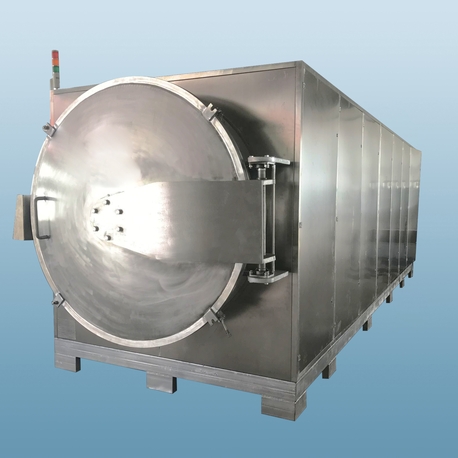
In the food industry, moisture is both a critical processing parameter and a
primary agent of spoilage. From drying pasta to aging cheese, from cold storage
of vegetables to the transport of powdered ingredients, precise humidity control
directly impacts product quality, safety, and shelf life. A food
dehumidifier is not simply a general-purpose dehumidifier; it must
comply with food safety regulations, withstand harsh washdown environments, and
deliver consistent performance across varying temperatures. This article
examines the technologies, applications, and selection criteria for industrial
food dehumidifiers, with a focus on measurable outcomes and compliance.

Why Food Processing Requires Dedicated Dehumidification
Moisture in food facilities leads to several chronic problems that compromise
both product and process integrity:
Microbial growth: Mold, yeast, and bacteria thrive at water
activity (aw) levels above 0.60–0.70. Controlling relative humidity
(RH) below 60% inhibits proliferation without chemical preservatives.
Caking and clogging: Hygroscopic powders (flour, milk
powder, spices) absorb moisture, forming lumps that block conveying systems and
reduce flowability.
Frost and condensation: In cold storage (0–4°C) or freezing
tunnels, warm, humid air entering the space condenses on evaporator coils and
ceilings, leading to ice buildup and drip contamination.
Weight loss and quality degradation: Fresh produce loses
moisture to dry air, causing wilting and economic loss; conversely, too high
humidity accelerates decay.
A purpose‑built food dehumidifier addresses these issues by
maintaining a stable dew point, regardless of ambient conditions. Suppliers like
Nasan engineer their units to meet
the specific demands of food environments, including IP65-rated enclosures,
stainless steel construction, and compliance with EHEDG (European Hygienic
Engineering & Design Group) guidelines.
Core Technologies: Refrigeration vs. Desiccant Food Dehumidifiers
Two principal dehumidification technologies are used in food applications;
the choice depends on temperature, desired RH, and energy efficiency
requirements.
Refrigeration (Condensation) Dehumidifiers
These units cool air below its dew point, condensing water vapor into liquid
that is drained away. They are most efficient in warm, humid conditions (above
15°C). Modern refrigeration dehumidifiers for food use include:
Hot-gas defrost cycles to prevent ice formation on coils when operating near
0°C.
Stainless steel drip pans and drain lines to eliminate standing water and
biofilm risks.
Corrosion-resistant evaporator coatings to withstand acidic cleaning
agents.
Refrigeration dehumidifiers typically achieve RH levels of 35–50% at 20–30°C,
making them suitable for packaging halls, dry goods storage, and ripening rooms
(e.g., cheese, bananas).
Desiccant (Adsorption) Dehumidifiers
Desiccant dehumidifiers use a rotating wheel impregnated with silica gel or
molecular sieve to adsorb moisture directly from the air. They are effective at
low temperatures and can achieve RH as low as 10%. Key features for food
processing include:
High moisture removal capacity even at -20°C, ideal for cold stores and
freeze-drying facilities.
Ability to produce very dry air (dew point down to -40°C) for processes like
spray drying or encapsulating.
No liquid condensate, eliminating drain pans and reducing microbial
risks.
Hybrid systems combining both technologies are also employed in large
facilities, using desiccant units to handle process loads and refrigeration
units for general space conditioning. Nasan offers both types, allowing
food engineers to select the optimal configuration based on product type and
local climate.
Critical Performance Parameters for Food Dehumidifiers
When specifying a food dehumidifier, several technical
metrics beyond simple capacity (liters/day) must be evaluated:
1. Dew Point Control and Stability
For processes like meat aging or chocolate tempering, the dew point must be
held within ±1°C. Dehumidifiers with PID controllers and feedback from precision
RH sensors (accuracy ±1.5%) are essential. Nasan’s food-grade units incorporate
digital scroll compressors and variable-speed desiccant wheels to modulate
capacity precisely.
2. Energy Efficiency (SMER or kg/kWh)
Specific moisture extraction rate (SMER) measures the kilograms of water
removed per kilowatt-hour. High-efficiency refrigeration units achieve SMER >
3.0 at 30°C/80% RH, while desiccant units typically range from 1.5 to 2.5.
Energy costs can dominate operational expenses, so matching the technology to
the load profile is critical.
3. Material Safety and Cleanability
All surfaces in contact with process air must be corrosion-resistant and easy
to sanitize. Look for:
304 or 316L stainless steel housings.
Smooth, crevice-free welds.
Removable access panels for internal inspection.
Filters with high dust-holding capacity (EU7 or higher) to prevent particle
recirculation.
4. Integration with Building Management Systems (BMS)
Modern food plants use centralized control. Dehumidifiers should support
Modbus, BACnet, or Profibus communication, enabling remote monitoring and data
logging for HACCP compliance.
Application-Specific Solutions
Cold Storage and Refrigerated Warehouses
Maintaining 85–95% RH at 0–4°C for fresh produce while preventing
condensation on ceilings is challenging. Desiccant dehumidifiers with
low-temperature regeneration are often used to handle infiltration loads. They
prevent “rain” inside the cold room and reduce defrost cycles of
evaporators.
Drying Rooms for Aged Meats and Cheeses
Products like prosciutto or Parmigiano-Reggiano require controlled drying
with gradual moisture loss. A food dehumidifier in these rooms
must maintain a specific RH profile (e.g., 65–75% for the first month, then
55–65%) while ensuring uniform air distribution. Units with programmable
humidity ramps and low-velocity discharge are preferred.
Powder Handling and Spray Drying Towers
In milk powder or coffee production, the air used for conveying and packaging
must be extremely dry (dew point < -30°C) to prevent caking. Desiccant
dehumidifiers with high-pressure blowers deliver this air directly to the
process.
Freeze-Drying (Lyophilization) Facilities
Freeze-drying requires a sterile, ultra-dry environment. Dehumidifiers
protect the sterile core by conditioning the surrounding cleanroom, reducing the
load on the lyophilizer’s own vacuum system.

Economic and Operational Benefits of Precision Dehumidification
Investing in a high-performance food
dehumidifier yields measurable returns:
Reduced spoilage: Studies show that controlling RH below
60% in dry storage can extend shelf life of grains and spices by 3–5 times.
Lower energy costs: By optimizing defrost cycles and using
heat recovery (e.g., from desiccant regeneration), modern units cut energy
consumption by 20–40% compared to older models.
Improved product consistency: In chocolate coating or sugar
drying, stable humidity prevents stickiness and ensures uniform quality.
Compliance with food safety standards: Maintaining
documented humidity levels satisfies BRCGS, IFS, and FSSC 22000
requirements.
Nasan provides life-cycle cost
analyses to help food processors justify the investment, factoring in energy
savings, reduced waste, and maintenance intervals.
Regulatory and Hygiene Standards for Food Dehumidifiers
Dehumidifiers used in food production must comply with a range of
international standards:
FDA (Title 21 CFR): Materials in contact with air that may
contact food must be FDA-listed.
EU Regulation 1935/2004: Framework for materials intended
to contact food.
ATEX / IECEx: For explosive atmospheres (e.g., flour dust),
dehumidifiers must be rated for hazardous zones.
ISO 22000 / HACCP: Requires documented control of
environmental conditions.
Nasan’s food-grade dehumidifiers carry CE, UL, and EAC certifications, and
are manufactured in ISO 9001 facilities, ensuring traceability and consistent
quality.
Selecting the Right Food Dehumidifier: A Step‑by‑Step Guide
Define the space and load: Calculate the volume, air
changes per hour, and moisture infiltration (from doors, people, product).
Identify temperature range: If the space is refrigerated, a
desiccant unit is likely needed; if ambient or heated, a refrigeration unit may
suffice.
Determine required RH and tolerance: For aging rooms, tight
control (±3%) is required; for general storage, ±10% may be acceptable.
Consider energy sources: Desiccant units require
regeneration heat (electric, steam, or gas); refrigeration units need electrical
power.
Evaluate air distribution: Ducted vs. free blowing; ensure
even coverage to avoid dead zones.
Check hygienic design: Look for sloping surfaces, no hidden
cavities, and easy access for cleaning.
Review controls and connectivity: Ensure compatibility with
your plant’s SCADA or BMS.
Nasan offers free application
engineering support, including psychrometric calculations and 3D airflow
simulations, to help customers select the optimal food
dehumidifier configuration.
Frequently Asked Questions (FAQ)
Q1: What is the difference between a regular dehumidifier and a food
dehumidifier?
A1: A regular dehumidifier (typically for residential use)
is not designed for continuous operation in harsh environments, nor does it meet
food safety material requirements. A food dehumidifier features stainless steel
construction, hygienic design (smooth surfaces, no stagnant water), compliance
with food-contact regulations, and often includes high-precision controls and
defrost systems for low-temperature operation.
Q2: Can a food dehumidifier be used in a cold room (0–5°C)?
A2: Yes, but you must select the correct technology.
Refrigeration dehumidifiers struggle below 10°C because coils ice up. Desiccant
(adsorption) dehumidifiers work efficiently at low temperatures and are the
standard choice for cold storage. Some advanced refrigeration units with hot-gas
defrost can operate down to 0°C, but desiccant is generally more reliable.
Q3: How often should a food dehumidifier be cleaned and maintained?
A3: Frequency depends on the environment. In dusty areas
(e.g., flour mills), pre-filters may need weekly cleaning. The internal
components should be inspected monthly for mold or residue, and a deep clean per
manufacturer’s instructions (usually quarterly) is recommended. Units with
stainless steel and smooth surfaces reduce cleaning time. Always follow the
HACCP plan for your facility.
Q4: What level of humidity is needed to prevent mold in a food
warehouse?
A4: To inhibit mold growth, relative humidity should be
maintained below 60% throughout the space. For long-term storage of grains or
dried goods, 50–55% is often recommended. However, for fresh produce, higher
humidity (85–95%) is required, but with strict temperature control to prevent
condensation. A professional assessment of the specific product’s water activity
(aw) is advisable.
Q5: Can a food dehumidifier help reduce energy costs in a cold store?
A5: Yes, significantly. By removing moisture from the air
entering the cold store, dehumidifiers reduce the frost load on evaporator
coils. Less frost means fewer defrost cycles, which saves energy and maintains
stable temperatures. Some users report energy savings of 15–25% after installing
a correctly sized desiccant dehumidifier.
Q6: Are Nasan food dehumidifiers suitable for organic food production?
A6: Yes, Nasan units are constructed with inert materials
that do not release any chemicals or particles into the airstream. They can be
integrated into facilities certified for organic production, provided the
cleaning agents used are also organic-compliant. Documentation is available upon
request.
Q7: What is the typical payback period for an industrial food
dehumidifier?
A7: Payback varies based on application. In many cases,
savings from reduced spoilage and energy consumption yield a payback of 1.5 to 3
years. For high-value products like aged cheese or cured meats, the payback can
be less than one year due to improved yield and quality. Nasan provides
customized ROI calculations.
For detailed technical specifications or to discuss your specific food
processing requirements, visit Nasan’s food dehumidifier page or contact their
engineering team.