For decades, conventional freeze drying has served as the benchmark for
preserving heat-sensitive pharmaceuticals, active biologicals, and premium
botanical extracts. By drying materials below the triple point of water,
processors preserve delicate molecular structures and maximize shelf
stability.
However, traditional shelf lyophilization carries well-documented industrial
handicaps. Long cycle times stretching from 24 to 72 hours, immense energy
consumption, and high capital equipment footprints continually squeeze
production margins. Plant managers and process engineers face mounting pressure
to increase throughput without compromising bioactivity.
To overcome these barriers, microwave freeze drying (MFD)
has emerged as an advanced thermal processing technology. By combining deep
vacuum conditions with dielectric heating, MFD changes how thermal energy
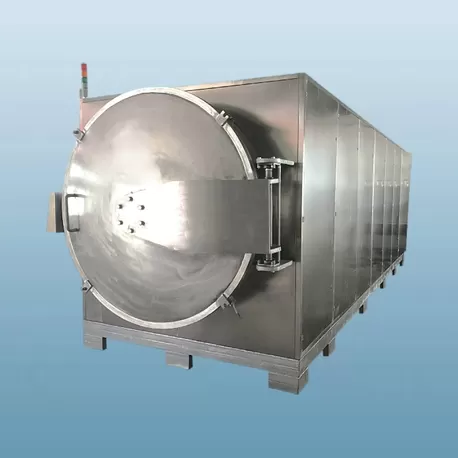
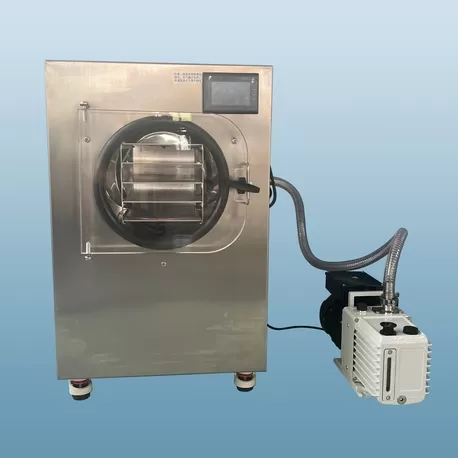
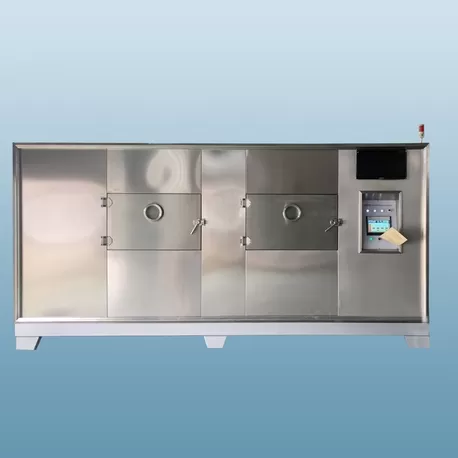
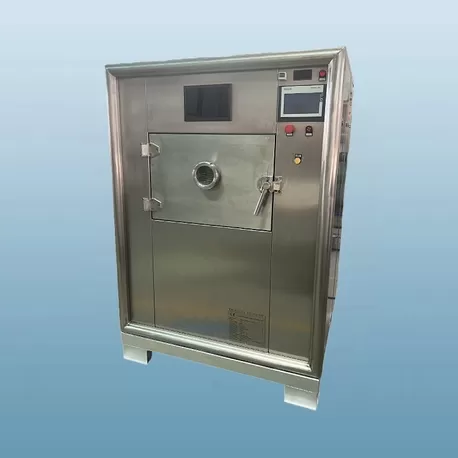
reaches the ice sublimation front. Equipment manufacturers like
Nasan are now helping industrial processors integrate
microwave-assisted freeze drying into commercial lines, delivering massive
reductions in processing schedules.
Below, we examine the six fundamental engineering and economic differences
between traditional shelf lyophilization and microwave-assisted freeze drying to
help guide your next capital investment.
1. Heat Transfer Mechanism and Sublimation Kinetics
The primary physical difference between these two technologies lies in how
energy moves into the frozen product core.
Traditional Lyophilization: Conductive Heat Bottlenecks
Conventional freeze dryers rely on conduction from heated shelves,
supplemented by minor radiative heat from chamber walls. Thermal energy must
travel through the bottom of the container, pass through the frozen matrix, and
eventually reach the retreating sublimation front.
As water vapor leaves the product, an outer dried cake forms. This porous
layer acts as a thermal insulator. The thicker the dried layer grows, the harder
it becomes to conduct heat to the underlying ice core without scorching the
surface. Consequently, sublimation kinetics slow down dramatically as the cycle
progresses.
Microwave-assisted systems bypass surface thermal resistance entirely through
volumetric heating. Electromagnetic waves penetrate directly into the frozen
material, selectively targeting the high dielectric loss factor of ice and
residual unbound water.
Instead of relying on slow surface-to-core conduction, energy generates
evenly throughout the product mass. Sublimation occurs simultaneously across the
entire matrix. The insulating dry outer layer no longer restricts energy
transfer, eliminating the classic heat transfer bottleneck that plagues standard
lyophilizers.
Traditional method: Surface-driven conduction; heat
transfer coefficient drops as dry cake thickness increases.
Microwave method: Volumetric microwave absorption; uniform
energy distribution directly at the ice crystal sites.
2. Drying Cycle Time and Throughput Capacity
Process duration dictates factory scheduling, inventory turnover, and overall
facility capacity.
In conventional lyophilization, primary drying alone often consumes 18 to 48
hours, followed by a secondary desorption phase of 6 to 12 hours. A single batch
cycle frequently requires 24 to 72 hours from load to harvest. This extended
residence time forces facilities to purchase massive drying chambers to hit
annual production targets.
Microwave freeze drying shortens this process. By supplying controlled energy
directly to the sublimation front, sublimation rates increase by up to tenfold.
In most industrial applications, total drying time drops to between 2
and 6 hours.
Cycle reduction: Total processing duration falls by 70% to
90%.
Operational model: Enables facilities to transition from
slow, high-risk multi-day batches toward rapid daily turnover and continuous
freeze drying technology.
Agile manufacturing: Fast cycle times allow flexible
production schedules, smaller buffer storage, and reduced working capital locked
in work-in-progress inventory.
3. Energy Efficiency and Operational Expenditure (OPEX)
Lyophilization is notoriously one of the most energy-intensive unit
operations in pharmaceutical and food processing plants.
The Energy Waste of Traditional Lyophilizers
In standard systems, the vast majority of electrical power does not heat the
product. Instead, power runs heavy industrial refrigeration compressors and
vacuum pumps continuously over 48 to 72 hours just to maintain chamber
parameters. Thermal efficiency in conventional lyophilizers frequently measures
below 30%.
Direct Energy Coupling in Microwave Systems
Microwave freeze drying applies electromagnetic radiation directly to target
polar molecules. Energy turns on only when needed and couples directly into the
ice phase. Because the drying cycle finishes in a fraction of the time, the run
duration for vacuum skids, condenser chillers, and circulation pumps drops
accordingly.
Process data demonstrates that MFD systems achieve thermal transfer
efficiencies above 80%. This cuts overall utility consumption per kilogram of
removed water by 30% to 50%, generating immediate OPEX savings and lowering
corporate carbon footprints.
4. Product Quality, Bioactivity, and Rehydration Kinetics
Drying speed means little if rapid processing harms fragile molecular
structures, live microorganisms, or functional compounds.
Uniform Pore Formation and Rapid Rehydration
Because microwave freeze drying vaporizes ice crystals uniformly across the
product cross-section, it leaves behind an open, honeycombed porous structure.
Unlike conventional freeze-dried cakes that can suffer from crusting or collapse
under heat flux variations, MFD samples show exceptional pore distribution.
When reconstituted with water, MFD products frequently rehydrate 30% to 50%
faster than traditional freeze-dried equivalents, restoring their original
flavor, aroma, and mouthfeel almost instantly.
Protecting Heat-Sensitive Active Compounds
A historical challenge in vacuum microwave systems was the risk of gas
ionization, known as plasma arcing, which can scorch products at low pressure.
Modern systems developed by Nasan solve this problem by pairing
solid-state microwave generators with high-precision vacuum pressure control and
multi-point infrared temperature tracking.
Because the ice sublimation cools the product internally (evaporative cooling
effect), material temperatures remain well below critical collapse thresholds.
Key active ingredients—including live probiotic cultures, therapeutic enzymes,
peptides, and botanical polyphenols—retain bioactivity rates equivalent to or
exceeding conventional freeze drying.
5. Floor Space, Cleanroom Footprint, and Factory Integration
Cleanroom square footage represents some of the most expensive industrial
real estate to build, validate, and maintain.
To produce high annual tonnages with 48-hour cycles, traditional
installations require banks of massive horizontal autoclaves. These
multi-chamber layouts demand extensive cleanroom floor space, heavy overhead
crane systems for tray handling, and sprawling utility rooms for giant
refrigeration compressors.
Because microwave freeze drying increases throughput per unit volume by 4 to
8 times, the physical machinery needed to achieve the same annual output is
significantly smaller:
Footprint savings: Requires 40% to 60% less physical floor
space than traditional freeze-drying setups.
Cleanroom CAPEX reduction: Smaller machines mean lower
square-meter cleanroom construction, reduced HVAC ducting, and lower air
filtration utility costs.
Flexible integration: Compact vacuum microwave modules
integrate smoothly into existing manufacturing suites or semi-continuous
material conveyance lines.
6. Capital Expenditure (CAPEX) and Return on Investment (ROI)
Evaluating drying equipment requires balancing initial machinery procurement
costs against long-term operational returns.
High-end industrial lyophilizers carry substantial CAPEX costs due to large
ASME-rated vacuum pressure vessels, intricate internal shelf heating circuits,
and extensive condenser refrigeration skids. Microwave freeze drying equipment
requires precision magnetrons or solid-state generators, custom microwave
waveguides, and specialized vacuum discharge suppressors, putting initial
capital expenditure on par with or slightly above high-specification traditional
freeze dryers.
However, the operational economics tell a completely different story over a
3- to 5-year operating window:
Throughput multiplication: A single MFD machine replaces
multiple traditional batch freeze dryers.
Lower labor costs: Rapid 4-hour cycles reduce operator
shift bottlenecks and optimize loading workflow.
Slashed utility bills: Massive drops in continuous
kilowatt-hour consumption lower operating costs on every batch.
Payback timeline: Most manufacturers recoup the initial
capital difference within 12 to 24 months of full commercial
operation.
B2B Decision Matrix: Technical and Operational Comparison
Review this side-by-side comparison to evaluate how both drying systems
perform across critical manufacturing metrics:
| Comparison Parameter | Traditional Shelf Lyophilization | Microwave Freeze Drying (MFD) |
|---|
| Heat Transfer Method | Conduction & radiation via heated shelves; limited by dry cake
insulation. | Volumetric dielectric heating; penetrates directly to the ice
core. |
| Typical Cycle Time | 24 to 72 hours per batch. | 2 to 6 hours per batch. |
| Thermal Efficiency | Low (approx. 20%–30%); heavy refrigeration energy losses. | High (approx. 75%–85%); direct electromagnetic coupling to
moisture. |
| Operational Cost (OPEX) | High utility bills; long running times for compressors and pumps. | 30% to 50% lower operational costs per unit mass dried. |
| Rehydration Speed | Standard porous structure; moderate rehydration times. | Highly uniform open micro-pores; rapid reconstitution kinetics. |
| Cleanroom Footprint | Large chamber footprints and extensive utility room requirements. | Compact modular footprint (40% to 60% space reduction). |
| Production Mode | Exclusively static batch processing. | High-speed batch or semi-continuous throughput. |
Ideal Application Scenarios: Which Technology Should You Choose?
Selecting between conventional lyophilization and microwave-assisted drying
depends on your specific product properties, batch sizes, and regulatory
environment.
When to Stay with Traditional Lyophilization:
Regulated Parenteral Vials: Liquid injectables packaged in
standard glass vials that must adhere strictly to validated pharmacopeial
monographs and legacy drug filings.
Stoppered Lyophilization Formulations: Formulations
requiring automated in-situ hydraulic vial stoppering under sterile cleanroom
vacuum conditions.
When to Choose Microwave Freeze Drying:
Bulk Active Pharmaceutical Ingredients (APIs): Granular
compounds and bulk chemical intermediates requiring high-speed solvent or
moisture removal.
Probiotics and Bacterial Cultures: High-value live
microorganisms where fast throughput prevents cellular degradation and preserves
colony forming units (CFU).
Nutraceuticals and Botanical Extracts: Plant polyphenols,
marine lipids, peptide extracts, and medicinal mushrooms where color, active
bio-markers, and aroma must remain intact.
Diagnostic Reagents and Enzymes: Lyophilized diagnostic
spheres, PCR master mixes, and commercial industrial biocatalysts.
High-Value Functional Foods: Ready-to-eat luxury foods,
cordyceps, and marine delicacies where shape retention and rapid reconstitution
are paramount.
Frequently Asked Questions (FAQ)
Q1: Can microwave freeze drying cause plasma arcing under
vacuum?
A1: Plasma discharge occurs when electric field intensity
exceeds the breakdown voltage of low-pressure gas, as described by Paschen's
Law. Modern industrial microwave freeze dryers prevent this entirely. Systems
use solid-state frequency modulation, optimized cavity geometry, and precise
vacuum control to keep electric field strengths well below ionization
thresholds.
Q2: How does microwave-assisted freeze drying affect heat-sensitive
proteins and bacteria?
A2: MFD provides excellent bioactivity retention. Because
moisture sublimates rapidly under vacuum, continuous latent heat removal keeps
the product core frozen and cold. As long as energy inputs match sublimation
kinetics, bulk temperatures stay low, protecting delicate enzyme structures and
live bacterial cell membranes.
Q3: What is the typical freeze drying cycle time reduction for bulk
materials?
A3: Bulk materials that require 30 to 48 hours on
conventional heated shelves routinely dry in 3 to 5 hours inside a microwave
freeze dryer. This represents an average cycle time reduction of roughly 80% to
85%.
Q4: Is it feasible to retrofit an existing traditional lyophilizer
with microwave sources?
A4: Retrofitting an existing standard freeze dryer is rarely
cost-effective. Microwave freeze drying requires specialized non-metallic
material handling trays, non-reflective interior chamber designs, custom
waveguides, and specific electromagnetic seal locks to prevent leakage. It is
almost always better to invest in a purpose-built MFD system.
Q5: How does MFD support continuous freeze drying lines?
A5: Conventional lyophilization takes too long to support
continuous material movement without massive multi-chamber tunnel systems.
Because MFD dries products in hours rather than days, frozen materials can pass
through sequential vacuum load locks and microwave zones on a continuous or
semi-continuous belt, transforming the manufacturing line into a lean flow
process.
Strategic Conclusion: Modernizing Your Drying Operations
Upgrading your drying line from traditional shelf lyophilization to microwave
freeze drying is more than a simple equipment replacement. It represents a
fundamental transition toward lean manufacturing, smaller physical footprints,
and lower energy expenditures.
By solving the conductive heat transfer bottleneck, microwave freeze drying
delivers the quality profile of freeze-dried products in a fraction of the time.
For operations handling bulk APIs, functional foods, live cultures, or botanical
extracts, MFD offers a compelling path toward higher profitability and
accelerated production turnover.
Engineering teams at Nasan specialize in custom microwave
drying systems, vacuum chamber design, and industrial process scaling. Let our
technical experts help you evaluate whether microwave freeze drying matches your
formulation profiles and financial targets.
Explore Our Full Industrial Drying Lineup
Review technical specifications, chamber dimensions, power ratings, and
automation controls for our entire series of vacuum microwave and freeze drying
systems.
[Download Nasan
Dryer Catalogue]