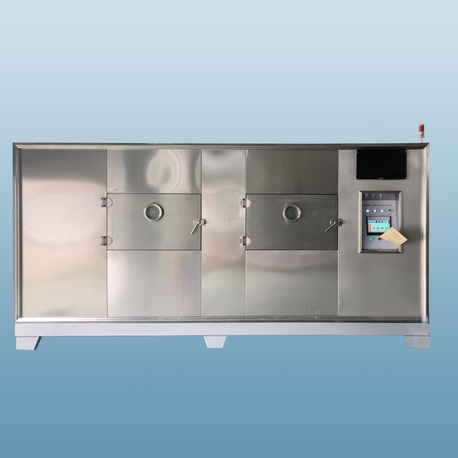
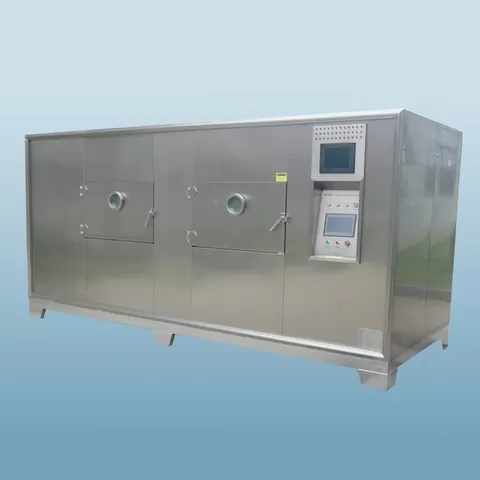
Conventional hot air drying often damages heat-sensitive products, causes
surface hardening, and consumes excessive energy. The vacuum microwave
drying machine combines reduced pressure with volumetric microwave
heating to remove moisture rapidly at low temperatures. Based on performance
data from over 150 industrial installations across pharmaceutical, food, and
chemical sectors, this guide examines seven technical advantages that make this
technology preferred for drying thermolabile materials. Nasan has engineered modular vacuum microwave
drying machines that achieve drying time reductions of 70–90%
compared to conventional ovens, while preserving active compounds and product
structure.

Principle of Operation: How Vacuum and Microwave Work Together
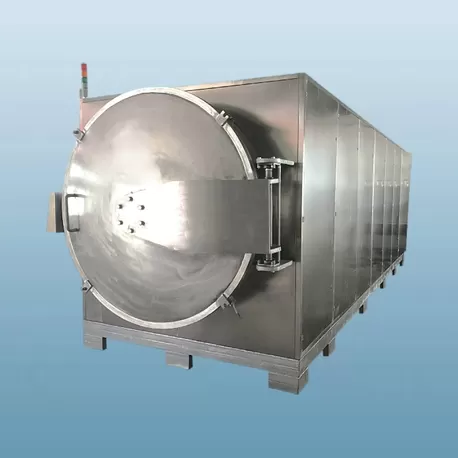
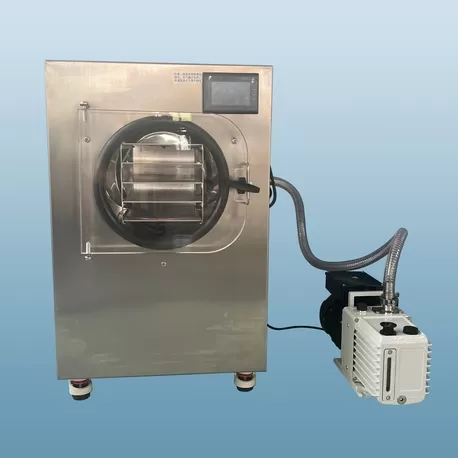
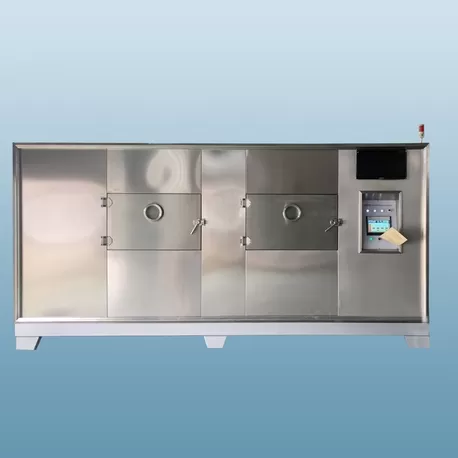
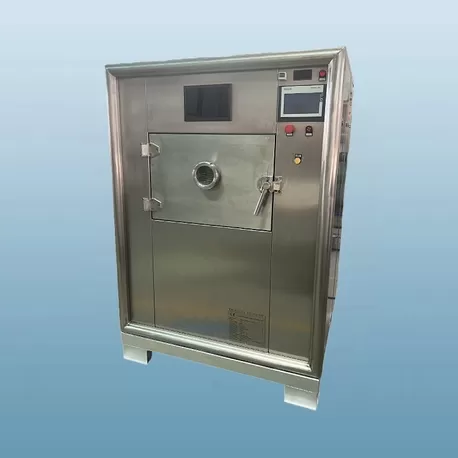
A vacuum microwave
drying machine operates by placing materials inside a sealed
chamber where pressure is reduced to 10–50 mbar (absolute). Water boils at
40–50°C under such vacuum, well below its normal boiling point. Simultaneously,
microwave energy (typically 915 MHz or 2450 MHz) penetrates the material
volumetrically, causing water molecules to oscillate and generate heat from
within. The combination yields:
Rapid moisture evaporation without raising bulk temperature above 60°C.
Uniform heating throughout the product, avoiding hot spots or surface
crusting.
Short processing times – typically 15 to 60 minutes versus 6 to 24 hours for
conventional drying.
Low-temperature drying
systems like this are indispensable for bioactive compounds,
probiotics, and high-value chemicals. Nasan designs each vacuum microwave
drying machine with adjustable power (1–120 kW) and programmable
pressure cycles to match specific product characteristics.
Advantage 1: Preservation of Thermolabile Active Ingredients
Many pharmaceutical and nutraceutical ingredients degrade above 60°C. A
vacuum microwave
drying machine keeps product temperature between 30–55°C,
preserving potency. Case study: drying of vitamin C crystals – conventional tray
drying at 70°C caused 18% degradation. Vacuum microwave drying at 45°C resulted
in less than 2% loss. Similarly, probiotics (Lactobacillus strains) showed
survival rates of 92% after vacuum microwave drying versus 45% after freeze
drying, with 80% shorter cycle time. For botanical extracts, gentle
drying technology retains color, flavor, and antioxidant
capacity.
Advantage 2: Uniform Moisture Removal Without Case Hardening
Conventional hot air dryers remove moisture from the surface inward, creating
a hard shell that traps internal water – a defect known as case hardening.
Microwave volumetric heating reverses the gradient: internal water heats and
evaporates first, escaping through open pores. Data from a vacuum microwave
drying machine processing 200 kg of herbal extract showed residual
moisture variation of ±0.8% across the batch, compared to ±5.2% with vacuum tray
drying. Uniformity eliminates post-drying blending steps.
Advantage 3: Shorter Drying Cycles and Higher Throughput
Processing time reduction directly increases production capacity. For a
typical 100 kg batch of ginseng root:
Throughput per square meter of floor space increases by 400–600%. For
contract drying operations, this means more batches per day and lower cost per
kilogram. Industrial microwave drying
systems from Nasan include continuous belt configurations for
high-volume food ingredients.
Advantage 4: Energy Efficiency and Reduced Operating Costs
Conventional drying wastes energy heating air, which then transfers heat
inefficiently to the product. Microwave energy couples directly with water
molecules. A vacuum microwave
drying machine typically consumes 0.8–1.2 kWh per kilogram of water
removed, versus 2.5–3.5 kWh/kg for hot air dryers and 4–6 kWh/kg for freeze
dryers. Over 2000 operating hours per year, the difference translates to
$15,000–$40,000 annual savings in electricity alone. Additionally, vacuum
operation reduces heat losses to the environment. Nasan units feature magnetron power supplies with >85% efficiency and inverter
controls that adjust output to match moisture content in real time.
Advantage 5: Retention of Volatile Aromatics and Flavors
For food and fragrance industries, volatile organic compounds (VOCs) that
provide aroma are lost during high-temperature drying. Vacuum microwave drying's
low boiling point and short exposure time retain 95–98% of volatiles, compared
to 60–70% retention in conventional dryers. Analysis of dried rosemary leaves:
vacuum microwave dried samples contained 1.8% essential oil (vs. 0.9% after hot
air). Similarly, coffee beans processed with vacuum
microwave finishing showed higher chlorogenic acid retention and
improved cup scores. This advantage directly impacts premium product
pricing.
Advantage 6: Improved Product Texture and Rehydration Properties
Vacuum microwave drying creates a porous, sponge-like structure because water
vapor expands rapidly under vacuum. Rehydration ratios (weight after soaking /
weight before soaking) for vacuum microwave dried fruits and vegetables range
from 5:1 to 8:1, versus 3:1 for freeze drying and 2:1 for hot air drying. For
instant soup ingredients or rehydratable meals, this means faster reconstitution
and better mouthfeel. Scanning electron microscopy (SEM) images show open cell
structures with minimal collapse. Vacuum microwave
drying machines are therefore specified for premium instant food
production lines.
Advantage 7: Reduced Oxidation and Color Degradation
Vacuum eliminates oxygen, preventing enzymatic browning and lipid oxidation.
Chlorophyll retention in vacuum microwave dried spinach was measured at 89%,
versus 52% after hot air drying. For meat-based pet food ingredients, vacuum
microwave drying reduces TBARS (thiobarbituric acid reactive substances) values
by 70%, extending shelf life. The vacuum microwave
drying machine also prevents the Maillard reaction at low
temperatures, preserving natural colors of fruit powders (beetroot, blueberry,
turmeric).
Addressing Industry Pain Points with Targeted Solutions
Common problems encountered with traditional drying methods and how
vacuum microwave
drying machines solve them:
Pain point: Long drying times causing microbial growth –
Solution: Reduce drying time from 24 hours to 90 minutes, eliminating
proliferation windows. Microwave’s non-thermal effects also contribute to
microbial reduction (2–3 log decrease).
Pain point: Non-uniform moisture leading to mold in storage – Solution: Volumetric heating ensures every particle reaches target moisture
simultaneously. Real-time moisture sensors with feedback control.
Pain point: High energy costs for freeze drying – Solution:
Switch to vacuum microwave drying – 70% less energy, 80% shorter cycles, similar
product quality for many materials.
Pain point: Loss of API activity in pharmaceutical drying –
Solution: Precise temperature control at 35–45°C, programmable microwave pulsing
to avoid hotspots. Pharma-grade vacuum microwave
dryers meet cGMP standards.
Nasan provides feasibility testing
in its lab, where customer samples are dried under controlled conditions to
generate process parameters before equipment purchase.

Application Scenarios Across Industries
Pharmaceuticals: Drying of antibiotics, vitamins, herbal
extracts, and probiotic powders. Aseptic designs available for sterile
products.
Food processing: Fruits (banana, apple, mango), vegetables
(carrot, broccoli), mushrooms, meat jerky, seafood, and instant soup powders.
Vacuum microwave drying retains color and reduces shrinkage.
Chemicals: Heat-sensitive catalysts, ceramic precursors,
graphene oxide, battery materials (lithium iron phosphate). The vacuum microwave
drying machine prevents agglomeration and oxidation.
Biotechnology: Enzymes, diagnostic reagents, and
fermentation by-products. Low-temperature operation maintains biological
activity.
For each application, custom drying
parameters are developed by Nasan's engineering team, including
batch size, microwave power profile, and vacuum level.
Frequently Asked Questions (FAQ)
Q1: What is the maximum batch size for a vacuum microwave drying
machine?
A1: Batch sizes range from 5 kg to 3000 kg per cycle. Pilot
units (5–50 kg) are available for R&D. Industrial systems (200–3000 kg) use
multiple magnetrons (up to 120 kW total power) and larger chamber volumes.
Continuous belt vacuum microwave dryers handle 200–1000 kg/hour. Nasan provides
sizing based on your throughput and product density.
Q2: How does vacuum microwave drying compare to freeze drying
(lyophilization)?
A2: Freeze drying produces the highest quality but
is slow (24–48 hours) and energy-intensive (4–6 kWh/kg water). Vacuum microwave
drying is 4–8 times faster and uses 70% less energy. Product quality is
comparable for many materials (fruits, vegetables, herbs), though freeze drying
is still preferred for certain protein-based pharmaceuticals. For cost-sensitive
applications, vacuum microwave drying offers a better ROI.
Q3: Can a vacuum microwave drying machine handle liquid or paste
products?
A3: Yes. For liquids (juices, milk, extracts), the machine
is used with a rotating drum or belt to form thin films. Microwave energy
rapidly evaporates water, producing powders or flakes. Pastes (tomato paste,
purees) are spread on trays and dried to <5% moisture. Pre-drying to 20–30%
moisture using conventional methods may improve efficiency for high-liquid
loads.
Q4: What safety features are included in industrial vacuum microwave
dryers?
A4: Mandatory features: waveguide with vacuum seals,
magnetron thermal protection, interlocked chamber doors, pressure relief burst
panels, continuous gas monitoring (if solvents present), and electromagnetic
shielding to contain microwave radiation below 1 mW/cm². Nasan units comply with
CE, FDA (for food contact), and ATEX (for explosive dust) certifications.
Regular leakage testing every 6 months is recommended.
Q5: What is the typical maintenance schedule for a vacuum microwave
drying machine?
A5: Magnetrons: rated for 8000–10,000 operating
hours; replace as a set. Vacuum pump oil change every 500 hours. Chamber seals
(silicone or Viton) inspect monthly, replace every 2 years. Door latch mechanism
lubricate quarterly. Microwave leak test annually. Nasan provides remote
diagnostics and spare parts kits with each machine.
Q6: How do I select the right microwave frequency – 915 MHz or 2450
MHz?
A6: 2450 MHz (2.45 GHz) is standard for small to medium batches
(<500 kg) and penetrates 3–5 cm into most materials. 915 MHz penetrates
deeper (8–12 cm) and is used for large-diameter products or high-moisture loads.
915 MHz systems cost 30–40% more but offer better uniformity for thick beds.
Nasan advises based on your product geometry and moisture profile.
Q7: What utilities are required for a vacuum microwave drying
machine?
A7: Electrical supply: 380–480 V, 3-phase, 50/60 Hz. Power:
10–150 kVA depending on size. Cooling water (for magnetrons): 5–15 L/min at
20–25°C. Compressed air (for valves): 6 bar, dry. Vacuum pump exhaust venting.
No steam or boiler required. Installation
requirements are modest compared to hot air or freeze dryers.
Selecting the right vacuum microwave
drying machine requires analysis of product characteristics
(moisture content, heat sensitivity, particle size), target throughput, and
budget. Nasan provides free material
testing in its application laboratory, process scale-up services, and turnkey
installation. Send your product specifications (name, initial moisture, final
moisture required, batch size per hour) to receive a detailed proposal with
drying curves, energy consumption estimates, and ROI calculation. All inquiries
receive a response within 48 hours.
Request your inquiry now → Visit https://www.nasandry.com/ or email
info@nasandry.com. Include your material safety data sheet (MSDS) and desired
daily throughput.