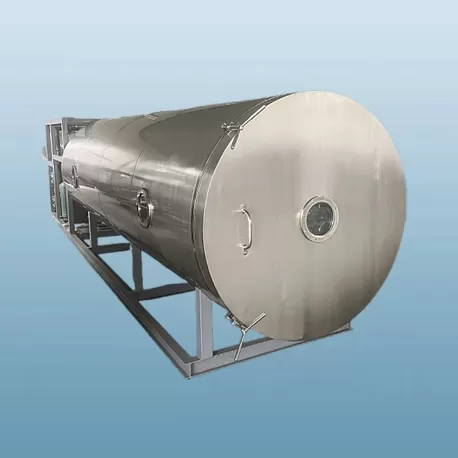
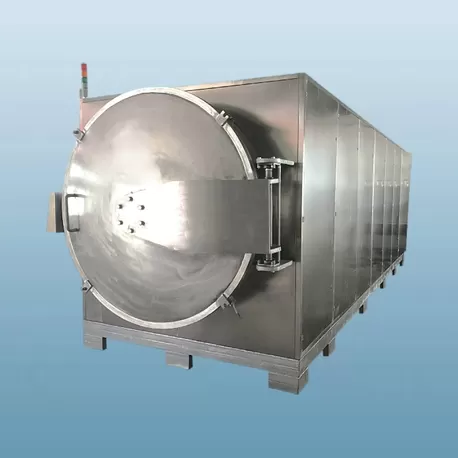
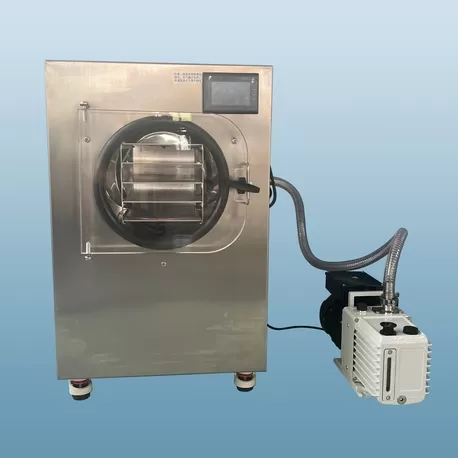
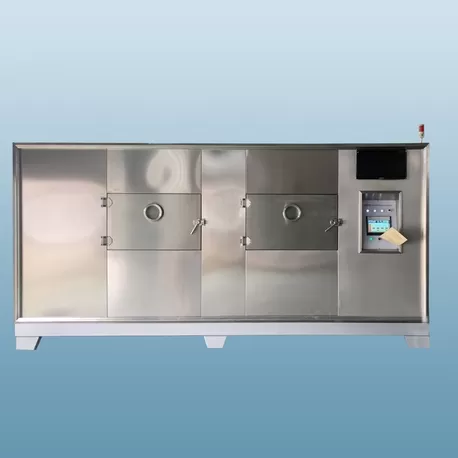
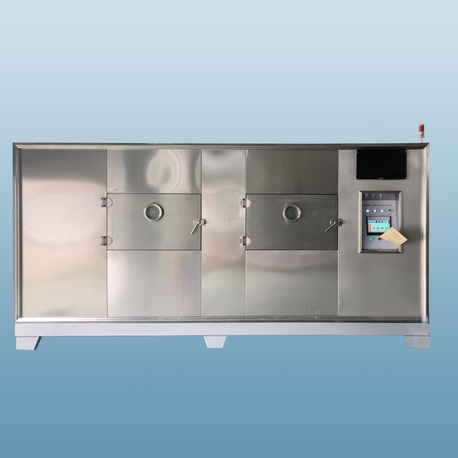
For decades, industrial drying was a necessary bottleneck. It was often slow, energy-intensive, and harsh on sensitive materials. Companies had to choose between speed and quality. That trade-off is now obsolete.
A technology called vacuum microwave dehydration is redefining standards across global manufacturing sectors. It merges two powerful physical principles to create a uniquely efficient process. This isn't just an incremental improvement; it's a fundamental shift in how we remove moisture at scale.
Forward-thinking engineers and plant managers are adopting this method to solve persistent problems. They aim to enhance product value, reduce operating costs, and meet stringent quality regulations. Manufacturers like Nasan are responding by building robust, commercial-scale systems that deliver these results daily.

The core strength of this technology lies in its synergistic design. It's more than just placing a microwave in a vacuum chamber. It's about the precise interaction between the two environments.
First, a powerful vacuum pump removes air from the sealed drying chamber. This dramatically lowers the atmospheric pressure inside. At this reduced pressure, water undergoes a phase change at a much lower temperature. It can boil at 30°C to 40°C instead of 100°C.
Second, controlled microwave energy is introduced. The microwaves penetrate the entire product load, agitating water molecules uniformly throughout the material's structure. This volumetric heating generates heat exactly where the moisture resides.
The result? Trapped moisture quickly turns to vapor at these low, gentle temperatures. The vacuum system then efficiently removes this vapor, condensing it for easy disposal or recovery. The process continues until the target moisture content is precisely achieved.
The Compelling Benefits: Beyond Faster Drying
Switching to an industrial vacuum microwave dehydration system delivers a cascade of operational benefits. The advantages extend far beyond simple time savings.
Unmatched Product Integrity. Low-temperature operation is the key. Heat-sensitive compounds—vitamins, enzymes, flavors, colors, and active pharmaceutical ingredients (APIs)—remain intact. This preserves the very qualities that define a product's value and efficacy.
Radical Efficiency Gains. Drying times can be reduced by 50-80% compared to conventional hot-air or vacuum shelf dryers. Microwaves heat the product directly, not the surrounding air or metal trays. This direct energy transfer slashes overall energy consumption per kilogram of water removed.
Superior Final Product Quality. The process minimizes case-hardening and shrinkage. It produces porous, easily rehydratable structures in food products. For chemicals and ceramics, it prevents cracking and agglomeration. You get a consistent, high-grade output batch after batch.
Enhanced Process Control. Modern systems offer precise, automated control over microwave power, vacuum level, and temperature. This allows for the creation of perfect drying curves for different materials, ensuring repeatability and compliance with strict quality protocols.
A Compact Footprint. The high efficiency of vacuum microwave dehydration often means a smaller machine can replace a much larger conventional dryer. This saves valuable floor space in production facilities.
Key Industries Driving Adoption
The application range for commercial vacuum microwave dehydration equipment is vast and growing. It excels wherever traditional drying fails to meet modern quality or efficiency demands.
Food & Nutraceutical Manufacturing. This is a primary growth area. The technology is ideal for producing "fresh-dried" fruits, vegetables, and herbs with vibrant color and potent nutrients. It creates instant powders from dairy and fruit juices, and perfectly dicks delicate probiotics and protein blends.
Pharmaceutical & Biotech. Drying is a critical unit operation here. Vacuum microwave dehydration gently processes temperature-sensitive antibiotics, vaccines, and bacterial cultures. It ensures high biological activity and stable shelf life, meeting rigorous Good Manufacturing Practice (GMP) standards.
Advanced Materials & Chemicals. From drying delicate ceramic membranes and battery cathode materials to removing solvents from polymer resins, the low-temperature, uniform heating is invaluable. It prevents thermal degradation and maintains precise material properties.
Herbal & Botanical Extraction. For high-value extracts from cannabis, ginseng, or marine algae, removing residual solvents or water is delicate. This process preserves fragile terpenes and cannabinoids at a scale that freeze-drying cannot match economically. Companies like Nasan have developed specialized lines for this exacting sector.

Addressing Specific Industrial Pain Points
Let's translate those benefits into solutions for common drying-floor frustrations.
Problem: Long cycles for viscous pastes or gels.
Solution: Vacuum microwave dehydration provides internal heating. It dicks thick materials uniformly from the inside out, bypassing the insulating layers that slow down conductive heating.
Problem: High energy bills from running gas-fired dryers or ovens 24/7.
Solution: The direct energy transfer and shorter cycle times of microwave systems significantly reduce total energy consumption, offering a faster return on investment.
Problem: Inconsistent results and product loss due to overheating.
Solution: Precise electronic control and low-temperature operation eliminate hot spots. This minimizes batch rejection and maximizes yield of saleable product.
Problem: Need for inert atmosphere processing.
Solution: The vacuum chamber is inherently a low-oxygen environment. This protects materials prone to oxidation during drying without the need for expensive nitrogen purging.
Engineering for Reliability: The Nasan Approach
Implementing this technology at an industrial scale requires robust engineering. It's not a lab curiosity. This is where experience matters. A brand like Nasan focuses on building systems for continuous, demanding production environments.
Nasan's vacuum microwave dehydration units are designed with industrial durability. They feature multi-magnetron arrays with sophisticated waveguides for even energy distribution, industrial-grade vacuum components, and advanced PLC control systems with data logging. This ensures the technology delivers not just in a trial, but for years of reliable service.
Looking Ahead
The trajectory is clear. As global industries prioritize sustainability, product quality, and operational efficiency, vacuum microwave dehydration will move from a specialty option to a mainstream standard. Its ability to deliver superior results with less energy aligns perfectly with future manufacturing goals. For operations looking to modernize, it presents a compelling and proven pathway.
Frequently Asked Questions (FAQ)
Q1: Is vacuum microwave dehydration the same as freeze-drying?
A1: No, they are fundamentally different. Freeze-drying (lyophilization) sublimates ice from a frozen state under high vacuum. Vacuum microwave dehydration does not require a freezing step. It uses microwave energy to evaporate liquid at low temperatures, which is typically much faster and less capital-intensive for many applications.
Q2: Can this method handle all types of solvents?
A2: It is highly effective for a wide range of solvents, including water, ethanol, acetone, and methanol. The vacuum lowers the solvent's boiling point, and the microwaves provide efficient heating. The system must be properly engineered with solvent-compatible materials and explosion-proof features, which reputable manufacturers like Nasan can provide.
Q3: What about drying uniformity in large batches?
A3: Uniformity is a critical engineering challenge. Advanced industrial systems use strategic magnetron placement, rotating turntables or trays, and mode stirrers to ensure even microwave exposure. Proper loading procedures are also part of the operational training to guarantee consistent results across the batch.
Q4: How does the cost compare to traditional drying methods?
A4: The initial capital investment is often higher than a simple oven. However, the Total Cost of Ownership (TCO) is frequently lower. Significant savings come from reduced energy use, shorter processing times (increasing throughput), higher product yield, and reduced waste. A detailed ROI analysis usually reveals a strong financial case.
Q5: Are there materials that should not be processed this way?
A5: Yes. Pure metals or materials with no dipole moment (like some pure oils) do not interact with microwaves and will not heat. Additionally, products containing loose metal parts or certain sensitive electronic components are unsuitable. A small-scale feasibility test is always recommended to confirm suitability for a new material.