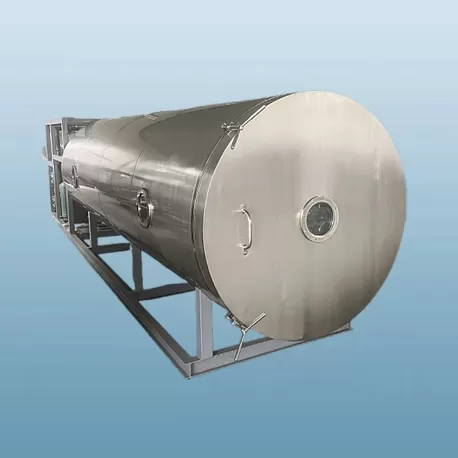
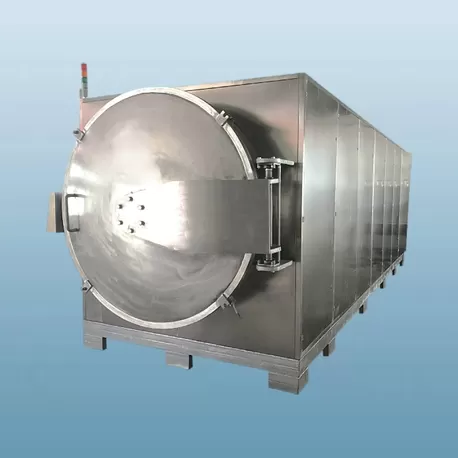
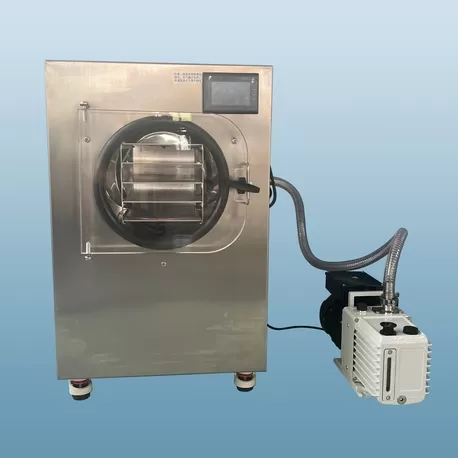
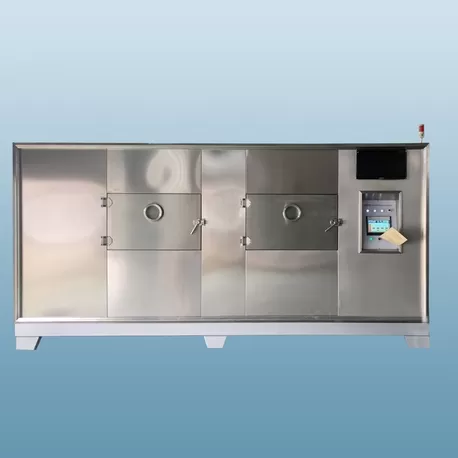
Selecting an industrial vegetable drying
machine involves far more than comparing price tags. In
high-throughput dehydration lines, decisions on heat source, airflow
configuration, and material conveyance directly impact operating margins,
product color, and rehydration ratios. This article dissects seven
performance-defining criteria—backed by thermodynamic principles and field
data—to help production managers and plant engineers optimize their capital
investments.

1. Drying Dynamics: Why Vegetable Matrices Behave Differently
Vegetable tissues contain up to 95% water, but moisture is bound in cell
walls, vacuoles, and intercellular spaces. A vegetable drying
machine must overcome internal resistance without causing case
hardening or thermal degradation. Unlike homogeneous materials, leafy greens
(spinach, kale) require gentle air speeds to avoid product entrainment, while
root vegetables (carrots, potatoes) tolerate higher temperatures but demand
uniform heat distribution to prevent surface scorching. Modern systems employ
variable-frequency drives and multi-zone temperature control to adapt to these
diverse loads.
1.1 Bound vs. Free Moisture: Implications for Drying Time
Free water evaporates quickly during the constant-rate period. Once the
critical moisture content is reached, diffusion of bound water becomes the
limiting factor. Data from continuous belt dryers show that the falling-rate
period can account for 60% of total residence time. High-performance vegetable drying
machine designs incorporate tempering zones or intermittent drying
cycles to allow internal moisture to migrate, reducing total energy consumption
by 18–22% compared to single-stage drying.
2. Heat Pump Integration and Specific Moisture Extraction (SMER)
Conventional hot-air dryers exhaust humid air, wasting latent heat.
Closed-loop heat pump dryers recover that energy, achieving a Specific Moisture
Extraction Rate (SMER) of 2.5–4.0 kg water/kWh—three to four times better than
electric resistance heaters. Nasan has implemented multi-stage
heat recovery in its industrial lines, allowing processors of garlic and onion
flakes to cut drying costs by up to 35% while maintaining precise dew-point
control. This is especially critical for heat-sensitive pigments like
chlorophyll and anthocyanins.
Heat pump dehumidifiers – Reduce electricity consumption
through refrigerant enthalpy recycling.
Thermal storage – Phase-change materials integrated into
drying chambers smooth out peak loads.
Exhaust air recirculation – Up to 65% recirculation without
compromising drying rate (validated by CFD simulations).
3. Conveyance Options: Belt, Tunnel, or Vacuum? Matching Technology to
Throughput
Batch tunnel dryers remain common for small-scale operations, but continuous
multi-stage belt dryers dominate medium-to-high capacities (500 kg/h or more).
For premium products like freeze-dried herbs, a vacuum belt vegetable drying
machine offers superior aroma retention. Yet, vacuum systems incur
higher capital costs. The decision matrix must include production volume,
desired water activity (aw target ≤0.60), and available floor space.
Nasan’s modular belt dryers allow processors to add drying
sections as capacity grows, protecting initial investment.
3.1 Continuous Multi-stage Conveyor Dryers
These systems feature 3–6 independently controlled zones. The first zone uses
higher temperature (70–90°C) to rapidly heat the product; subsequent zones
employ lower temperatures and controlled humidity to equalize moisture.
Perforated stainless-steel belts (FDA-approved) ensure uniform airflow through
the bed. Field data from a carrot cube line shows a 12% increase in throughput
after retrofitting with a pulsed-airflow system from Nasan.
4. Hygienic Design and Compliance with Food Safety Standards
In vegetable drying, microbiological risks are heightened by warm, moist
environments. A well-designed vegetable drying machine must
enable full wash-down, with sloped surfaces and no harborage points. Key
certifications include USDA, EHEDG, and 3-A Sanitary Standards. Sensors for
real-time monitoring of belt tension and cleaning cycles are now standard in
Industry 4.0 configurations. vegetable drying
machine suppliers should provide validation protocols for
cleaning-in-place (CIP) and documented material traceability.
5. Nutrient Retention and Color Preservation: Empirical Benchmarks
Industrial drying inevitably alters phytochemical profiles. However,
controlled trials indicate that a well-tuned vegetable drying
machine can retain over 90% of total phenolics if drying temperatures
stay below 60°C and oxygen exposure is minimized. For broccoli florets, a
two-stage process (microwave-vacuum followed by hot air) achieved 95%
glucosinolate retention compared to 65% in conventional cross-flow dryers.
Measurement of color difference (ΔE) should be part of acceptance tests; values
below 3.0 indicate excellent preservation.
Vitamin C retention – Directly correlated with drying time
and residual oxygen.
Rehydration ratio – Target 1:4 to 1:6 for most diced
vegetables.
Bulk density – Affects packaging costs; can be controlled
by infeed rate and slice thickness.
6. Adaptive Process Control: From PLC to AI-Based Moisture Prediction
Modern vegetable drying
machine controllers use inline NIR sensors to measure moisture
content every second, adjusting belt speed and temperature dynamically. This
reduces over-drying, which wastes energy and degrades quality. Machine learning
models trained on 10,000+ drying cycles can now predict optimal endpoint
moisture with ±0.5% accuracy. Nasan’s latest control platform,
DrySmart™, integrates these algorithms and provides remote monitoring via OPC
UA, enabling process engineers to fine-tune recipes for different harvests.
7. Total Cost of Ownership: Beyond the Initial Purchase Price
A low-cost dryer often hides inefficiencies in energy use and maintenance.
When evaluating a vegetable drying machine, calculate the
payback period based on:
Energy consumption (kW per kg of water removed).
Annual maintenance (belt replacement, bearing seals, fan
balancing).
Yield loss due to scorching or uneven drying.
Cleaning downtime – hygienic designs reduce changeover time
by 30%.
Case study: A mid-size onion processor replaced an imported single-belt dryer
with a Nasan triple-pass system. Despite 18% higher upfront
cost, energy savings ($18,000/year) and 5% less product waste led to a 2.3-year
payback.
Special Focus: Drying Exotic Varieties and Microgreens
High-value crops like kale, beet greens, and herbs require gentle handling.
Low-temperature freeze dryers deliver premium quality but at high operational
cost. A hybrid approach—using a vegetable drying machine with a
initial burst of dehumidified air at 35°C, followed by a short vacuum
stage—offers a compromise. Trials at the Nasan Food Technology Center show that
microgreens retain 88% of their original antioxidant capacity using this method,
compared to 52% with conventional forced-air drying.
Frequently Asked Questions (Vegetable Drying Machine Engineering)
Q1: What is the optimal residual moisture for dried vegetables
intended for long-term storage?
A1: For most vegetables (carrots,
peppers, tomatoes), a final moisture content of 6–8% (wet basis) ensures
microbial stability and prevents browning during storage. Leafy herbs like
parsley should be dried to 4–5% to avoid caking. Accurate control of this
parameter requires a drying machine equipped with in-line moisture sensors or
periodic gravimetric sampling.
Q2: How does a heat pump vegetable drying machine compare to a
natural gas-fired dryer in terms of operating cost?
A2: The
comparison depends on local energy prices. Heat pump dryers typically have
higher coefficient of performance (COP 3–5), but natural gas may be cheaper per
BTU in some regions. However, heat pumps also provide dehumidification without
venting conditioned air, which is advantageous in cold climates. A life-cycle
cost analysis should include carbon taxes or sustainability incentives.
Q3: Can one vegetable drying machine handle both leafy greens and
root vegetables without cross-contamination?
A3: Yes, provided the
machine has easy-clean features and programmable profiles. Modular belt designs
with quick-release fasteners allow thorough cleaning between batches.
Nasan’s machines include dedicated wash cycles and HEPA
filtration options for allergen control, making them suitable for multi-product
facilities.
Q4: What is the typical lifespan of an industrial vegetable drying
machine, and what are the most common wear parts?
A4: With proper
maintenance (belt tracking, bearing lubrication, fan balancing), a well-built
dryer can operate 15–20 years. Wear items include conveyor belts (replace every
3–5 years depending on temperature), seals, and humidity sensors. Choosing a
supplier with local parts stock, like Nasan, minimizes downtime.
Q5: How do I determine the required drying capacity for my planned
production line?
A5: Start with the wet feed rate and target final
moisture. Example: If you process 1,000 kg/h of wet cabbage (85% moisture) down
to 10% moisture, you remove 833 kg of water per hour. A dryer’s evaporation rate
(kg water/h) must match this. Always include a safety margin (10–15%) for
seasonal variations in raw material moisture. Nasan provides
free process audits to calculate exact sizing.
Q6: What role does air velocity play in a continuous vegetable drying
machine?
A6: Air velocity affects both heat transfer and product
movement. For lightweight products (chopped spinach), velocity should stay below
1.5 m/s to prevent entrainment. For dense cubes, velocities up to 3 m/s can be
used. Perforated plates and adjustable louvres in vegetable drying
machine designs allow operators to tune airflow per product.
Engineering Partnership for Superior Dehydration
Selecting a vegetable drying machine is a multidisciplinary
decision—thermodynamics, food science, and automation must align. Nasan offers more than equipment;
we provide process guarantees backed by pilot-scale testing and 30+ years of
dryer manufacturing. Whether your focus is energy austerity, organic
certification, or maximizing throughput, our team can configure a solution that
meets your exact vegetable drying objectives. Explore our food dryer
series for detailed specifications and case studies.
© 2026 Nasan – industrial drying systems. All technical data cited
reflect internal testing and peer-reviewed publications.