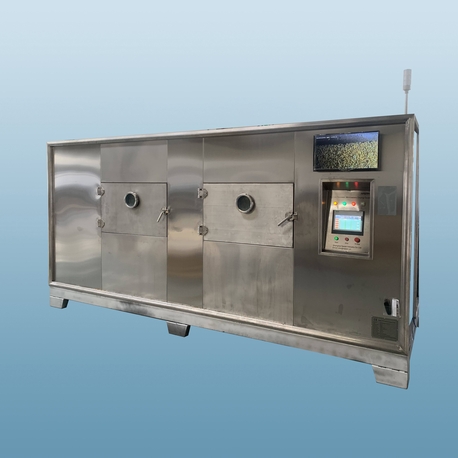
Mushroom dehydration presents unique challenges: high initial moisture
content (85–95%), extreme enzyme sensitivity, and delicate cell structures that
collapse under aggressive heating. Selecting an industrial mushroom
dryer therefore requires evaluating thermal efficiency alongside
product-specific metrics such as cap cracking index and rehydration capacity.
This article outlines five critical performance indicators—derived from
thermodynamic principles and field data—to guide procurement decisions for
large-scale mushroom processors.
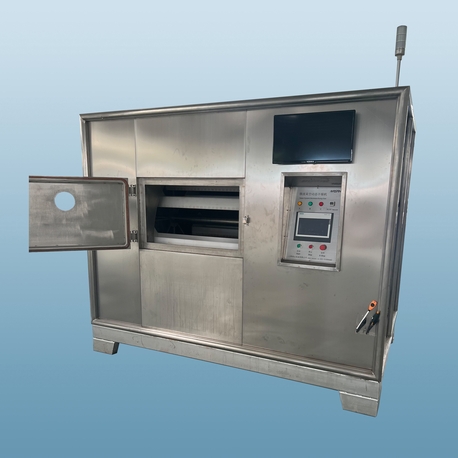
1. Moisture Mobility and Capillary Structure in Fungal Tissues
Unlike plant-based vegetables, mushrooms (Basidiomycetes) possess chitinous
cell walls and a highly porous hyphal network. Water is held both
intracellularly and within inter-hyphal spaces. A mushroom
dryer must facilitate rapid moisture migration without case hardening.
For common button mushrooms (Agaricus bisporus), drying rates during the
constant-rate period are typically 0.8–1.2 kg·m⁻²·h⁻¹, but once free water is
removed, diffusion-limited drying dominates. Industrial trials indicate that
pulsed-airflow designs—alternating between high-velocity and relaxation
phases—can reduce total drying time by 17% compared to continuous cross-flow
systems.
1.1. Shrinkage and Porosity Dynamics
During drying, mushroom volume can decrease by 70–80%. This collapse affects
both appearance and rehydration speed. A well-calibrated mushroom
dryer controls the rate of moisture removal to maintain a porous
structure. Data from Nasan's test facility shows that
Shiitake dried with controlled humidity profiles (60–50–40°C stepped) exhibit
25% better rehydration ratios than those dried with constant temperature.
2. Specific Energy Consumption (SEC) and Heat Pump Efficiency
Energy costs represent 30–40% of total mushroom drying operational expenses.
A conventional gas-fired dryer may achieve a Specific Moisture Extraction Rate
(SMER) of 0.8–1.2 kg/kWh, while a modern heat-pump-assisted mushroom
dryer can reach SMER values of 2.8–3.5 kg/kWh. Heat pump systems
recover latent heat from exhaust air, making them particularly suited for
high-humidity products like mushrooms. Nasan’s closed-loop heat
pump dryers incorporate variable-speed compressors and electronic expansion
valves, enabling precise dew-point control. For a mid-sized processor handling 2
tons/day of fresh Portobello, switching from electric resistance to a heat pump
dryer yields annual savings of approximately $22,000 (based on $0.12/kWh).
Enthalpy recovery – Recycles 70–80% of exhaust heat.
Dehumidification capacity – Critical for maintaining low
water activity (aw ≤ 0.60) without over-drying caps.
COP (Coefficient of Performance) – Industrial units now
achieve COP 4.5–5.0 at 50°C drying temperature.
3. Enzymatic Browning Inhibition: Temperature Ramps and Pretreatment
Mushrooms contain high levels of polyphenol oxidase (PPO), which causes rapid
browning when tissues are damaged and exposed to oxygen. A mushroom
dryer must either inactivate PPO through blanching (steam or water)
before drying, or employ rapid initial drying to minimize the time at PPO-active
temperatures (20–40°C). For sliced mushrooms destined for the soup industry,
sulfur-free pretreatments (citric acid/ascorbic acid dips) are common. Process
data from continuous belt dryers show that a 3-minute steam blanch followed by
drying at 65°C yields a lightness (L* value) of 72–75, compared to L* 58 for
unblanched samples.
3.1. Color Measurement as a Quality Criterion
Color stability is a key differentiator for premium dried mushrooms.
Spectrophotometric analysis (CIE Lab) should be specified in procurement
contracts. A high-performance mushroom
dryer maintains ΔE (total color difference) below 5.0 compared to
fresh-frozen references. Nasan offers inline color sensors that
provide real-time feedback for adjusting drying parameters.
4. Configurations for Exotic Mushrooms: Shiitake, Oyster, and Maitake
Different genera demand distinct airflow patterns and loading densities.
Oyster mushrooms (Pleurotus) are fragile and require low air velocities (<1.5
m/s) and shallow bed depths (≤5 cm). Shiitake (Lentinula edodes), with their
thicker caps, benefit from through-circulation drying where air passes
vertically through the bed. A versatile mushroom dryer should
offer modular trays or belt designs with adjustable plenums. Continuous
multi-stage dryers with independent zone control allow processors to switch
between varieties with minimal changeover time.
Tray loading density – Typically 8–12 kg/m² for whole
mushrooms, 5–7 kg/m² for slices.
Air reversal – Prevents channeling and ensures uniform
moisture content.
Residence time – Ranges from 4 hours (thin slices) to 12
hours (whole Shiitake).
5. Sanitary Construction and Food Safety Compliance
Mushrooms are prone to microbial proliferation during slow drying. A
mushroom dryer must comply with EHEDG and USDA guidelines,
featuring sloped surfaces, crevice-free welds, and CIP (clean-in-place)
capability. Stainless steel 304 or 316L is mandatory for all product contact
surfaces. Air intake filters (HEPA H13 or higher) prevent recontamination.
Nasan’s drying systems include automated wash cycles with
validated log reduction for Listeria and Salmonella, essential for processors
supplying the food ingredient market.
Process Automation: From PLC to AI-Based Quality Prediction
Modern mushroom drying lines employ PLCs with adaptive fuzzy logic that
adjust temperature, humidity, and belt speed based on real-time moisture
readings (NIR or microwave sensors). Nasan has developed a
digital twin platform that simulates drying curves for specific mushroom lots,
allowing operators to optimize recipes before production starts. This reduces
off-spec product and energy waste. In a recent installation for a European
mushroom cooperative, the system reduced batch-to-batch variability by 62%.

Economic Evaluation: Beyond the Initial Investment
When comparing mushroom
dryer quotes, consider the following TCO factors:
Thermal efficiency – kW·h per kg of water removed. Heat
pump dryers reduce utility bills.
Maintenance intervals – Belt replacements, fan bearing
life, sensor calibration.
Yield loss – Scorched caps or uneven drying can reduce
saleable output by 3–7%.
Labor for cleaning – Hygienic designs cut cleaning time
from 4 hours to 90 minutes.
A case study: A North American mushroom powder producer replaced an aging
vacuum dryer with a Nasan continuous belt dryer. Despite 22%
higher capital cost, the 40% reduction in energy use and 5% increase in yield
led to a 1.8-year payback.
Frequently Asked Questions: Industrial Mushroom Drying
Q1: What is the optimal drying temperature for Shiitake mushrooms
destined for the whole-dried market?
A1: For whole Shiitake with
caps intact, a stepped temperature profile is recommended: start at 45°C for 2
hours to allow surface moisture to evaporate without case hardening, then
increase gradually to 60°C for the main drying phase, finishing at 55°C with
lowered humidity. This preserves the characteristic umami compounds and
minimizes cap cracking. A quality mushroom dryer should allow
programmable step changes.
Q2: How does a heat pump mushroom dryer handle the high initial
humidity load compared to a conventional dryer?
A2: Heat pump dryers
are inherently better at managing high humidity because they condense water out
of the recirculated air. They maintain a constant dew point, typically 10–15°C
below the drying temperature, which accelerates moisture migration without
overheating the product. Nasan’s heat pump units are
specifically sized to handle peak evaporation loads from freshly harvested
mushrooms.
Q3: Can a single mushroom dryer process both whole buttons and sliced
mushrooms without quality loss?
A3: Yes, provided the dryer has
adjustable airflow distribution and belt speed control. Whole mushrooms require
gentler air movement to avoid rolling, while slices can tolerate higher
velocities. Modular belt designs with separate plenum chambers allow
reconfiguration. mushroom
dryer systems from Nasan include quick-change
baffles to adapt to different product geometries.
Q4: What pretreatment is most effective for preventing browning in
organic mushroom drying?
A4: For organic certification,
sulfite-based treatments are prohibited. A combination of steam blanching (90°C
for 90–120 seconds) followed by a dip in 1% citric acid solution is widely
adopted. This inactivates PPO and chelates copper ions essential for enzymatic
browning. After pretreatment, the mushrooms should be immediately loaded into
the mushroom dryer to prevent microbial growth.
Q5: How do I calculate the required dryer capacity for a projected
5-ton/day fresh mushroom line?
A5: Start with mass balance. If fresh
mushrooms have 90% moisture and dried target is 8%, water removal per ton =
(0.90 - 0.08)/(1 - 0.08) ≈ 0.89 kg water per kg fresh. For 5,000 kg/day, you
need to remove 4,450 kg water. If the dryer operates 20 hours/day, required
evaporation rate = 222.5 kg/h. Choose a mushroom
dryer with at least 250 kg/h capacity to account for fluctuations.
Nasan provides free process modeling to confirm sizing.
Q6: What are the main causes of uneven drying in tray mushroom dryers
and how can they be mitigated?
A6: Uneven airflow distribution,
overloading, and moisture stratification are common. Computational fluid
dynamics (CFD) studies show that perforated trays with 30–40% open area and
plenum chambers with baffles improve uniformity. In continuous belt dryers,
periodic air reversal (switching flow direction every 30 minutes) eliminates
moisture shadows. Nasan integrates air-reversal as standard in
its multi-belt designs.
Q7: Is microwave-assisted drying suitable for
mushrooms?
A7: Microwave-vacuum drying can produce excellent
rehydration and flavor retention, but capital costs are high and throughput is
limited compared to convection dryers. It is typically reserved for high-value
mushroom extracts or instant soup components. For bulk drying, a hybrid approach
(microwave finish drying after hot-air pre-drying) can reduce overall time by
30% while controlling costs.
Selecting a Partner for Commercial Mushroom Dehydration
Choosing a mushroom dryer involves balancing energy
economics, product quality metrics, and sanitation standards. Nasan combines decades of dryer
manufacturing with active research in fungal post-harvest physiology. Our test
center can run pilot batches on your specific mushroom varieties, providing data
on color retention, energy use, and final water activity. Explore our food dryer
range for detailed specifications and published case studies from
global mushroom processors.