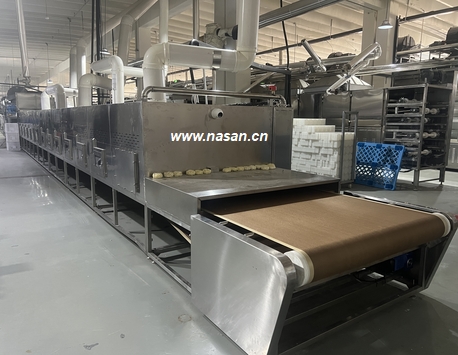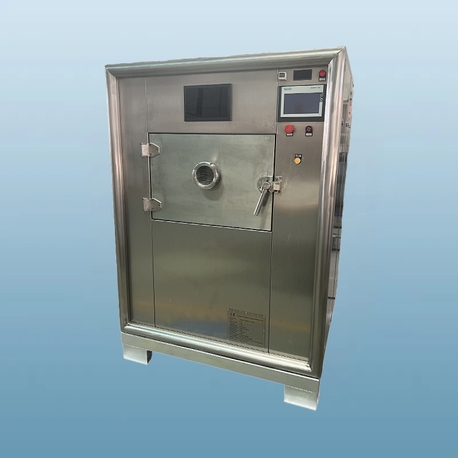
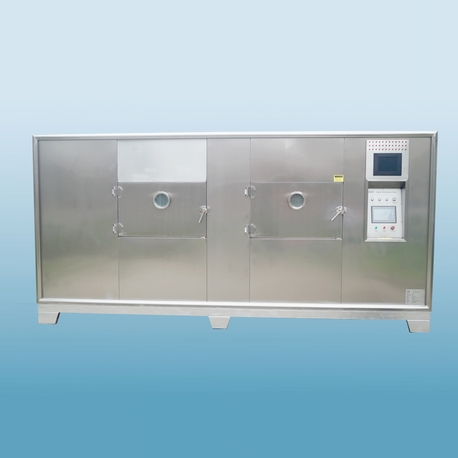
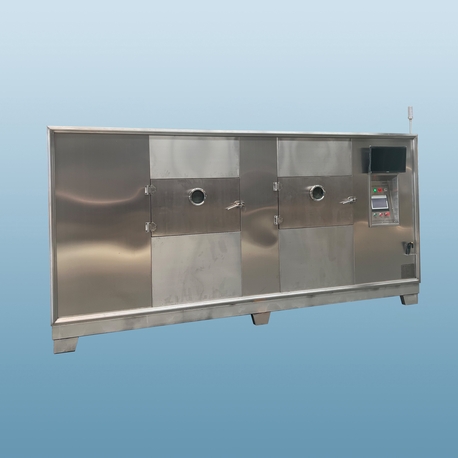
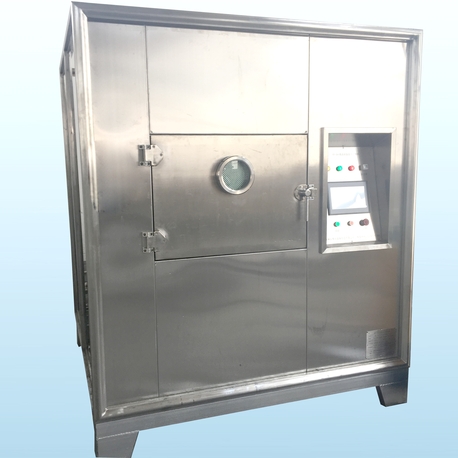
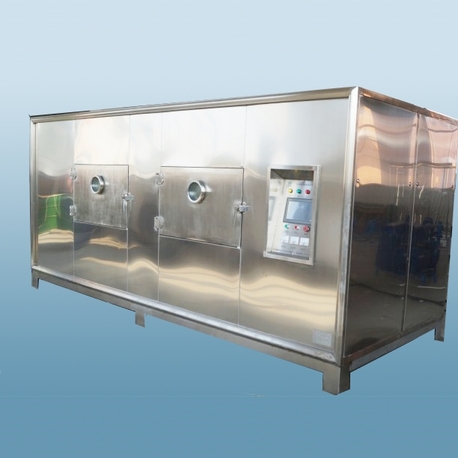
In the global agricultural processing sector, post-harvest losses represent a persistent vulnerability in the supply chain. Millions of tons of fresh produce deteriorate prematurely due to inadequate preservation infrastructure, leading to severe financial deficits for large-scale agricultural cooperatives and food manufacturers. Transitioning fresh biomatter into shelf-stable, high-value dehydrated commodities requires strict regulation of thermodynamic variables. Achieving this at a commercial volume necessitates the implementation of an industrial fruit dryer engineered to extract moisture systematically without compromising the nutritional density, organoleptic properties, or structural integrity of the raw material.
Moving away from antiquated open-air solar drying or rudimentary hot-air ventilation, modern facilities demand precision technology to ensure consistent batch quality. Facility directors must navigate complex decisions regarding thermal efficiency, airflow mechanics, and sanitary compliance. As a recognized authority in advanced manufacturing, Nasan develops engineered solutions that address these exact operational hurdles, providing factories with robust machinery capable of handling high-tonnage continuous or batch processing while significantly reducing energy overheads.
To operate a successful commercial dehydration facility, plant engineers must have a firm grasp of the thermodynamic interaction between the processing environment and plant biology. Fresh fruits consist of complex cellular matrices containing both free water and bound water. Free water is located in the intercellular spaces and is relatively straightforward to evaporate. Bound water, conversely, is integrated within the cellular walls and chemically bonded to starches and proteins. Breaking these bonds requires overcoming the latent heat of vaporization—typically demanding 2260 kilojoules of energy per kilogram of water evaporated.
The drying process generally follows two distinct phases. First is the constant rate period, where surface moisture evaporates rapidly into the surrounding air. Following this is the falling rate period, where the surface is dry, and internal moisture must migrate outward via diffusion and capillary action. If an industrial fruit dryer applies excessive thermal energy too rapidly during this secondary phase, it induces case hardening. This biological phenomenon causes the outer parenchyma cells to collapse and form an impermeable crust, trapping moisture inside and inevitably leading to microbial spoilage and core rot. Proper processing requires slow, methodical psychrometric adjustments to keep the cellular pores open.
A prevalent point of failure in low-grade dehydration systems is the development of severe moisture gradients within the processing chamber. In poor designs, heated air follows the path of least resistance, resulting in trays near the heating elements over-drying, while materials in the center remain above the required water activity (aw) threshold. Resolving this discrepancy requires sophisticated airflow engineering.
High-tier commercial drying chambers are developed utilizing Computational Fluid Dynamics (CFD). This software modeling ensures that circulating air sweeps uniformly across every square inch of the tray surface. By utilizing alternating fan matrices, adjustable baffling, and bi-directional air circulation, processors can guarantee thermodynamic uniformity. This mechanical precision drastically reduces batch rejection rates and minimizes the need for operators to manually rotate trays halfway through the drying cycle, thereby reducing labor costs.
Fruits are highly reactive biological structures. When exposed to heat and oxygen, they are prone to enzymatic browning—driven by the enzyme polyphenol oxidase—and non-enzymatic browning via the Maillard reaction. Traditional direct-combustion dryers rely on high temperatures (exceeding 80°C) to expedite production, which actively destroys ascorbic acid (Vitamin C), denatures volatile aromatic compounds, and ruins the natural pigmentation of the produce.
Modern processors utilize low-temperature dehydration. Operating comfortably between 40°C and 60°C, a precisely calibrated industrial fruit dryer utilizes highly dehumidified air rather than sheer heat to pull moisture from the product. Because the circulating air has an exceptionally low dew point, it aggressively absorbs moisture even at lower temperatures, preserving the natural color, flavor profile, and nutritional biochemistry of the produce. This directly translates to a premium-grade final product that commands higher wholesale market value.
Operational Expenditure (OPEX), specifically regarding electricity or fossil fuel consumption, dictates the profitability of a dehydration plant. Standard open-loop ventilation systems operate by drawing in ambient air, heating it, passing it over the wet fruit, and then exhausting the hot, moisture-laden air directly into the atmosphere. This method constitutes a massive waste of sensible heat.
The implementation of heat pump dehydration systems revolutionizes this operational metric. These closed-loop systems use refrigeration cycles to condense the moisture out of the internal air. During condensation, the latent heat previously absorbed by the water vapor is released. The system’s heat exchanger captures this thermal energy and recycles it to reheat the newly dehumidified air. This continuous loop drastically improves the Specific Moisture Extraction Rate (SMER). By recovering this energy, facilities can achieve operational cost reductions of 40% to 60% compared to traditional resistive heating elements, compressing the return on investment (ROI) timeline significantly.
No two fruit species react identically to thermal processing. A versatile facility requires equipment capable of storing and executing highly specific drying curves.
High-Sugar Content (Mangoes, Bananas, Papayas): High fructose levels make these fruits highly susceptible to syneresis (weeping) and caramelization. They require a stepped, multi-stage drying curve that begins with moderate humidity to prevent the surface from sealing prematurely, followed by a gradual decrease in relative humidity to draw out deep-tissue moisture.
Waxy Cuticles (Blueberries, Cranberries, Plums): Berries possess a natural hydrophobic wax layer that aggressively resists moisture migration. While chemical or thermal blanching is often utilized to micro-perforate this skin, the drying equipment must accommodate pulsed heating phases—allowing internal moisture to equilibrate with the surface periodically, preventing structural implosion.
Volatile Oils (Citrus Rinds, Lemons): When dehydrating citrus, the objective is often to preserve the flavedo layer containing valuable essential oils like limonene. Operating parameters must be strictly clamped below the volatilization threshold of these specific hydrocarbons.
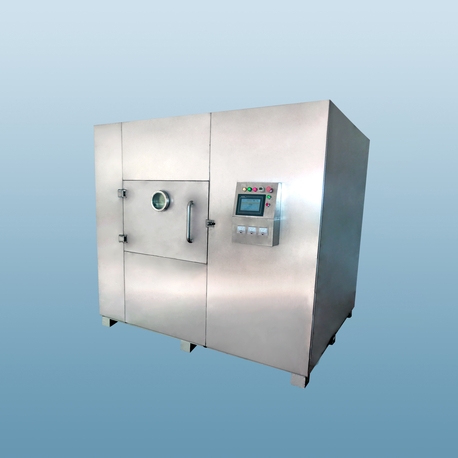
Manual monitoring is entirely insufficient for large-scale agricultural processing. A premier industrial fruit dryer relies on an integrated architecture of Programmable Logic Controllers (PLCs) and Human-Machine Interfaces (HMIs). This industrial telemetry allows facility directors to program extensive multi-stage recipes that dictate temperature, airflow velocity, and humidity on a minute-by-minute basis.
By utilizing Proportional-Integral-Derivative (PID) control loops tied to highly sensitive electronic psychrometers, the system reacts instantaneously to any internal deviations. If a dense batch of pineapples releases moisture faster than anticipated, the PID controller automatically increases the compressor load to extract the excess humidity, ensuring the chamber environment never strays from the programmed parameters. Partnering with a manufacturer like Nasan ensures your facility is equipped with this level of responsive, automated intelligence.
Food safety compliance is non-negotiable. Agricultural processing environments are highly acidic due to the exudation of citric, malic, and tartaric acids during the drying cycle. If equipment is manufactured using inferior mild steel or improper coatings, rapid oxidation and rust will contaminate the food product.
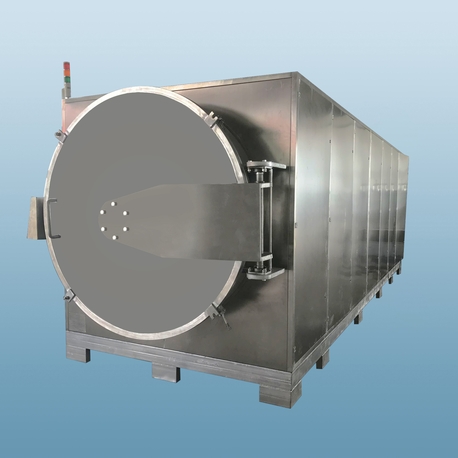
Procurement directors must ensure that all internal chamber walls, ducting, and material handling trays are constructed from food-grade stainless steel—minimally SS304, or SS316L for highly corrosive applications. Furthermore, the structural geometry of the industrial drying equipment must support rigorous Clean-in-Place (CIP) protocols. This includes fully welded, polished seams to prevent bacterial harborage points, and sloped sub-floors to facilitate rapid drainage during chemical washdowns, keeping the facility fully compliant with global HACCP and FDA sanitary standards.
Q1: What is the target water activity (aw) for commercially
dehydrated fruit?
A1: To ensure long-term microbiological stability
and prevent the proliferation of mold and pathogenic bacteria, dehydrated fruit
must generally achieve a water activity level below 0.60 aw. This metric is
strictly monitored during the final stages of the drying cycle.
Q2: How does case hardening affect the final product, and how is it
prevented?
A2: Case hardening occurs when the exterior of the fruit
dries too rapidly, forming a hard, impermeable shell that traps moisture inside
the core. This leads to internal spoilage. It is prevented by using a stepped
drying profile, starting with lower temperatures and moderate humidity to keep
the surface pores open while internal moisture migrates outward.
Q3: What makes a closed-loop heat pump dryer more efficient than a
traditional hot air dryer?
A3: Traditional dryers exhaust heated,
humid air outdoors, wasting the energy used to generate that heat. A closed-loop
heat pump captures that humid air, condenses the water out, and recovers the
latent heat of vaporization. This recovered energy is then used to reheat the
dry air, dramatically lowering electrical consumption.
Q4: Are industrial drying parameters the same for all types of
fruit?
A4: Absolutely not. High-sugar fruits require lower
temperatures to prevent caramelization, while berries with waxy cuticles require
careful humidity management to prevent cellular collapse. Advanced PLC systems
allow operators to save dozens of customized recipes tailored to specific
botanical inputs.
Q5: What grade of stainless steel should be used in the construction
of the drying chamber?
A5: All internal components and food contact
surfaces should be constructed of at least SS304 food-grade stainless steel. For
processing highly acidic products (such as lemons or tomatoes), the more
corrosion-resistant SS316L is highly recommended to withstand long-term exposure
to organic acids and industrial cleaning chemicals.
Upgrading your processing infrastructure requires strategic alignment between your production goals, factory capacity, and thermodynamic engineering. Standardized, off-the-shelf machinery rarely meets the rigorous demands of specialized high-tonnage agricultural processing. Implementing a custom-engineered industrial fruit dryer is paramount to stabilizing your product quality, lowering operational costs, and scaling your market reach.
To determine the optimal configuration for your facility, connect with the engineering team at Nasan. Please submit an inquiry detailing your target fruit species, expected daily processing volume (in kilograms or tons), and available electrical infrastructure. Our technical specialists will provide a detailed proposal, airflow diagram, and a comprehensive ROI analysis tailored to your specific commercial requirements.