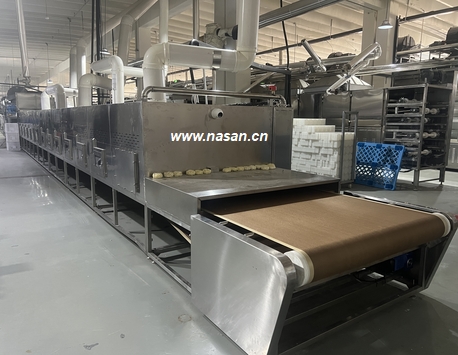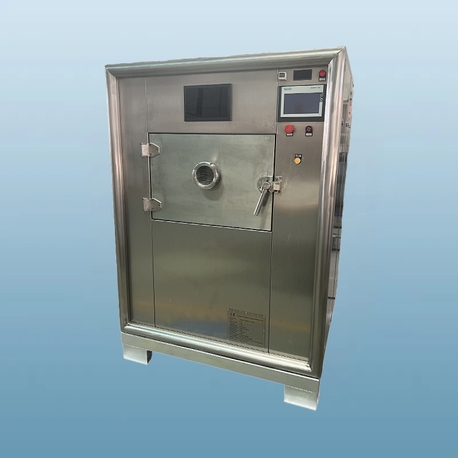
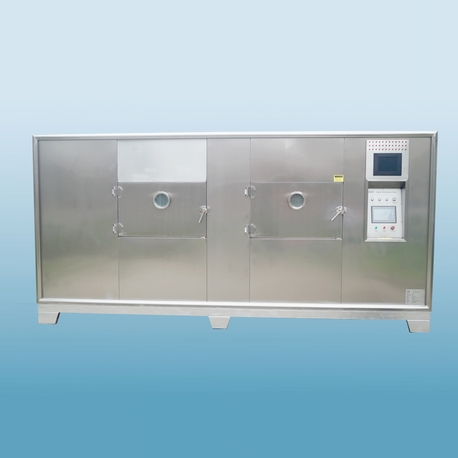
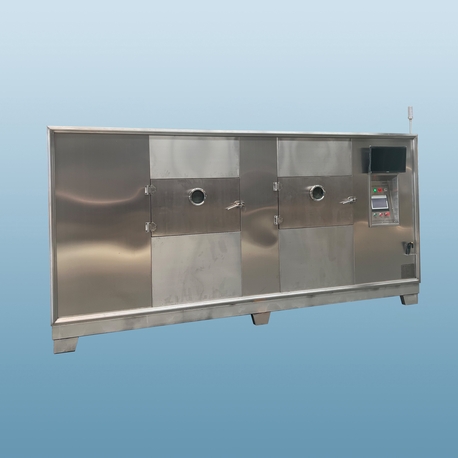
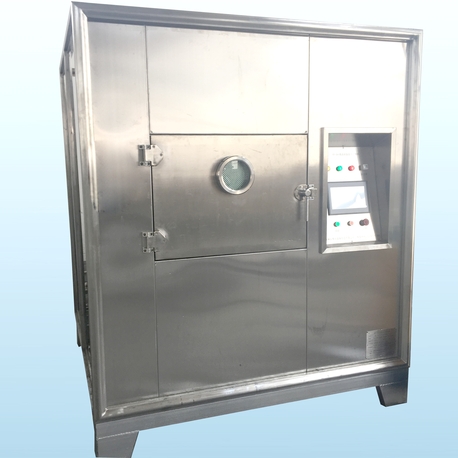
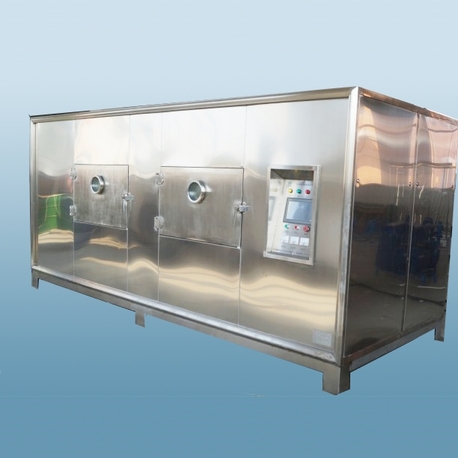
In the agricultural processing sector, post-harvest losses remain a persistent challenge, with a significant percentage of harvested produce deteriorating before reaching the consumer market. Transforming fresh produce into value-added dehydrated commodities offers a highly effective method to extend shelf life, reduce logistical weights, and meet the growing global demand for healthy snacks and food ingredients. Achieving this transformation at a commercial scale requires precision engineering. Implementing an industrial fruit drying machine allows processing facilities to systematically remove moisture while strictly maintaining the organoleptic properties, nutritional profiles, and cellular integrity of the source material.
The transition from rudimentary open-air sun dehydration to controlled indoor thermodynamic processing marks a vital shift in food manufacturing. By strictly managing temperature, relative humidity, and airflow velocity, modern processors can achieve standardized output regardless of external climatic fluctuations. As a recognized manufacturer in this sector, Nasan provides robust engineering solutions designed to tackle the demanding operational variables of large-scale commercial dehydration, ensuring consistent batch quality and operational cost efficiency.
To fully understand commercial dehydration, one must examine the interaction between plant biology and thermodynamic principles. Fruits contain two primary types of moisture: free water, which resides in the intercellular spaces and is relatively easy to evaporate, and bound water, which is trapped within the cellular structures and bound by molecular forces to carbohydrates and proteins. The objective of dehydration is to overcome the latent heat of vaporization—which requires approximately 2260 kilojoules of energy per kilogram of water—without causing structural collapse or thermal degradation to the fruit tissue.
During the initial phase of the process, surface moisture evaporates rapidly at a constant rate. As the surface dries, the process enters the falling rate period, where moisture from the center of the fruit must migrate to the surface via capillary action and diffusion. If the external heat is applied too aggressively, the surface parenchyma cells dry too quickly, forming a hard, impermeable barrier. This phenomenon, known as case hardening, traps internal moisture, leading to eventual microbial spoilage and a severely compromised end product. Avoiding this requires sophisticated psychrometric control, often achieved through heat pump drying systems that slowly adjust the enthalpy and relative humidity of the circulating air.
A prevalent issue in large-scale batch processing is the development of moisture gradients within the drying chamber. Trays located near the heat source may over-dry, while those in the center or corners remain unacceptably moist. Resolving this requires meticulous airflow engineering. A properly configured industrial fruit drying machine utilizes multi-directional airflow matrices, alternating fan rotations, and strategically placed baffling to ensure that heated air sweeps uniformly across every single tray. Computational Fluid Dynamics (CFD) modeling during the equipment design phase is often employed to eliminate dead zones and ensure uniform thermodynamic exposure.
Fruits are highly susceptible to enzymatic browning (mediated by polyphenol oxidase) and non-enzymatic browning (the Maillard reaction). Traditional hot air systems often rely on excessively high temperatures to expedite drying times, which accelerates these deleterious reactions, destroying heat-sensitive vitamins such as Vitamin C, and darkening the fruit's natural pigmentation. Modern commercial food dehydrators mitigate this by utilizing low-to-medium temperature parameters, typically operating between 40°C and 60°C. Closed-loop systems maintain low internal humidity, allowing moisture to evaporate effectively even at these gentler temperatures, thereby preserving the vibrant natural colors and volatile aromatic compounds of the produce.
Energy consumption is arguably the most significant operational expense in a dehydration facility. Conventional open-ventilation systems exhaust heavily heated, moisture-laden air directly into the atmosphere, representing a massive loss of sensible heat. Advanced configurations utilize thermal recovery mechanisms. By employing refrigeration cycles to condense the moisture out of the internal air, these systems capture the latent heat released during condensation and immediately reuse it to reheat the dry air. This process drastically improves the Specific Moisture Extraction Rate (SMER), significantly lowering the kilowatt-hour requirement per kilogram of processed fruit.
The versatility of a well-engineered processing line allows facility operators to handle a broad spectrum of botanical profiles. However, each fruit category demands a highly specific operational recipe.
High-Sugar Fruits (Mangoes, Pineapples, Bananas): These fruits pose a high risk of syneresis and case hardening due to their dense cellular structure and elevated fructose levels. Processing these requires a stepped drying curve, initiating with higher humidity to keep the surface pores open, followed by a gradual reduction in humidity to pull out deep-seated moisture.
Berries and Delicate Structures (Blueberries, Strawberries): Berries possess a protective waxy cuticle that resists moisture release. While chemical dipping or blanching is sometimes used to micro-perforate this skin, a highly precise industrial fruit drying machine allows for pulsed heating and cooling phases, allowing internal moisture to equilibrate without collapsing the delicate cellular architecture.
Citrus Fruits (Lemons, Oranges): Often dried for their rinds as well as their flesh, citrus requires strict temperature boundaries to prevent the volatilization of valuable essential oils (such as limonene) contained within the flavedo layer. Equipment engineered by Nasan can be programmed to respect these strict thermal thresholds throughout the entire batch cycle.
When investing in capital processing equipment, procurement managers and technical directors must evaluate machinery based on strict industrial standards to ensure long-term viability and compliance with international food safety regulations.
Food processing environments are inherently corrosive due to organic acids (like citric and malic acid) present in fruit exudates, alongside frequent exposure to industrial cleaning agents. It is strictly required that all contact surfaces, tray structures, and internal chamber walls are fabricated from food-grade stainless steel, typically SS304 or the more corrosion-resistant SS316L. The structural design must also accommodate Clean-in-Place (CIP) protocols, featuring sloped floors for drainage and fully welded seams to prevent bacterial harborage.
Consistent product quality is impossible without rigorous control over the internal environment. Superior commercial drying chambers are equipped with Programmable Logic Controllers (PLCs) interfaced with Human-Machine Interfaces (HMIs). This allows operators to input highly specific, multi-stage temperature and humidity profiles. The integration of PID (Proportional-Integral-Derivative) control loops connected to industrial-grade psychrometric sensors ensures that the system reacts instantaneously to deviations in chamber conditions, providing a level of precision manual adjustment cannot match.
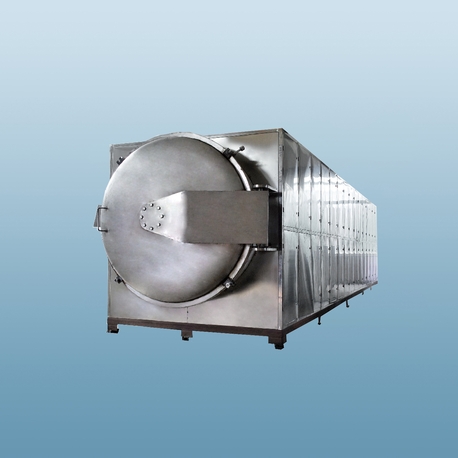
As market demand for dried agricultural products expands, processing facilities must possess the agility to scale their operations. Modular equipment designs allow facility managers to increase throughput capacity by adding supplementary drying chambers or transitioning from static tray systems to continuous belt-driven configurations. When selecting an industrial fruit drying machine, evaluating its capacity for future integration into a larger, automated processing line is paramount to maximizing return on investment.
Upgrading to modern thermal processing infrastructure represents a significant capital expenditure, yet the financial justification is straightforward when analyzing long-term operational metrics. By drastically reducing energy consumption through latent heat recovery—often yielding energy savings of 40% to 60% compared to traditional fossil-fuel burners or direct electrical resistance heating—the payback period for high-efficiency systems is notably compressed. Furthermore, the reduction in batch rejection rates, achieved through uniform drying and exact PLC control, directly increases total sellable yield.
By producing premium-grade dried fruits that command higher wholesale prices due to superior color retention and rehydration ratios, companies can significantly improve their profit margins. This economic advantage cements the value of investing in scientifically engineered fruit dehydration equipment rather than compromising with sub-standard agricultural dryers.
Q1: What is the optimal temperature range for drying high-sugar
agricultural products?
A1: For high-sugar items like mangoes or
bananas, the optimal temperature range is typically between 45°C and 55°C.
Exceeding this range early in the process accelerates surface evaporation too
rapidly, causing case hardening and trapping moisture inside, which leads to
core rot.
Q2: How does a closed-loop heat pump system differ from an
open-ventilation dryer?
A2: An open-ventilation system constantly
exhausts hot, humid air outside, wasting the thermal energy used to heat it. A
closed-loop heat pump system recirculates the air, passing it over a cold
evaporator coil to condense the moisture out, and then passing the dry air over
a hot condenser coil to reheat it. This recovers the latent heat of
vaporization, resulting in massive energy savings.
Q3: Can a single machine be programmed to process entirely different
types of produce?
A3: Yes, modern systems utilize sophisticated PLCs
capable of storing dozens of customized processing recipes. An operator can
switch the operational parameters from a gentle berry-drying cycle to a more
aggressive root-vegetable cycle simply by selecting the appropriate program on
the touch screen interface.
Q4: What routine maintenance procedures are required to ensure the
longevity of this equipment?
A4: Primary maintenance involves
stringent sanitation protocols using food-safe alkaline and acidic washdowns.
Mechanically, operators must regularly clean the evaporator and condenser coils
to maintain optimal heat exchange efficiency, replace circulating air filters,
and periodically calibrate the temperature and humidity sensors to ensure
telemetry accuracy.
Q5: How do operators validate the final moisture content of a large
commercial batch?
A5: While the machine monitors the ambient chamber
humidity, final product validation is typically conducted offline using a
halogen moisture analyzer or a calibrated water activity (aw) meter. To ensure
microbiological stability for long-term storage, most dried fruits require a
water activity level below 0.60 aw.
Optimizing your processing facility requires machinery tailored to your specific throughput requirements, factory footprint, and botanical inputs. Standardized equipment often falls short when dealing with unique local cultivars or strict export quality standards. Partnering with Nasan ensures you gain access to robust engineering support and precision-manufactured technology.
Whether you are expanding an existing production line or designing a new facility from the ground up, implementing the right industrial fruit drying machine is the most crucial step toward maximizing your yield and profitability. Please contact our technical sales team today with your required capacity (kg/batch), target moisture content, and site electrical specifications to receive a comprehensive technical proposal and ROI analysis.