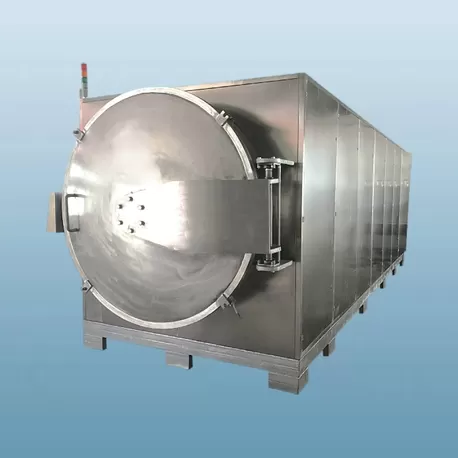
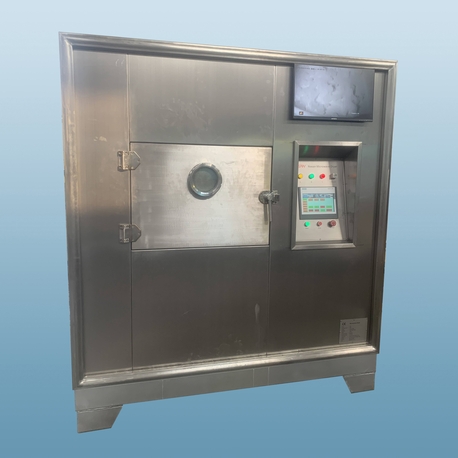
Commercial beef jerky production sits at the intersection of food science,
thermodynamics, and operational efficiency. The equipment at the core of this
process—the beef jerky
dryer—directly determines final product quality, shelf stability,
energy cost per kilogram, and throughput capacity. Selecting or engineering the
right drying system requires moving beyond basic specifications to understand
how heat transfer, moisture migration, and air distribution interact with meat
biochemistry.
This article provides a technical framework for evaluating and optimizing a
beef jerky dryer for medium to large-scale operations. Drawing
on food engineering principles, we will examine key performance indicators,
compare drying technologies, and discuss validation protocols that ensure
consistent results batch after batch. For producers seeking to scale or upgrade,
these insights form the foundation of a profitable, compliant operation.

1. Drying Technology: Heat Pump vs. Thermal Oxidizer Systems
The choice of energy source and heat delivery mechanism is the first critical
decision in specifying a beef jerky dryer. Two dominant
technologies serve the commercial sector: heat pump dehumidification systems and
direct-fired thermal units. Each offers distinct advantages depending on
production volume, energy costs, and product requirements.
1.1. Heat Pump Dehumidification Dryers
These closed-loop systems operate on a refrigeration cycle to extract
moisture from the drying chamber while recovering latent heat. Key engineering
benefits include:
Energy efficiency: Consumes 40–60% less energy than thermal
systems by recycling heat within the chamber. Coefficient of performance (COP)
typically ranges from 2.5 to 3.5.
Precise environmental control: Maintains temperature within
±0.5°C and relative humidity within ±2% across the drying cycle, critical for
consistent water activity (aw) outcomes.
Ambient operation: Functions effectively in ambient
temperatures from 0°C to 45°C without performance degradation, eliminating the
need for conditioned intake air.
1.2. Direct-Fired Thermal Dryers
These units use natural gas, propane, or electric resistance heating to raise
air temperature, with moisture vented to the atmosphere. They are characterized
by:
High initial drying rates: Capable of achieving rapid
surface moisture evaporation, which can accelerate production cycles for
high-volume facilities.
Lower capital cost: Initial equipment investment is
typically 20–35% lower than heat pump systems of comparable capacity.
Ventilation requirements: Require substantial makeup air,
which introduces outdoor temperature and humidity variables, potentially
affecting consistency.
For producers prioritizing energy efficiency and product consistency, heat
pump technology has become the industry standard. Nasan specializes in heat pump-based beef jerky dryer systems
engineered to maintain tight process parameters while minimizing operational
expenditure.
2. Airflow Dynamics: Uniformity and Velocity
Inadequate air distribution is the leading cause of batch inconsistency. A
well-designed beef jerky dryer must achieve uniform airflow
across all product trays, with velocity variations below 15% between any two
points in the chamber.
2.1. Airflow Configuration Options
Horizontal flow: Air moves across product trays from one
side to the opposite. This configuration requires careful plenum design to
prevent velocity drop at the far end.
Vertical flow (top-to-bottom or bottom-to-top): Common in
multi-tray cabinets. Air passes through each tray stack, with perforated trays
ensuring even distribution.
Reversible flow: Advanced systems periodically reverse
airflow direction to eliminate dry spots and ensure uniform moisture extraction,
particularly important for thicker meat cuts.
Computational Fluid Dynamics (CFD) modeling during the design phase can
predict airflow patterns and identify dead zones before fabrication. For a
typical 500 kg batch capacity beef jerky dryer, target air
velocity at product surface should range between 1.5 and 2.5 m/s to balance
moisture removal with energy efficiency.
3. Moisture Extraction Rate and Water Activity Control
The primary performance metric for any beef jerky dryer is
moisture extraction rate (MER), measured in kilograms of water removed per hour.
For beef jerky, the goal is to reduce moisture content from an initial 65–70%
(wet basis) to a final 15–20%, corresponding to a water activity (aw) below 0.85
to inhibit pathogenic bacteria like Salmonella and Staphylococcus aureus.
3.1. Calculating System Requirements
A producer processing 1,000 kg of raw beef (65% moisture) to a final product
weight of approximately 400 kg (18% moisture) must remove 600 kg of water. A
commercial beef jerky dryer with a MER of 30 kg/hour would
complete this batch in 20 hours, assuming optimal conditions. Factors affecting
MER include:
Initial meat temperature and pH
Slice thickness and uniformity
Air dew point (in heat pump systems)
Product loading density (kg per square meter of tray area)
Operators should select equipment with a MER capacity 20–30% above calculated
requirements to accommodate variations in raw material and ambient
conditions.
4. Process Control and Programmability
Modern beef jerky production relies on multi-stage drying profiles rather
than constant-temperature operation. A sophisticated beef jerky
dryer must support programmable logic control (PLC) with multiple
phases.
4.1. Typical Multi-Stage Profile
Phase 1 – Surface drying (1–2 hours): Temperature 60–65°C,
high airflow, low humidity to rapidly evaporate surface moisture and prevent
case hardening.
Phase 2 – Constant rate period (4–8 hours): Temperature
55–60°C, moderate airflow, humidity 30–40% to extract bound moisture at a
controlled rate.
Phase 3 – Falling rate period (2–4 hours): Temperature
50–55°C, reduced airflow, humidity 20–25% to achieve final water activity
without over-drying edges.
Data logging capabilities—recording temperature, humidity, and energy
consumption at 5-minute intervals—are essential for batch traceability and
compliance with HACCP plans. Systems that offer remote monitoring and alarm
notifications provide additional operational security.
5. Sanitary Design and Cleanability
Meat products present unique food safety risks. A commercial beef
jerky dryer must be designed for rigorous sanitation protocols to
prevent cross-contamination and pathogen harborage.
5.1. Key Sanitary Design Features
304 or 316 stainless steel construction: All
product-contact surfaces must be non-porous, corrosion-resistant, and free of
crevices.
Welded seams ground smooth: Eliminates gaps where organic
material can accumulate.
Removable trays and racks: Designed for easy disassembly
and cleaning in a separate wash area.
Sloped surfaces: Drip pans and interior floors should slope
to drains to prevent standing water.
Positive pressure interior: Prevents unfiltered outside air
from entering during operation.
Systems should support Clean-in-Place (CIP) functionality, with automated
spray nozzles capable of circulating hot water and sanitizing solutions through
the chamber. A sanitation cycle that reaches 85°C for 15 minutes is typically
sufficient for pathogen inactivation.
6. Energy Consumption and Lifecycle Cost Analysis
For operations running multiple batches per week, the energy cost
differential between efficient and inefficient beef jerky dryer systems can exceed $15,000 annually. A lifecycle cost analysis should
consider:
Specific energy consumption (SEC): Measured in kWh per kg
of water removed. Heat pump systems typically achieve 0.8–1.2 kWh/kg, while
thermal systems range from 1.8–2.5 kWh/kg.
Heat recovery efficiency: In heat pump dryers, the recovery
ratio indicates how much energy is recycled; values above 60% indicate superior
design.
Insulation quality: Panel thickness and thermal break
construction directly affect heat loss. Target U-value below 0.5 W/m²·K for the
drying chamber.
Peak demand vs. continuous operation: Some utilities offer
lower rates for off-peak operation; programmable systems can be scheduled
accordingly.
Manufacturers like Nasan provide energy consumption
modeling as part of the equipment selection process, enabling producers to
project operating costs before purchase.

7. Validation and Quality Assurance Protocols
Consistent product quality requires a validated drying process. For each
beef jerky dryer installation, producers should establish and
document validation protocols covering:
7.1. Thermal Mapping
Temperature sensors placed at 9–15 locations throughout the chamber during a
full drying cycle to identify cold spots. Acceptance criteria: maximum
temperature variation ≤2°C across all points during steady-state operation.
7.2. Moisture Uniformity Testing
Samples taken from multiple trays and positions within each tray are analyzed
for moisture content using AOAC-approved methods. Coefficient of variation (CV)
across samples should be ≤5%.
7.3. Water Activity Verification
Final product aw is measured using a calibrated water activity meter. For
non-refrigerated shelf-stable jerky, aw must be ≤0.85. Process capability
indices (Cpk) should exceed 1.33.
7.4. Microbial Validation
Independent laboratory testing for pathogen reduction (Salmonella, Listeria
monocytogenes) and indicator organisms (aerobic plate count) to confirm the
drying process achieves required lethality per USDA-FSIS guidelines.
Industry Application: Scaling from Artisanal to Industrial
Transitioning from small-batch dehydrators to a commercial beef jerky
dryer requires careful consideration of batch size, shift patterns, and
packaging integration. A 500–1,000 kg batch capacity system with automated
loading and unloading reduces labor costs by up to 60% compared to cart-type
dryers. Integration with downstream processes—such as continuous cooling
conveyors and metal detection—further enhances efficiency.
For producers exporting to markets with strict food safety regulations (USDA,
EU, CFIA), the drying equipment itself becomes part of the facility's registered
equipment list. Systems must be constructed from materials compliant with FDA
food contact regulations (21 CFR Part 177) and feature documented
cleanability.
Defining Success Through Data
Selecting a beef jerky dryer is a capital decision with
long-term implications for product quality, operational cost, and regulatory
compliance. By prioritizing verifiable performance metrics—MER, SEC, temperature
uniformity, and sanitary design—producers can achieve consistent results and
predictable profitability. The most successful operations treat drying not as an
art, but as an engineered process subject to continuous monitoring and
improvement.
For organizations evaluating equipment options, partnering with a
manufacturer that offers pre-sale process testing, installation validation, and
ongoing technical support is essential. A well-specified beef jerky
dryer, properly validated and maintained, becomes a competitive
advantage in a growing market.
Frequently Asked Questions (FAQ)
Q1: What is the typical drying time for beef jerky in a commercial
dryer?
A1: Drying time varies with slice thickness,
desired final moisture, and equipment type. For 3–5 mm slices in a heat pump
beef jerky dryer, total cycle time ranges from 10–14 hours.
Thermal dryers may achieve 6–10 hours but with higher energy consumption and
less precise moisture control. Multi-stage programming can optimize time while
maintaining quality.
Q2: How do I determine the required capacity for my beef jerky
dryer?
A2: Calculate based on weekly production
targets. For example, to produce 1,000 kg finished jerky per week, assuming a
40% yield from raw meat, you need 2,500 kg raw input. With a dryer capable of
500 kg raw per batch, five batches per week (allowing for loading, cleaning, and
sanitation) would meet the target. Always include 20–30% capacity buffer for
growth.
Q3: Can a beef jerky dryer be used for other meat or plant-based
products?
A3: Yes. Commercial units are versatile
and can process turkey, bison, salmon, and plant-based jerky alternatives.
However, validation must be repeated for each product type due to differences in
thermal properties, moisture migration rates, and pathogen risks.
Cross-contamination protocols must be strictly followed when switching between
protein types.
Q4: What sanitation frequency is required for a beef jerky
dryer?
A4: At a minimum, a full sanitation cycle
should occur after each production batch. This includes removal of all removable
components for washing, followed by a CIP cycle or manual cleaning with approved
food-grade sanitizers. A weekly deep cleaning with disassembly of
non-product-contact areas is recommended. All cleaning activities must be
documented in a sanitation standard operating procedure (SSOP).
Q5: How do heat pump beef jerky dryers perform in cold
climates?
A5: Heat pump systems are well-suited for
cold climates because they do not rely on outdoor air for drying. The
refrigeration circuit operates efficiently down to -10°C ambient; for colder
conditions, manufacturers can specify low-ambient kits. This is a distinct
advantage over thermal dryers, which require preheating of makeup air in winter,
significantly increasing energy costs.
For detailed specifications, process testing, or assistance with your
next beef jerky dryer project, consult the engineering team at Nasan. Their food-drying
specialists provide pre-sale testing and installation support tailored to your
production goals.