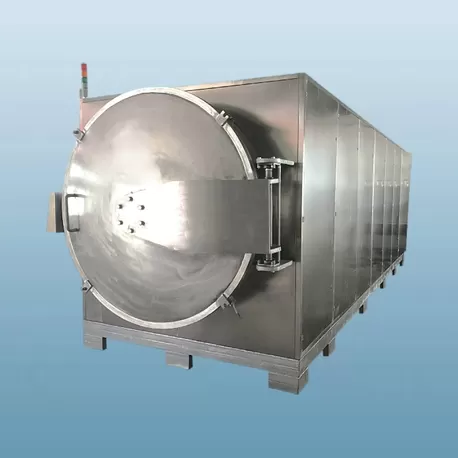
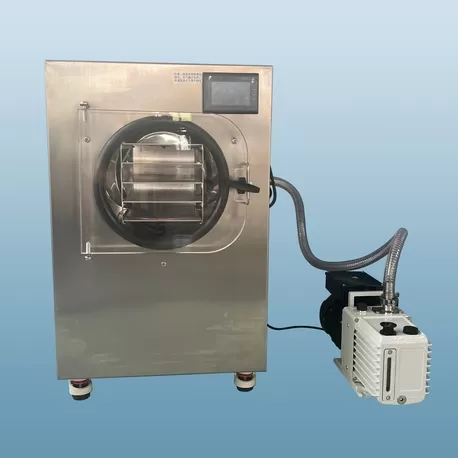
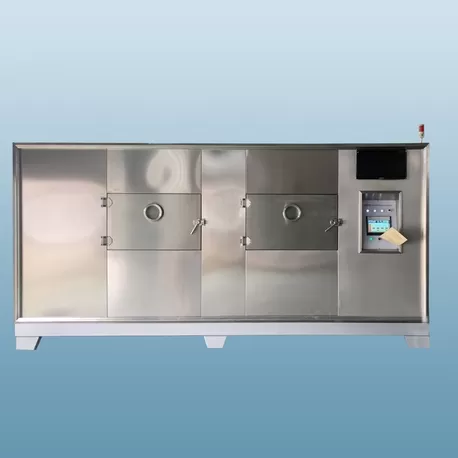
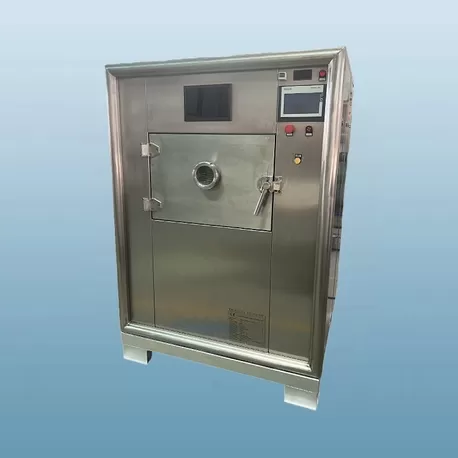
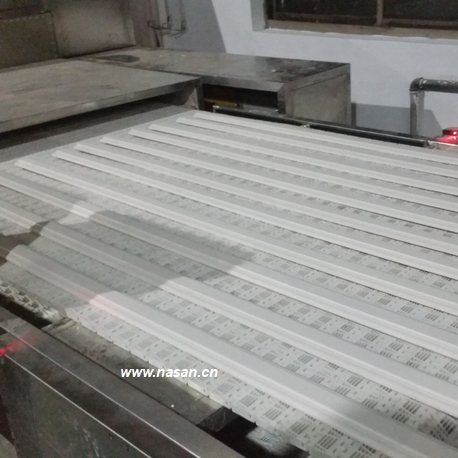
If you work in pharmaceuticals, food manufacturing, or biotechnology, you've likely heard about freeze drying. The term "freeze dryer" often comes up in discussions about long-term preservation of sensitive materials. But what exactly does an industrial freeze dryer do, and why is it a critical piece of equipment for so many advanced industries?
Unlike conventional drying methods that use heat, a commercial freeze dryer operates on the principle of sublimation. This gentle process removes moisture while preserving the physical structure and chemical integrity of the product in a way no other dryer can. For businesses where product viability, potency, and shelf life are non-negotiable, investing in a robust freeze drying system is a strategic decision.
Leading manufacturers like Nasan have been at the forefront of engineering reliable industrial freeze dryers that meet the rigorous demands of global standards. Their equipment is found in facilities where failure is not an option.

How Does a Freeze Dryer Actually Work? The Lyophilization Process Explained
The operation of a freeze dryer, scientifically known as lyophilization, is a multi-stage, carefully controlled process. It's more complex than simply freezing and vacuuming a product. Understanding the steps highlights the precision engineering involved in these machines.
The first critical phase is Freezing. The product is placed in the freeze dryer's chamber and cooled to well below its eutectic point, often between -30°C to -50°C. This isn't just surface freezing; the goal is to solidify all water molecules into ice crystals throughout the entire product mass. The rate and method of freezing can impact the size of the ice crystals, which in turn affects the final product's structure.
Once fully frozen, the primary drying or Sublimation phase begins. The freeze dryer's vacuum pump dramatically lowers the chamber pressure. Then, controlled heat is applied to the shelves. Under this low pressure, the solid ice in the product sublimates—it transitions directly from a solid to a vapor, bypassing the liquid phase entirely. This is the core magic of a freeze dryer.
The water vapor is then drawn toward extremely cold coils called the condenser, where it re-solidifies as ice. This phase can take the longest, as it involves removing the bulk of the water.
The final stage is Secondary Drying (Desorption). With the free ice gone, some moisture remains bound to the product's molecules. In this phase, the temperature is raised further (though still below ambient) to break these bonds. The vacuum continues to pull away the liberated vapor. This step brings the product to its desired, ultra-low moisture content, often between 1-4%.
Key Industries That Rely on Commercial Freeze Dryer Technology
The unique advantages of freeze drying make it indispensable across several high-stakes fields. The applications go far beyond backpacking meals.
In the Pharmaceutical and Biotechnology sectors, the freeze dryer is a pillar of production. It is used to preserve vaccines, antibiotics, protein-based drugs, diagnostic kits, and live viral vectors. The process maintains the biological activity of these sensitive compounds, allowing for stable, long-term storage at room temperature. A pharmaceutical freeze dryer must be built to strict cGMP (current Good Manufacturing Practice) standards, with full traceability and validation protocols.
The Food and Beverage Industry uses freeze dryers for high-value ingredients and finished products. Instant coffee is the classic example. But the technology is also vital for preserving fruits for cereals and snacks, herbs and spices, full meals for military and aerospace use, and premium ingredients for the culinary world. Freeze-dried food retains its original shape, color, flavor, and nutrition far better than air-dried or heat-dried counterparts.
Research and Development labs, both academic and corporate, utilize smaller-scale freeze dryer units. They are essential for preparing stable samples, preserving cell cultures, and conducting experiments in material science. The precision and reproducibility offered by a lab freeze dryer are critical for scientific work.
Other niches include the preservation of historical documents damaged by water, the preparation of certain types of ceramics, and even in taxidermy. Wherever delicate materials need drying without distortion or damage, a freeze dryer is considered.
Choosing the Right Industrial Freeze Dryer for Your Operation
Selecting a freeze dryer is a significant capital investment. The right choice depends on a clear analysis of your needs. You must consider the type of product, batch size, required cycle time, and regulatory environment.
Capacity and Configuration are primary factors. Do you need a batch freeze dryer with trays and shelves for discrete production runs? Or would a continuous or semi-continuous freeze dryer be better for a high-volume, single-product output? Shelf area and condenser ice capacity determine the size of each batch.
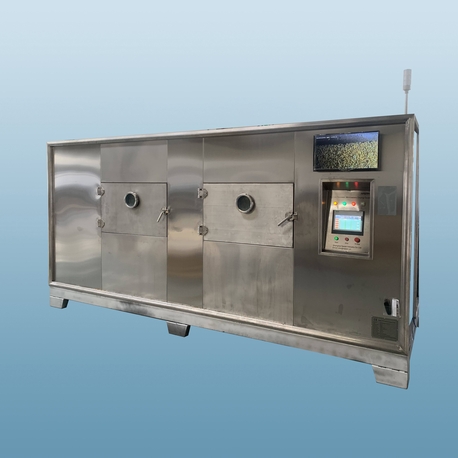
Engineering and Controls are where quality shines. A commercial freeze dryer should feature robust construction, often with pharmaceutical-grade stainless steel for cleanability and corrosion resistance. The control system is vital; modern units use programmable logic controllers (PLCs) with recipe storage, data logging, and remote monitoring capabilities. This ensures process repeatability and compliance.
Regulatory Compliance is non-negotiable for many users. Equipment destined for FDA-regulated industries needs to be designed for easy validation. This includes features like clean-in-place (CIP) systems, sterilizable chambers, and comprehensive documentation packages. Suppliers like Nasan specialize in building freeze dryers that not only perform but are also designed to pass rigorous regulatory audits.
Maintenance and Operational Efficiency of Your Freeze Drying System
Running a freeze dryer efficiently is about more than pressing a start button. Proactive maintenance is key to uptime and product quality. Regular tasks include defrosting and cleaning the condenser, checking and replacing vacuum pump oil, inspecting door seals for integrity, and calibrating temperature and pressure sensors.
Energy consumption is a major operational cost. Modern freeze dryers incorporate efficiency features like heat recovery systems, which recycle thermal energy within the cycle, and variable-speed vacuum pumps. Investing in an energy-efficient model from a manufacturer focused on sustainability, such as Nasan, can lead to substantial long-term savings.
Operator training is crucial. Understanding the principles of lyophilization helps technicians troubleshoot issues like slow drying times or condenser overload. Proper loading techniques—ensuring product is evenly spread and vial stoppers are correctly positioned—directly impact cycle consistency and final product quality.
Conclusion: The Strategic Value of Advanced Freeze Drying
An industrial freeze dryer is not just a piece of drying equipment; it is an enabling technology. It allows businesses to create stable, high-value products from perishable or unstable starting materials. It extends global supply chains by granting products a multi-year shelf life without refrigeration.
The decision to invest in a freeze drying system involves careful consideration of technical needs, compliance requirements, and total cost of ownership. Partnering with an experienced and reliable manufacturer is critical for success.
Companies like Nasan provide the engineering expertise and robust equipment needed to harness the power of lyophilization reliably. In a world demanding advanced preservation for medicines, foods, and biotech products, the industrial freeze dryer remains a cornerstone of modern manufacturing.
Frequently Asked Questions (FAQs)
Q1: What is the main advantage of a freeze dryer over a standard thermal dryer for food or pharmaceuticals?
A1: The primary advantage is preservation of structure and heat-sensitive compounds. A freeze dryer removes water via sublimation at low temperatures, preventing damage from liquid phase reactions or high heat. This preserves the physical shape, cellular structure, flavor, color, and—most importantly for pharma—the biological activity of delicate proteins and vaccines.
Q2: How long does a typical freeze drying cycle take on an industrial unit?
A2: Cycle times vary widely based on the product, its formulation, and the batch size. A cycle can range from 20 hours for simple, thin materials to several days (72+ hours) for dense, complex biological products or large volumes. The freeze dryer's efficiency and the optimization of the lyophilization recipe significantly impact total cycle time.
Q3: Is it possible to over-dry a product in a freeze dryer?
A3: Yes, over-drying is a risk, particularly in the secondary drying phase. Removing too much bound moisture can lead to protein denaturation in biologicals, loss of volatile aromas in food, or increased brittleness. Precise endpoint determination, often through residual moisture analysis or pressure rise tests, is used to stop the cycle at the optimal moisture content.
Q4: What are the most critical maintenance points for a commercial freeze dryer?
A4: The vacuum system and the condenser are most critical. The vacuum pump requires regular oil changes and seal inspections. The condenser must be thoroughly defrosted and cleaned between batches to maintain optimal ice capture efficiency. Door gaskets and valve seals should also be inspected routinely for leaks that can break the vacuum and ruin a cycle.
Q5: Can a freeze dryer handle liquid products, or only solids?
A5: A freeze dryer is excellent for liquid products. In fact, many pharmaceutical applications involve filling vials with a liquid drug solution or suspension before loading them into the freeze dryer. The process freezes and then dries the liquid in situ, resulting in a stable powder cake in the vial, ready for reconstitution with sterile water later.