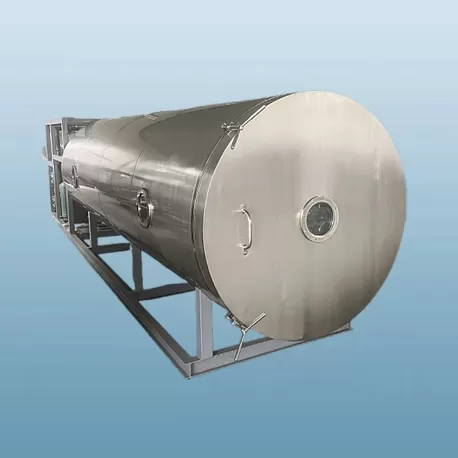
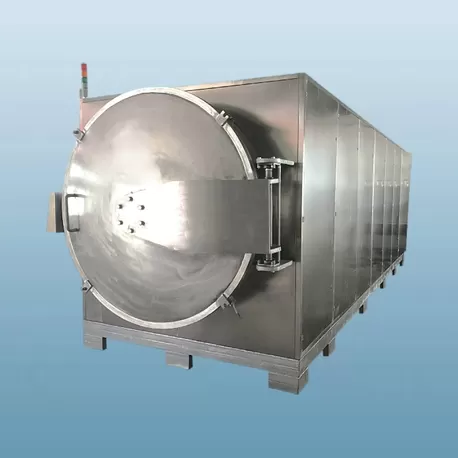
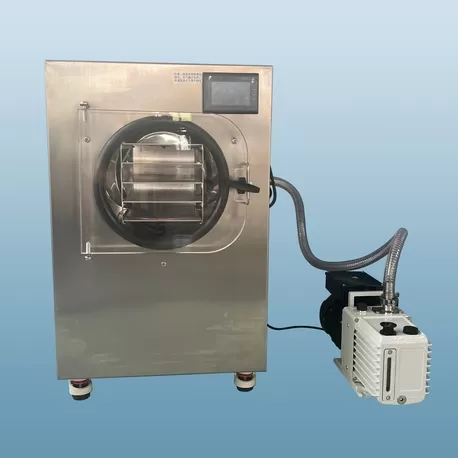
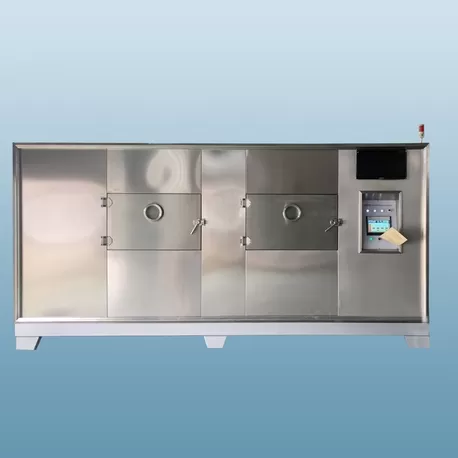
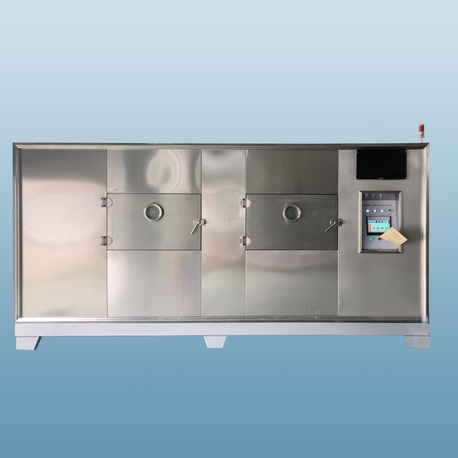
In the global seafood processing industry, preserving quality and extending shelf life are non-negotiable. For businesses scaling from medium-sized operations to large industrial plants, achieving consistent, efficient drying is a major challenge. Enter the industrial fish dryer—a pivotal piece of equipment that transforms preservation from an art into a precise science.
This isn't about small-scale food dehydrators. We're discussing powerful systems designed for tonnage-level output. A commercial fish dryer removes moisture efficiently, locking in flavor, nutrients, and value. For processors seeking reliability, brands like Nasan have built a reputation on robust drying technology tailored for demanding environments.

Understanding the Core: How Industrial Fish Dryers Work
Industrial fish drying is far removed from traditional sun-drying. Modern systems use controlled heat, airflow, and sometimes vacuum or heat pump technology to accelerate the process.
The primary goal is to lower the water activity in the fish, inhibiting microbial growth. A commercial fish dryer achieves this uniformly across large batches. Key components include a heating system, fans for air circulation, trays or trolleys for product loading, and sophisticated control panels.
The process ensures hygiene, consistency, and compliance with international food safety standards. This level of control is impossible with traditional methods.
Key Applications: Where Fish Dryers Are Essential
The industrial fish dryer serves multiple segments within the seafood sector. Its application is critical for various products and business models.
Fish Processing Plants: For producing dried anchovies, stockfish, sardines, or mackerel on a large scale.
Value-Added Product Manufacturers: Creating ingredients for soups, seasonings, pet food, or snacks.
Aquaculture and Fisheries: Preserving surplus catch efficiently to reduce waste and open new market channels.
Export-Oriented Businesses: Meeting stringent quality and safety requirements for international shipments.
Whether the final product is whole dried fish, flakes, or powder, the right drying system is the foundation.
Choosing Your System: A Comparative Guide to Fish Dryer Types
Selecting a fish dryer requires matching the technology to your product and volume. Here’s a breakdown of common industrial types.
1. Hot Air Dryers (Convection Dryers):
These are the workhorses of the industry. They circulate heated air around the fish. They are cost-effective for large volumes and are highly versatile for different species and sizes. Energy consumption can be higher compared to more advanced systems.
2. Heat Pump Dryers:
This technology is gaining rapid popularity for its efficiency. A heat pump fish dryer recycles heat within the chamber, drastically reducing energy consumption by up to 60% compared to conventional hot air dryers. It operates at lower temperatures, which can better preserve sensitive nutrients and colors.
3. Vacuum Dryers:
These systems dry fish in a low-pressure environment, allowing water to evaporate at much lower temperatures. Ideal for premium, heat-sensitive products. It preserves shape, color, and nutrients exceptionally well but comes at a higher capital cost and lower batch size.
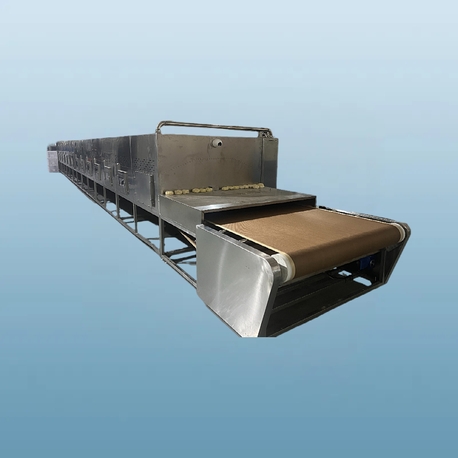
4. Continuous Belt Dryers:
For ultra-high-volume processing, continuous dryers automate the entire flow. Fish are loaded on a moving belt that passes through different temperature zones. This ensures non-stop production and uniform treatment, maximizing throughput.
Brands like Nasan offer a range of these technologies, allowing processors to choose based on precise operational needs and product specifications.
Cost Factors and Investment Analysis for a Fish Dryer
The price of a commercial fish dryer is not a single figure. It's an investment calculated over the machine's lifespan. Key cost components include:
Initial Capital Cost: This varies dramatically by type, capacity, and automation level. A basic hot air cabinet dryer costs less than a fully automated heat pump or vacuum system.
Energy Consumption: This is the largest operational cost. Heat pump dryers have a higher upfront price but much lower running costs. A simple payback period analysis often shows they are cheaper in the long run.
Installation and Infrastructure: Consider space, utility connections (electrical, gas, steam), and ventilation.
Labor Costs: Automated loading, unloading, and control systems reduce labor requirements, impacting total operational expense.
Maintenance and Spare Parts: Robust construction and accessible service networks, like the support offered by Nasan, minimize downtime and future costs.
The goal is to calculate the cost per kilogram of dried product, not just the sticker price of the machine.
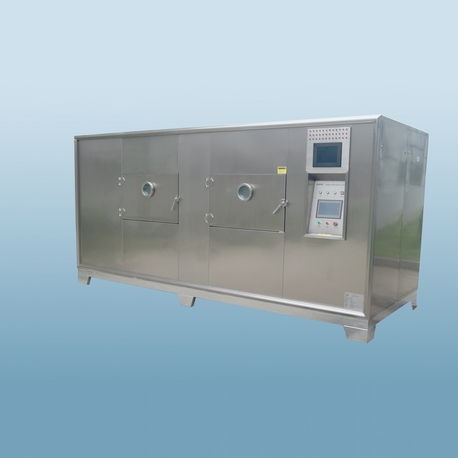
Finding the Right Supplier: What to Look For
Sourcing a reliable industrial fish dryer requires due diligence. A supplier is a long-term partner for your business.
Industry Experience: Seek companies with a proven history in food, specifically seafood, drying. They understand product-specific challenges.
Technology Range: A good supplier offers multiple technologies (hot air, heat pump) to provide an unbiased solution.
Test Facilities: The ability to conduct a live drying test with your specific fish is invaluable for validating results.
After-Sales Service: Inquire about installation support, technician training, spare parts availability, and warranty terms.
References and Case Studies: Ask for contactable clients with similar production needs to verify performance claims.
A trustworthy provider will focus on your total cost of operation and final product quality, not just making a sale.
Deep Dive: Advanced Technology and Process Control
Today's top-tier industrial fish dryer is a smart machine. Advanced process control is what separates adequate drying from optimal drying.
Modern dryers feature PLC (Programmable Logic Controller) systems with touchscreen interfaces. Operators can set and save precise drying programs for different products—controlling temperature, humidity, and airflow in stages.
This multi-stage programming is crucial. For example, an initial high-temperature phase can set the surface, followed by a lower-temperature phase to remove internal moisture without case-hardening. Sensors provide real-time feedback, making automatic adjustments.
This level of control maximizes efficiency, ensures batch-to-batch consistency, and safeguards product quality. Investing in advanced control technology future-proofs your operation.
Investing in the right industrial fish dryer is a strategic decision that impacts product quality, operational cost, and business scalability. From efficient heat pump systems to high-capacity continuous dryers, the technology must align with your specific product goals and financial calculations.
By focusing on total lifecycle value—encompassing energy use, reliability, and supplier support—processors can make a sound investment. Partners like Nasan exemplify the blend of durable engineering and practical application knowledge needed in this demanding field.
The modern seafood market demands efficiency and consistency. A professional fish drying system is the core equipment that delivers both.
Frequently Asked Questions (FAQ)
Q1: What is the main advantage of a heat pump fish dryer over a traditional hot air dryer?
A1: The primary advantage is dramatically lower energy consumption. A heat pump fish dryer recycles heat within the chamber, often using 50-70% less energy than a standard hot air dryer. It also typically operates at gentler temperatures, which can lead to better preservation of product color, shape, and certain heat-sensitive nutrients.
Q2: How much can I realistically save on operating costs with an efficient fish dryer?
A2: Savings depend on your local energy costs, annual production volume, and the technology you switch from. For a medium-sized operation replacing an old hot air dryer with a modern heat pump model, annual energy savings of several thousand dollars are common. A detailed analysis based on your specific throughput and utility rates is essential to determine your exact payback period.
Q3: What are the key factors I must specify when requesting a quote for a fish dryer?
A3: Provide suppliers with: 1) The type of fish and desired final product (whole, flakes, moisture content %), 2) Your required hourly or daily output in kilograms of raw/finished product, 3) Your available energy sources (electricity, gas, steam), 4) The available floor space and ceiling height in your facility, and 5) Your preferred level of automation (manual loading vs. continuous belt).
Q4: How important is after-sales service when purchasing an industrial dryer?
A4: It is critically important. An industrial fish dryer is a core production asset. Reliable after-sales service ensures minimal downtime in case of issues. Look for suppliers who offer prompt technical support, readily available spare parts, and possibly on-site technician training. This service commitment is as valuable as the machine itself.
Q5: Can one dryer handle many different types of fish and seafood products?
A5: Yes, a versatile fish dryer with programmable multi-stage controls can handle different products. However, you must create and save a specific drying program (temperature, humidity, time profile) for each product type. Switching between products like small shrimp and thick fish fillets requires careful recipe management to optimize quality and efficiency for each.