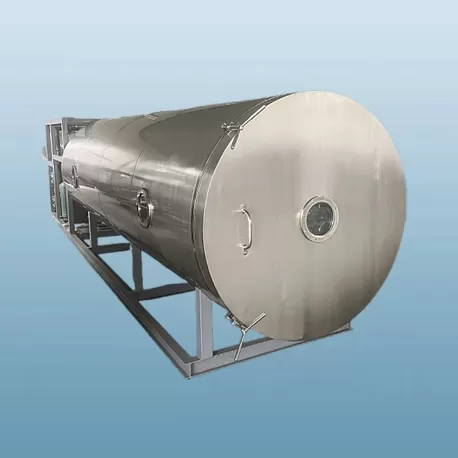
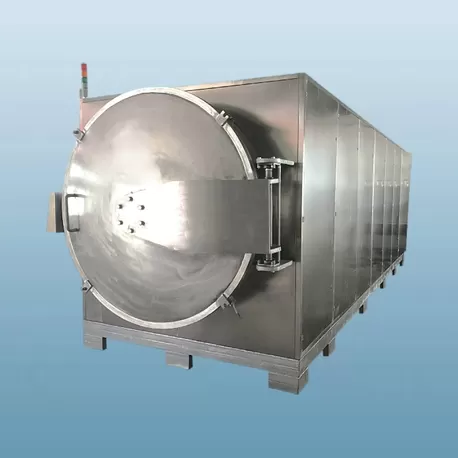
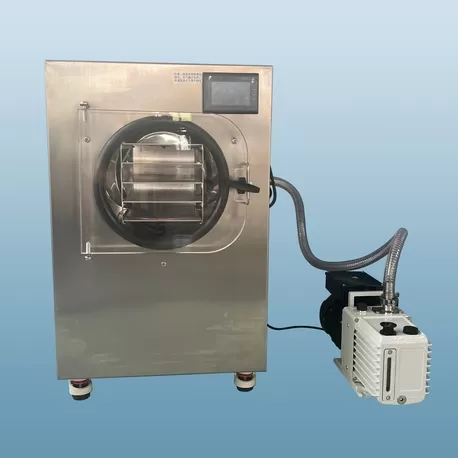
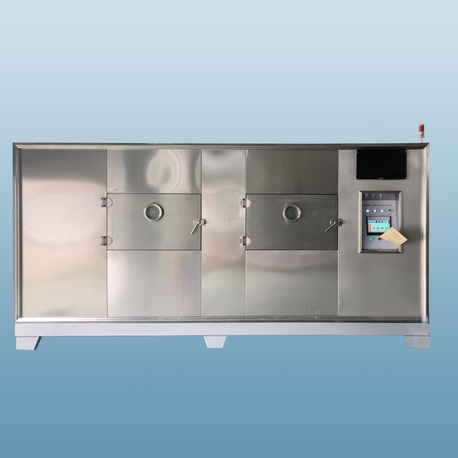
Drying is one of the oldest food preservation methods. But for modern food manufacturers, traditional techniques often fall short. The challenges of slow speed, high energy use, and nutrient loss are significant.
A technology that solves these problems is gaining serious traction. Vacuum microwave drying combines two powerful principles to deliver superior results. It is not just another drying method; it’s a strategic upgrade for quality-focused production.
This process is specifically engineered for commercial and industrial-scale operations. It meets the rising demand for premium dried ingredients and snacks with exceptional color, flavor, and nutritional value. Forward-thinking equipment manufacturers, like Nasan, are integrating this advanced technology into robust industrial platforms.

The Core Principle: Why Combine Vacuum and Microwave?
To understand vacuum microwave drying, break it down into its two components.
First, a vacuum chamber significantly lowers the air pressure inside. This lowers the boiling point of water. Moisture in the product can evaporate at temperatures as low as 30°C to 40°C, instead of 100°C.
Second, microwave energy is introduced. Microwaves directly excite water molecules within the product, generating heat from the inside out.
Combined, these forces create a powerful synergy. The vacuum allows for gentle, low-temperature drying. The microwaves provide rapid, volumetric heating that drives moisture out quickly and evenly.
The result is a drying process that is both fast and exceptionally gentle.
Key Advantages Over Conventional Drying Methods
How does vacuum microwave drying stack up against common industrial dryers like hot air convection or freeze dryers? The differences are substantial.
Versus Hot Air Drying:
Hot air dryers rely on external heat transfer. They can cause case-hardening, where the outside crusts over, trapping moisture inside. This leads to long drying times, high energy consumption, and significant thermal degradation.
Vacuum microwave systems heat from within, avoiding case-hardening. Drying times are often reduced by 50-90%. The low-temperature operation under vacuum better preserves heat-sensitive vitamins, colors, and fresh flavors.
Versus Freeze Drying:
Freeze drying is excellent for quality but is notoriously slow and expensive. It’s a multi-day, batch-based process with high capital and operational costs.
Industrial vacuum microwave drying achieves a similar high-quality, porous structure in a fraction of the time. While not a direct replacement for all freeze-dried products, it offers a far more productive and cost-effective alternative for many applications.
The primary benefits are clear: speed, quality retention, and energy efficiency.
Major Industrial Applications and Product Examples
This technology is not a niche solution. It is transforming production lines across several high-value food sectors.
Fruits and Vegetables: It produces vibrant, crisp, or chewy dried fruits with near-fresh color and flavor. Berries, mangoes, herbs, and garlic are ideal candidates.
Seafood and Meats: For creating premium dried seafood snacks or jerky with improved texture and shelf-stability without high heat damage.
Dairy and Ingredients: Processing delicate ingredients like probiotics, yeast, or dairy powders where thermal degradation is a major concern.
Ready-to-Eat Snacks: Manufacturing a new generation of puffed fruit chips, vegetable crisps, and functional snacks that appeal to health-conscious consumers.
The ability to control texture—from crispy to chewy—by adjusting parameters makes it incredibly versatile for product development.
Understanding the Cost and Investment Profile
An industrial vacuum microwave dryer represents a significant capital investment. The price is higher than a standard hot air tunnel dryer.
However, the total cost of ownership analysis often tells a different story. Key financial factors include:
Higher Throughput: Faster drying cycles mean more batches per day, increasing facility output without expanding floor space.
Lower Energy per Kilogram: Microwaves heat the product directly, not the entire chamber air. Combined with shorter cycles, energy use per kilogram of finished product can be much lower.
Superior Product Value: The premium quality achievable often commands a higher market price, improving profit margins.
Reduced Waste: More consistent results and better preservation reduce product rejection rates.
The business case is strongest for producers of high-value, sensitive ingredients where quality directly translates to price.

Selecting a Commercial Supplier: Critical Questions to Ask
Sourcing this advanced technology requires careful vetting. You are buying both sophisticated equipment and the supplier’s process expertise.
Ask about scale. Does the supplier offer lab, pilot, and full production-scale units? Can you conduct product trials?
Evaluate the system design. Is the microwave field uniform to prevent hot spots? How robust is the vacuum system for continuous industrial use?
Scrutinize controls. The PLC interface should allow precise programming of vacuum levels, microwave power, and temperature in stages.
Discuss service and support. What is the availability of technical experts and spare parts? Manufacturers with a strong service network, such as Nasan, provide crucial long-term operational security.
Request references. Speak to other commercial clients running similar products to verify performance claims and reliability.
A trustworthy supplier acts as a partner, not just a vendor.
A Closer Look at the Technical Process and Control
Effective vacuum microwave drying is about precise control. A typical industrial cycle involves multiple stages.
An initial higher-power microwave phase under vacuum can rapidly remove surface and free moisture. A subsequent lower-power, longer-duration phase then carefully removes bound moisture without overheating the now-dry structure.
Advanced sensors monitor product temperature and chamber pressure. The PLC automatically adjusts microwave magnetron output to follow a set profile.
This level of control prevents scorching and ensures the final moisture content is uniformly achieved. It turns a complex physical process into a repeatable, automated recipe.
Mastering these parameters is key to unlocking the technology's full potential for your specific product.
Vacuum microwave drying is a powerful tool for industrial food processors aiming for the premium segment. It bridges the gap between the high quality of freeze drying and the practical speed needed for commercial viability.
The decision to invest hinges on your product portfolio, quality goals, and production volume. For businesses focused on preserving delicate nutrients, vibrant colors, and fresh flavors at scale, it is a compelling solution.
As this technology matures, it is becoming more accessible and reliable for 24/7 factory environments. Integrating such advanced systems demands proven engineering, the kind offered by experienced industrial partners like Nasan.
For the right application, it is more than a dryer—it’s a competitive advantage.
Frequently Asked Questions (FAQ)
Q1: Can vacuum microwave drying make products crispy like frying?
A1: Yes, one of its standout features is the ability to create a crispy, porous texture without oil. The rapid vaporization of water inside the product under vacuum causes it to puff. This is perfect for making crispy fruit chips or vegetable snacks that are marketed as healthy alternatives to fried snacks.
Q2: How does the energy efficiency really compare to a standard convection dryer?
A2: While a vacuum microwave dryer uses significant electrical power, its overall thermal efficiency is often higher. Convection dryers waste enormous energy heating air and the chamber, much of which is exhausted. Microwave energy is absorbed directly by the product moisture. Shorter processing times further reduce total energy consumption per batch, leading to lower operating costs for many products.
Q3: What are the main maintenance concerns for an industrial system?
A3: Primary maintenance focuses on the magnetrons (which generate microwaves) and the vacuum pump system. Industrial-grade magnetrons have long lifespans but are a key spare part. The vacuum pump requires regular servicing per the manufacturer's schedule. A well-designed system from a reputable supplier will have accessible components to minimize downtime for maintenance.
Q4: Is it suitable for all moisture contents, or just low-moisture finishes?
A4: It is highly effective for removing moisture from high to low levels. However, for very wet products, an initial dewatering step (like centrifugation or air drying) is often used. This is to remove large amounts of "free" water cost-effectively before using the more advanced vacuum microwave drying for the final, precision drying phase where quality is most impacted.
Q5: How scalable is the process from lab to full production?
A5: The process scales very well, which is a major advantage. Parameters developed on a pilot-scale vacuum microwave dryer can typically be directly transferred to a production unit. The key is working with a supplier that offers a range of sizes and has proven experience in scaling the microwave field and airflow uniformity for consistent results at every scale.