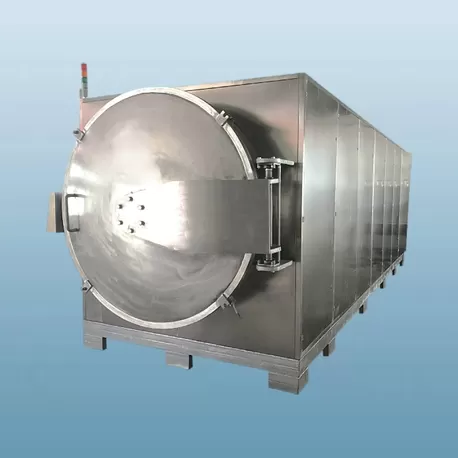
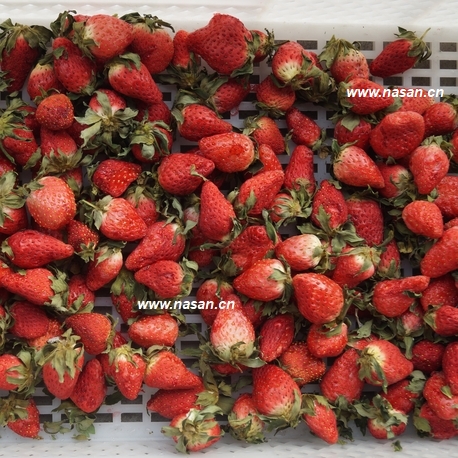
Thermodynamic Precision in Food Processing: The Engineering Behind
High-Capacity Fruit Dehydrators
In commercial food processing—from dried apple rings to mango strips and
banana chips—the fruit
dehydrator represents a critical intersection of thermodynamics,
food safety, and process economics. Unlike small-scale home units, industrial
dehydration systems must achieve consistent moisture removal across tons of
product per batch while preserving color, nutritional content, and structural
integrity. A poorly designed system results in case hardening (where the
exterior seals before interior moisture escapes), microbial growth from uneven
drying, or excessive energy consumption that erodes margins. This article
examines the engineering parameters—airflow management, heat pump integration,
control strategies, and sanitation protocols—that define high-performance fruit
drying systems, drawing on implementation data from Nasan installations across fruit processing facilities in North America, Europe, and
Southeast Asia.
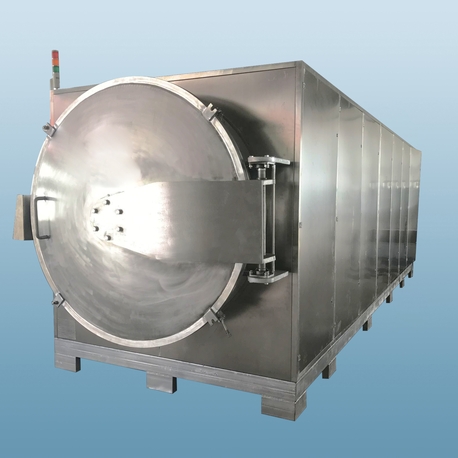
1. Heat Pump vs. Conventional Thermal Systems
The core technology selection for an industrial fruit dehydrator fundamentally determines energy
efficiency, product quality, and operating cost profiles.
1.1 Heat Pump Dehydrators (Closed-Loop Systems)
Heat pump technology recirculates drying air while extracting moisture via
refrigeration coils. Key advantages:
Energy efficiency: Coefficient of performance (COP)
typically 3.0–5.0, meaning 3–5 units of heat transferred per unit of electricity
consumed. Compared to electric resistance heating, energy savings of 50–70% are
common.
Precise temperature control: Operation in the 35–70°C
range, ideal for heat-sensitive fruits where temperatures above 65°C can degrade
vitamins and cause browning.
Humidity management: Integrated dehumidification eliminates
the need for separate exhaust systems, preventing heat loss.
1.2 Conventional Steam or Gas-Fired Systems
These systems use direct heating with forced convection. They are suited for
high-volume operations where capital cost is prioritized over energy efficiency.
Typical specifications:
Operating temperatures: 50–90°C.
Air change rates: 4–10 ACH (air changes per hour) to remove moisture-laden
air.
Energy consumption: 1.2–2.0 kWh per kg of water removed, compared to 0.3–0.6
kWh/kg for heat pump systems.
2. Airflow Dynamics and Tray Configuration
Uniform drying across all product zones requires meticulous airflow
engineering. The configuration of trays, loading density, and air distribution
directly influence moisture uniformity and drying time.
2.1 Airflow Pattern Selection
Three primary airflow patterns are employed in industrial fruit
dehydrators:
Horizontal flow: Air passes horizontally across product
trays. Suitable for rack-loaded systems with consistent product thickness.
Requires careful plenum design to prevent velocity gradients across the
width.
Vertical (upflow/downflow): Air moves vertically through
stacked trays. Downflow designs are preferred for products with light
particulate matter (e.g., diced fruit) to prevent carryover.
Reverse-flow periodic: Direction of airflow is reversed at
programmed intervals to equalize drying across tray stacks. Reduces moisture
gradients by up to 40% compared to unidirectional systems.
2.2 Air Velocity and Tray Loading
Air velocity across product surfaces typically ranges from 1.0 to 2.5 m/s.
Velocity selection balances:
Heat transfer coefficient: Higher velocity increases
evaporation rate but risks case hardening if surface moisture removal outpaces
internal moisture migration.
Product movement: For lightweight or diced products,
velocities above 1.5 m/s may cause displacement.
Tray loading density (kg/m²) is a critical design parameter. Typical loading
ranges: 5–12 kg/m² for sliced fruits; 15–25 kg/m² for diced or particulate
products. Overloading reduces airflow through the bed, creating zones of high
relative humidity that promote mold growth.
3. Moisture Extraction Curves and Process Control
Industrial fruit drying follows characteristic moisture removal curves that
dictate optimal temperature and humidity profiles. Advanced dehydrators use
multi-stage control algorithms to match drying conditions to product
behavior.
3.1 Constant-Rate vs. Falling-Rate Drying Periods
Drying typically proceeds in two phases:
Constant-rate period: Surface moisture is freely available.
High airflow and moderate temperatures (50–55°C) maximize evaporation without
overheating. This phase accounts for 30–50% of total drying time.
Falling-rate period: Internal moisture migration becomes
rate-limiting. Temperatures can be increased (60–70°C) to accelerate diffusion
without causing surface damage. Humidity should be reduced to maintain the
driving force for evaporation.
Modern fruit
dehydrator systems incorporate real-time moisture sensors
(near-infrared or impedance-based) to automatically adjust setpoints, reducing
over-drying and energy waste.
4. Sanitary Design and Food Safety Compliance
Food processing equipment must meet stringent sanitary standards to prevent
cross-contamination and facilitate cleaning. Key design features for industrial
dehydrators include:
4.1 Construction Materials and Surface Finishes
304 stainless steel: Standard for all food-contact
surfaces, resistant to acidic fruit juices (pH as low as 2.5 for citrus).
316 stainless steel: Recommended for applications involving
high-salt brines or aggressive cleaning agents.
Electropolished finishes: Ra ≤0.8 µm minimizes bacterial
adhesion and simplifies cleaning.
4.2 Clean-in-Place (CIP) Capability
Industrial dehydrators should be designed for CIP with:
Removable baffles and access panels for spray nozzle insertion.
Sloped floors and drain ports to eliminate standing water.
Sealed motors and electrical enclosures rated to IP65 or higher.
4.3 HEPA Filtration and Air Quality
For dried fruit products intended for direct consumption, incoming air should
be filtered to ISO Class 8 (Class 100,000) or better. HEPA filtration on
recirculated air reduces microbial loads and prevents recontamination.
5. Application-Specific Engineering Considerations
5.1 High-Sugar Fruits (Mango, Banana, Date)
Fruits with high sugar content (Brix >20) are prone to stickiness and
caramelization. Drying strategies include:
Lower maximum temperatures (55–60°C) to prevent sugar degradation.
Pre-treatment with citric acid or ascorbic acid dips to inhibit
browning.
Use of non-stick tray coatings (PTFE or silicone) or perforated belts to
reduce adhesion.
5.2 High-Acid Fruits (Apple, Pineapple, Citrus)
Acidic products require corrosion-resistant materials and may benefit
from:
5.3 Powders and Purees (Fruit Leathers, Powders)
Drying of purees or juices to powder form demands specialized
configurations:
Continuous belt or drum dryers with uniform spreading mechanisms.
Fine particle recovery systems (cyclones or bag filters) to capture product
fines.
Low-temperature operation (≤50°C) to preserve volatile aroma
compounds.

6. Energy Recovery and Lifecycle Cost Analysis
Industrial drying is energy-intensive, with energy costs often representing
30–50% of total operating expenses. Advanced dehydrators incorporate energy
recovery features:
Heat recovery wheels: Transfer sensible and latent heat
from exhaust to incoming air, recovering 50–80% of otherwise wasted energy.
Multi-stage heat pump systems: Cascade configurations
increase COP to 5.5–6.5 in ambient temperatures above 20°C.
Exhaust heat reclaim: Pre-heating wash water or facility
space using waste heat from condenser units.
A lifecycle cost analysis (LCCA) comparing heat pump vs. conventional systems
for a 10-ton/day apple drying facility shows:
Heat pump dehydrator: Initial cost +25%, annual energy cost -60%, payback
period 2.2 years.
Conventional gas-fired: Lower initial cost, but 5-year total cost of
ownership 35% higher due to energy and maintenance expenses.
Nasan provides detailed LCCA for all major installations,
ensuring clients select systems aligned with their production volumes and energy
pricing structures.
7. Validation and Quality Assurance Protocols
For commercial fruit drying operations, validated processes are essential for
food safety and consistent quality. Key validation elements include:
7.1 Temperature Uniformity Mapping
Multi-point thermocouple arrays (minimum 12 points for production-scale
chambers) map temperature distribution during steady-state operation. Acceptance
criteria: ±2°C for premium product lines; ±4°C for general industrial
applications.
7.2 Moisture Analysis
Final product moisture content is verified using:
7.3 Microbial Testing
Process validation includes testing for:
Total plate count (TPC) ≤10⁴ CFU/g.
Yeast and mold ≤10² CFU/g.
Absence of Salmonella and E. coli O157:H7 per FDA BAM guidelines.
Frequently Asked Questions (FAQ)
Q1: What is the typical drying time for different fruits in an industrial
dehydrator?
A1: Drying times vary significantly based on fruit type,
slice thickness, and system configuration. Examples: apple slices (6 mm) at
60°C: 6–10 hours; mango strips (10 mm) at 55°C: 12–18 hours; banana chips (4 mm)
at 65°C: 4–6 hours. Heat pump systems may extend drying times by 10–20% compared
to conventional ovens but deliver superior energy efficiency and product
quality. Always conduct trials with actual product to establish baseline
parameters for your specific fruit
dehydrator.
Q2: How do I prevent case hardening in dried fruit?
A2: Case hardening occurs when surface drying outpaces
internal moisture migration. Prevention strategies: (1) use lower temperatures
(50–55°C) during the initial drying phase; (2) maintain relative humidity at
30–40% during the constant-rate period, then gradually decrease; (3) incorporate
humidity control or steam injection to keep surface pliable; (4) use multi-stage
drying profiles with programmed ramp/soak sequences. Modern dehydrators with
humidity sensors and automated control cycles reduce case hardening incidents by
over 70% compared to fixed-temperature systems.
Q3: What sanitation procedures are required for industrial fruit
dehydrators?
A3: A validated sanitation program should include: (1) daily
dry cleaning—vacuum removal of product residues; (2) weekly wet cleaning using
approved food-grade detergents and sanitizers (e.g., peracetic acid or chlorine
dioxide at 100–200 ppm); (3) monthly deep cleaning with disassembly of removable
components; (4) quarterly validation via ATP bioluminescence testing (≤30 RLU
per 100 cm²) and swab cultures for pathogen monitoring. Equipment designed with
CIP capabilities reduces cleaning time by 50–70% compared to manual
cleaning.
Q4: How does altitude affect fruit dehydrator performance?
A4: Altitude reduces atmospheric pressure, lowering the
boiling point of water and increasing drying rates. At 2,000 meters elevation,
drying time may decrease by 15–20% compared to sea level. However, heat pump
systems may experience reduced COP at higher altitudes due to lower refrigerant
density. System selection should account for site elevation; consult with
manufacturers like Nasan to ensure proper sizing and control
adjustments for high-altitude installations.
Q5: What is the expected lifespan of an industrial fruit dehydrator?
A5: With proper maintenance, well-constructed stainless
steel dehydrators have a service life of 15–25 years. Key factors: (1) corrosion
resistance of materials (316L for acidic environments), (2) quality of bearings
and motors (replace every 8–12 years), (3) control system upgrades (typically
every 10 years for software compatibility), (4) regular cleaning and inspection
of heat exchangers and filters. Nasan provides preventive
maintenance programs that extend equipment life and minimize unplanned
downtime.
Selecting an industrial fruit
dehydrator requires a balance of thermodynamic performance, food
safety compliance, and operational economics. From heat pump efficiency to
sanitary design and process validation, each engineering element directly
impacts product quality and profitability. Nasan combines decades of drying
system expertise with application-specific engineering to deliver solutions that
meet the rigorous demands of modern fruit processing facilities worldwide.