

7 Key Advantages of Industrial Food Drying Machines for Large‑Scale Food Producers
...
View Details
2026-07-11

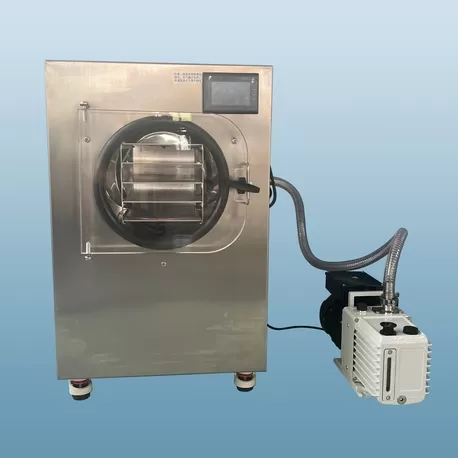
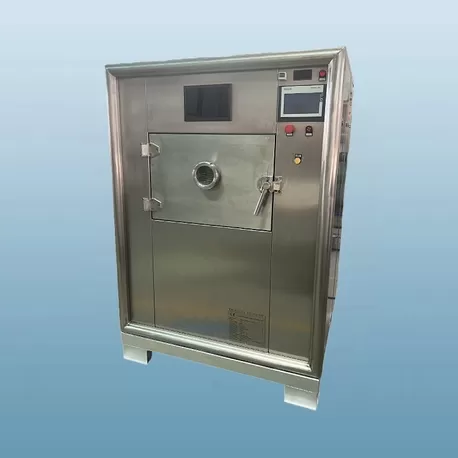
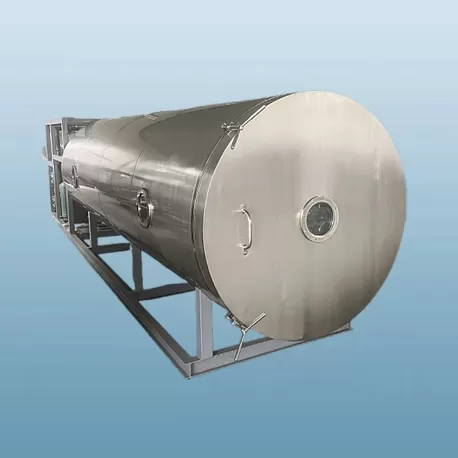
Moisture control sits at the center of nearly every shelf-stable food product. Whether the output is fruit flakes, instant coffee, infant formula, spice blends, or protein powders, final quality depends on how efficiently water is removed and how tightly the heat and mass transfer processes are controlled along the way. A modern food dry system is not a single machine but an integrated assembly of air handling units, heat exchangers, conveying mechanisms, and control loops that must work in concert. For B2B buyers, understanding the physics behind these systems is the foundation for making a sound capital investment.
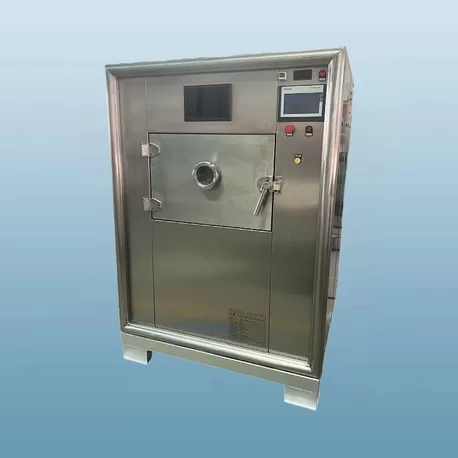
Water in food exists in free, adsorbed, and bound states, and each responds differently to thermal driving forces. Free water evaporates relatively easily from the surface, while bound water requires higher energy input and longer residence time to migrate from the interior to the evaporation front. The rate at which this migration occurs determines the drying curve, which typically shows a constant-rate phase followed by one or more falling-rate phases. Engineers who ignore the shape of that curve often end up with equipment that either over-dries the surface or leaves the core above the target moisture specification.
Total moisture content is a useful metric, but water activity (aw) is the parameter that actually governs microbial growth, enzymatic reactions, and chemical degradation. Most bacteria stop proliferating below aw 0.90, while molds and yeasts are inhibited around 0.70 to 0.80. Formulating a food dry process around a target water activity rather than a simple percentage gives formulators and process engineers a shared language for specification.
Case hardening, shrinkage, and pore collapse all emerge from an imbalance between surface evaporation and internal diffusion. A slow, staged drying profile preserves the porous structure that gives dried fruit its rehydration ratio and keeps instant powders free-flowing. Rapid, high-temperature drying may boost throughput on paper, yet it can degrade heat-sensitive vitamins and alter color through Maillard reactions. The optimal profile is always a compromise between throughput, energy input, and sensory retention.
Equipment selection begins with the physical form of the feedstock, the required output moisture, and the sensitivity of the material to heat and oxygen. Each category below occupies a distinct position in the cost-versus-performance spectrum.
Belt dryers handle sticky or fragile materials by transporting them on perforated stainless belts through zoned air chambers.
Tunnel dryers suit high-volume, low-variety production where residence time can be fixed across shifts.
Fluidized bed dryers deliver excellent heat transfer for granular and powdered products, with short residence times and uniform moisture distribution.
Air distribution is the single most influential design variable in convective systems. Uneven plenum pressure produces channeling, which leaves wet pockets that fail downstream quality checks. Computational fluid dynamics modeling is now standard practice for validating distributor plate geometry before fabrication begins.
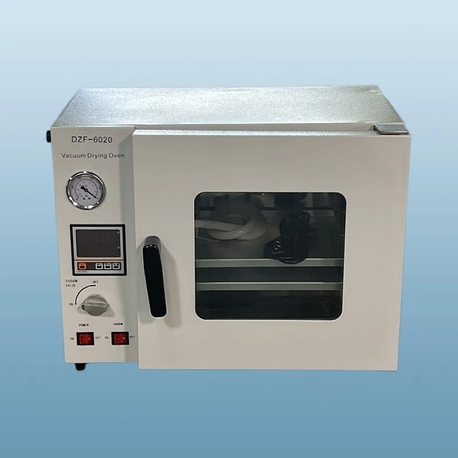
Vacuum tray and vacuum belt dryers operate at reduced pressure, which lowers the boiling point of water and allows gentle processing of heat-sensitive pastes, extracts, and purees. Because oxygen is largely excluded, oxidation-driven color and flavor loss is minimized. These systems carry higher capital cost and require robust vacuum pump maintenance programs, yet they remain the reference technology for high-value botanical extracts and premium fruit concentrates.
Freeze drying removes water through sublimation, preserving cellular structure almost intact. The result is a product with superior aroma retention and near-instant rehydration, which justifies the elevated operating cost for coffee, berries, and ready-to-eat meals. Spray drying converts liquid feeds into powder in seconds, making it the dominant route for dairy, maltodextrin, and flavor encapsulation. Nozzle design, inlet air temperature, and chamber residence time together determine particle size distribution and bulk density.
Production managers consistently report a recurring set of difficulties that trace back to system design rather than operator error.
Energy consumption per kilogram of water evaporated remains the largest operating cost, and many legacy lines operate well above 1.2 kg of steam per kg of water removed.
Product changeover requires extensive cleaning, and inadequate access points extend downtime beyond planned windows.
Moisture variation across the belt width creates rejected batches and inconsistent packaging weights.
Dust generation in powder handling raises explosion protection requirements and complicates filtration.
Heat-sensitive ingredients lose potency when inlet air temperature is pushed to increase throughput.
Addressing these issues requires a design philosophy that treats the dryer as part of a larger process train rather than an isolated unit.
Heat recovery through exhaust air recirculation can cut thermal energy demand substantially when combined with humidity-controlled partial recirculation. Multi-stage drying, where the first stage removes bulk surface water at higher temperature and the second stage finishes the product under gentle conditions, balances throughput against quality. Zoned temperature and airflow control, delivered through independent plenum sections and variable-frequency drives on fans, allows the drying curve to be matched to the material's falling-rate behavior.
Hygienic design directly affects both cleanability and inspection outcomes. Fully welded 316L stainless steel contact surfaces, sloped drainage, and tool-free access panels reduce cleaning time between product runs. For dryers handling allergenic or high-care ingredients, dedicated zones and validated clean-in-place routines support compliance with HACCP and GMP expectations in export markets.
Instrumentation choices matter as much as mechanical design. Inline near-infrared moisture sensors enable closed-loop control, allowing the system to adjust conveyor speed or air temperature in real time. When paired with recipe management software, this creates traceability from raw material intake through to packaging, which buyers in regulated markets increasingly require.
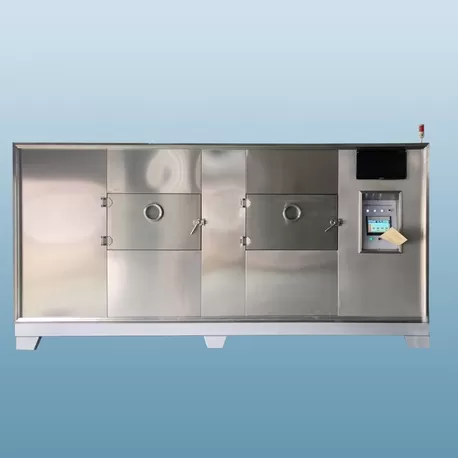
Specification should begin with a material characterization study covering initial moisture, particle size distribution, thermal sensitivity, and stickiness curve. Pilot-scale trials then establish the drying curve and confirm achievable throughput before full-scale design is committed. A supplier that offers in-house testing capability reduces the technical uncertainty that surrounds any new product introduction.
Total cost of ownership analysis should weigh energy consumption, maintenance intervals, spare parts availability, and expected service life against the initial quotation. A lower-priced food dry unit that consumes 30 percent more energy per ton will erase its capital advantage within two to three years of continuous operation. Nasan approaches each project with this lifecycle perspective, beginning with material trials and extending through commissioning and operator training.
Belt dryers move material on a perforated conveyor and work well for sticky, fibrous, or fragile products that cannot be suspended in an air stream. Fluidized bed dryers suspend granular particles in heated air, delivering faster heat transfer and more uniform moisture, but they require a narrow and consistent particle size range to function properly.
Lowering the drying temperature, shortening residence time, and reducing oxygen exposure are the three primary levers. Vacuum and freeze drying offer the highest retention for vitamins and volatile aromatics. For convective systems, multi-stage profiles that remove bulk water quickly and finish gently often achieve a practical balance between retention and throughput.
The dominant factors are the latent heat required to evaporate water, the efficiency of the air heating system, exhaust air losses, and the moisture content of the incoming material. Pre-dewatering through mechanical pressing or filtration before thermal drying reduces the load on the dryer and lowers specific energy consumption considerably.
Inlet air temperature and humidity, airflow distribution across the drying zone, conveyor speed or residence time, and bed depth all interact. Closed-loop control using inline moisture measurement is the most reliable way to hold final moisture within a narrow band despite variations in raw material.
Capacity follows from the required finished output, the initial and final moisture content, and the achievable evaporation rate for that specific product. Pilot trials establish the evaporation rate per unit area or volume, and the production unit is then sized with a reasonable margin to accommodate seasonal variation in raw material.
Continuous systems make sense when the product mix is stable and volumes are high enough to justify dedicated equipment. Batch systems offer greater flexibility for multiple recipes, small lots, and products requiring long or variable residence times, and they are often preferred in specialty and contract manufacturing environments.
Project teams evaluating a new line or upgrading an existing one benefit from early technical dialogue with an equipment specialist who can review material data, propose a suitable configuration, and outline the testing path. Nasan supports manufacturers at every stage, from laboratory-scale trials through full production commissioning. Sharing your product specifications and capacity targets with the engineering team is the most efficient way to receive a tailored proposal and a clear picture of expected performance.