Industrial drying operations face persistent trade-offs between throughput,
product quality, and energy consumption. vacuum microwave drying addresses these constraints by
combining reduced-pressure environments with volumetric heating. This article
examines the physical mechanisms, equipment configurations, and application
parameters that define effective vacuum microwave drying systems, providing a
framework for process engineers evaluating this technology.

The process operates on two simultaneous principles: microwave energy
penetrates the material bulk, converting to heat through dielectric loss, while
vacuum conditions lower the boiling point of moisture, enabling evaporation at
reduced temperatures. This synergy allows drying of heat-sensitive compounds
that would degrade under conventional hot-air or steam methods.
Dielectric Heating and Moisture Migration
Microwave frequencies—typically 915 MHz or 2450 MHz—couple with polar
molecules, primarily water, causing rapid molecular rotation. The heating
pattern is volumetric, not surface-conducted. This means thermal energy
generates throughout the material cross-section, driving moisture from interior
regions toward the surface. The vapor pressure gradient complements the
temperature gradient, accelerating mass transfer.
Vacuum application modifies the thermodynamic path. At absolute pressures
between 10 and 100 mbar, water evaporates at 20–40°C instead of 100°C. This
low-temperature regime preserves thermolabile constituents, including enzymes,
vitamins, and aromatic compounds. The combination produces dried products with
retained structural integrity and rehydration characteristics superior to those
from convective or freeze-drying methods.
Energy Transfer Efficiency
Conventional drying loses significant energy to heating the drying medium
(air or steam) and to sensible heat of the substrate. Microwave energy converts
directly to internal heat, with conversion efficiencies above 70% for most
moisture-containing materials. The vacuum enclosure reduces convective heat
losses and eliminates the need for high-volume air handling. These factors
contribute to shorter processing times—often 50–70% less than equivalent
convective drying cycles.
Equipment Architecture for Vacuum Microwave Systems
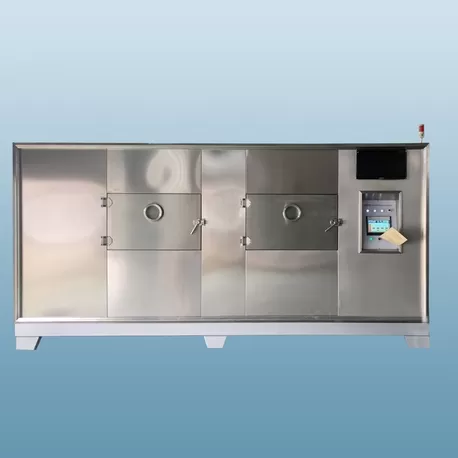
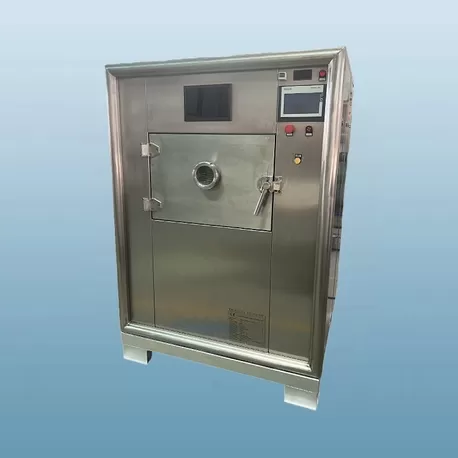
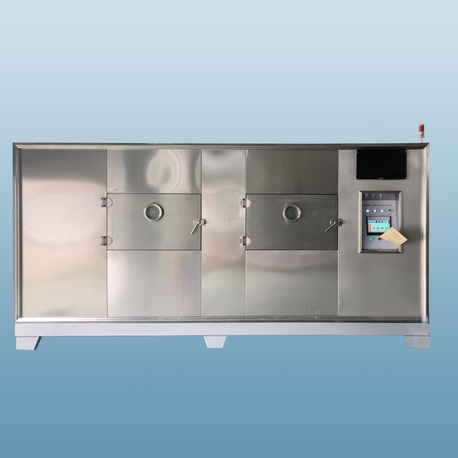
Industrial vacuum microwave drying installations comprise several
integrated subsystems. Each component influences the overall performance,
reliability, and product consistency.
Vacuum Chamber and Microwave Generation
The drying vessel must withstand external atmospheric pressure while
containing microwave radiation. Chambers are constructed from stainless steel or
aluminum, with internal dimensions matching the required batch size or
continuous throughput. Microwave generators—magnetrons or solid-state
sources—deliver power through waveguides or coaxial applicators. Power
distribution across the chamber requires careful design to avoid hot spots,
which cause localized overheating and product degradation. Mode stirrers or
rotating turntables help homogenize the electromagnetic field.
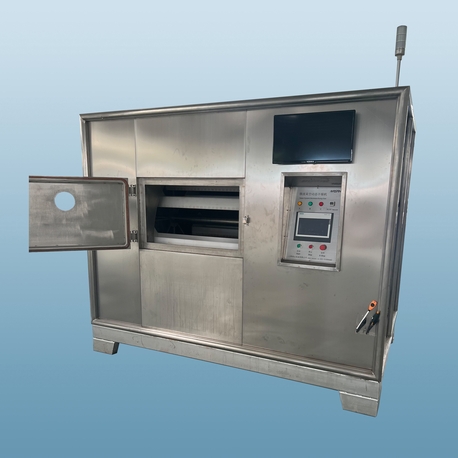
For batch systems, the chamber includes loading doors and vacuum seals that
maintain integrity through repeated cycles. Continuous systems employ vacuum
locks or rotary valves that allow product entry and exit without breaking
vacuum. The choice between batch and continuous configurations depends on
production capacity and product handling characteristics.
Vacuum Pumping and Condensation
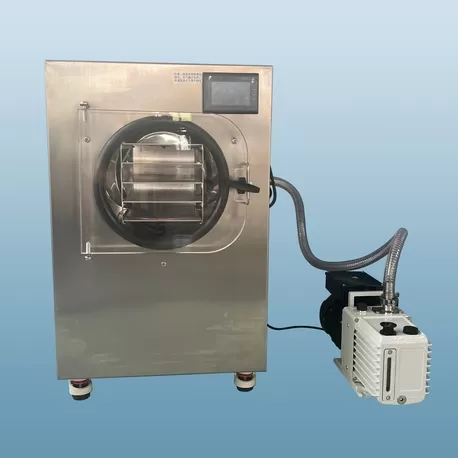
Vacuum pumps maintain the required pressure level. Rotary vane pumps, dry
screw pumps, or roots blowers operate in sequence to achieve the target vacuum.
The extracted vapor contains water and volatile compounds. A condenser—often a
shell-and-tube or plate-type heat exchanger—cools the vapor stream, recovering
latent heat and reducing the load on the vacuum pump. Condensate collection
provides a measure of moisture removal rate, useful for process monitoring.
Pressure control systems regulate vacuum level through variable-speed drives
or bypass valves. Precise pressure management affects both drying rate and
product temperature, as lower pressures shift the evaporation curve. Operators
adjust pressure setpoints based on product moisture content and thermal
sensitivity.
Control and Monitoring Systems
Process control integrates multiple sensors: thermocouples or infrared
pyrometers measure product temperature; capacitance or microwave-based sensors
track residual moisture; pressure transducers monitor vacuum integrity.
Programmable logic controllers (PLCs) execute drying recipes that sequence power
application, vacuum ramps, and cooling phases. Data logging enables traceability
and process optimization. Modern systems include remote access for diagnostics
and recipe management.
Application Domains and Material Considerations
Vacuum microwave drying finds application across sectors where product
quality commands priority. The following categories illustrate typical use
cases.
Pharmaceutical intermediates and APIs: Active pharmaceutical
ingredients often exhibit thermal instability. Vacuum microwave drying reduces
exposure to elevated temperatures, preserving crystalline structure and
polymorphic form. The closed system prevents contamination and allows solvent
recovery.
Food ingredients and nutraceuticals: Fruit powders, vegetable
extracts, and probiotic cultures retain color, flavor, and biological activity.
The rapid drying minimizes oxidative degradation, and the absence of
high-temperature air flow prevents surface hardening.
Chemical catalysts and fine chemicals: Porous materials such as
zeolites, activated carbon, and supported catalysts benefit from uniform
moisture removal without pore collapse. The drying profile can be tailored to
avoid cracking or shrinkage.
Wood and agricultural products: Timber drying with vacuum microwave
reduces checking and warping compared to kiln drying. Grain and seed drying
maintains germination rates by avoiding thermal stress.
Process Design Parameters
Effective application of vacuum microwave drying requires systematic
determination of key variables. These parameters are interdependent and must be
optimized for each product.
Microwave power density: Expressed as watts per kilogram of wet
material. Typical ranges are 1–5 W/g, with higher densities reducing cycle time
but increasing the risk of thermal runaway. Power density selection considers
the dielectric loss factor of the material, which varies with moisture content
and temperature.
Vacuum level profile: Stepwise pressure reduction prevents
boiling-induced foaming or splattering. Initial drying at higher pressure (50–80
mbar) removes surface moisture, then lower pressure (10–20 mbar) drives internal
diffusion. Pressure ramping rates are adjusted based on vapor generation
rate.
Product loading and layer thickness: Microwave penetration depth
limits the effective bed thickness. For most organic materials, penetration
depth at 2450 MHz is 2–5 cm. Loading beyond this depth results in uneven
heating, with the core remaining wet while the surface overheats. Tray designs
or continuous belts accommodate layer thickness control.
Endpoint detection: Drying completion is indicated by plateauing of
the product temperature or by stabilized vacuum pressure (indicating no further
vapor generation). Dielectric properties change with moisture content, so some
systems use microwave transmission or reflection measurements for real-time
moisture estimation.
Each parameter interacts with material properties—density, thermal
conductivity, dielectric constant, and specific heat—requiring pilot-scale
trials for new products. Equipment suppliers typically offer test facilities
where process conditions are validated before full-scale equipment
fabrication.
Operational Considerations and Maintenance
Sustained performance of vacuum microwave dryers depends on attentive
operation and scheduled upkeep. Key areas include:
Microwave leakage monitoring: Regulatory limits for microwave
radiation (5 mW/cm² at 5 cm from the surface) require periodic checks of door
seals, waveguide joints, and viewing windows. Leakage detectors verify
compliance during operation.
Vacuum seal integrity: Door gaskets and shaft seals degrade with
temperature cycles. Visual inspection and leak-down tests (rate of pressure rise
after pump isolation) indicate seal condition. Replacement schedules based on
cycle count prevent unplanned downtime.
Condenser performance: Cooling water temperature and flow rate affect
condensation efficiency. Fouling of heat exchanger surfaces reduces heat
transfer; cleaning intervals depend on the nature of volatiles and particulate
carryover.
Generator maintenance: Magnetron life is influenced by operating hours
and cooling adequacy. Cooling air filters and water jackets require regular
cleaning. Solid-state generators offer longer maintenance intervals but higher
initial cost.
HANNA, through its drying equipment division, provides comprehensive service
packages that include annual performance audits and spare parts kits tailored to
each installation. Nasan dryers incorporate predictive maintenance alerts within
their control software, notifying operators of pending service actions based on
runtime and cycle counts.
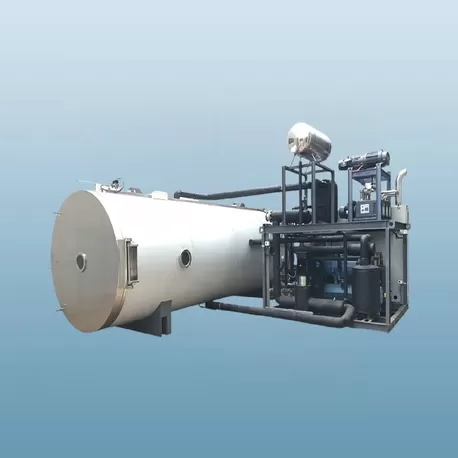
Scale-Up and Integration with Production Lines
Transitioning from pilot to production scale involves engineering choices
that affect footprint, utilities, and workflow. Batch dryers suit low- to
medium-capacity operations with frequent product changes. Continuous
dryers—using belt or screw conveyors—handle higher throughput and integrate with
upstream and downstream equipment.
Utility requirements include three-phase electrical supply for microwave
generators, cooling water for condensers and magnetrons, and compressed air for
control valves. Steam or hot water may be needed for auxiliary heating of the
chamber walls to prevent condensation. The total installed power ranges from 20
kW for small batch units to over 500 kW for large continuous lines.
Integration with material handling systems—such as vacuum loading of wet
product and pneumatic conveying of dried powder—requires attention to dust
containment and explosion protection, particularly for organic materials. Nasan
provides interface engineering for integration with existing conveying, milling,
and packaging lines, ensuring smooth material flow without
cross-contamination.
Frequently Asked Questions
Q1: What materials are unsuitable for vacuum microwave drying?
A1: Materials with very low dielectric loss factors, such as pure metals or highly
non-polar polymers, absorb minimal microwave energy and do not heat effectively.
Additives or moisture content above 5% generally provide sufficient coupling.
Materials that outgas excessive volatiles under vacuum—especially corrosive or
flammable solvents—require specialized containment and inerting systems.
Q2: How does vacuum microwave drying compare to freeze drying?
A2: Freeze drying (lyophilization) operates at sub-zero temperatures and relies on
sublimation, which is slower and more energy-intensive. Vacuum microwave drying
maintains higher product temperatures (typically 20–60°C) and shorter cycles.
Product structure differs: freeze-dried materials are often more porous, while
microwave-dried materials show denser structure but retain comparable
rehydration ratios for most food and pharmaceutical applications.
Q3: Can vacuum microwave drying achieve continuous operation?
A3: Yes, continuous designs use vacuum locks or rotary feeders to introduce and
discharge material while maintaining chamber pressure. Belt-type continuous
dryers spread material in a thin layer, passing through multiple microwave
application zones. These systems suit high-capacity production of uniform
materials, such as snack foods or catalyst beads.
Q4: What safety measures are required for vacuum microwave drying equipment?
A4: Primary
safety features include microwave leakage interlocks that shut down generators
if chamber doors are opened, pressure relief vents to prevent implosion, and
thermal sensors to prevent runaway heating. For flammable solvents, inert gas
purging and explosion-proof electrical components are mandatory. Compliance with
regional standards (e.g., CE, UL, or GB) is verified during installation.
Q5: How is drying uniformity assured in large chambers?
A5: Uniformity is achieved through multiple microwave feeds, mode stirrers that
rotate the field pattern, and moving product beds (turrets or vibrating
conveyors). Finite element modeling during design phase optimizes applicator
geometry. Post-installation, heat map tests using temperature-sensitive markers
confirm field distribution.
Q6: What is the typical moisture reduction capacity per cycle?
A6: Capacity depends on power input and material properties. A 50 kW batch unit can
remove 40–60 kg of water per hour under typical conditions. Continuous systems
scale linearly with belt width and speed. Specific rates are established during
pilot testing, as material characteristics influence evaporation efficiency.
For detailed process evaluation, equipment sizing, or pilot testing
arrangements, direct inquiries to the engineering group at Nasan. The company's
application laboratory offers material testing services to determine optimal
drying curves and to validate product quality metrics before capital
commitment.