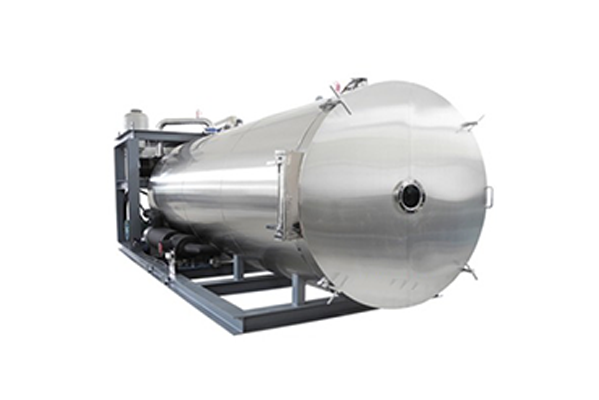


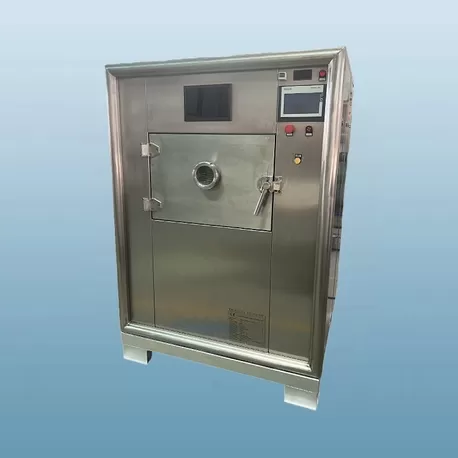
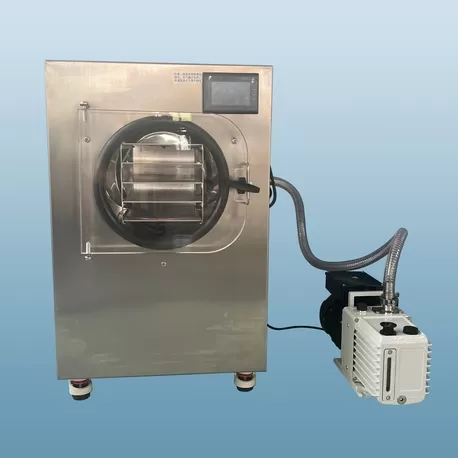
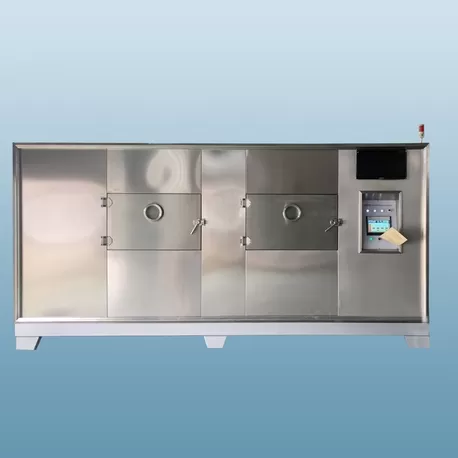
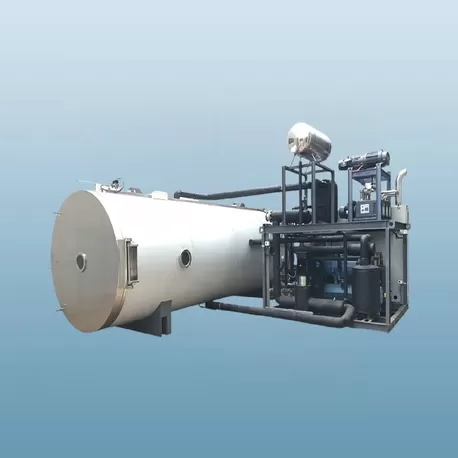
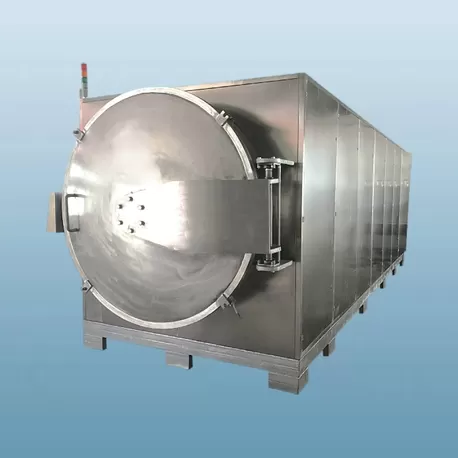
In the pharmaceutical and biotechnology industries, freeze drying equipment represents the cornerstone of stability for thermolabile products. Lyophilization—the process of removing water via sublimation under vacuum—preserves the structural integrity of proteins, peptides, and biological therapeutics that would degrade in liquid form. With over 25 years of experience designing and validating industrial drying systems for global biopharmaceutical manufacturers, I have observed that improperly specified lyophilizers contribute to batch failures, long cycle times (increasing cost of goods by 30–50%), and regulatory compliance risks. This technical guide dissects the engineering principles that define high-performance freeze drying equipment—from refrigeration architecture and vacuum system design to process analytical technology (PAT) integration and cGMP validation.
1. Lyophilization Fundamentals: Sublimation Kinetics and Thermal Processing
Lyophilization occurs in three distinct phases, each requiring precise control of temperature and pressure:
Freezing phase: The product is cooled below its eutectic or glass transition temperature (Tg') to solidify the solvent. Controlled nucleation techniques (ice fog seeding, ultrasound) reduce ice crystal size variability, resulting in uniform drying and shorter primary drying times by 15–25%.
Primary drying (sublimation): Chamber pressure is reduced below the vapor pressure of ice, and shelf temperature is raised to drive sublimation. The product temperature must remain below the collapse temperature to maintain structural integrity. Heat transfer is governed by the equation: q = k × (T_shelf - T_product) / d, where k is the thermal conductivity of the frozen layer.
Secondary drying (desorption): Unfrozen water bound to the product matrix is removed by raising shelf temperature (typically 30–50°C) while maintaining low chamber pressure. Residual moisture levels of 0.5–2% are achieved, ensuring long-term stability.
Advanced freeze drying equipment integrates manometric temperature measurement (MTM) and tunable diode laser absorption spectroscopy (TDLAS) to monitor primary drying endpoints in real-time, eliminating conservative cycle overestimation and reducing cycle time by 20–35%.
2. Refrigeration Systems: Cascade vs. Compression vs. LN₂
The refrigeration system determines the lowest achievable shelf temperature and cooling ramp rate—critical for products with low Tg' values (e.g., monoclonal antibodies with Tg' -40°C). Three dominant architectures exist:
Cascade refrigeration: Two independent refrigerant circuits (e.g., R-404A + R-23) provide shelf temperatures down to -55°C to -60°C. Reliable and energy-efficient for most pharmaceutical applications. Typical cooling rate: 1–2°C/min.
Compression with brine circulation: Single refrigerant loop with secondary coolant (silicone oil) circulating through shelves. Achieves -45°C to -50°C. Lower initial cost but limited to moderate freezing requirements.
Liquid nitrogen (LN₂) systems: Direct injection or circulating LN₂ enables shelf temperatures down to -80°C, with cooling rates exceeding 5°C/min. Essential for ultra-low Tg' formulations and high-throughput production. Operating costs are 2–3× higher than cascade systems, but reduced cycle times often justify the premium.
Leading manufacturers like Nasan offer hybrid systems that combine cascade refrigeration with LN₂ boost capability, providing operational flexibility for multi-product facilities.
3. Vacuum System Design: Pump Architecture and Control Precision
Vacuum integrity and control accuracy are paramount for consistent sublimation. Industrial freeze drying equipment typically employs:
Rotary vane pumps: For rough evacuation to 10⁻³ mbar. Oil-sealed designs require inert gas ballasting to prevent water vapor condensation in pump oil.
Dry screw pumps: Oil-free operation eliminates risk of back-streaming contamination—increasingly specified for GMP facilities. Higher initial cost but reduced maintenance and validation burden.
Roots blowers: Boost pumping speed in the 0.1–10 mbar range, reducing evacuation time by 40–60% and minimizing product exposure to vacuum-induced stress.
Capacitance manometers: Provide pressure-independent measurement (0.001–100 mbar) with ±0.25% accuracy, essential for consistent primary drying control.
Leak rate specifications for GMP equipment must be <5 × 10⁻³ mbar·L/sec (per FDA guidance). Automated leak testing routines integrated into the control system validate chamber integrity before each cycle.
4. Shelf Temperature Uniformity and Heat Transfer Engineering
Temperature variation across shelves directly impacts product quality. Premium freeze drying equipment achieves shelf uniformity of ±0.5°C across the entire shelf area (vs. ±2°C for basic units). Critical design elements:
Fluid circulation path: Dual-channel shelf design with counter-flow routing eliminates thermal gradients. Computational fluid dynamics (CFD) optimized manifolds ensure flow velocity >1.5 m/s for efficient heat transfer.
Contact pressure: Shelves must provide uniform contact with vial bottoms. Hydraulic shelf lifting systems apply controlled pressure (typically 0.5–1.0 N/cm²) to compensate for vial height variations.
Thermal mapping: Validation protocols require temperature mapping with ≥30 sensors per shelf during worst-case loading conditions. Acceptance criteria: maximum variation ≤2°C across all shelves during freezing and secondary drying.
Data from a recent installation by Nasan demonstrated shelf uniformity of ±0.4°C across 20 shelves in a 40 m² production-scale lyophilizer, enabling batch size expansion without requalification.
5. Process Analytical Technology (PAT) Integration
Regulatory expectations (FDA PAT Guidance, ICH Q8–Q11) increasingly require real-time monitoring of critical process parameters. Advanced lyophilizers incorporate:
TDLAS (Tunable Diode Laser Absorption Spectroscopy): Measures water vapor concentration in the chamber effluent, enabling mass flow determination and primary drying endpoint detection with ±5% accuracy.
MTM (Manometric Temperature Measurement): Calculates product temperature and resistance during primary drying without invasive probes. Validated for 96-well plates and standard vials.
NIR (Near-Infrared) spectroscopy: In-line residual moisture measurement during secondary drying, reducing off-line QC testing by 50–70%.
RFID vial tracking: Integrates product identity and batch genealogy directly into the batch record, eliminating manual transcription errors.
PAT-enabled lyophilizers reduce cycle development time by 30–40% and enable real-time release testing for critical quality attributes (CQAs).
6. cGMP Compliance and Cleanability
Pharmaceutical freeze drying equipment must meet stringent design-for-cleaning standards:
Clean-in-Place (CIP) systems: Automated spray balls and nozzles provide 360° coverage with validated impingement pressure (>20 psi). Sanitary welds (Ra <0.8 µm) and sloped surfaces prevent fluid pooling.
Sterilization-in-Place (SIP) capabilities: Saturated steam at 121°C for 30–60 minutes achieves sterility assurance level (SAL) of 10⁻⁶. Steam penetration studies using thermocouples validate cold spot elimination.
Material of construction: 316L stainless steel with electropolished surfaces (Ra <0.4 µm) for product-contact areas. Non-product contact areas specified as 304L with passivated finish.
Containment systems: Barrier isolator integration (RABS or closed isolators) for potent compounds (OEL <1 µg/m³). Blow-through doors and glove ports enable aseptic loading/unloading.
Validation packages typically include IQ/OQ/PQ documentation with 200+ test points, ensuring regulatory acceptance by FDA, EMA, and PMDA.
7. Scale-Up Considerations: Laboratory to Production
Scale-up failures account for 40% of technology transfer delays. Key engineering principles for successful scale-up:
Geometric similarity: Shelf spacing, vial geometry, and loading pattern must be maintained across scales. Scale-down models (e.g., 50% fill volume) may not represent full-scale heat transfer.
Heat transfer coefficient (Kv) characterization: Kv values measured in laboratory-scale units rarely correlate directly to production. Empirical modeling using design of experiments (DoE) is recommended.
Edge vial effect: Vials on shelf edges experience 20–30% higher heat transfer due to radiation from chamber walls. Production-scale units incorporate radiation shields to minimize variability.
Technology transfer success rates exceed 95% when both laboratory and production freeze drying equipment share identical control logic and sensor architectures—a key design principle offered by Nasan through its scalable platform approach.
8. Energy Efficiency and Sustainability
Pharmaceutical lyophilization consumes 5–10 kWh per kg of water removed. Optimization strategies include:
Heat recovery systems: Recapture condenser heat (typically 50–70°C) to preheat CIP water, reducing steam consumption by 15–25%.
VFD-controlled vacuum pumps: Adjust pumping speed to match process requirements, reducing energy use by 30–40% during secondary drying and idle periods.
In-situ cleaning optimization: Reduced CIP cycle times through validated low-volume protocols cut water and chemical consumption by 40%.
A 2024 industry survey indicated that energy-optimized lyophilizers deliver 18–24 month payback periods, with annual savings of $25,000–$60,000 per production-scale unit.

9. Emerging Technologies: Continuous Lyophilization and Advanced Nucleation
Next-generation freeze drying equipment incorporates breakthrough technologies:
Controlled nucleation: Ice fog seeding or ultrasonic cavitation induces uniform ice crystal formation at defined supercooling points, reducing primary drying time by 25–40% and improving product uniformity.
Continuous lyophilization: Multi-stage conveyor systems with modular drying zones enable continuous processing, reducing footprint by 50% compared to batch systems. Regulatory guidance for continuous manufacturing (ICH Q13) now supports this paradigm shift.
Microwave-assisted drying: Dielectric heating reduces primary drying time by 50–70% for high-solids formulations. Industrial-scale systems are emerging for select applications.
Early adopters report 30–50% reduction in cost of goods for high-volume products using these advanced technologies.
10. Total Cost of Ownership: Purchase Price vs. Operating Economics
While initial capital for a production-scale lyophilizer ranges from $500,000 for 5 m² units to $4 million+ for 50 m² units, TCO analysis reveals:
Energy costs: $30,000–$100,000 annually depending on scale and efficiency.
Maintenance: 3–5% of initial investment per year for routine service (refrigeration recharging, pump overhauls, sensor calibration).
Validation lifecycle: $50,000–$150,000 for initial qualification plus annual revalidation.
Cycle optimization: Advanced PAT-enabled units reduce cycle time by 20–35%, translating to 15–25% higher annual throughput without additional capital investment.
Premium lyophilizers with integrated PAT and energy recovery typically demonstrate 2–3 year incremental payback versus basic configurations, with superior long-term reliability.
Frequently Asked Questions (FAQ)
Q1: What is the difference between laboratory, pilot, and production-scale freeze drying equipment?
A1: Laboratory units (0.5–2 m² shelf area) are designed for formulation development and cycle optimization, typically with removable shelves for R&D flexibility. Pilot units (3–10 m²) simulate production conditions for scale-up studies, incorporating production-grade control systems. Production units (10–50+ m²) are built for cGMP manufacturing with full CIP/SIP automation, redundant utility systems, and batch tracking capabilities. Control logic and sensor architectures should be identical across scales to facilitate technology transfer.
Q2: How do I select the correct refrigeration system for my product?
A2: Selection is driven by the product's glass transition temperature (Tg') and collapse temperature. For products with Tg' above -30°C (many small molecules and stable biologics), cascade refrigeration to -55°C is sufficient. For products with Tg' between -30°C and -50°C (certain monoclonal antibodies, liposomes), LN₂-assisted or two-stage cascade systems are required. For ultra-low Tg' products below -50°C (some peptides, viral vectors), full LN₂ systems with shelf temperatures to -80°C are mandatory. Conduct differential scanning calorimetry (DSC) early in formulation development to define requirements.
Q3: What are the critical validation requirements for pharmaceutical freeze drying equipment?
A3: Validation includes: Installation Qualification (IQ): verify utilities, materials, and documentation; Operational Qualification (OQ): test interlocks, alarms, and control system functionality; Performance Qualification (PQ): thermal mapping across all shelves under worst-case loading, vacuum integrity testing, and SIP/CIP cycle validation. Additional requirements include: leak rate certification (<5 × 10⁻³ mbar·L/sec), steam penetration studies, and cleaning validation (swab testing for active residues). Regulatory guidance follows FDA's "Process Validation: General Principles and Practices" (2011) and ASTM E2500.
Q4: How does vial geometry affect freeze drying performance?
A4: Vial geometry impacts both heat and mass transfer. Key parameters:
Fill depth: Deeper fills increase drying time exponentially—generally limited to 1.5–2.5 cm.
Vial diameter: Larger diameters increase sublimation path length and require longer drying cycles.
Vial bottom shape: Flat-bottom vials provide better thermal contact than concave-bottom designs.
Glass vs. polymer: Polymer vials have 2–3× lower thermal conductivity, requiring extended drying cycles unless specifically designed with conductive additives.
Q5: What is the typical lifecycle of freeze drying equipment in a GMP environment?
A5: Well-maintained lyophilizers operate for 20–25 years in GMP service. Component replacement intervals:
Vacuum pumps: 5–8 years (oil-sealed), 8–12 years (dry screw).
Refrigeration compressors: 10–15 years with proper oil management.
Shelf and condenser silicone oil: replaced every 3–5 years.
Control system electronics: 10–15 years; obsolescence management programs ensure spare parts availability.
Door seals and gaskets: 3–5 years depending on steam exposure.
Q6: How does controlled nucleation improve lyophilization cycle efficiency?
A6: Conventional freezing produces random ice crystal formation, resulting in broad pore size distribution and extended drying times. Controlled nucleation (using ice fog, ultrasonic, or electric field) induces uniform nucleation at a defined temperature, creating larger, interconnected ice crystals. Benefits include:
Reduced primary drying time: 25–40% reduction.
Improved product uniformity: 50% reduction in inter-vial variability.
Enhanced cake structure: Reduced collapse risk and improved reconstitution time.
Higher batch yield: 2–5% reduction in rejected vials.
Q7: What are the emerging regulatory expectations for lyophilization process validation?
A7: Regulators increasingly expect: (1) Process Analytical Technology (PAT) implementation for real-time monitoring of critical process parameters. (2) Enhanced design space characterization using Design of Experiments (DoE) rather than single-point validation. (3) Continuous process verification using multivariate statistical process control (MSPC). (4) Risk-based validation following ICH Q9 principles. (5) Data integrity compliance (ALCOA+ principles) for all electronic records. Suppliers like Nasan provide audit-ready data packages with 21 CFR Part 11-compliant audit trails and electronic signatures to facilitate regulatory submissions.
For comprehensive technical specifications, cycle development support, or validation services for pharmaceutical freeze drying equipment, contact the engineering team at Nasan—specialists in precision lyophilization systems for the global biopharmaceutical industry.