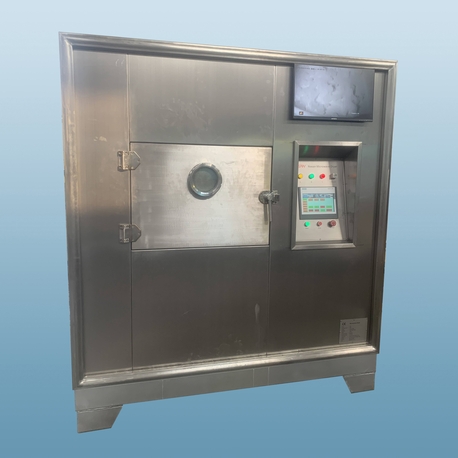



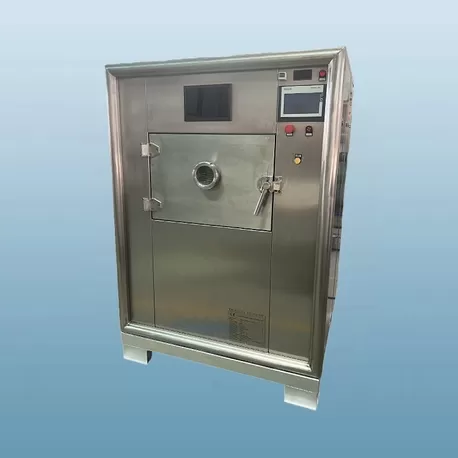
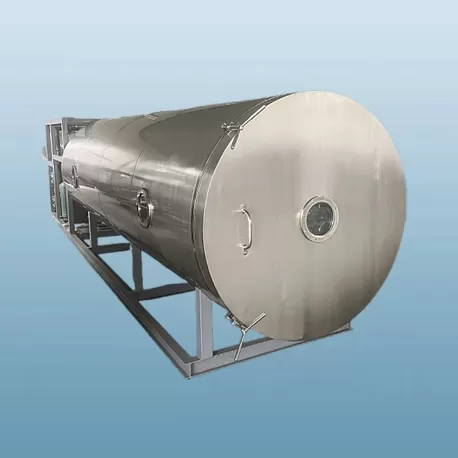
The transition from conventional radiant/convective heating to microwave energy represents a fundamental shift in industrial thermal processing. For manufacturers of advanced ceramics, technical ceramics, and refractory components, adopting an industrial microwave kiln can reduce firing cycles by up to 80% while improving product uniformity and lowering energy costs. Unlike traditional kilns that rely on thermal conduction from the surface inward, microwave kilns use dielectric heating to generate heat directly within the material volume. This article examines the engineering principles, material-specific applications, and economic justification for integrating microwave kilns into commercial production lines.

1. Principles of Microwave Kiln Operation
Microwave heating at industrial frequencies (915 MHz or 2450 MHz) exploits the dielectric loss properties of materials. When an alternating electric field is applied, polar molecules and charged particles attempt to realign, causing friction and volumetric heating. In a microwave kiln, the cavity is designed to create a standing wave pattern that uniformly couples energy into the load.
1.1 Frequency Selection: 915 MHz vs. 2450 MHz
Industrial microwave kilns typically operate at 915 MHz because the longer wavelength (∼33 cm) penetrates deeper into lossy materials compared to 2450 MHz (∼12 cm). For large ceramic components or densely packed powder beds, 915 MHz ensures temperature gradients remain below 10 °C/cm during ramp-up. Higher frequencies are reserved for thin-layer applications or where smaller cavity dimensions are required.
1.2 Coupling and Impedance Matching
Effective energy transfer requires matching the impedance of the microwave source to the load. Automatic tuners—often three-stub or sliding short configurations—adjust in real time as the material’s dielectric properties change during sintering. Without dynamic matching, reflected power can exceed 20%, leading to arcing or magnetron damage. Modern microwave kilns incorporate solid-state generators that allow precise frequency tuning, maintaining coupling efficiency above 90% throughout the thermal cycle.
2. Material-Specific Applications
The suitability of microwave processing depends on the dielectric loss factor (ε'') of the material at elevated temperatures. Many ceramics exhibit low loss at room temperature but couple effectively above a critical temperature (typically 300–600 °C), enabling hybrid heating strategies.
Sintering of alumina and zirconia: Microwave kilns achieve full densification at temperatures 100–150 °C lower than conventional furnaces, with grain growth suppressed by faster heating rates.
Calcination of battery materials (LFP, NMC): Volumetric heating eliminates thermal gradients in powder beds, producing more uniform particle morphology and reducing lithium volatilization.
Debinding and sintering of MIM parts: Combined thermal and microwave assistance shortens the debinding step from 24 hours to under 4 hours without bloating.
Glass fusing and enameling: Localized heating minimizes distortion in substrates, critical for architectural glass and enamel coatings.
3. Design Challenges in Industrial Microwave Kilns
Scaling microwave heating from laboratory to production volumes introduces engineering hurdles that must be addressed to ensure repeatability and safety.
3.1 Refractory Materials Transparent to Microwaves
The kiln’s insulation must withstand temperatures up to 1600 °C while allowing microwaves to reach the load. Low-loss ceramics such as fused quartz, alumina fiberboard, or silicon nitride are used. HANNA has developed composite refractory linings that exhibit less than 0.02 dielectric loss tangent at 915 MHz, ensuring that >95% of microwave energy is deposited in the product rather than the insulation.
3.2 Hybrid Heating for Thermal Uniformity
Certain materials (e.g., silicon carbide) couple so strongly that runaway heating can occur. Hybrid microwave kilns combine microwave energy with conventional radiant elements. The radiant pre-heat brings the load to the critical coupling temperature, after which microwaves dominate. This approach maintains temperature uniformity within ±5 °C across a 500‑kg batch.
3.3 Temperature Measurement in Microwave Fields
Conventional thermocouples are perturbed by electromagnetic fields and can act as antennas. Fiber‑optic pyrometry or dual‑wavelength infrared sensors are preferred. For rotating kilns, slip‑ring‑coupled pyrometers or wireless data loggers provide real‑time readings without signal interference.
4. Case Study: Reducing Firing Time for Technical Ceramics
A manufacturer of alumina wear tiles faced bottlenecks in their gas‑fired shuttle kiln, where a 36‑hour cycle limited output to 120 tons per month. After installing a HANNA 200‑kW continuous microwave kiln operating at 915 MHz, the firing schedule was reduced to 8 hours (including cooling). The volumetric heating eliminated the need for slow heating rates to avoid thermal shock. Post‑installation data showed:
Energy consumption per ton decreased from 4.8 MWh to 2.6 MWh (45% reduction).
Rejection rate due to cracking fell from 7.2% to 1.1%.
Production capacity increased to 480 tons/month without expanding floor space.
The client achieved full ROI within 14 months, driven by energy savings and increased throughput.
5. Operational Considerations and Safety
Industrial microwave kilns operate at power levels that demand rigorous safety protocols and maintenance practices.
5.1 Microwave Leakage Monitoring
Regulatory limits (typically 5 mW/cm² at 5 cm) require periodic leakage surveys around doors, feedthroughs, and viewing ports. HANNA systems incorporate double‑sealed chokes and continuous monitoring interlocks that shut down the generator if leakage exceeds 2 mW/cm².
5.2 Thermal Runaway Prevention
Materials with positive temperature coefficients of dielectric loss can experience runaway heating. Advanced control algorithms use real‑time pyrometry to modulate power in individual zones, preventing hot spots. In batch kilns, load mass and composition are logged to adapt heating profiles automatically.
5.3 Load Matching and Tuners
As materials sinter, their dielectric properties shift. Automatic three‑stub tuners maintain match by adjusting stub penetration within milliseconds. For continuous kilns, dynamic tuning is essential to accommodate varying product densities.

6. Economic Analysis: ROI of Microwave Kilns
Capital expenditure for an industrial microwave kiln is typically 30–50% higher than a conventional electric kiln of equivalent capacity. However, the total cost of ownership favors microwave technology in applications with high energy intensity or long cycle times.
Energy cost: Microwave sintering uses 0.4–0.7 kWh per kg of processed ceramic, compared to 1.2–2.0 kWh/kg for conventional furnaces.
Throughput: Cycle time reductions of 60–80% translate into lower labor and overhead costs per unit.
Quality: Reduced scrap rates directly improve gross margin.
A Monte Carlo simulation for a mid‑size advanced ceramics plant (500 tons/year) indicates a median payback period of 2.3 years, with a 90% confidence interval of 1.6–3.1 years.
7. Frequently Asked Questions
Q1: What materials cannot be processed in a microwave
kiln?
A1: Materials with extremely low dielectric loss (ε'' <
0.01) at processing temperatures—such as pure fused silica or certain
polymers—do not couple effectively. These require susceptors (e.g., silicon
carbide rods) that absorb microwaves and transfer heat by radiation.
Additionally, metals with high electrical conductivity cause arcing unless they
are in powder form with insulating coatings.
Q2: How does a microwave kiln achieve uniform heating in large
batches?
A2: Uniformity is achieved through a combination of mode
stirring, variable-speed turntables, and multiple microwave feed ports. In
continuous systems, product moves through zones with controlled power density.
HANNA uses
finite element modeling to design cavities that maintain field homogeneity
within ±10% across the working volume.
Q3: What is the maximum operating temperature of industrial microwave
kilns?
A3: Current commercial systems routinely operate up to
1600 °C with appropriate refractory materials. For ultra‑high‑temperature
applications (e.g., sintering of zirconia at 1800 °C), microwave + plasma hybrid
kilns are under development, but these are not yet widespread in production
environments.
Q4: Can a microwave kiln be retrofitted into an existing production
line?
A4: Yes, but careful consideration must be given to material
handling and pre‑drying stages. Microwave kilns often require shorter pre‑heat
zones and faster cooling sections. Microwave kiln retrofits are
most successful when the upstream and downstream processes are adjusted to match
the new cycle time.
Q5: Are there regulatory restrictions on industrial microwave
emissions?
A5: In most jurisdictions, industrial microwave equipment
must comply with standards such as FCC Part 18 (USA) or IEC 60519-6
(international). These mandate shielding effectiveness and leakage limits.
Certified installations include periodic validation by in‑house safety
officers.
Q6: How does microwave sintering affect the microstructure compared
to conventional firing?
A6: Volumetric heating reduces thermal
gradients during the critical initial stage of sintering, often resulting in
finer and more uniform grain size. Studies on alumina show that
microwave‑sintered samples have 15–20% higher fracture toughness due to reduced
abnormal grain growth.
Q7: What maintenance is required for the microwave
generators?
A7: Magnetron‑based generators typically require cathode
replacement after 8,000–10,000 hours of operation. Solid‑state generators, now
available for 915 MHz, have longer lifetimes (>20,000 hours) and allow rapid
power adjustments without warm‑up time. Routine checks include circulator
cooling water quality and waveguide pressurization.
For manufacturers aiming to remain competitive in advanced materials processing, the transition to microwave technology offers a measurable advantage. The convergence of faster cycles, lower energy intensity, and improved product consistency makes the industrial microwave kiln a strategic asset rather than a mere equipment upgrade.