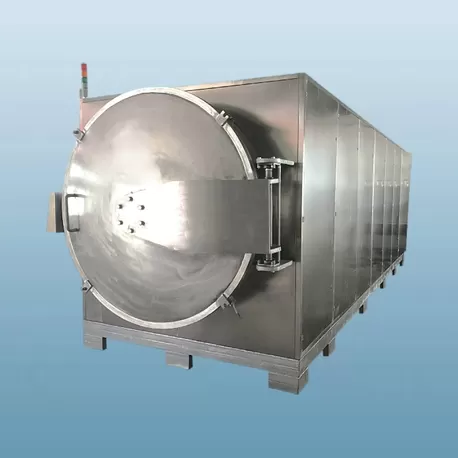
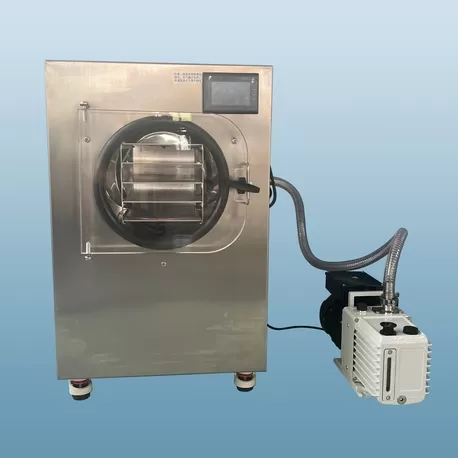
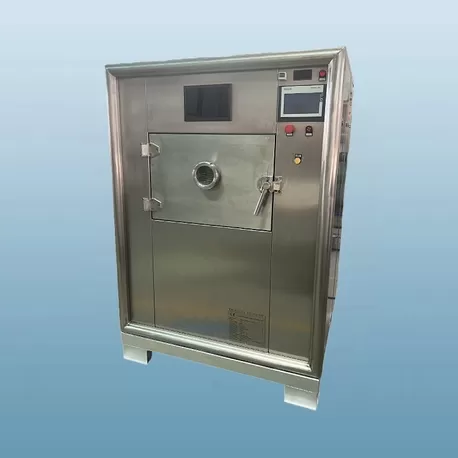
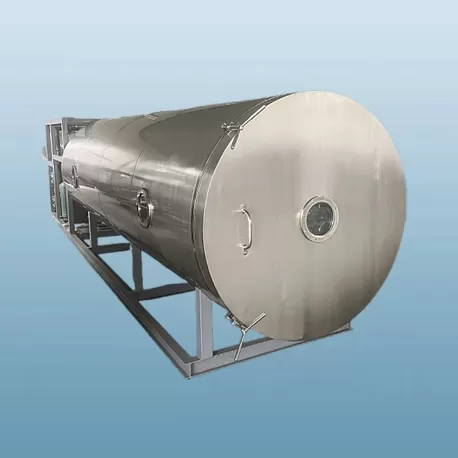
Thermal conversion processes are undergoing major changes as industrial
operators seek higher thermodynamic efficiency and precise process control.
Conventional pyrolysis methods rely on surface-conduction heating, which often
results in thermal gradients, processing delays, and uneven product quality.
Among these alternatives, microwave
pyrolysis offers distinct operational advantages by introducing
volumetric heating directly into the core of the processed material. This
analysis explores the physics, mechanical configurations, processing
bottlenecks, and deployment methodologies of microwave-assisted thermal
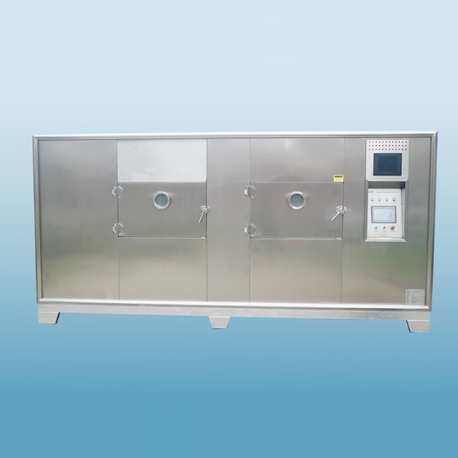
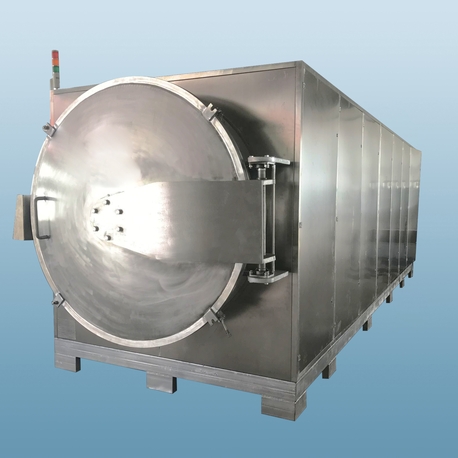
decomposition, utilizing industrial systems engineered by specialists like
Nasan.

Understanding the Dielectric Physics of Microwave Heating
To understand why electromagnetic heating outperforms standard gas-fired or
electric resistance heating, one must analyze the dielectric properties of
target feedstocks. Conventional heating depends on temperature differentials to
drive heat from the outer boundary of a particle to its core. In contrast,
electromagnetic processing generates heat internally through molecular
excitation.
This molecular interaction is governed by two primary mechanisms: dipole
rotation and ionic conduction. When carbonaceous feedstocks are exposed to
high-frequency electromagnetic waves, polar molecules (such as water or specific
oxygenated compounds) align themselves with the rapidly alternating electric
field. At industrial frequencies (typically 915 MHz or 2450 MHz), this alignment
field alternates millions of times per second, causing intense molecular
friction and immediate volumetric temperature rises.
The efficiency of this conversion is defined by the complex permittivity of
the material:
$$\varepsilon = \varepsilon' - i\varepsilon''$$
Where:
$\varepsilon'$ (Dielectric Constant): Measures the ability
of the material to store electrical energy from the electromagnetic field.
$\varepsilon''$ (Dielectric Loss Factor): Represents the
ability of the material to dissipate that stored energy as thermal energy.
$\tan \delta$ (Loss Tangent): Calculated as $\varepsilon''
/ \varepsilon'$. A higher loss tangent indicates a material that heats rapidly
under electromagnetic exposure.
Another key parameter is the penetration depth ($D_p$), which determines how
deeply the electromagnetic wave can penetrate the material bed before its power
drops to $1/e$ of its surface value. The formula for penetration depth is:
$$D_p = \frac{c}{2 \pi f \sqrt{2 \varepsilon'} \left( \sqrt{1 +
\left(\frac{\varepsilon''}{\varepsilon'}\right)^2} - 1 \right)^{-1/2}}$$
Because $D_p$ is inversely proportional to frequency ($f$), industrial
systems operating at 915 MHz offer significantly greater penetration depths than
those operating at 2450 MHz. This makes 915 MHz systems highly suitable for
deep-bed bulk material processing.
Transitioning from laboratory testing to continuous manufacturing requires
robust, heavy-duty hardware capable of handling high power loads while
maintaining safe operating conditions.
When optimizing microwave
pyrolysis systems, waveguide design is primary. Waveguides are
precisely sized metal conduits that transfer electromagnetic energy from the
generator to the processing chamber with minimal power loss. For 915 MHz
operations, WR975 waveguides are standard, whereas 2450 MHz systems utilize
WR340 waveguides.
An industrial system consists of the following subsystems:
The Microwave Generator (Magnetron): High-efficiency,
industrial-grade magnetrons, often water-cooled, that produce continuous-wave
energy. Power configurations can range from 10 kW units up to multi-megawatt
arrays.
The Circulator and Water Load: A passive three-port device
that allows energy to travel from the magnetron to the reactor, but diverts any
reflected energy back into a water load. This protects the magnetron from damage
caused by mismatched impedances or highly reflective processing conditions.
The Tuner (Impedance Matcher): Manual or automated stub
tuners that adjust the impedance of the system to match the varying dielectric
properties of the material bed as it heats up, ensuring maximum energy
transfer.
The Applicator (Reactor Vessel): The chamber where the
feedstock interacts with the electromagnetic field. These are designed as
multimode cavities for bulk processing or single-mode cavities for targeted,
high-intensity processing.
Processing Bottlenecks and Mechanical Engineering Solutions
Industrial deployment presents specific physical and mechanical challenges
that require advanced engineering solutions.
Managing Thermal Runaway and Hotspots
As carbonaceous materials (such as biochar) heat up, their dielectric loss
factor ($\varepsilon''$) often increases. This creates a positive feedback loop:
hotter areas of the material absorb more energy, leading to localized melting or
uneven product distributions. Engineering organizations like Nasan address this by using
mechanical mixing devices, rotary drum reactors, or continuous fluid beds.
Constantly moving the material through the electromagnetic field evens out
spatial energy distribution, preventing localized thermal runaway.
Mitigating Electric Field Concentration and Arcing
High-power microwave fields can cause electrical discharge (arcing) in the
presence of sharp metal edges, carbon dust, or highly conductive materials. If
left unmanaged, this arcing can damage the reactor liner and ignite volatile
gases. To prevent this, the reactor headspace is purged with a continuous flow
of inert gas (typically nitrogen). This sweep gas dilutes volatile organic
compounds, removes fine carbon particles from the active field, and maintains a
stable dielectric atmosphere inside the chamber.
Feedstock Suitability and the Use of Susceptors
Different materials respond differently to electromagnetic fields, making
feedstock preparation a key process step.
Biomass Decomposition Pathways
Lignocellulosic biomass (such as agricultural residues, forestry waste, and
nutshells) has moderate dielectric loss parameters. During processing, the bound
moisture initially heats up, followed by the rapid decomposition of
hemicellulose, cellulose, and lignin. This process produces high-purity syngas
(rich in $H_2$ and $CO$) and a highly porous biochar that is well-suited for
soil remediation or activated carbon production.
Processing Non-Polar Polymers
Many synthetic polymers, such as polyethylene (PE), polypropylene (PP), and
polystyrene (PS), are non-polar. They have extremely low loss tangents, meaning
they do not heat up when exposed to electromagnetic waves. Because of this,
processing non-polar materials via microwave
pyrolysis requires the introduction of a susceptor.
A susceptor is a material with a very high loss tangent (such as biochar,
graphite, or silicon carbide) that is mixed with the polymer feedstock. The
susceptor absorbs the electromagnetic energy, heats up rapidly, and transfers
that heat to the surrounding polymer through conduction. This indirect heating
method enables rapid polymer cracking and depolymerization, converting municipal
solid waste and sorted plastics into valuable liquid hydrocarbons.
Process Parameter Comparison: Conventional vs. Microwave-Assisted
Pyrolysis
The table below highlights the operational differences between conventional
thermal processing and electromagnetic-assisted methods:
| Operational Parameter | Conventional Thermal Pyrolysis | Microwave-Assisted Pyrolysis |
|---|
| Heat Transfer Method | External conduction and convection (outside-in thermal gradient) | Volumetric dielectric heating (inside-out thermal gradient) |
| Heating Rates | Slow to moderate (limited by material thermal conductivity) | Very high (instantaneous molecular response) |
| Thermal Gradient | Hotter at the outer boundary, cooler in the center | Hotter in the core, cooler at the boundary (promotes volatile
exit) |
| Startup and Shutdown | High thermal inertia; requires hours of preheating and cooling | Near-instantaneous power control (starts and stops in seconds) |
| Syngas Composition | Higher heavy tar content due to secondary reactions | Higher hydrogen and carbon monoxide content; low tar formation |
| Process Footprint | Large, insulated rotary kilns or fluidized bed complexes | Compact, modular reactor configurations with high energy
densities |
The thermal profiles of conventional thermal processing and microwave
pyrolysis differ fundamentally. In conventional reactors, volatile
gases must travel through a cooler outer layer to exit the particle, which often
leads to secondary condensation and undesirable tar formation. In
electromagnetic reactors, the core is the hottest zone. This drives volatiles
outward through a cooler boundary, reducing secondary reactions and producing a
cleaner, higher-quality liquid or gaseous product.
Design Parameters for Continuous Production Systems
Implementing continuous-flow microwave
pyrolysis requires robust engineering to prevent energy leakage and
maintain a stable internal atmosphere.
A primary design consideration is the feeding and discharge mechanism.
Because the reactor operates under anaerobic conditions (without oxygen) and
must prevent electromagnetic radiation leakage, standard open feeders cannot be
used. Instead, engineers use rotary airlocks and continuous screw conveyors with
choke tubes. These choke tubes are designed with specific lengths and diameters
relative to the operating frequency, acting as waveguides below cutoff and
reducing electromagnetic leakage to safe, non-hazardous levels.
Additionally, the integration of temperature sensors requires careful
planning. Standard metallic thermocouples can act as antennas, concentrating the
electric field, causing localized arcing, and distorting temperature readings.
Consequently, continuous systems rely on non-contact infrared pyrometers or
fiber-optic temperature sensors. These fiber-optic sensors are made from
non-conductive silica glasses, allowing them to measure temperatures accurately
in real-time within high-power electromagnetic fields.
Finally, these integrated systems developed by Nasan ensure process safety
through automated PLC control systems. These PLCs monitor forward and reflected
power, sweep gas flow rates, reactor pressure, and any electromagnetic leakage
around seals. If any metric deviates from safe operational parameters, the
system automatically adjusts the magnetron output or initiates a rapid
shutdown.

Engineering Consultation and Inquiry
Optimizing an industrial electromagnetic reactor requires a detailed
understanding of your specific feedstock's physical and dielectric properties.
Our engineering team specializes in custom-designing industrial-scale systems
tailored to your throughput, moisture content, and product yield
requirements.
To help us evaluate your process, please provide details on your feedstocks,
required throughput rates, and targeted output specifications. We can
collaborate with your team to conduct dielectric testing, run pilot-scale
trials, and design a custom, high-efficiency continuous processing system.
Contact our engineering division today to discuss your project requirements
and request a technical proposal.
Frequently Asked Questions
Q1: What is the main difference between 915 MHz and 2450 MHz
frequencies in microwave systems?
A1: The primary differences are wave penetration depth and
power capacity. Systems operating at 915 MHz offer a much greater penetration
depth, making them suitable for large-volume industrial material beds. They are
also available in higher power outputs per single magnetron (up to 100 kW or
more). Systems operating at 2450 MHz have a shallower penetration depth and are
typically used for thinner material beds, laboratory testing, or small-scale
processing.
Q2: How do you prevent microwave leakage at the feed and discharge
ports?
A2: Leakage is prevented by using metallic choke structures
and wave-attenuating transition zones. These components are designed so their
physical dimensions act as waveguides below cutoff for the specific operating
frequency. This keeps electromagnetic fields confined to the heating chamber
while allowing materials to flow continuously through rotary airlocks or screw
conveyors.
Q3: Can materials with high moisture content be processed
directly?
A3: Yes, water has a very high loss factor and absorbs
electromagnetic energy rapidly, making it easy to heat. However, processing
feedstocks with high moisture content requires a two-stage approach. In the
first stage, energy is used to evaporate the water. In the second stage, once
the material is dry, temperatures rise to the levels required for thermal
cracking. Integrating a pre-drying step can significantly improve overall system
efficiency.
Q4: Why is nitrogen sweep gas necessary during the heating
cycle?
A4: Nitrogen serves two key purposes. First, it displaces
oxygen to maintain the anaerobic environment required for pyrolysis. Second, it
sweeps volatile gases and fine carbon dust out of the active heating zone. This
rapid removal prevents high-voltage gradients from forming in the headspace,
which eliminates the potential for electrical arcing and plasma formation.
Q5: What parameters must be provided to design a custom industrial
reactor?
A5: To design an efficient system, our engineers require
details on the feedstock type, average moisture content, particle size
distribution, and target throughput (kg/h). We also need to know your target
output ratios (biochar, bio-oil, or syngas) so we can configure the appropriate
power levels, residence times, and condensation systems.