The manufacturing of commercial pasta products involves a delicate balance of
biochemistry, thermodynamics, and mechanical engineering. While extrusion shapes
the raw semolina dough, the drying phase determines the final product's
structural integrity, shelf-life, and cooking quality. Improper moisture
extraction leads to defects such as checking, cracking, or surface deformation,
which can render entire production batches unsellable.
To prevent these issues, food processing facilities require precise control
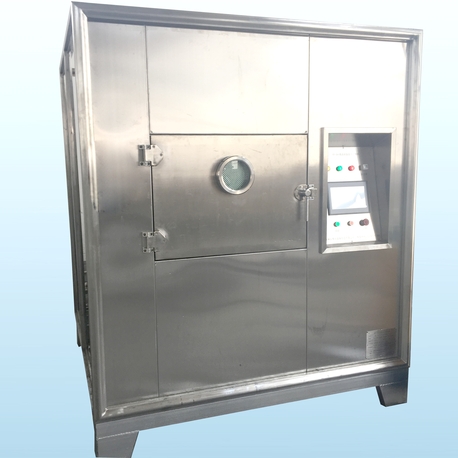
over heat and mass transfer. Investing in a specialized pasta dryer is
therefore a fundamental requirement to transition the product from a highly
unstable, wet state to a stable, dry state without damaging the delicate
protein-starch matrix.
Physics of Pasta Dehydration: Moisture Migration and Thermodynamic
Equilibrium
Drying pasta is not merely a process of heating the product to evaporate
water. It is a controlled mass transfer operation where moisture inside the
pasta must migrate to the outer surface at the same rate that it evaporates into
the surrounding air. If surface evaporation occurs too rapidly compared to
internal diffusion, internal stresses build up, leading to structural
failure.
Constant Rate vs. Falling Rate Drying Periods
The drying cycle of semolina-based products is divided into distinct
thermodynamic phases:
The Constant Rate Period: During this initial phase, the
pasta surface is completely wet. The rate of evaporation is governed by the
temperature, velocity, and relative humidity of the drying air. Water moves
freely from the interior to the exterior, and the product temperature remains
relatively low due to evaporative cooling.
The Falling Rate Period: As drying progresses, the surface
becomes dry, and the rate of moisture migration is controlled by internal
diffusion through the gluten matrix. This stage is highly temperature-dependent,
requiring careful adjustment of air conditions to prevent the outer layer from
shrinking too fast.
The Phenomenon of Case Hardening and Micro-Cracking
If the drying air is too dry or too hot during the early falling rate period,
the outer layer of the pasta dries rapidly and forms a hard, impermeable skin.
This defect is known as case hardening. The trapped moisture inside the core
eventually tries to escape, causing internal stress. Upon cooling or during
storage, this stress manifests as micro-cracking (checking), causing the pasta
to break easily before packaging or disintegrate during boiling.
Understanding how a continuous pasta dryer manages
relative humidity throughout these phases is vital for operators aiming to
maintain structural quality.
Key Engineering Parameters of Industrial Dehydration Systems
Industrial drying equipment must provide uniform conditions across the entire
product bed. Variations in air velocity or temperature within the chamber lead
to inconsistent moisture distribution and uneven product quality.
Systems engineered by industry specialists like Nasan to ensure uniform heat
distribution utilize advanced aerodynamic layouts to mitigate these issues.
Airflow Distribution and Convective Heat Transfer
Convective heat transfer is the primary mechanism utilized in commercial food
drying. The velocity of the air must be sufficient to sweep away the boundary
layer of moisture surrounding each piece of pasta. However, excessive velocity
can physically deform delicate shapes like long-goods (spaghetti) or cause
nesting in short-goods (penne, macaroni).
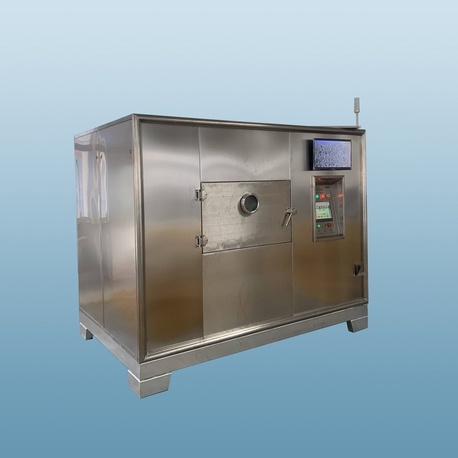
To achieve uniformity, the modern pasta dryer relies
on precise air recirculation systems. By reversing the direction of the airflow
periodically, manufacturers can guarantee that the moisture gradient across the
drying trays or belts remains uniform, minimizing localized over-drying.
Relative Humidity and Temperature Control Loops
Modern industrial drying utilizes closed-loop control systems. These setups
consist of high-precision humidity sensors and dry-bulb thermometers linked to a
programmable logic controller (PLC). By adjusting the intake of fresh, dry air
and the exhaust of saturated, wet air, the system maintains the exact relative
humidity required at each stage of the drying curve.
Process Workflow in Modern Pasta Dehydration
The drying cycle of extruded pasta involves three primary stages, each
requiring distinct environmental parameters inside the drying chamber.
| Drying Stage | Temperature Range (°C) | Relative Humidity (%) | Primary Objective |
|---|
| Pre-Drying (Shaking) | 50 - 65 | 65 - 75 | Stabilize surface shape, prevent sticking |
| Main Drying (Desorption) | 70 - 90 | 75 - 85 | Gradual moisture reduction to 12.5% |
| Stabilization & Cooling | 30 - 45 | 55 - 65 | Relieve internal stresses, normalize temp |
Pre-Drying Phase (Surface Stabilization)
Immediately after extrusion, pasta has a moisture content of approximately
30% to 32% on a wet basis. At this stage, the product is highly pliable and
sticky. The pre-dryer utilizes rapid convective heating to quickly reduce the
surface moisture to about 24%. This fast evaporation forms a thin, stable outer
shell that prevents the pasta pieces from sticking together or losing their
molded shape during subsequent transport.
Main Drying Phase (Controlled Desorption)
This is the longest phase of the cycle. Moisture must be reduced from 24% to
the standard commercial limit of 12.5%. To achieve this without causing
structural defects, the temperature is raised while the relative humidity is
kept moderately high. This high humidity slows down surface evaporation just
enough to match the internal moisture migration rate, allowing the pasta to
shrink uniformly.
Stabilization and Cooling (Preventing Thermal Shock)
Once the target moisture content is reached, the pasta cannot be packaged
immediately. It must undergo a stabilization phase where the temperature is
gradually decreased to ambient levels, and the moisture distribution throughout
the pasta cross-section is allowed to fully equilibrate. This prevents thermal
shock and ensures the product remains mechanically stable during packaging and
transport operations.
Addressing Common Production Faults in Dry Pasta Manufacturing
Even small deviations in drying parameters can lead to noticeable product
defects. Identifying these anomalies early allows operators to adjust the drying
curve parameters before large quantities of product are compromised.
Souring and Fermentation
If the pre-drying phase is too slow, or if the initial humidity inside the
dryer is too high without adequate air circulation, wet pasta can remain warm
and moist for too long. This creates an environment where microorganisms and
wild yeasts can thrive, leading to fermentation, sour odors, and discoloration.
Proper pre-drying airflow is the main preventive measure against this issue.
Product Deformation and Nesting
For short-cut pasta, poor air circulation or mechanical vibration during the
early stages of drying can cause the pieces to clump together or "nest." This
reduces the exposed surface area, leading to localized under-drying. Custom
configurations developed by Nasan address these systemic
challenges by incorporating gentle agitation mechanisms and optimized tray
configurations to keep the product separated.
Selecting the Right Configuration for Your Pasta Production Line
When planning a manufacturing facility, selecting a suitable pasta dryer requires matching evaporation capacity with extruder output. The choice between
a batch drying system and a continuous belt dryer depends largely on production
volume and product variety.
Continuous Belt Dryers: Best suited for high-volume,
single-product manufacturing. The product moves through different temperature
zones on conveyor belts, offering high throughput and consistent automated
operation.
Static Batch Dryers: Ideal for specialty pasta
manufacturers who produce a wide variety of shapes and sizes. These systems use
racks and trays, allowing operators to easily run customized drying profiles for
different shapes, from long spaghetti to complex structural cuts.
Integrating a high-efficiency pasta dryer into
your processing line ensures that raw ingredient quality is preserved all the
way to the retail shelf, delivering the color, bite, and shelf stability
consumers expect.

Industrial Inquiries and Custom Thermal Engineering
Selecting the appropriate dehydration equipment is a significant engineering
decision that influences product quality and plant yield. Standard machinery
often fails to meet the specific requirements of unique pasta formulations, such
as gluten-free blends or vegetable-infused doughs, which exhibit distinct
moisture desorption characteristics.
To discuss your production requirements, capacity targets, and custom
machinery configurations, contact the engineering team at Nasan for a detailed consultation.
Our technical experts are available to evaluate your process parameters and
suggest a thermal solution engineered for your facility.
Frequently Asked Questions
Q1: Why does dry pasta crack several hours after the drying cycle is
completed?
A1: This issue, known as "checking," occurs when the stabilization and
cooling phases are too brief. If the outer layer of the pasta cools and dries
much faster than the inner core, internal mechanical stresses remain locked
inside. Over time, these stresses resolve by forming microscopic cracks that
cause the pasta to fracture easily.
Q2: How does gluten content affect the drying profile of semolina
pasta?
A2: Gluten forms a dense protein network that acts as a barrier to moisture
migration. High-gluten semolina requires a more gradual drying curve with higher
temperatures to facilitate internal water diffusion without tearing the
protein-starch matrix.
Q3: Can a standard food dehydrator be used for long-cut pasta like
spaghetti?
A3: Long-cut pasta requires specialized vertical hanging systems to maintain
straightness during the drying process. Standard tray-based food dehydrators are
typically restricted to short-cut pasta shapes, as long-cut shapes would bend,
stick, and dry unevenly if laid flat.
Q4: What is the ideal final moisture content for commercial
shelf-stable pasta?
A4: The internationally accepted standard is approximately 12.5% moisture
content on a wet basis. At this level, the water activity is low enough to
inhibit the growth of mold, yeast, and bacteria, allowing for a shelf-life of
several years when stored properly.
Q5: How does high-temperature drying (above 80°C) improve pasta
cooking quality?
A5: High-temperature drying coagulates the gluten proteins more effectively,
creating a stronger structural matrix. This traps starch particles more
efficiently during boiling, resulting in reduced stickiness, firmer texture (al
dente), and lower starch loss into the cooking water.