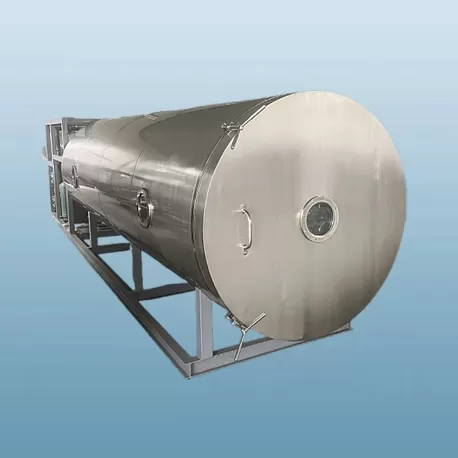
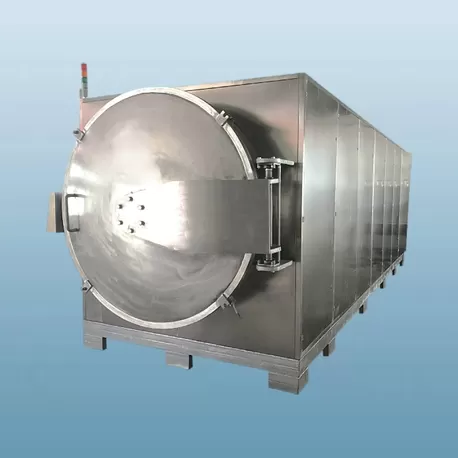
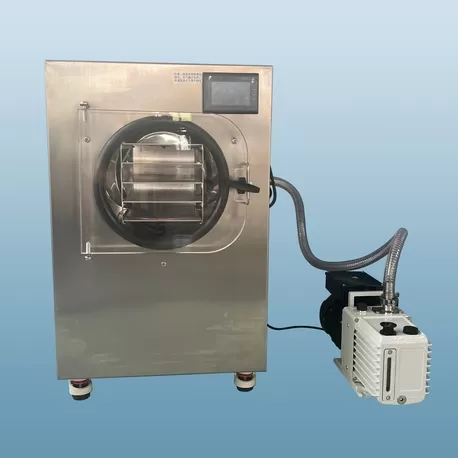
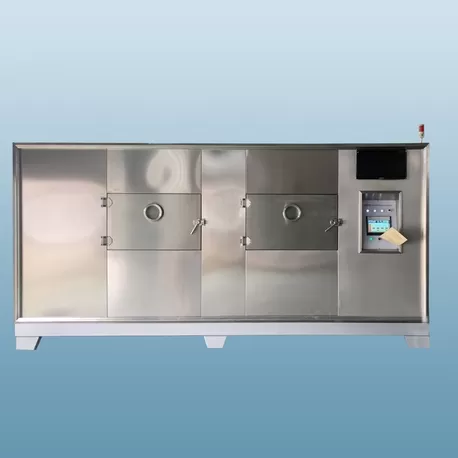
In industrial manufacturing, removing moisture or organic solvents from
materials that cannot tolerate high temperatures presents a persistent
challenge. Standard convective air dryers often fail when handling substances
prone to thermal degradation or oxygen-induced chemical changes. This is where a
vacuum drying
oven becomes a necessary piece of processing equipment. By reducing
the ambient pressure within the drying chamber, the boiling point of water and
other solvents is lowered, allowing evaporation to occur at significantly
reduced temperatures.
At Nasan, we focus
on designing robust, high-performance thermal processing systems that meet
stringent industrial standards. Understanding the specific physical laws and
mechanical dynamics of low-pressure drying allows process engineers to optimize
drying times while preserving the structural and chemical integrity of the
target substance.
The Thermodynamics of Low-Pressure Thermal Processing
The fundamental operation of a low-pressure thermal system relies on the
Clausius-Clapeyron relation. When the atmospheric pressure within an airtight
chamber is reduced by a vacuum pump, the vapor pressure required for liquid
vaporization also drops. For instance, at a vacuum level of 10 mbar, water boils
at approximately 7°C rather than its sea-level boiling point of 100°C.
This suppression of the boiling point is beneficial for materials containing
active biological compounds, polymers prone to thermal crosslinking, or fine
chemicals susceptible to thermal degradation.
In a standard convective dryer, heat transfer is mediated by moving air.
Under vacuum conditions, however, air molecules are sparse, making convection
highly inefficient. Heat must therefore be transferred via conduction—through
direct contact with heated shelves—or via radiation. Managing these heat
transfer mechanisms is vital for ensuring uniform moisture removal. Without
precise control, products can suffer from localized cold spots due to the
evaporative cooling effect, which slows down the drying cycle, or hot spots that
cause localized damage.
Addressing Manufacturing Pain Points in Thermal Processing
Process engineers face several systemic hurdles when utilizing traditional
convective or high-heat methods. High-vacuum thermal processing directly
resolves these challenges:
Prevention of Oxidation and Degradation: Certain powders,
metal components, and chemical formulations react with oxygen when heated,
leading to oxidation, discoloration, or degradation of surface properties. By
removing oxygen from the chamber, a vacuum drying
oven eliminates the oxidative pathway. Furthermore, convective
drying can cause "skinning" or surface crusting, where the outer layer dries
quickly and traps moisture inside. Low-pressure drying draws moisture out from
the core of the material uniformly, preventing surface defects.
Recovery of Valuable or Hazardous Solvents: When processing
materials containing organic solvents, releasing vapors into the atmosphere is
often restricted due to environmental regulations or safety parameters. Under
vacuum, these evaporated solvents can be directed to a cold trap or condenser,
allowing for efficient recovery and preventing exposure to personnel.
Drying Intricate Geometries and Porous Materials: Components with deep crevices, capillary tubes, or highly porous internal
structures are difficult to dry using air-flow methods. The surface tension of
liquid trapped in micropores prevents easy evaporation. A low-pressure
environment removes air resistance, allowing liquid to vaporize and escape even
the most complex mechanical configurations.
Core Structural and Operational Mechanisms
To achieve consistent, reproducible drying profiles, the construction of the
drying apparatus must adhere to precise engineering standards. Nasan manufactures industrial
drying systems designed with high-grade materials to withstand continuous
low-pressure cycles without structural deformation.
Chamber Construction
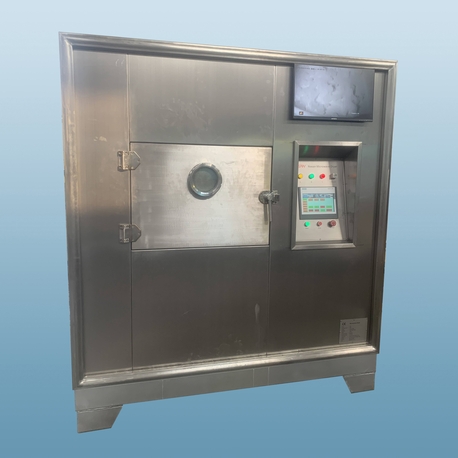
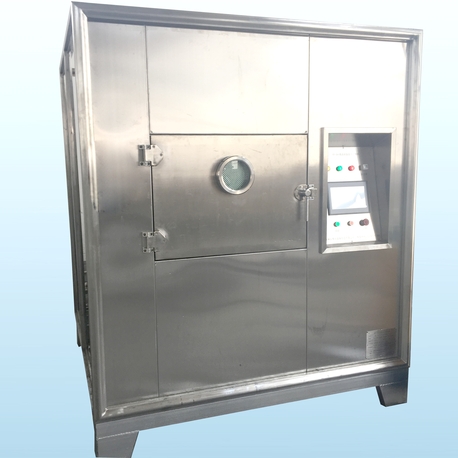
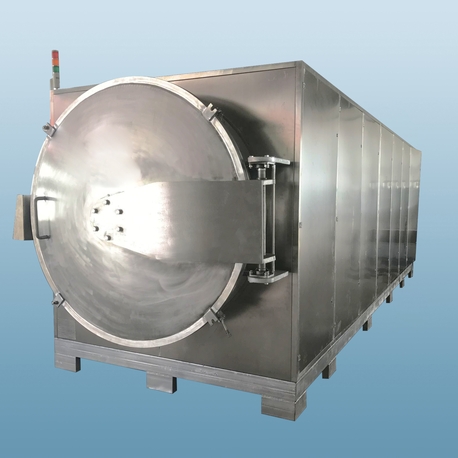
The vacuum vessel must be fabricated from heavy-gauge stainless steel (such
as 304 or 316L grade) with external reinforcements. High-integrity welding
ensures that the chamber can maintain a deep vacuum over extended periods
without leakage. The door sealing mechanism typically utilizes high-temperature
silicone or Viton gaskets to maintain pressure tight seals under varying thermal
conditions.
Heating Methodologies
Indirect Wall Heating: Heating elements are wrapped around
the exterior of the chamber. While simple, this method relies on radiation and
can lead to slower heat transfer and less uniform temperatures across different
shelves.
Direct Shelf Heating: Each shelf is equipped with
independent heating elements or internal channels for thermal fluid circulation.
This configuration provides superior temperature uniformity and faster heat
transfer through direct conduction. When choosing a vacuum drying
oven for high-capacity manufacturing, direct shelf heating is often
preferred for its precise thermal control.
Condensation Control and Vacuum Integrity
An effective vacuum drying
oven setup requires an appropriately matched vacuum pump and a
condensing unit. If moisture-laden vapor is pulled directly into the vacuum
pump, it can degrade the pump oil, reducing efficiency. A cold trap installed
between the chamber and the pump condenses the vapor back into liquid,
protecting the system and maintaining high vacuum performance.
Sector-Specific Industrial Applications
Low-pressure drying systems are deployed across diverse industries where
product purity and structural stability are paramount.
Pharmaceutical and Biotech Industries
In the production of active pharmaceutical ingredients (APIs), proteins, and
enzymes, heat exposure must be strictly regulated. Many pharmaceutical compounds
undergo thermal decomposition at temperatures above 40°C. Utilizing a vacuum drying
oven ensures rapid moisture reduction at room temperature or lower,
preserving the therapeutic efficacy of the product.
Lithium-Ion Battery Production
Battery electrodes and separators must be completely free of moisture before
assembly. Even minute quantities of water can react with lithium salts to form
hydrofluoric acid, degrading battery performance and posing safety hazards.
High-vacuum drying systems ensure that moisture levels are reduced to
parts-per-million (ppm) levels.
Aerospace and Precision Engineering
After machining, precision aerospace components and printed circuit boards
(PCBs) are often cleaned with solvents. Residual solvent trapped in
hard-to-reach areas can lead to corrosion or outgassing in high-altitude or
space environments. Low-pressure thermal processing completely volatilizes these
residues without warping delicate components.

Selecting the Appropriate Configuration for Industrial Operations
When integrating a low-pressure thermal processor into your production line,
several engineering parameters must be evaluated to ensure process
compatibility:
Vacuum Level and Pump Compatibility: Depending on the
solvent's boiling point, dry scroll pumps, rotary vane pumps, or diaphragm pumps
may be required. Corrosive solvents require chemical-duty pumps with PTFE coated
pathways.
Temperature Uniformity and Control: For demanding
applications, PLC-driven multi-zone PID controllers are necessary to monitor and
adjust temperatures across individual shelves. This prevents thermal overshoot
and ensures batch consistency.
Loading and Automation: For high-volume production,
features like automatic sliding doors, custom product racks, and automated cycle
profiles are helpful for overall process efficiency.
As an established manufacturer, Nasan provides custom-engineered
drying systems designed to integrate into existing production workflows,
ensuring high-reliability operations and minimal processing downtime.
Inquiry Evaluation
Selecting the correct drying equipment requires deep analysis of your
specific material properties, solvent characteristics, and throughput
requirements. Our engineering team is available to assist you in defining the
exact parameters required for your processing needs. If you require custom
dimensions, specialized temperature control, or assistance with process
integration, please contact us for a detailed project evaluation.
Frequently Asked Questions
Q1: Why is direct shelf heating preferred over wall heating in a
vacuum drying oven?
A1: Direct shelf heating utilizes physical contact to
transfer thermal energy directly to the material container. In a low-pressure
environment, air is scarce, which minimizes convective heat transfer. Wall
heating relies primarily on thermal radiation to reach the center of the
chamber, which is slower and can lead to uneven temperature distribution between
the top, middle, and bottom shelves. Direct shelf heating offers faster cycle
times and superior temperature uniformity.
Q2: How does vacuum drying prevent oxidation during the thermal
process?
A2: Oxidation occurs when oxygen molecules react with a
material under the influence of heat. By evacuating the air from the chamber,
the oxygen concentration is reduced to negligible levels. Without oxygen, the
chemical reaction of oxidation cannot occur, allowing metals, active
pharmaceutical powders, and chemicals to dry without discoloration or
degradation of surface properties.
Q3: What role does a cold trap play in a vacuum drying
system?
A3: A cold trap is positioned between the drying chamber and
the vacuum pump. It operates at extremely low temperatures to condense vaporized
water or solvents back into liquid form before they can enter the vacuum pump.
This prevents solvent vapors from contaminating the pump oil, which would
otherwise degrade vacuum performance and cause premature pump wear.
Q4: Can a vacuum drying oven be used for solvent
recovery?
A4: Yes. Because the evaporated solvents are drawn out of
the chamber under vacuum, they can be easily directed through a condenser or
cold trap. This configuration allows manufacturers to collect and liquefy the
solvents for reuse or disposal, ensuring compliance with environmental
standards.
Q5: How do you determine the correct vacuum level for a specific
solvent?
A5: The correct vacuum level is determined by consulting the
vapor pressure curve of the target solvent at the desired drying temperature.
The vacuum system must be capable of reducing the chamber pressure below the
solvent's vapor pressure at that temperature to initiate boiling and
evaporation.