Industrial processing facilities frequently encounter throughput bottlenecks
caused by traditional thermal conduction and hot-air convection drying. Surface
hardening, extended residence times, and substantial thermal radiation losses
continue to reduce operational profitability across food processing, fine
chemical manufacturing, and pharmaceutical synthesis. Dielectric heating offers
direct volumetric heat generation, yet translating laboratory results into
robust factory-floor processing requires resolving systemic operational
challenges. Material dielectric variability, standing wave hot-spots, and
electromagnetic suppression at feed openings demand dedicated mechanical
engineering. Equipment developers such as NASAN engineer
processing infrastructure designed to resolve these specific transport
phenomena. Correctly specifying an industrial microwave dryer
machine allows continuous processing facilities to strip moisture
rapidly while maintaining structural, chemical, and visual product
specifications.
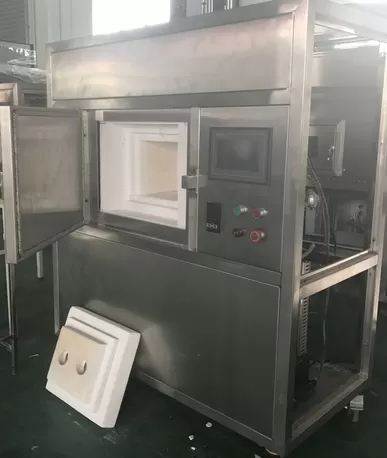
Electromagnetic Wave Propagation and Dielectric Heat Dynamics
Traditional drying methods transfer thermal energy from the material surface
inward via conductive or convective temperature gradients. This process creates
a dry outer crust that limits the rate at which internal moisture migrates to
the surface, resulting in extended drying cycles and high thermal expenditure.
Dielectric heating reverses this heat transfer dynamic by delivering energy
directly into the internal liquid phase throughout the material volume.
Electromagnetic Wave Interplay with Polar Molecules
The operational foundation of dielectric dehydration relies on the
interaction between an alternating high-frequency electric field and dipole
molecules—primarily water—present inside the product matrix. When subjected to
electromagnetic radiation at industrial allocated frequencies, typically 2.45
GHz or 915 MHz, water molecules attempt to align their dipoles with the rapidly
alternating field. At 2.45 GHz, this electrical field changes polarity 2.45
billion times per second. The resulting molecular friction converts kinetic
energy into internal thermal energy without relying on conductive contact with
heating elements.
The power absorbed per unit volume ($P$) within a material bed depends
directly on the operational frequency ($f$), the vacuum permittivity
($\varepsilon_0$), the dielectric loss factor of the material ($\varepsilon''$),
and the local electric field strength ($E$):
P = 2π · f · ε₀ · ε'' · E²
As moisture leaves the material, the dielectric loss factor ($\varepsilon''$)
drops. This physical shift creates an inherent self-limiting drying mechanism:
areas with higher moisture levels absorb higher amounts of microwave energy,
while drier zones absorb substantially less energy, preventing severe
over-baking of dry regions.
Managing Thermal Runaway and Dielectric Property Changes
A primary challenge in continuous dielectric processing involves managing
material variations where local loss factors unexpectedly rise with temperature.
For certain organic and mineral compounds, as internal temperatures rise, the
material dielectric loss tangent increases sharply. If unmanaged, this condition
creates thermal runaway—a state where localized hot-spots absorb an increasing
proportion of electromagnetic power, causing localized degradation or
scorching.
Preventing thermal runaway requires combining dynamic field agitation,
automated power regulation, and controlled air movement. Integrating auxiliary
low-temperature hot air removes liberated moisture vapor from the cavity
headspace, preventing condensation back-spray onto incoming dry material while
keeping surface temperatures stable.
Overcoming Scale-Up Barriers: Laboratory vs. Industrial Operations
Scaling a microwave drying process from a batch laboratory unit to a
multi-megawatt continuous conveyor system involves complex wave propagation
challenges. Simply enlarging cavity dimensions often introduces irregular
standing wave patterns that lead to uneven drying profiles across the conveyor
belt width.
Cavity Mode Distribution and Standing Wave Mitigation
Single-mode cavities operate effectively for precise laboratory testing or
uniform liquid streams, producing predictable field geometry. High-throughput
continuous systems, however, rely on multi-mode cavities where numerous wave
reflections overlap within a single chamber. Without proper wave distribution
mechanisms, these interference patterns produce fixed nodes (cold zones) and
antinodes (hot zones).
Mode Stirrers: Rotating metallic fan-like reflectors alter
field geometry dynamically within the cavity, continually shifting interference
nodes across the material bed path.
Phased Waveguide Arrays: Positioning multiple magnetrons
along staggered axes directs electromagnetic radiation into the drying cavity
from calculated angles, balancing overall power density.
Slotted Waveguide Feeders: Distributing energy along
continuous slotted structures prevents concentrated field spikes, maintaining
flat energy distribution profiles across broad conveyor belts.
Conveyor Belt Selection and Quarter-Wave Choke Architecture
Continuous industrial systems must allow continuous entry and exit of wet and
dry material without leaking electromagnetic radiation into the working
environment. Regulatory limits mandate that microwave leakage must remain below
5 mW/cm² measured 5 cm from the machine surface.
Accommodating continuous belt flow while maintaining safety requires
specialized suppression tunnels called quarter-wave attenuation chokes. These
entry and exit tunnels incorporate metallic pins and absorbent dielectric
materials tuned to the operational wavelength. Incoming electromagnetic waves
enter the choke structure, reflect off metallic surfaces, and destructively
interfere with themselves, attenuating wave energy to safe levels before
reaching external openings.
Conveyor belt materials must exhibit low dielectric loss factors to ensure
microwaves pass directly through the belt without heating the transport
mechanism itself. Woven fiberglass coated with polytetrafluoroethylene (PTFE) or
specialized polypropylene links provides necessary chemical resistance,
mechanical strength, and dielectric transparency.
Realizing Financial Viability: Total Cost of Ownership Analysis
Evaluating an investment in dielectric drying systems requires evaluating
both initial capital expenditure and long-term operating costs. Convective
drying systems present lower initial purchase costs, but their operational cost
footprint grows over time due to high thermal losses, extensive floor space
demands, and high cleaning requirements between product switches.
| Operational Parameter | Hot-Air Convection Dryer | Fluidized Bed Dryer | Industrial Microwave Dryer |
|---|
| Heat Transfer Mechanism | Convective Surface-Inward | Convective/Conductive Mixed | Direct Volumetric Dielectric |
| Thermal Efficiency | 25% – 40% | 45% – 60% | 65% – 80% (Wall-Plug to Thermal) |
| Drying Cycle Duration | Hours (Long Residence) | 30 to 90 Minutes | Minutes (Rapid Evaporation) |
| Footprint Requirement | Extensive (Long Tunnels/Towers) | Moderate Height Requirement | Compact (Up to 70% Space Reduction) |
| Process Start-up Time | 30 to 120 Minutes Preheat | 15 to 45 Minutes Preheat | Instantaneous (On/Off Control) |
Magnetrons convert electrical power into microwave energy with efficiency
rates typically between 70% and 85%. Modern industrial water-cooled magnetrons
feature expected operating lifespans between 6,000 and 10,000 continuous
operating hours. Implementing structured power management practices—such as
soft-start power supplies and managed cooling loops—extends tube operating life,
keeping routine component replacement costs low.
Energy savings become clear when examining water evaporation mechanics.
Traditional convective air dryers expend substantial energy warming huge volumes
of ambient air that are subsequently exhausted into the atmosphere. Conversely,
a microwave dryer machine directs electrical energy primarily
into water molecules within the product, lowering overall thermal wastage per
kilogram of evaporated water.
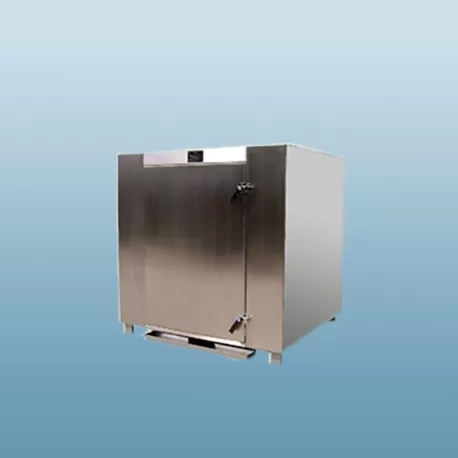
Material Response Across Varied Industrial Matrices
Different material categories respond uniquely to electromagnetic energy
based on physical density, moisture distribution, and molecular composition.
Understanding these specific matrix behaviors enables proper system
configuration.
Food Processing and Functional Nutrients
In food dehydration, preserving color, volatile aromas, and active nutrients
requires limiting overall thermal exposure times. Convective drying often causes
case hardening, where the outer skin dries quickly and traps moisture inside,
forcing operators to increase temperatures and extend processing times.
Dielectric processing pushes water vapor outward from the product core,
maintaining open pore structures that prevent shrinkage and surface crusting.
This gentle moisture migration helps retain thermolabile compounds like Vitamin
C, pigments, and active probiotics in sensitive functional ingredients, plant
extracts, and alternative protein bases.
Fine Chemical Synthesis and Mineral Dehydration
Drying chemical catalysts, filter cakes, and ceramic powders requires
maintaining uniform moisture levels throughout the material bed to prevent
clumping or uneven firing behavior in downstream kilns. Because chemical powders
can insulate heat in traditional ovens, dielectric systems offer significant
time reductions by bypassing low conductive heat transfer rates inside dense
powder beds.
Pharmaceutical Granules and Temperature-Sensitive APIs
Active Pharmaceutical Ingredients (APIs) often degrade when exposed to
extended heat above 40°C to 50°C. Combining dielectric heating with vacuum
environments lowers the boiling point of water inside the drying chamber. Vacuum
microwave drying systems evaporate residual moisture at lower temperatures,
preserving molecular stability in heat-sensitive pharmaceuticals while
accelerating batch turnaround times.
Integration Architecture and Automated Control Loops
Modern process automation relies on continuous sensor telemetry to adjust
machine behavior in real time, avoiding reliance on manual periodic sampling and
batch adjustments.
Integrating an advanced microwave dryer machine into an
existing plant control architecture requires connecting high-speed field sensors
with a central Programmable Logic Controller (PLC) via industrial ethernet
protocols such as PROFINET or EtherNet/IP. Automated control loops monitor key
processing variables continuously:
In-Line Microwave Moisture Sensors: Positioned at the inlet
and outlet, these units measure signal attenuation to calculate real-time
moisture content without contacting the product bed.
Non-Contact Infrared Pyrometer Arrays: Multi-point IR
sensors scan the conveyor width, continuously monitoring surface temperatures to
detect localized heating variations.
Solid-State Power Regulation: Variable switch-mode power
supplies adjust individual magnetron output levels instantly, matching local
field strength to incoming mass flow fluctuations.
Automated Exhaust Velocity Control: Variable frequency
drives alter extraction fan speeds based on humidity levels inside the drying
cavity, maximizing humidity evacuation without creating air turbulence that
disrupts fine light powders.
Equipment engineered by NASAN incorporates these closed-loop
telemetry frameworks, enabling self-regulating operations that maintain output
moisture parameters even when incoming raw material feed profiles fluctuate
unexpectedly.
System Evaluation Criteria for Equipment Procurement
Selecting appropriate continuous dehydration machinery requires evaluating
several key operational criteria during preliminary system engineering:
Frequency Matching: Evaluate material bed depth and volume.
High-volume, thick-bed operations generally benefit from the deeper penetration
depths offered by 915 MHz systems, whereas thin-layer continuous processes
achieve higher efficiency using 2.45 GHz frequencies.
Sanitary Cavity Design: Ensure internal stainless steel
surfaces feature continuous welds with radius corners (radiused sanitary finish)
to facilitate clean-in-place (CIP) routines and prevent material
accumulation.
Power Modulation Flexibility: Verify that power output can
adjust incrementally across low ranges rather than relying on crude pulsing
(on/off cycling), which causes thermal cycling and component wear.
Cooling System Reliability: Confirm magnetron cooling loops
feature secondary heat exchangers to isolate internal magnetron cooling fluid
from plant ambient water networks, avoiding internal mineral build-up and
localized overheating.
Frequently Asked Questions
Q1: How does a microwave dryer machine handle non-uniform material
bed depths on a continuous conveyor?
A1: Advanced continuous systems
combine localized mode stirrers with real-time infrared temperature monitoring
and dynamic magnetron power modulation. If sensor arrays detect thinner product
beds or localized temperature spikes, the central control unit adjusts magnetron
output levels instantly along specific zones of the tunnel, preventing local
burning and maintaining uniform drying results.
Q2: What is the main operational difference between 2.45 GHz and 915
MHz industrial drying systems?
A2: The primary difference lies in
electromagnetic wavelength and penetration depth. 2.45 GHz waves feature a
shorter wavelength, making them ideal for thin material beds, lighter mass
flows, and smaller machine footprints. 915 MHz waves feature a longer wavelength
that penetrates deeper into thick, dense material beds, making 915 MHz systems
suitable for high-tonnage bulk processing.
Q3: How do quarter-wave chokes suppress microwave radiation leakage
at open entry and exit ports?
A3: Quarter-wave chokes are engineered
tunnel extensions containing internal reflective geometry and absorbent
materials tuned to the precise frequency of the system. Incoming electromagnetic
waves reflect off metallic interior surfaces, overlapping out-of-phase with
oncoming waves. This destructive interference attenuates stray wave energy
within the choke section, ensuring radiation levels outside the opening remain
well within safety standards.
Q4: How long do industrial magnetrons typically operate before
requiring replacement?
A4: High-grade, water-cooled industrial
magnetrons operating within controlled temperature limits typically deliver
between 6,000 and 10,000 hours of continuous service. Operating life can be
maximized by maintaining clean cooling fluid loops, using regulated power
supplies, and avoiding low-load conditions that reflect excess wave energy back
into the transmitter tube.
Q5: Can dielectric drying systems be retrofitted into existing
continuous hot-air drying lines?
A5: Yes. Dielectric systems are
frequently installed as pre-drying modules to remove bulk moisture rapidly
before hot-air processing, or as finishing modules at the end of hot-air tunnels
to strip residual internal moisture without scorching the product surface. This
combined approach increases overall line capacity while lowering operational
footprint.
Engineering Consultation and Process Evaluation
Transitioning from traditional drying methods to advanced dielectric
processing requires precise empirical testing and material characterization. The
engineering specialists at NASAN assist facility directors and
process development teams through every step of implementation—from measuring
loss tangent properties in pilot tests to designing custom multi-stage
processing systems. Contact our engineering team today to review your material
specifications, schedule pilot testing, and receive a comprehensive system
configuration proposal tailored to your plant performance requirements.