In industrial manufacturing—whether for lithium-ion battery electrodes,
pharmaceutical granules, or electronic components—the drying oven is far more than a simple heating chamber.
It is a precisely engineered system where heat transfer, airflow distribution,
and control algorithms converge to remove moisture or solvents while maintaining
product integrity. A poorly designed oven introduces temperature gradients that
cause uneven drying, surface defects, or degraded material properties.
Conversely, a well-engineered system delivers repeatable results, energy
efficiency, and full process traceability. This article examines the critical
engineering parameters—from thermal uniformity to validation protocols—that
define industrial drying solutions, drawing on implementation data from
Nasan installations across battery
manufacturing, pharmaceutical processing, and advanced materials sectors.
1. Heat Transfer Mechanisms and Oven Configuration
The fundamental performance of any drying
oven is determined by how thermal energy is delivered to the
product. Three primary mechanisms are employed, often in combination.
1.1 Convection Heating
Forced convection ovens circulate heated air using fans, achieving rapid and
uniform heat transfer. Key design parameters include:
Airflow velocity: Typically 0.5–2.5 m/s across product
surfaces. Higher velocities increase heat transfer coefficients but risk
disturbing lightweight or powdery materials.
Air change rate: Measured in air changes per hour (ACH).
For solvent drying, sufficient fresh air exchange prevents flammable vapor
accumulation while maintaining oxygen levels for oxidation-sensitive
processes.
Flow pattern: Horizontal or vertical airflow configurations
are selected based on product loading geometry. Horizontal flow suits racked
products; vertical (downflow) is preferred for trays or continuous belts to
minimize particle cross-contamination.
1.2 Infrared (IR) and Radiant Heating
IR ovens deliver energy directly to the product surface without heating the
surrounding air. Applications include:
Rapid surface drying: Medium-wave IR (2–4 µm) penetrates
typical coating layers, reducing drying time by 50–70% compared to convection
alone.
Zone-specific heating: Zoned IR arrays allow targeted
drying for products with varying thickness or moisture profiles.
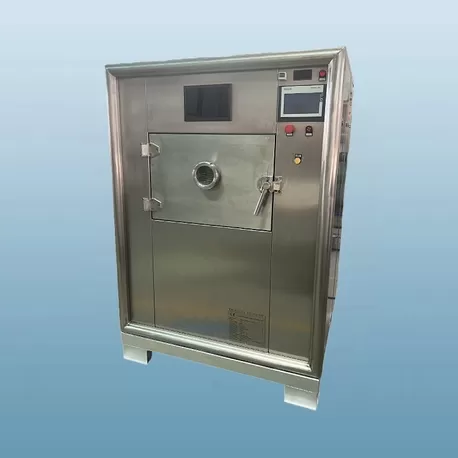
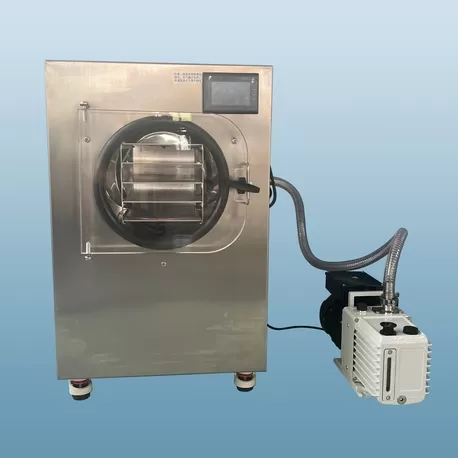
1.3 Vacuum Drying
Vacuum ovens reduce atmospheric pressure, lowering the boiling point of
solvents and enabling drying at lower temperatures. This is essential for
heat-sensitive materials such as pharmaceuticals, food ingredients, or
high-value polymers. Typical operating ranges: 50–150°C at pressures from 10 to
760 Torr.
2. Thermal Uniformity and Airflow Engineering
The most common failure mode in industrial drying is non-uniform product
moisture content caused by temperature gradients or stagnant airflow zones.
2.1 Temperature Uniformity Specifications
Acceptable uniformity is defined as the maximum temperature deviation across
the usable chamber volume. Standards vary by industry:
Uniformity is validated using multi-point thermocouple arrays (minimum 9
points for small chambers, up to 27 points for walk-in ovens) during heat-soak
and steady-state operation.
2.2 Airflow Distribution and Baffle Design
Even airflow requires careful baffle and plenum design. Computational fluid
dynamics (CFD) modeling is employed to:
Identify and eliminate recirculation zones where moisture-laden air
accumulates.
Optimize nozzle angles for impingement drying applications.
Balance supply and return air velocities to prevent
short-circuiting.
Field data from Nasan installations show that CFD-optimized
baffle designs reduce temperature deviation by 40–60% compared to conventional
plenum configurations.
3. Control Systems and Data Integrity
Modern drying ovens integrate programmable logic controllers (PLCs) with
touch-screen HMIs, offering recipe management, data logging, and compliance with
21 CFR Part 11 for regulated industries.
3.1 PID Control and Ramp/Soak Programming
Proportional-integral-derivative (PID) controllers maintain setpoint
temperatures with typical accuracy of ±0.5°C. Multi-segment ramp/soak profiles
allow:
Gradual heating to prevent thermal shock in ceramics or glass.
Dwell stages at specific temperatures for solvent evaporation or chemical
curing.
Controlled cooling to avoid condensation or oxidation.
3.2 Data Logging and Traceability
Regulated industries require full batch traceability. Systems include:
Real-time temperature and humidity recording with electronic
signatures.
Alarm thresholds for deviations beyond user-defined limits (e.g.,
±2°C).
Exportable logs in CSV or PDF format for batch records.
4. Material Compatibility and Cleanability
The chamber interior and airflow path must be compatible with the materials
being processed and withstand cleaning protocols.
4.1 Construction Materials
304 stainless steel: Standard for general industrial
applications.
316L stainless steel: Required for pharmaceutical, food,
and corrosive solvent applications, offering superior corrosion resistance and
ease of cleaning.
Electropolished finishes: Ra ≤0.5 µm to prevent particle
adhesion and facilitate cleaning in cleanroom environments.
4.2 Clean-in-Place (CIP) and Access Design
For applications involving powders, sticky residues, or potent compounds,
ovens may be designed with:
Removable baffles and fan assemblies for access.
Rounded internal corners to eliminate crevices.
Drain ports for wash-down applications.
5. Application-Specific Engineering Considerations
5.1 Lithium-Ion Battery Electrode Drying
Electrode coating drying demands extremely uniform temperature profiles to
prevent binder migration and ensure consistent adhesion. Specifications
include:
Temperature uniformity: ±1.5°C across 1.5 m width web.
Airflow velocity control to prevent coating disturbance during initial
drying stage.
Solvent recovery systems for NMP (N-Methyl-2-pyrrolidone) capture.
5.2 Pharmaceutical and Nutraceutical Drying
GMP-compliant ovens require:
HEPA filtration on incoming air (ISO Class 5 or better).
Temperature mapping with validated sensors placed in worst-case
locations.
Interlocks preventing door opening during active drying cycles.
5.3 Electronics and Semiconductor Curing
Component curing and moisture bake-out (per J-STD-033) demand:
Ultra-low particulate generation (<100 particles/ft³ at 0.5 µm).
Oxygen-controlled atmosphere options for preventing oxidation of exposed
metals.
Rapid ramp rates (5–10°C/min) to maximize throughput.
6. Energy Efficiency and Lifecycle Cost
Industrial drying accounts for a significant portion of manufacturing energy
use. Efficient oven design reduces operating costs through:
Insulation thickness: 75–150 mm high-density mineral wool
with thermal conductivity ≤0.040 W/mK reduces heat loss by 30–50% compared to
thinner insulation.
Heat recovery: Exhaust-to-supply air heat exchangers
recover 50–70% of sensible heat.
VFD-controlled fans: Reduce fan energy by 30–50% during
idle periods or when processing low-moisture products.
Economy mode: Automatic setback temperatures during
non-production hours.
Lifecycle cost analysis should consider not only energy but also maintenance
intervals for filters, bearings, and door seals. Nasan provides
detailed LCCA (lifecycle cost analysis) reports for major installations,
typically showing payback periods of 18–30 months for energy efficiency
upgrades.

7. Validation and Qualification Protocols
For regulated applications, ovens must undergo formal qualification:
7.1 Installation Qualification (IQ)
Verifies that the oven is installed per specifications, including electrical
connections, exhaust ducting, and safety interlocks.
7.2 Operational Qualification (OQ)
Tests system functions: temperature accuracy, uniformity mapping, door
interlock operation, alarm tests, and air velocity measurements.
7.3 Performance Qualification (PQ)
Confirms that the oven achieves specified drying results with actual product
over multiple runs, using moisture analysis (loss-on-drying) or other relevant
metrics.
Frequently Asked Questions (FAQ)
Q1: How do I determine the required temperature uniformity for my drying
application?
A1: Uniformity requirements are driven by product
sensitivity and process standards. For general industrial drying, ±5°C is often
acceptable. For pharmaceutical or advanced battery applications, ±2°C or tighter
is required. Conduct a risk assessment: if temperature variation can cause
product rejection (e.g., uneven coating adhesion, degraded API), specify tighter
uniformity. Reference industry standards such as USP <731> for
pharmaceutical or customer-specific specifications for OEM applications. A
well-engineered drying
oven can achieve uniformity as tight as ±1.0°C with proper airflow
design.
Q2: What is the difference between a laboratory oven and an industrial
production oven?
A2: Laboratory ovens are designed for small batch sizes,
research, and quality control with basic controls and limited throughput.
Industrial production ovens are engineered for continuous or high-volume
operation with robust construction, higher uniformity specifications, automated
loading systems, and compliance with industry standards (GMP, ISO, etc.).
Industrial ovens also incorporate features such as data logging, recipe
management, and integration with production line controls—capabilities typically
absent in lab-scale equipment.
Q3: How often should a drying oven be calibrated and validated?
A3: Calibration of temperature sensors and controllers
should be performed annually at minimum, or more frequently if used heavily. For
regulated industries (pharmaceutical, medical device), full re-qualification
(IQ/OQ/PQ) is typically required every 1–2 years or after any major repair.
Between formal qualifications, daily verification of setpoint vs. indicated
temperature and periodic check of uniformity using independent thermocouples is
recommended as good manufacturing practice.
Q4: What safety features are required for ovens processing flammable
solvents?
A4: Ovens used for solvent drying must comply with NFPA 86
(Standard for Ovens and Furnaces). Required features include: (1) purge timers
to ensure explosive concentrations are vented before ignition, (2) high-limit
temperature cutoffs with manual reset, (3) flammable vapor detection and
interlocked exhaust fans, (4) explosion relief panels if solvent concentrations
cannot be kept below 25% of LEL, and (5) positive pressure interlock to prevent
operation with insufficient exhaust flow. Always consult a qualified safety
engineer when specifying ovens for flammable materials.
Q5: Can an existing drying oven be retrofitted with improved controls or
data logging?
A5: Yes, retrofitting is often cost-effective. Upgrades may
include: replacing on/off or basic PID controllers with modern PLC/HMI systems;
adding recipe management and USB/ethernet data export; installing additional
thermocouples for enhanced uniformity monitoring; and integrating with plant
SCADA or MES systems. Nasan offers retrofit solutions that
typically deliver payback through reduced scrap, improved process visibility,
and compliance with traceability requirements within 12–18 months.
Selecting and operating an industrial drying
oven requires a systems-level understanding of thermal dynamics,
material behavior, and process control. From uniform airflow design to validated
control systems, each engineering element contributes to product quality and
operational efficiency. Nasan provides tailored drying
solutions that meet the rigorous demands of modern manufacturing, backed by
comprehensive engineering support and lifecycle services.