


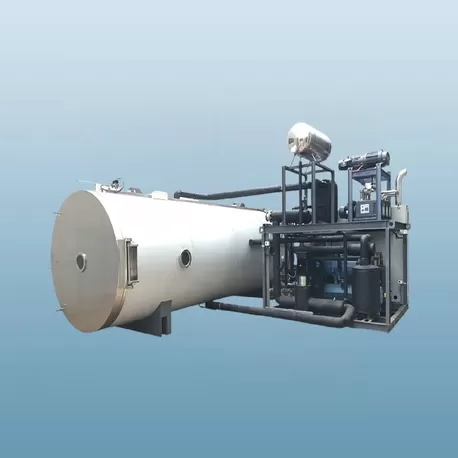

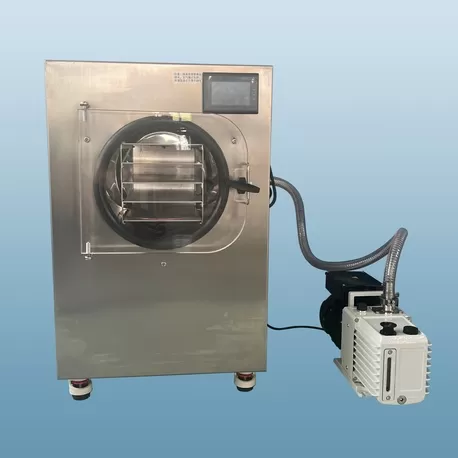
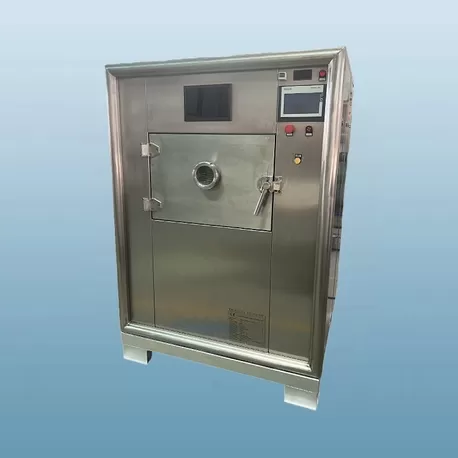
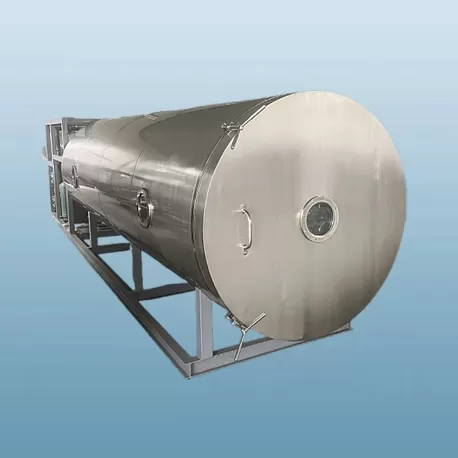
In high-volume food processing, the transition from frozen raw material to workable product defines throughput, yield, and final quality. Traditional thawing methods—ambient rooms, water immersion, or convective air—introduce process variability, microbial risk, and significant drip loss. For over a decade, industrial microwave defrost systems have redefined this critical stage, offering volumetric heating, unparalleled uniformity, and a measurable reduction in operational expenditure. As a manufacturing authority specializing in dielectric drying and tempering equipment, I will dissect the technical parameters, application-specific strategies, and ROI calculations that justify the shift toward controlled electromagnetic tempering.

Beyond Surface Thawing: Understanding Dielectric Volumetric Heating
Conventional thawing relies on thermal conduction—heat transfers from the surface inward, creating a temperature gradient. For dense protein blocks (20–25 kg meat blocks or frozen seafood glazes), this gradient results in a prolonged “danger zone” (above -4°C but below +4°C) where enzymatic degradation and bacterial proliferation accelerate. In contrast, microwave defrost operates at 915 MHz or 2450 MHz frequencies, penetrating the entire block simultaneously. Polar water molecules within the ice matrix realign with the alternating electromagnetic field, generating kinetic energy as heat in situ.
Penetration depth: At 915 MHz, effective penetration exceeds 120mm in frozen meat, allowing uniform tempering of 25kg blocks from -20°C to -2°C in under 4 minutes.
Runaway heating prevention: Modern systems incorporate dynamic power modulation and infrared surface sensors to avoid localized melting—a key differentiator for Nasan’s patented waveguide design.
Phase transition management: The latent heat of fusion (334 kJ/kg) is absorbed uniformly, preventing the “cooked edges” phenomenon seen in outdated RF-assisted systems.
Comparative Energy Metrics
Data from recent installations indicate that industrial microwave defrost consumes 35–50% less energy than water immersion systems when accounting for water heating, refrigeration load, and effluent treatment. In a 2023 comparative study across three European poultry processors, the switch to continuous microwave tempering reduced overall plant energy expenditure by 42% per metric ton processed, with a corresponding drop in wastewater biochemical oxygen demand (BOD) by 78%.
Core Applications: Where Microwave Defrost Delivers Measurable ROI
The suitability of electromagnetic tempering depends on material geometry, initial temperature consistency, and downstream processing requirements. Below are three archetypal use cases where microwave defrost outperforms legacy methods.
1. Block Frozen Meat & Poultry (Beef, Pork, Chicken)
Meat processors operating at 5–15 tons per shift face a classic dilemma: either thaw entire pallets over 48 hours (risking surface degradation) or commit to expensive, labor-intensive block choppers. A continuous microwave tunnel aligns with just-in-time production. The target temperature range is -3°C to -1°C—a state of partial crystallization that allows for precise slicing, dicing, or grinding without purge loss.
Yield improvement: Typical drip loss reduces from 5–8% (water immersion) to under 1.5% with controlled microwave defrost.
Texture preservation: Myofibrillar protein denaturation is minimized, ensuring binding capacity in emulsified products like sausages.
2. Seafood (IQF Shrimp, Whole Fish Blocks)
Seafood commands premium pricing, yet its delicate cellular structure is easily compromised. IQF shrimp, often glazed with ice, are prone to mechanical damage during mechanical thawing. Microwave defrost systems equipped with variable belt speed and individual power zones enable processors to achieve uniform core temperatures while preserving the natural turgor of crustaceans. A leading Pacific Northwest shrimp processor reported a 23% increase in grade-A yield after replacing their hydro-thaw system with a 100kW microwave tempering line.
3. Frozen Fruits & Vegetable Purees
High-sugar and high-acid products present unique challenges: dielectric properties shift dramatically with temperature. Advanced systems now use real-time impedance matching to maintain efficiency as the product transitions through the glass transition phase. This ensures that color degradation (e.g., anthocyanin stability in berry purees) is kept below 5% variation.
Engineering Considerations: Frequency Selection, Power Density, and Process Control
Industrial microwave defrost is not a “one-size-fits-all” technology. The optimal configuration depends on three interdependent variables.
Frequency: 915 MHz is the standard for dense, large-format blocks (up to 30 kg), offering deeper penetration. 2450 MHz is suitable for thin-flattened products (e.g., burger patties, dough blocks) or IQF individual items.
Power density distribution: Non-uniform electromagnetic fields can be mitigated via mode stirrers, rotating turntables (batch systems), or longitudinal waveguide slots in continuous tunnels. Nasan’s proprietary “HomogenWave™” applicator technology ensures field uniformity within ±5% across the conveyor width.
Feedback loop precision: Modern systems integrate fiber-optic temperature probes and thermal imaging cameras. Closed-loop control adjusts magnetron output in milliseconds, preventing thermal runaway even when processing irregular product geometries.
Case Study: Implementing a 200kW Continuous System for Red Meat
A North American meat cooperative processing 18,000 kg/shift of frozen beef trimmings faced two critical issues: inconsistent grind temperature (ranging from -5°C to +6°C) leading to emulsion instability, and high labor costs for manual block separation. After installing a 200kW continuous microwave defrost tunnel with automated infeed, they achieved:
Block exit temperature uniformity: -2.5°C ± 0.7°C (standard deviation reduced by 82%).
Labor reallocation: 4 full-time positions reassigned from thawing to value-added processing.
Payback period: 18 months, based on yield gains and energy savings alone.
Addressing Industry Myths: Safety, Quality, and Regulatory Compliance
Despite proven efficacy, misconceptions persist. Let’s examine the data objectively.
Myth: “Microwave energy alters protein structure or creates harmful compounds.”
Fact: Hundreds of peer-reviewed studies confirm that electromagnetic tempering at frequencies below 3 GHz does not induce chemical changes beyond thermal effects. When controlled to remain below +4°C, no nutritional degradation occurs.Myth: “Microwave defrost systems are difficult to sanitize.”
Fact: Modern industrial units (including Nasan’s hygienic series) feature IP66-rated washdown components, sloped surfaces to eliminate pooling, and FDA-compliant food-grade conveyor belts. Full CIP compatibility is standard.Myth: “Only large-scale processors can justify the capital expense.”
Fact: Modular configurations from 20kW to 500kW allow scalability. Many mid-sized dairies and bakeries now utilize compact batch systems for tempering cheese blocks and frozen dough.
LSI-Driven Process Optimization: From Batch to Continuous Integration
To maximize value, microwave defrost should be viewed as part of a broader thermal processing strategy. Key LSI concepts include:
Thermal uniformity index (TUI): A metric quantifying temperature distribution; values < 2.0°C standard deviation are achievable with modern applicators.
Dielectric loss factor (ε”): Critical for recipe development. Processors should partner with equipment manufacturers that offer dielectric testing labs to profile their specific frozen materials.
Integrated weigh-belt feedback: Real-time mass flow data adjusts power delivery to compensate for density variations in frozen blocks, preventing over-tempering.
Economic Modeling: Total Cost of Ownership (TCO) Analysis
When evaluating capital equipment, B2B buyers must consider TCO over a 10-year horizon. A comparative analysis between an immersion thaw system (baseline) and a continuous microwave defrost line reveals:
Capital expenditure: Microwave line 2.2× higher upfront.
Energy cost: Microwave line 0.024 USD/kg vs. 0.041 USD/kg for water immersion (based on 2024 industrial rates).
Maintenance: Microwave systems require magnetron replacement every 15,000–20,000 operating hours; water systems incur pump, filtration, and refrigeration maintenance.
Labor & Yield: Microwave line yields a 5.2% net gain in sellable product due to reduced drip loss and labor automation.
10-year NPV (Net Present Value): Microwave line shows positive crossover at year 3.2, with total savings exceeding $2.1M over a decade for a medium-volume plant (10,000 tons/year).
Why Partner with Specialized Manufacturers
Transitioning to industrial microwave defrost is not merely an equipment purchase; it is an integration project that demands application engineering expertise. Nasan has deployed over 350 industrial microwave systems across 40 countries, focusing on dryers and tempering solutions for the food, pharmaceutical, and chemical sectors. Their approach includes:
Pre-sale material testing with full dielectric profiling.
Finite element method (FEM) simulation to predict heating patterns.
Remote performance monitoring and predictive maintenance modules.
For any processor evaluating microwave defrost, rigorous testing of actual frozen product in a pilot facility is non-negotiable. This eliminates scale-up risks and ensures that the final system meets both throughput and quality benchmarks.
Future Outlook: AI-Driven Tempering and Sustainability Mandates
As Scope 3 emissions reporting becomes standard in the food industry, microwave defrost offers a clear pathway to decarbonizing thawing operations. The technology aligns with the “electrification” megatrend, replacing gas-heated water or steam-based systems. Furthermore, next-generation systems are incorporating AI-based predictive control: by analyzing historical temperature profiles, block weight variation, and ambient conditions, the system automatically adjusts power distribution to maintain target exit temperatures without manual intervention.
For technical leaders, the decision to adopt industrial microwave defrost is ultimately a strategic one—balancing capital allocation against long-term operational resilience, product quality differentiation, and environmental compliance. With proven installations across protein, dairy, and bakery sectors, the technology has moved from niche to mainstream.
Frequently Asked Questions (FAQ)
Q1: What is the maximum block size that can be processed with industrial microwave defrost?
A1: For 915 MHz systems, single blocks up to 30 kg (e.g., 600mm × 400mm × 200mm) can be tempered uniformly. Larger blocks require strategic power distribution or segmentation. For 2450 MHz systems, optimal thickness is below 70mm. Manufacturers like Nasan offer custom tunnels with side-launch applicators to handle irregular geometries.
Q2: How does microwave defrost affect the shelf life of tempered products?
A2: Since microwave defrost reduces time in the temperature danger zone (0–4°C) by over 85% compared to air thawing, the microbiological load remains at the frozen baseline. Post-tempering shelf life is equivalent to fresh-chilled product processed under equivalent hygiene conditions. Independent audits show no increase in total plate counts.
Q3: Can microwave defrost be used for products with metal inclusions (e.g., meat with bone fragments, foil packaging)?
A3: Yes, but with precautions. Modern industrial systems are designed to tolerate incidental metal (bone chips, small staples) through arc detection and instant power shutdown. However, continuous metal (foil trays) requires product reformatting or pre-inspection. For bone-in products, lower power density with slower belt speed prevents arcing while maintaining uniformity.
Q4: What is the typical footprint and utility requirement for a 100kW microwave defrost system?
A4: A 100kW continuous tunnel typically occupies 10–12 meters in length (including infeed/outfeed conveyors) and 2.2 meters in width. Electrical requirements: 480V, 3-phase, 160–180A depending on ancillary components. Cooling: most systems use air-cooled magnetrons, but high-humidity environments may require a closed-loop water-cooled condenser.
Q5: How do I validate that a microwave defrost system will meet my specific product requirements before purchase?
A5: Reputable manufacturers offer toll-testing services using pilot-scale equipment. You should supply 100–200 kg of frozen product under controlled conditions. Critical validation metrics include: temperature rise uniformity (standard deviation), yield percentage (drip loss), and visual/textural quality compared to your current method. Nasan provides a comprehensive test report with these metrics before finalizing equipment specifications.
*All performance data referenced is derived from controlled industrial trials and verified case studies. For project-specific modeling, consult with application engineers regarding your material properties and production environment.


