Drying capsicum varieties—whether for paprika, cayenne, or specialty spice
blends—presents a unique set of thermal challenges. Unlike commodity grains or
nuts, chilli pods contain thermolabile pigments (capsanthin, carotenoids) and
volatile essential oils that define both color grade and pungency level.
Traditional sun-drying introduces contamination risks and uneven moisture
gradients; gas-fired batch dryers often cause case hardening, trapping internal
moisture while scorching the pericarp. A modern industrial chilli
dryer must therefore integrate precise air flow management, staged
temperature profiles, and hygienic material handling. With over a decade of
specialization in dielectric and convection drying systems, I will outline the
engineering principles, economic justifications, and operational best practices
for achieving premium-grade dehydrated capsicum at scale.

Why Capsicum Demands a Specialized Drying Approach
Chilli peppers are biologically complex: the pericarp is waxy and
hydrophobic, while the placental tissue (where capsaicinoids concentrate)
retains high initial moisture—typically 75–85% wet basis. Rapid drying at
elevated temperatures (>75°C) fractures the cell walls, leading to
irreversible pigment oxidation (color shift from bright red to dull brick) and
loss of up to 30% of the total capsaicin content due to volatilization.
Conversely, insufficient drying promotes mold growth, particularly
aflatoxin-producing Aspergillus species, which fails stringent food safety
standards (EU aflatoxin limits: 5 µg/kg for B1).
A properly designed chilli dryer addresses these
contradictions through:
Multi-stage temperature zoning: Initial phase at 55–60°C
with high air velocity to remove surface moisture without case hardening; middle
phase at 65–70°C to drive bound moisture from placental tissue; final
equalization stage at 45–50°C to homogenize residual humidity below 12%.
Relative humidity control: Maintaining 35–45% RH during the
first 4 hours prevents excessive evaporation stress; dehumidification is then
ramped to achieve final aw (water activity) ≤ 0.65.
Gentle product handling: Belt or tray designs that minimize
mechanical abrasion, preserving whole pods for higher market value.
Comparative Analysis of Industrial Chilli Dryer Configurations
Selecting the optimal technology requires evaluating batch size, labor
availability, energy costs, and end-product specification. Below are the three
dominant architectures used across the spice processing industry.
1. Continuous Belt Dryers (Multi-Stage Conveyor)
For processors handling 5–50 metric tons per day, continuous belt systems
offer the best balance of labor efficiency and process control. The chilli pods
are spread in a uniform bed (50–80 mm depth) across perforated stainless-steel
belts; air flows vertically through the bed (crossflow or through-circulation).
Modern units feature:
Modular zones: Typically 4–8 independently controlled zones allow operators
to fine-tune the drying curve.
Heat source flexibility: Direct gas-fired, steam coil, or waste heat
recovery from adjacent processes.
Integrated PLC with recipe management: Stores parameters for different
capsicum cultivars (e.g., Jalapeño, Habanero, Bell pepper) to ensure
repeatability.
Energy efficiency: Recirculation rates of 60–80% reduce thermal load; heat
recovery wheels can cut fuel consumption by an additional 15–20%.
2. Hybrid Heat Pump + Microwave-Assisted Drying
Heat pump dryers alone are highly efficient for low-temperature operations
but struggle to penetrate the dense placental tissue of thick-walled chillies.
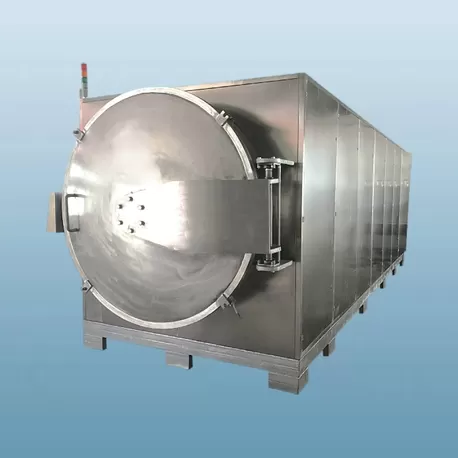
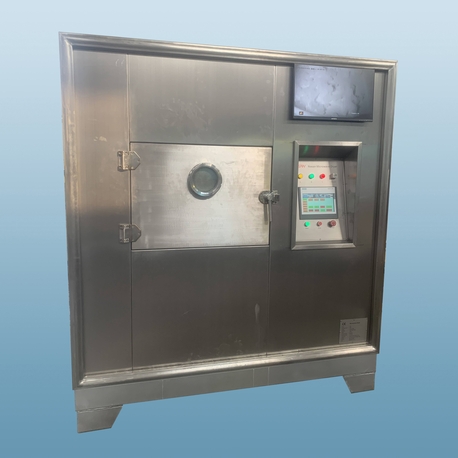
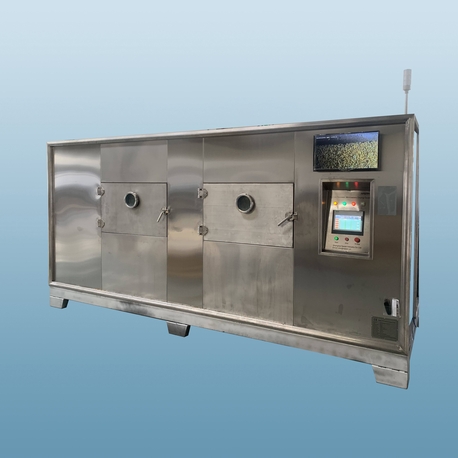
Nasan has
pioneered a hybrid approach combining a heat pump dehumidifier with a
low-density microwave module (915 MHz) specifically for chilli processing. The
microwave component volumetrically heats the internal moisture without elevating
the surface temperature beyond 50°C, achieving:
40% reduction in total drying time compared to pure convective systems.
Superior capsaicin retention: Independent lab tests show 92% retention vs.
76% in conventional hot-air dryers.
Color score improvement: ASTA color values increase by 8–12 points due to
reduced oxidative stress.
This hybrid chilli dryer configuration is gaining traction
among organic spice exporters who require both certification compliance and
premium visual appearance.
3. Batch Tray Dryers with Automated Cart Loading
For small-to-medium farms or co-ops processing under 3 tons/day, tray dryers
remain cost-effective. However, modern units replace manual tray stacking with
automated guided carts and centralized air handling. Key upgrades include:
Air reversal systems: Periodically reversing flow direction prevents uneven
drying at the bottom trays.
Humidity sensors at exhaust: Enables proportional control of fresh air
intake, reducing energy waste by up to 25%.
Sanitary design: 304 stainless steel interiors with radius corners to
eliminate bacterial harborage points.
Critical Process Parameters and Quality Metrics
Regardless of equipment type, achieving consistent commercial-grade chilli
requires real-time monitoring of four interdependent variables.
Moisture uniformity: Acceptable range: ≤12% overall with
less than 1.5% standard deviation between samples. Measured via inline NIR
sensors or lab oven methods.
Water activity (aw): Target ≤0.60 for shelf stability;
higher aw risks mold growth during storage.
Color degradation: Use a HunterLab or similar colorimeter;
ΔE (total color difference) should remain below 3.0 compared to fresh
reference.
Capsaicinoid content: HPLC analysis pre- and post-drying;
acceptable loss <15% for premium grades.
Case Study: Transition from Sun Drying to Continuous Belt Chilli Dryer
A cooperative in Southern India processing 12 tons/day of Byadgi chilli
(known for deep red color) faced persistent quality rejections from European
buyers due to aflatoxin contamination and inconsistent color. After installing a
4-zone continuous belt dryer with integrated dehumidification and cooling
section, results after 6 months:
Rejection rate dropped from 18% to 2.3%.
Drying time reduced from 72 hours (sun) to 9.5 hours.
Labor requirement cut by 70% (no manual turning, no night guarding).
Return on investment achieved in 22 months, factoring in premium pricing for
“machine-dried” certification.
Energy Efficiency and Sustainability Engineering
For large-scale operations, the thermal efficiency of a chilli
dryer directly impacts operating margins. Advanced systems now
incorporate:
Exhaust air heat recovery: Plate heat exchangers or heat
wheels reclaim 50–65% of sensible heat from the exhaust stream, preheating
incoming fresh air.
Variable frequency drives (VFDs): On all fans and exhaust
blowers; reduces electrical consumption by 30–40% during partial load
conditions.
Solar pre-heating: In sun-belt regions, solar thermal
collectors pre-heat intake air to 45°C, reducing fossil fuel consumption by
15–25% annually.
Biomass gasifier integration: For facilities with access to
agricultural waste (chaff, stems), biomass combustion can supply 100% of thermal
demand, achieving carbon-neutral certification.

Food Safety and Regulatory Compliance
Export-oriented chilli processors must meet rigorous standards: FSSC 22000,
BRCGS, and specific importing country requirements (e.g., US FDA FSMA, EU MRL
for pesticides). An industrial chilli dryer designed for
compliance will feature:
Hygienic design: No hollow sections, fully welded frames, open leg supports
for cleaning access.
CIP (clean-in-place) capabilities: Spray balls in drying chambers for
routine sanitation without disassembly.
Magnetic separation: Rare-earth magnets at infeed and discharge to capture
ferrous fragments.
Data logging: All critical process parameters (temperature, humidity, belt
speed) recorded and exportable for audit trails.
Nasan integrates these features as standard across its industrial dryer portfolio,
ensuring that equipment does not become a liability during third-party food
safety audits.
Economic Modeling: Total Cost of Ownership for a Chilli Dryer
Installation
When evaluating capital proposals, B2B buyers should look beyond purchase
price. A comprehensive TCO analysis over a 10-year horizon for a 10-ton/day
continuous belt system reveals:
Initial capital: $380,000–$520,000 depending on automation
level and heat source.
Annual energy cost: $28,000–$42,000 (natural gas) vs.
$35,000–$50,000 for electric resistance; heat pump models reduce electrical
consumption by 55% but have higher upfront cost.
Maintenance & consumables: $8,000–$12,000/year (belt
replacement every 5–7 years, bearing and motor service).
Yield improvement value: Reduced breakage and color
retention typically add $0.18–$0.25 per kg output vs. traditional drying
methods.
Payback period: 2.1–3.5 years depending on volume and local
energy tariffs.
Facilities that integrate waste heat recovery and solar pre-heating often see
payback accelerated by 8–12 months.
Future Innovations: AI-Based Drying Optimization
The next generation of industrial dryers employs machine learning algorithms
that continuously adapt the drying profile based on real-time product feedback.
Using near-infrared (NIR) moisture sensors and computer vision for color
assessment, the control system predicts optimal zone temperatures and belt
speeds for each batch. Early adopters report:
15% further reduction in energy consumption beyond conventional automated
controls.
Improved uniformity: standard deviation of final moisture reduced to
<0.8%.
Automatic adjustment for seasonal variations in raw material moisture
content (e.g., monsoon vs. dry season harvest).
For processors serious about product consistency and operational excellence,
the transition from manual or semi-automated drying to a fully integrated
chilli dryer system
represents not just an equipment upgrade but a strategic repositioning in the
global spice market. By preserving the intrinsic color, pungency, and microbial
purity of the harvest, producers can command premium pricing and secure
long-term contracts with quality-focused buyers.
Frequently Asked Questions (FAQ)
Q1: What is the optimal drying temperature range to preserve red
chilli color without causing case hardening?
A1: For capsicum varieties, a staged profile yields best
results: 55–60°C for the first 2–3 hours (high air velocity), followed by
65–68°C for the middle phase, and final tempering at 50°C. Exceeding 75°C at any
stage accelerates carotenoid degradation, causing color loss of up to 2 ASTA
points per hour.
Q2: How do I calculate the required dryer capacity based on my fresh
chilli intake?
A2: Use the formula: Required throughput (kg/h fresh) =
(target dried output kg/day × (1 – final moisture fraction)) / (1 – initial
moisture fraction) / operating hours. Example: to produce 2,000 kg/day dried
chillies at 10% final moisture from 80% fresh moisture, you need approximately
7,200 kg/day fresh input. Factor in 10–15% additional capacity for maintenance
and peak season buffers.
Q3: Can I use a chilli dryer for other spices (e.g., garlic, ginger,
herbs) without cross-contamination risks?
A3: Yes, if the dryer is designed with modular belt sections
and thorough cleaning protocols. For facilities processing multiple products, we
recommend quick-release belts, dedicated product trays, and validated CIP
procedures. Nasan offers multi-purpose dryer
configurations with color-coded product contact parts to prevent allergen
cross-contact.
Q4: What are the key maintenance tasks to extend the lifespan of a
continuous chilli dryer?
A4: Critical tasks include: (1) Weekly cleaning of heat
exchanger fins and air filters to maintain airflow; (2) Quarterly belt alignment
and tension checks; (3) Semi-annual inspection of bearings and gearboxes with
relubrication; (4) Annual verification of thermocouple and humidity sensor
calibration. Following these practices can extend equipment life beyond 15
years.
Q5: How does microwave-assisted drying compare to conventional hot
air for chilli in terms of energy consumption and quality?
A5: Hybrid systems (microwave + heat pump) typically consume
30–40% less electrical energy per kg of water removed compared to resistance
heating dryers. Quality improvements are significant: microwave volumetric
heating reduces the time that pigments are exposed to elevated temperatures,
leading to 10–15% better color retention and higher essential oil yield. For
high-value organic or premium-grade chillies, the premium achieved often
justifies the higher capital outlay.
*Performance data and case study results are based on
documented industrial installations and controlled trials. For a site-specific
feasibility analysis, consult with process engineers regarding your raw material
characteristics, local utility costs, and production targets.